Unlike the Baraniecki family, whose history was so closely intertwined with their pharmacy that the two formed an inseparable whole, the Frischmans touched that history only for a relatively brief period of several years.
During the years when August Frischman lived in Dynów.
Before telling that story, however, I must begin at the beginning—that is, by explaining who the Frischmans were and how this family of German origin came to settle in Dynów and became united with the Baraniecki family.
I shall begin with their origins.
1. The Years 1727 to 1790
Ennoblement
Among the Hungarian Royal Archives, the crown jewel is the so-called Hungarian Libri Regii, consisting of seventy-three volumes containing approximately 38,000 royal documents issued by the Royal Chancellery between 1527 and 1867.
This extraordinary archival treasure is now entirely available online and constitutes a remarkable source for historical research.
It is there that one finds the document confirming the ennoblement of George Frischman and the granting of his coat of arms.
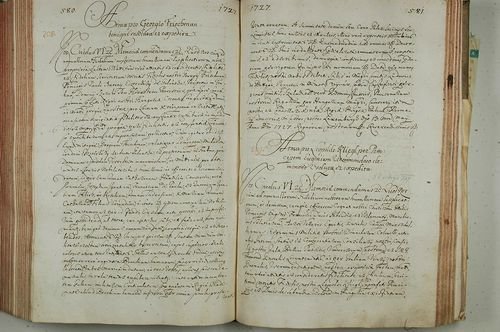
And here is translation of this text:
Coat of Arms for Georg Frischman, Graciously Granted and Bestowed
We, Charles VI, make known to the memory of all and each whom this matter may concern that We, acceding to the most humble petition of certain of Our faithful subjects presented before Our Majesty, and also taking into consideration the loyalty and faithful services of Our subject Georg Frischman, perpetual provisor in the service of Prince Paul Anton Eszterhazy of Galanta, at Fraknó and in the lordship of Szczukő, that is, Hornstein, which services he has faithfully and steadfastly rendered and performed, first to the Holy Crown of Our aforementioned Kingdom of Hungary and thereafter to Our Imperial House and Majesty, in various places and at various times, and upon various occasions and necessities, and which he promises henceforth to render and perform with the same zeal, loyalty, and constancy;
Therefore, considering also that the said Georg Frischman, having been granted his liberty by the late Prince Michael Eszterhazy of Galanta, as hereditary lord of Fraknó, was most humbly and successfully recommended to Our Majesty for the granting of nobility, We have resolved that he, together with his wife Katharina Händlein; his sons Johann, Joseph, Ignaz, and Franz, born of Paula, as well as Anton Ignaz; and the daughters of the said spouses [Georg and Katharina], Rosalie, Anna Theresia, and Maria Anna Katharina, shall be received, incorporated, and enrolled among the nobility;
Provided, however, that the estates and possessions which they presently hold in fact, as well as those which they may possess in the future, shall not thereby be exempted from the burdens to which they have hitherto been subject.
In testimony whereof, We have signed this instrument and caused Our seal to be affixed thereto.
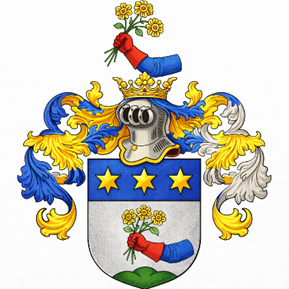
The Coat of Arms
A military shield, horizontally divided into two fields.
The upper field is azure [blue], containing three golden stars arranged in a straight line.
In the lower field, argent [silver], above a green hill, appears a human arm [Latin: brachium; although from the description that follows it is apparent that the entire arm is intended], clad in a red glove and holding in its hand three golden roses together with their stems.
Upon the shield rests an open, barred military helmet, adorned with a royal crown, from which extends another human arm, in every respect similar to the arm described above.
Finally, the helmet is adorned with mantling, or ribbons, on one side gold and blue, and on the other silver and yellowish, falling toward the edges of the shield, etc.
As all these things, etc., are represented, etc., so We decree, etc.
And in the manner described above We receive, incorporate, and enroll them, and by virtue of this present instrument We give, grant, and bestow the same.
In perpetual commemoration of this matter, We have signed this instrument and caused Our seal to be affixed thereto.
Given by the hand of Our faithful subject, the illustrious and noble Count Lajos Batthyány, Hereditary Count of Németújvár and in the County of Vas, Administrator of Zala County, Our Royal Chief Cup-Bearer in Hungary, Our Chamberlain, and First Assessor of Our Royal Hungarian Court Chancellery;
at Our Castle of Laxenburg, on the 3rd day of May, in the Year of Our Lord 1727, in the year of Our reign, in the presence of the Most Reverend [abbreviated formula listing the witnesses].
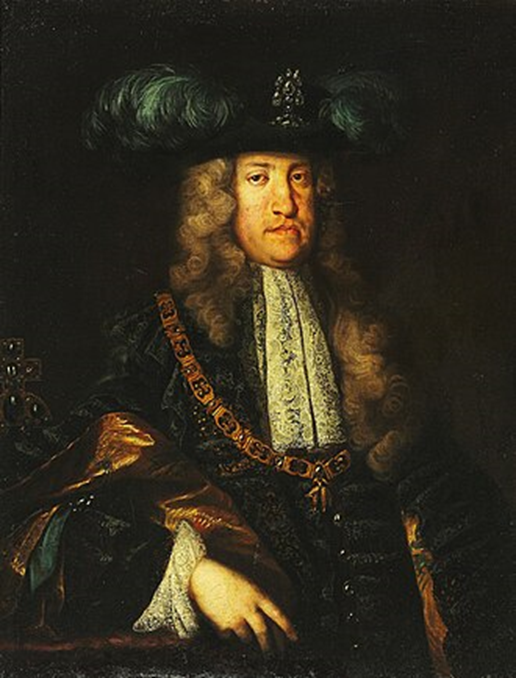
Charles VI Habsburg
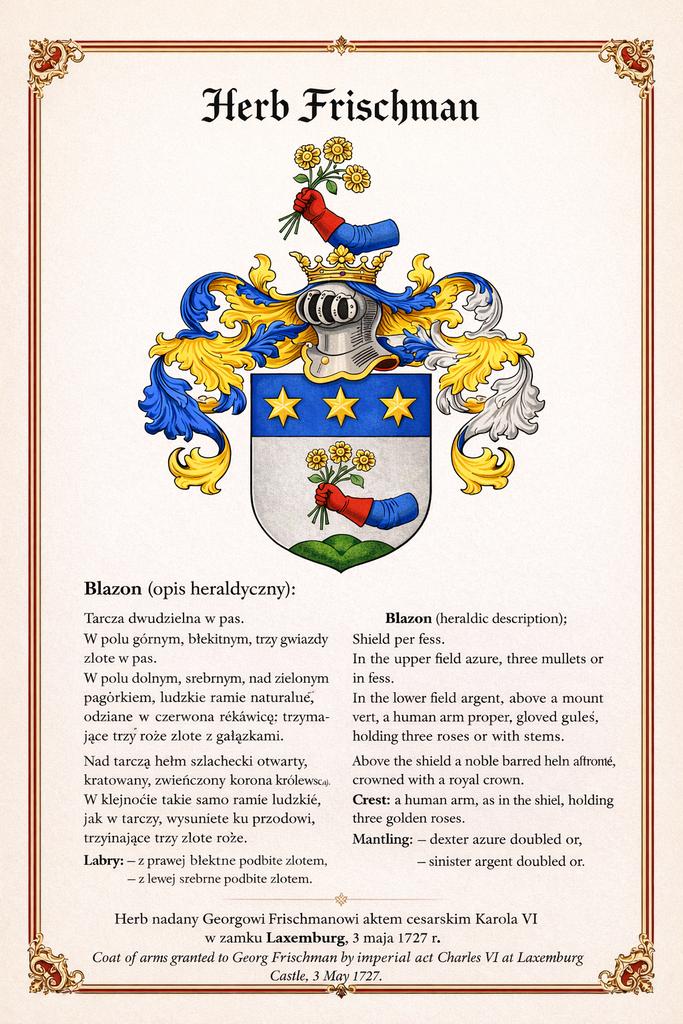
The act of 1727 therefore represents not only the formal beginning of the history of the Frischman coat of arms, but also a testimony to the social advancement achieved through work, trust, and loyalty to the state.
It is precisely this fact that gives the grant its enduring historical and symbolic significance.
The great-grandson of George Frischman, Johann, born around 1755, settled in Czernowitz in Bukovina—a land which, by virtue of an agreement with the Ottoman Empire, became part of Austria.
This almost completely untouched province opened itself to immigration, creating a remarkable mosaic of peoples.
Austria sought to Germanize the newly acquired territory.
It therefore began building its civil administration and establishing military garrisons.
One of the officials sent there was Johann Frischman.
The year was approximately 1790.
2. The Years 1790 to 1861
Bukovina
Johann and Zofia Frischman had three children.
One of them was Franz, born in 1797 in Zurin, near Czernowitz.
On 23 July 1818, after completing his secondary education, he entered public service, following in his father’s footsteps, at the District Office in Zaleszczyki.
By 1830, he had already become a tax commissioner in the Estate Inspectorate at Zaleszczyki.
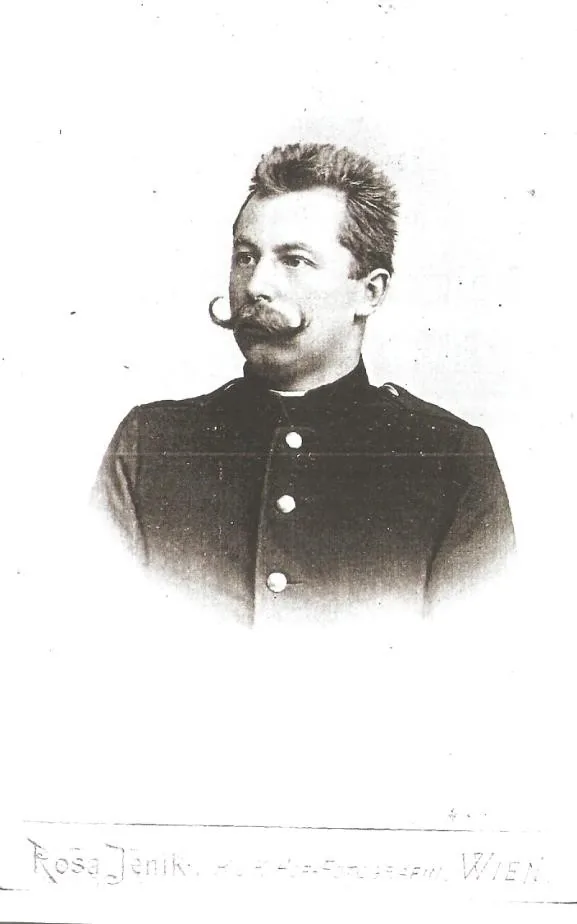
Franz Frischmann
He spoke fluent German, Romanian, Polish, and Ukrainian.
On 23 September 1824, Franz married Marcjanna Fuchs in Zaleszczyki.
She had been born on 22 November 1808, the daughter of Bernard Fuchs, a surgeon born in 1780, and Rozalia, born in 1786.
Franz was eleven years older than his bride.
The wedding took place in Zaleszczyki.
Marcjanna was not yet sixteen years old, while Franz was twenty-seven.
They had six children:
- Emilia, born in 1825.
She was born only six months after her parents’ wedding. Although Marcjanna had not yet reached the age of sixteen when she married, the parish priest recorded her age as seventeen in the marriage register.
- August Jan, born 1826, died 1880.
- Adolf, born 1828.
- Leontyna Anna, born 1832, died 1852.
- Paulina Antonina Waleriana, born 1833, died 1921.
- Marianna Józefa, born 1835.
Meanwhile, on 5 February 1840, Johann—the father of Franz—died in Stryj, in Podolia.
3. The Years 1853 to 1858
August’s Education
Among the children of Franz and Marcjanna, August entered the Faculty of Philosophy to study pharmacy at the Jagiellonian University in Kraków in 1853.
He completed his studies in 1858.
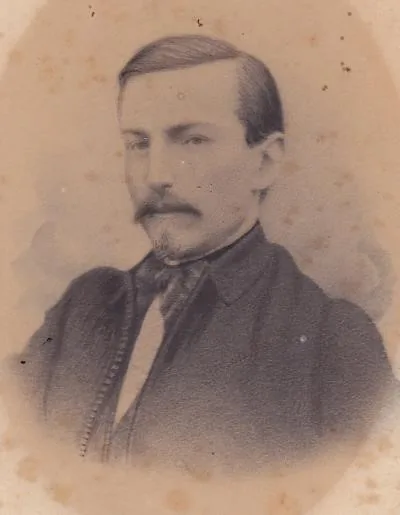
August Frischman
Almost immediately after graduating, he began working as a provisor—that is, the qualified pharmacist responsible for managing a pharmacy—in Dubiecko, in the Podkarpacie region, only fifteen kilometres from Dynów.
A little later, in 1862, he signed a lease agreement with Karolina Baraniecka, widow of the pharmacist Feliks Baraniecki, for the “Under Providence” Pharmacy in Dynów.
It was August who, in 1867, married Karolina’s daughter, Wanda Salomea, thus uniting the Frischman and Baraniecki families.
But let us not get ahead of ourselves.
4. Adolf and Paulina
August’s brother Adolf also completed pharmaceutical studies, though not in Kraków but at the University of Munich.
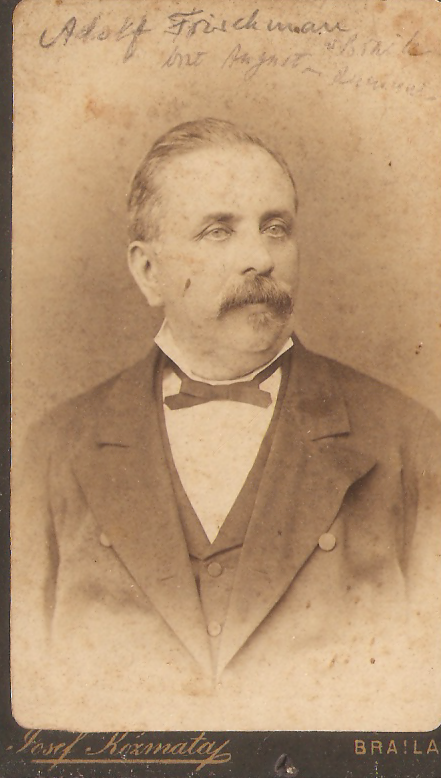
Adolf de Frischmann
After receiving his degree, he settled in Brăila, Romania, where he first leased and later, in 1880, purchased the Minerva Pharmacy from the Scharmelly family.
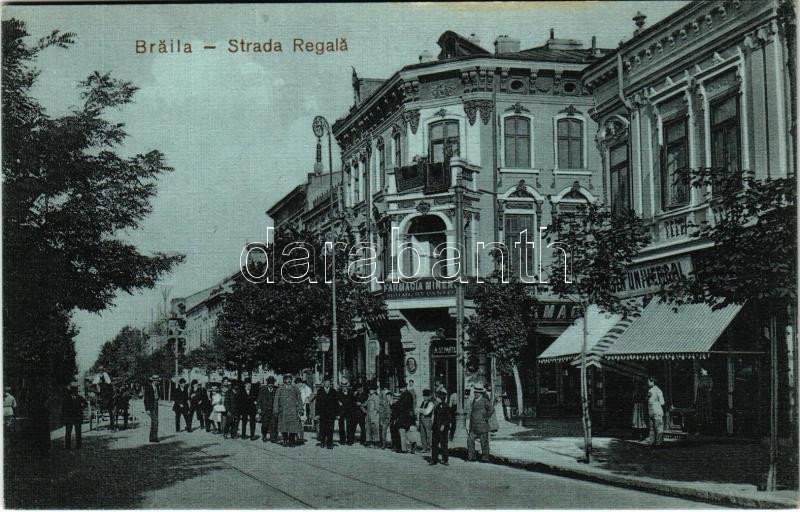
Pharmacy “Minerva” in Braila.
Like Adolf, his sister Paulina, born in 1833, also settled in Brăila.
During the Russo–Turkish War of 1877, she devoted herself selflessly to serving as a frontline nurse, for which she was awarded the Elizabeth Cross, a decoration established by Prince Carol I for women especially distinguished during wartime service.
After the war, Paulina became associated with the court of the Romanian Queen Elisabeth, better known under her literary pseudonym Carmen Sylva.
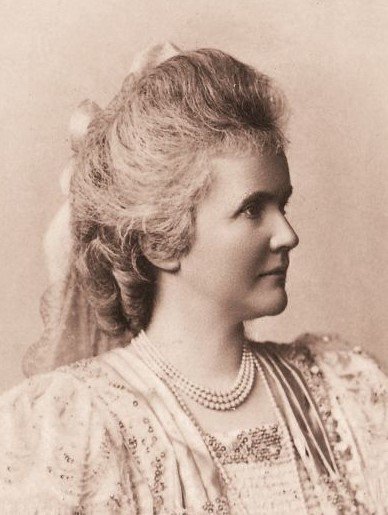
Queen Elizabeth aka Carmen Sylva.
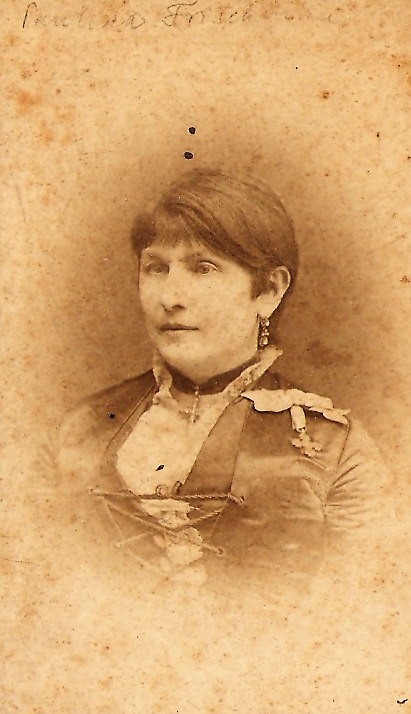
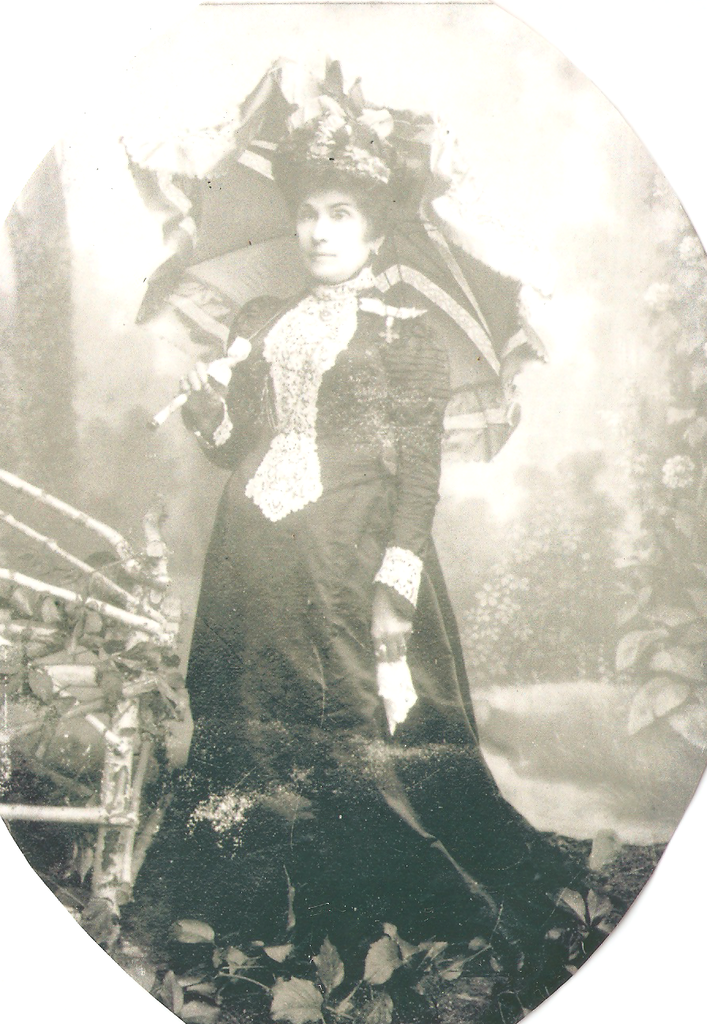
Paulina de Frischmann
The royal court at Peleș Castle in Sinaia was then one of the most fascinating cultural centres in Europe.
Queen Carmen Sylva transformed it into a celebrated literary and artistic salon.
After her death in March 1916, the court ceased to exist, and those who had formed its circle dispersed throughout the Empire.
Lonely and already more than eighty years old, Paulina moved to Żywiec (Saybusch), which was then the residence of the Żywiec branch of the Habsburg family.
The wife of the lord of Żywiec Castle—Archduke Karl Stephan of Habsburg—was Archduchess Maria Theresa of Tuscany, a close friend of Queen Carmen Sylva.
It was she who took under her protection the now “orphaned” Paulina, who spent the final years of her life in Żywiec.
Paulina died there on 12 August 1921, at the age of eighty-seven, and was buried in the cemetery of the Parish of the Blessed Virgin Mary.
As a purely chronological aside, I should mention that family tradition relates that shortly before settling in Żywiec, Paulina expressed a desire to come to Dynów—perhaps hoping to live there for some time.
However, the widow of her brother August, Wanda Salomea, categorically opposed the idea, declaring that she had had the Frischmans “up to her ears.”
Such a decisive—and admittedly rather impolite—refusal to invite her sister-in-law had its roots in the exceptionally unhappy, or rather badly matched, marriage of Wanda Salomea and August.
He was educated, sophisticated, broad-minded, and a freethinker.
She was the very model of the traditional homemaker—frugal almost to the point of stinginess, highly authoritarian, strict in raising her children, and never able to accept her husband’s way of life.
That, however, is merely a digression.
It should also be added, entirely by the way, that the youngest sister of Adolf, August, and Paulina—Marianna Józefa, born in 1835—married Julian Lewicki, Master of Pharmacy in Załoźce.
As one can see, the tradition of pharmacy ran strongly through both the Baraniecki and the Frischman families.
Let us now return to August and to the beginnings of his work as provisor in the “Under Providence” Pharmacy in Dynów.
5. The Years 1862–1880
As I have already mentioned, after the death of Feliks, his widow Karolina employed August Frischman as provisor—that is, the qualified manager of the pharmacy.
She herself had no legal right to operate it.
After all, she was not a pharmacist, and Austrian law strictly required that the person running a pharmacy possess a university degree and official authorization to manufacture medicines.
August was almost exactly the same age as Karolina.
She had been born in 1827, and he in 1826.
Dynów was a small Galician town.
August managed the pharmacy impeccably, but people soon began to gossip.
The widow was still quite young, while the provisor was handsome, cheerful, and highly sociable.
There was probably nothing whatsoever between them—nothing beyond a professional relationship—but gossip has a thousand tongues, and before long the whole town was whispering that Karolina intended to marry August.
In reality, however, Karolina was gravely ill, and romance was the very last thing on her mind.
She was suffering from advanced tuberculosis, and, plainly speaking, death was already knocking at her door.
She was also crushed by the sudden and unexpected loss of her husband.
She could neither endure nor overcome the loneliness into which she had been thrown.
Her children became her only refuge and her only protection against despair.
Yet August was always nearby.
He witnessed her tragedy and tried to help.
To no avail—for Karolina, mindful of the rumours circulating about them, pushed him away, fearing that he might somehow violate the sacred memory of her beloved husband.
Besides, she simply had no strength left.
In letters to a close friend she complained bitterly about her loneliness, the malicious gossip, and the overwhelming burden of business affairs.
It should be noted that both the pharmacy and the post office—which had belonged to the Baraniecki family for many years—provided a good income, and the financial position of the family was secure.
August worked diligently, yet he also possessed a temperament inclined toward pleasure, card games, lively company, and, in every sense of the word, generous spending.
From childhood I remember that in our family home, whenever someone spent money too freely, people would say that he had a “Frischman gesture,” meaning that he was something of a spendthrift.
August was universally liked.
Perhaps not by the parish priest of Dynów, Father Teofil Witoszyński, with whom he was constantly at odds, but certainly by the neighbouring landed families—the Trzecieskis, Starzeńskis, Skrzyńskis, and Trzcińskis.
August’s love of card playing, his constant visits, sleigh rides, the bustle of guests, and the endless social activity exhausted poor Karolina, who was, quite simply, slowly dying.
Yet one must emphasize that beneath his exuberant personality, August Frischman was a deeply compassionate and caring man.
Already in 1862, he was simultaneously pharmacist, Imperial and Royal administrator of the Dynów post office, and agent of the Mutual Fire Insurance Society of Kraków.
That is how the documents preserved in the Library of the Jagiellonian University describe him.
A little later he also obtained the right of propination—the legal privilege to produce and sell alcoholic beverages.
Then came the summer of 1863.
Karolina was dying.
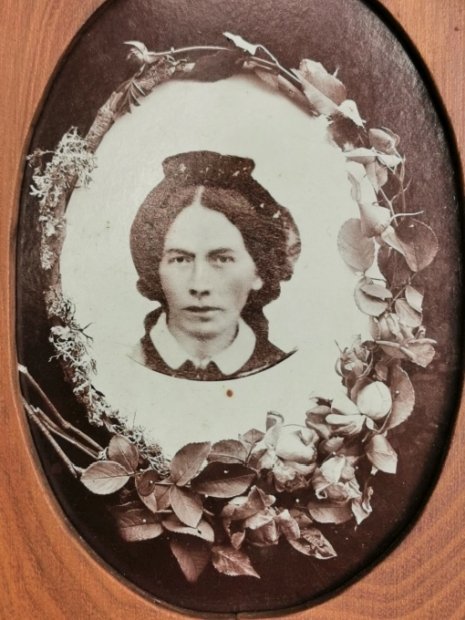
Karolina Baraniecka
We know the story of her final days from two surviving letters written by August to Mr. Żywicki, the husband of Karolina’s close friend.
How those letters came to survive in our family archive is difficult to explain.
Why the recipient returned them is equally impossible to say.
Nevertheless—they are there.
Here is the first.
Letter I
Most Honourable Sir and Benefactor,
Poor Mrs. Baraniecka is still alive. I did not dare read to her Your Honour’s letter, for she remains fully conscious, and I could not bear the impression that sincere compassion would make upon her.
I know what it means to have a friend, and I know how deeply one feels such a loss.
I can imagine how blessed she would feel if, perhaps for the last time and perhaps in her final hour, she might embrace and bid farewell to the woman whom she truly and sincerely loved.
I hope that if Madam leaves without delay immediately upon receiving this letter, she will still find the poor woman alive.
In the name of the dying woman, I ask that you keep your promise. For her sake, I shall remain grateful.
Your humble servant,
Frischman
The drama of the second letter reveals the finest qualities of August.
By then he already felt profoundly attached to the Baraniecki family, and he took under his protection both the orphaned children and all the family affairs of the Baranieckis.
The letter was written on 9 August 1863, two weeks after Karolina’s death.
Here is that remarkable account.
Letter II
Most Honourable Madam and Benefactress,
Please forgive me for taking so long to answer your letter. In my sorrowful situation I forgot everything.
Today I have finally begun to adjust to this new order of life, and therefore I hasten to satisfy the pleasure of giving you a complete account.
The children are healthy. I do not know what is happening in their hearts, but judging from their faces no one would say that they are orphans without either father or mother.
At the first moment after their mother ceased to live, I believe I was the one who looked the most foolish among them.
At four o’clock in the afternoon the deceased gathered us around her and would not allow us to leave her side.
At eight in the evening she began to die.
Standing beside the bed were myself, Władek, Wanda, and Felcia—the little ones behind us.
My head was spinning, and I would have sworn that everyone was weeping uncontrollably.
At ten o’clock in the evening, when she breathed her last, I turned around and saw only the two elder girls. The rest were sleeping peacefully. Old Wincenty stood beside the stove.
As though at someone’s command, people began arriving.
In the midst of that chaos I noticed only that Felcia and Wanda were combing their mother’s hair as if preparing her for her wedding, and they organized everything so efficiently that within an hour she lay upon the illuminated catafalque in perfect order while everyone knelt, sang hymns, and prayed.
What happened within me at that moment I cannot describe. I could not look at anyone, and I withdrew into my own room.
I did not see the funeral, but judging by the amount of money I spent, I presume it was conducted quite properly.
I immediately moved the children downstairs and ordered some repairs upstairs, for everything had fallen into terrible disorder.
And so, while living with six children in a single room, we were visited by Mrs. Stronczakowa a week after the death.
Whether she wished to win my favour or had some other purpose, she remarked: “The deceased was always rather careless with the truth.”
Her obvious satisfaction in saying such things about the children’s mother made a very unpleasant impression upon me, and I must have been rather impolite to the lady, for she departed immediately—and for that I am very grateful.
A few days later the postal official Astleilhner arrived once again for an inspection.
I received him as best I could amid this swarm of children. He sat with us, lived with us, and ate with us until today.
The Directorate behaved with great humanity, for it ordered that … be handed over entirely to the children, while entrusting me with the office and the administration of everything.
During Mrs. Baraniecka’s lifetime I somehow thought more about all these matters. After her death I did nothing—I visited no one and asked no one for anything.
And yet everything turned out for the best.
I promised the official that I would travel there, and I thanked the Director for the kindness he had shown to the children.
There are many candidates for this post office, and several people have already sought the administration.
If Madam should kindly visit the children of my late friend in September, I shall gladly and gratefully listen to your advice as to what should become of them.
Perhaps Władek would be better prepared for postal service, since the road to pharmacy is a long one—and on that matter I should very much value your opinion.
My dear aunt refuses even to answer me. I am preparing to write to her once more, and if this attempt is unsuccessful, then she may remain where she is, while I shall seek another.
On this occasion please accept the assurances of my profound respect for you both.
Your humble servant,
Frischman
Dynów, 9 August 1863.
Thus, in July 1863, August Frischman, provisor of the Baraniecki “Under Providence” Pharmacy, became the only person truly capable of supporting the orphaned family and ensuring the uninterrupted operation of the pharmacy.
In the letter quoted above, August mentions that he hoped for assistance from his “dear aunt,” who had not replied to his letters.
It may reasonably be assumed that he meant his father’s sister, Anastazja, born around 1799, wife of Bazyli Lewicki.
The aunt never came.
And so he remained alone—with six children who were not his own and two businesses that were not his own.
True, the children were no longer infants.
The eldest, Władysław, was already sixteen, while the twin sisters Wanda Salomea and Felicja were fourteen.
Yet the remaining three sisters were only twelve, ten, and eight years old and still required constant care.
Family tradition nevertheless tells us that all of them were remarkably independent and unusually resourceful for their age.
At roughly the same time, however, something terrible occurred.
August was arrested by the Austrian authorities.
The reason was his involvement in helping insurgents from the Kingdom of Poland—that is, the Russian partition.
After the collapse of the January Uprising, a number of Polish insurgents crossed into Galicia, which was under Austrian rule.
They hoped that Austria would remain neutral and that they would find safe refuge beneath the Habsburg crown.
They were mistaken.
Austria had no desire to damage its political relations with Russia.
Perhaps the authorities might have turned a blind eye to the fugitives had they behaved quietly.
Unfortunately, those who appeared in Dynów were arrogant, loud, and deliberately provocative.
According to family recollections, they behaved almost like ordinary bandits.
August received them, supplied them, and openly supported them in every possible way.
That was more than the Austrian authorities were willing to tolerate.
Arrests began.
August was treated as a political prisoner and imprisoned in the fortress of Kufstein, in Tyrol.
He was sentenced to one and a half years in prison.
During that time the “Under Providence” Pharmacy was managed by several successive provisors, though always under the watchful eye of Wanda Salomea, who was rapidly growing into a true materfamilias.
August Frischman returned from the fortress in 1865.
He returned to Dynów.
Not to Zaleszczyki, where he had been born.
Not to Janów or Buczacz, where he had lived and attended secondary school in his youth.
Nor to Kraków, where he had completed his university studies.
He returned to Dynów.
He returned to the abandoned group of children, to a business that was not his own, and to the countless everyday responsibilities connected with running both the pharmacy and the post office.
Ill, weakened, and exhausted—yet he returned.
During this period, a Master of Pharmacy named Ludwik Giebułtowicz appeared in the Dynów pharmacy.
Already in the early 1870s he was managing the establishment on behalf of “the heirs of Feliks Baraniecki,” precisely the wording that repeatedly appears in documents of that period.
August was still weak and worn down by his imprisonment.
He also suffered from kidney disease and was unable immediately to resume work.
Giebułtowicz therefore acted on his behalf.
A decision nevertheless had to be made.
And so, on 2 February 1867, seventeen-year-old Wanda Salomea married the forty-year-old August Frischman.
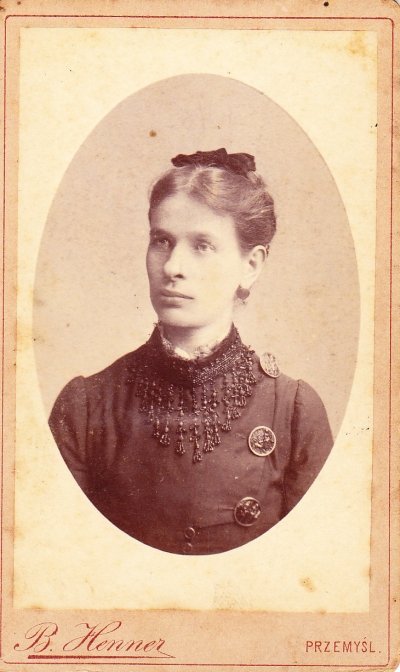
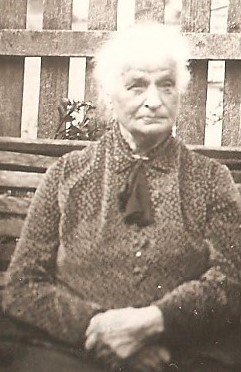
Wanda Salomea z Baranieckich Frischmanowa
The difference of thirteen years was not the most important issue.
Far more significant was the complete contrast between their personalities.
Nevertheless, the couple had seven children.
- Adolf, born 1867, died shortly after birth.
- Aleksander, likewise died shortly after birth.
- Zofia, born 1872, later the wife of Adam Banach, died in 1903 at the age of thirty-one.
- Franciszek, born 1874, died 1955, husband of Wanda Grochowicz.
- Henryk, born 1876, died in 1891 at the age of fifteen.
- Stanisław Adolf, born 1878, died in 1930 in Buffalo, New York, USA.
- Filip, born 1880, died in 1939 in Przemyśl.
Wanda Salomea therefore had her hands more than full.
From August she received not only his surname but also many worries, for, as already mentioned, he was a man entirely different from herself.
It is true that he was a good and conscientious guardian, but despite this there were constant frictions between husband and wife.
August escaped from those tensions into card games and social life.
Their married life was not an easy one.
It lasted only thirteen years.
August died at the age of fifty-three.
The date was 2 November 1880.
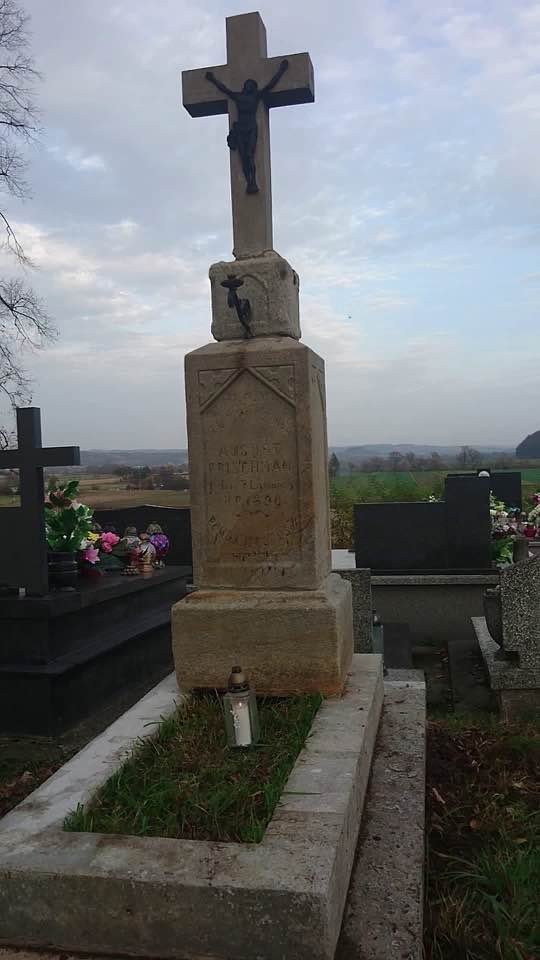
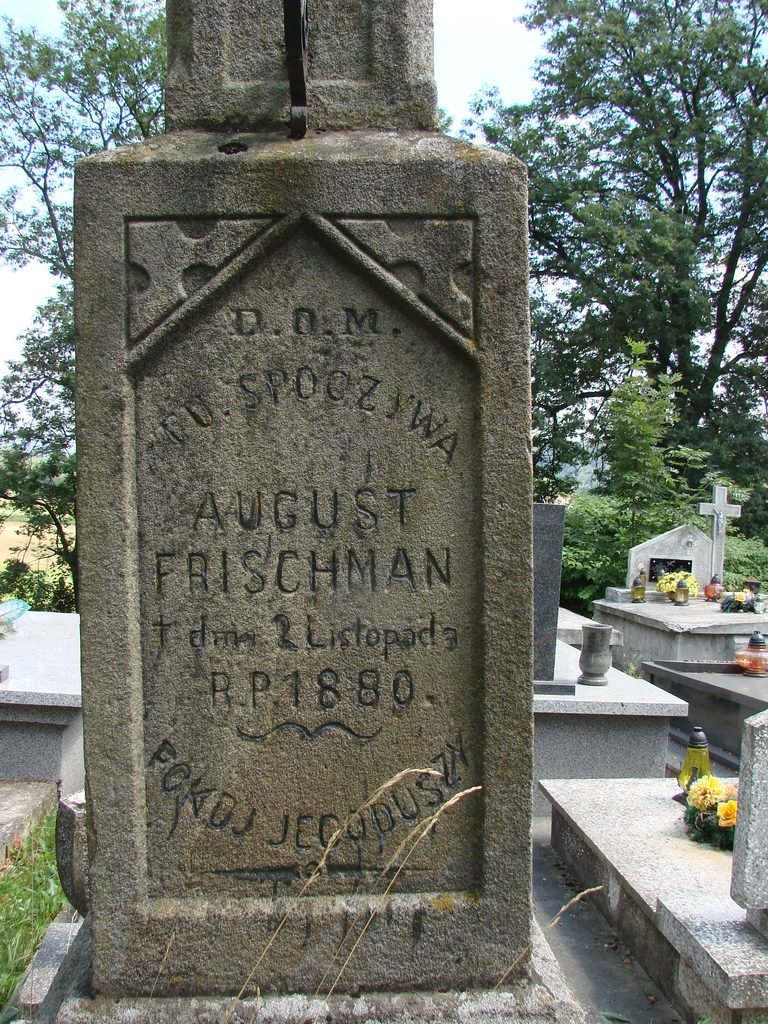
He left behind a thirty-one-year-old widow and five children.
Of the original seven, two had already died.
At the moment of August’s death, the youngest child, Filip, was barely six months old, while four-year-old Henryk was destined to live only another eleven years.
Wanda Salomea remained alone with her children, the eldest of whom, Zofia, was only eight years old.
Her situation was astonishingly similar to that of her mother Karolina.
Like her mother, she was thirty-one years old when her husband died.
Like her mother, she was left with a house full of children.
And once again, just as before, the pharmacy had been left without its master.
Yet Wanda Salomea possessed one enormous advantage over the circumstances in which her mother had found herself.
She was an entirely different person.
She was not sick, lost, or exhausted.
Wanda Salomea was a woman of bronze—not of iron, but of bronze.
She possessed a strength that many men might have envied.
Moreover, she knew how to take matters into her own hands.
She was sharp, authoritative, and uncompromising.
And now, after her husband’s death, she also possessed complete freedom to make every important decision herself.
It must be said that, to a remarkable extent, those decisions proved wise and successful.
Her first priority was to bring order to every matter concerning the family’s property.
Until then, ownership of the “Under Providence” Pharmacy had been described merely as “the property of the heirs of Feliks Baraniecki.”
Karolina had never completed the probate proceedings.
Consequently, after Feliks’s death the pharmacy legally belonged jointly to her and her six children, while August Frischman remained its provisor and managing pharmacist.
Now, after his death, everything was to change.
Above all, the young widow, Wanda Salomea, demanded that her brothers and sisters transfer their inheritance rights to her.
Naturally—for compensation.
Her intention was that both the pharmacy and the post office should have one owner.
That owner was to be herself.
She based her plans upon the inheritance decree drawn up after the death of her father, Feliks.
I reproduce that document below in its original legal wording.
DECREE OF INHERITANCE
The Imperial and Royal Office acting as the District Court of Dubiecko hereby awards the entire estate remaining after the death, intestate, on 1 August 1858 in Přerov during medical treatment, of the pharmacist Feliks Baraniecki of Dynów.
The estate consists of the house numbered 25, 26 and 244 in Dynów together with its garden and adjoining arable land, as well as ten morgens of arable land situated in the Dynów suburb under cadastral number 332, together with claims to be recovered and various movable property, having a total assessed value of 3,481 Austrian florins and 58 kreuzers.
By virtue of legal succession and pursuant to the division approved by resolution of 20 June 1859, No. 1222, the estate is awarded in equal shares, with the benefit of inventory and with reservation of a life interest in one seventh for the surviving widow Karolina Baraniecka, to the children: Władysław, Wanda, Felicja, Helena, Stefania, and Marcjanna Baraniecki.
Dubiecko, 16 December 1860.
Signature illegible.
From the Imperial and Royal District Court of Dynów, 22 August 1890.
Wanda had her own plans.
She understood that clearly defined ownership constituted the fundamental condition for the success of any enterprise.
And that is precisely what happened.
One may be astonished by the extraordinary harmony among the siblings.
Not one of them objected.
Every one of them signed a notarized declaration renouncing all inheritance rights in favour of their sister Wanda Salomea.
There were, however, a few minor tensions.
While four of the siblings—Władysław, Felicja, Helena, and Stefania—transferred their rights through deeds of assignment, the youngest sister, Maria Wanda, required Wanda to conclude a formal contract of purchase and sale.
Something, therefore, must have lain beneath the surface.
In any event, Wanda Salomea began consolidating ownership even during August’s lifetime.
It appears quite likely that August himself was the inspiration behind this entire operation.
In 1874, Wanda Salomea’s eldest brother, Władysław, lieutenant of the 18th Austrian Line Infantry Regiment, became the first of the siblings to transfer his inheritance rights to Wanda.
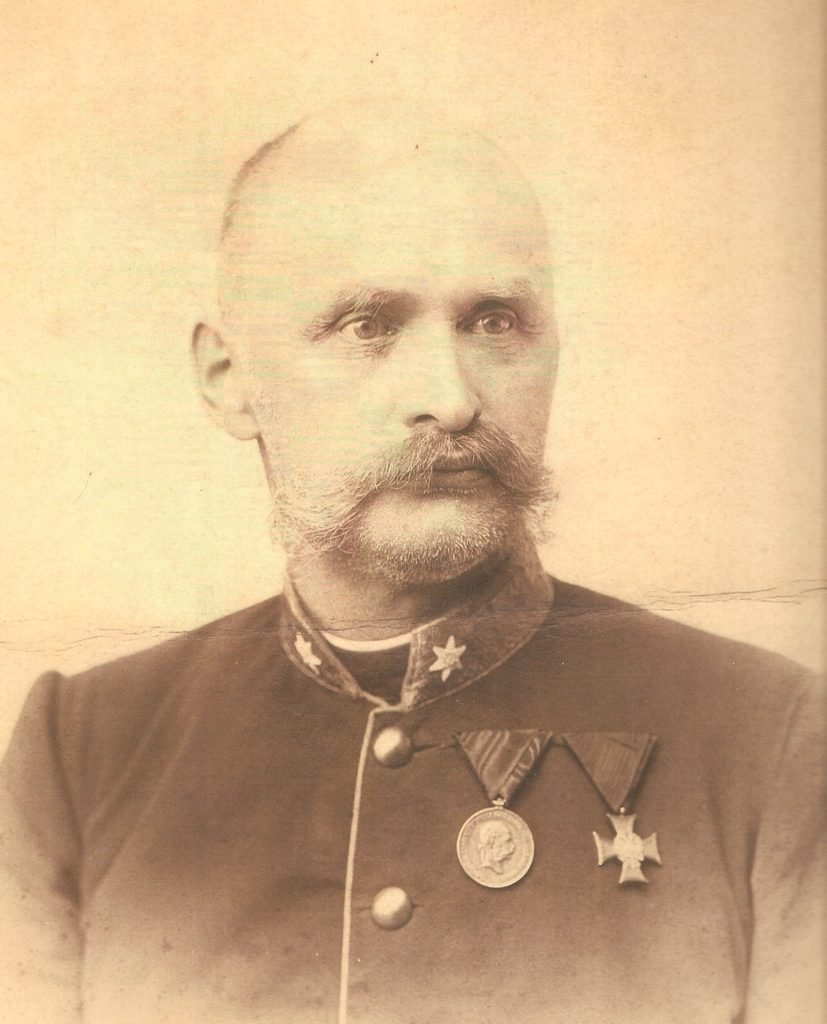
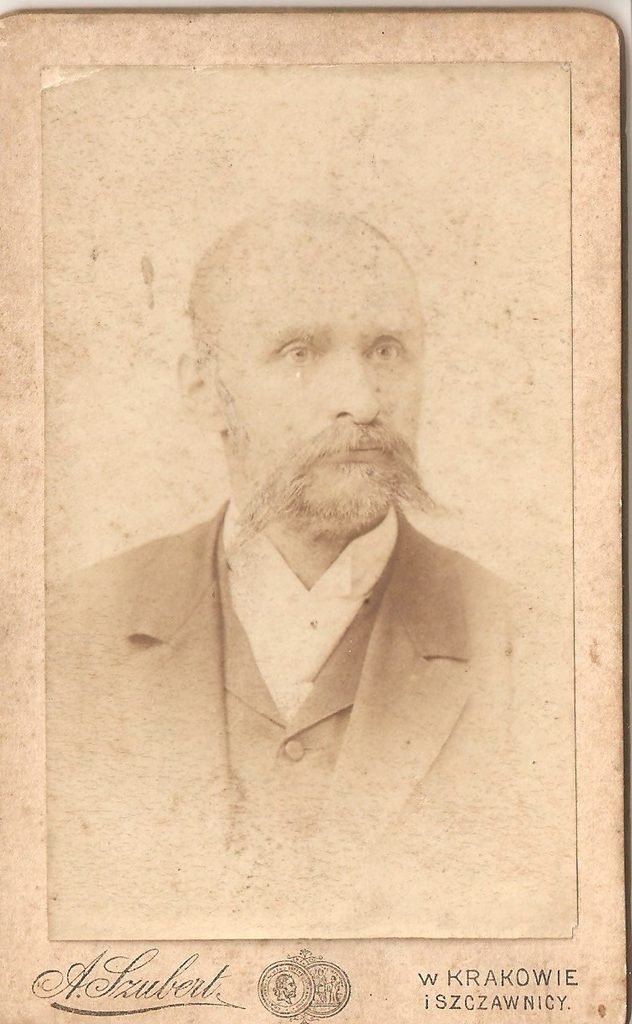
Major Władysław Baraniecki
At that time Władysław was both a lieutenant and a veteran of the Battle of Königgrätz (Sadowa).
That terrible battle took place on 3 July 1866 during the Austro–Prussian War, in which Austria suffered a crushing defeat.
Władysław was stationed in Prague, which explains why his deed of assignment was executed there.
Here is the document.
Assignment
By virtue of this deed, I, the undersigned, hereby declare that, having been awarded by the Decree of Inheritance of the Imperial and Royal District Court in Dubiecko dated 16 December 1860, No. 1772, my inheritance after my late father Feliks Baraniecki, pharmacist in Dynów, who died intestate in Přerov on 1 August 1858, together with my siblings, namely Wanda née Baraniecka Frischman, Felicja, Helena, Stefania, and Maryanna Baraniecki, in equal shares; to which inheritance belong the property numbered 25, 26 and 244 in Dynów together with its garden and arable land, the arable lands numbered 332 and 82 in the Dynów suburb, various claims and movable property, and in particular the Pharmacy in Dynów—
I hereby assign and transfer my entire inheritance share granted to me by the said decree, together with every right which belongs or may hereafter belong to me in the inheritance of my late father Feliks Baraniecki, without reserving anything whatsoever for myself or for my heirs, into the sole and unrestricted ownership of my sister, Mrs. Wanda née Baraniecka Frischman, in consideration of the voluntarily agreed compensation of 600 Austrian Rhine florins (in words: six hundred Austrian Rhine florins), receipt of which I hereby acknowledge.
At the same time I renounce every right to challenge or invalidate this assignment for any reason whatsoever, and in particular on the grounds of inadequacy of consideration exceeding one half of the value, and I consent that Mrs. Wanda Frischman, as owner of the rights acquired through this assignment, may be entered in the land registers as owner of the properties belonging to the inheritance and enumerated above, wherever such registration may be required.
In witness whereof I affix my signature in the presence of two witnesses.
Prague, 1 July 1874.
Ladislaus Baraniecki
Similar deeds of assignment were executed in subsequent years by Felicja, Helena, and Stefania, while Maria—or Maryanna, as her name is frequently written interchangeably in the documents—signed, as already mentioned, a formal deed of purchase and sale.
Thus, beginning in 1874, over the course of several years Wanda succeeded in consolidating ownership of all the family’s real estate, including the pharmacy, into her own hands.
Four siblings assigned their inheritance rights to Wanda, while Maria sold hers.
These were the respective deeds of assignment and the purchase contract concluded with Maria:
- 1 July 1874, Prague — Władysław Baraniecki assigned his share for 600 Austrian Rhine florins.
- 20 August 1875, Budziwój — Helena née Baraniecka Chodzińska assigned her share for 1,000 Austrian Rhine florins.
- 3 September 1878, Nisko — Stefania née Baraniecka Niewolkiewicz assigned her share for 1,000 Austrian Rhine florins.
- 23 October 1890, Sieniawa — Felicja Baraniecka assigned her share for 2,000 Austrian Rhine florins.
- 8 January 1891, Nisko — Marya née Baraniecka Długosz sold her share to Wanda Salomea by a formal purchase agreement for 2,000 Austrian Rhine florins.
On the basis of these deeds, Wanda Salomea née Baraniecka Frischman became the sole owner of the hereditary “Under Providence” Pharmacy in Dynów, and on 17 October 1911 she was able to transfer it to her son Franciszek.