
Marcin Baraniecki
The story I present here is true; however, all names, surnames, places and information that could in any way make it possible to identify its protagonists have been changed.
Chapter 1
The family was exceedingly large. The old progenitor of the line, who had died long before the First World War, had come to Prussia from western Bohemia in 1835.
His name was Alois Selley. He arrived with his wife, nine sons and six strapping daughters. He must also have brought considerable capital with him, for after his arrival he bought a large estate west of Poznań, where he built a house and established a great market-gardening enterprise.
In time the whole estate came to be known as Gärten, which later, nobody knows why, changed to “Ogrody”. The name suited the place, for the whole enterprise was, at bottom, one great garden.
As the business grew, the Selleys bought up more and more land, built new farm buildings, laid out huge orangeries, extensive hotbeds, and also spacious horse stables, for vegetable gardens need manure, and as everyone knows, there is nothing like horse manure for the purpose.
There were also piggeries, in which several hundred fattened hogs wallowed, cowsheds full of splendid Dutch cows, and among them, in separate pens, several dozen gigantic bulls, which had “their hands full” serving that herd of bovine beauties.
In specially built slaughterhouses and smokehouses, pork and beef were dressed, cured, smoked, seasoned, cooked and prepared for transport.
Week after week, and sometimes more often, military wagons came to take these delicacies into the town and to the regiments stationed nearby, which formed part of the V Army Corps.
The stout, moustachioed Wachtmeister Vogel of the Transport Battalion in Poznań received the transports and complained all the time that there was too little, too little. The army demanded greater supplies and there was never enough. And the Selleys also had obligations to wholesalers in Wrocław, Kalisz and even Berlin, so business was going better than well.
Transports of cheese, cream and golden-yellow butter were sent out, as well as great baskets of eggs bedded in hay, whole bunches of dressed poultry, and wagons of vegetables and fruit.
All this required many hands to work, but the Selleys had no great difficulty with that, for besides the numerous family of Alois Selley, his brother Stefan had also come to the Poznań region, bringing with him — no small matter — twelve sons, five daughters and their families.
There it is! The Selleys were numerous! Around 1880 there were already about two hundred of them! It was precisely this number, and the fact that they worked together, that was the key to their success.
Besides this, and perhaps above all, the Selleys employed people from outside, from beyond the family, and treated them incomparably better than other landowners or town employers.
Where necessary, besides the agreed wage, they gave them lodging, working clothes and board. That common table was an old, good custom of the Ogrody and made people get to know one another better and feel like family. Many hired labourers — especially those who had come from farther afield — took advantage of these benefits. As an employer, the Ogrody had an excellent reputation, and that reputation spread far and wide, even to other regions.
The heart of the enterprise was formed by the enormous orangeries, in which the most varied plants were grown, including exotic ones. All this was exhibited at home and foreign shows, and afterwards sold on order throughout Europe. Carpenters prepared crates and carefully packed the ordered plants, which were sent to customers. Quite often by their own transport.
The Selleys supplied everyone who wanted a fine garden or orchard of their own. Orders came from royal courts, the aristocracy, noble houses, and also ordinary farms. The Selley firm served everyone with equal care and diligence.
The head of the line, Alois Selley, died, “full of days”, in 1901, as a man of almost a hundred, and since by that time his brother Stefan was also dead, the first place in the family was taken by Alois’s eldest daughter — Johanna.
There is no question that the Selleys were different. Even among the Prussians.
They were excellent farmers, specialists in horticulture, shrewd businessmen, but they took no part in political life, nor social life, nor even in neighbourhood life.
They lived and worked as if on the sidelines, “bothering nobody”.
What was admirable was that successive Selleys stayed with the Firm and educated themselves according to its needs. Some studied horticulture, others veterinary science, mechanics and carpentry, and still others butchery, distilling, and so on.
And they stayed in the Ogrody. Everything for the needs of the enterprise.
Indeed, it was hard to believe that all of them, to a man, went to work for the good of the Firm. And yet that is how it was.
For the Selleys worked together and always together!
First Alois ruled, then Johanna, but in neither case could one speak of any authoritarian rule, for in all more important matters the Family Council gathered and a vote was taken. The enterprise was the common property of the whole family. Of course, the decisive voice belonged to the Head of the Family, that is, after Alois’s death, Johanna, but always, by way of various discussions and concessions, they tried to reach a common agreement.
Around 1865 five groups left the Ogrody to emigrate. Each departure was planned. The young people left with the full blessing of their fathers, well provided for, prepared, and with suitable instructions. In the countries where they settled they established farms, worked, kept in touch with the Ogrody, and above all remained Selleys!
And so, August landed in America, Hans in Australia, Karol in the Orange Free State in southern Africa, Fryc in Argentina, and Sebastian in Canada.
There is not the slightest doubt that this common work and the subordination of everyone to a single purpose had its beginnings in the religious origins of the Selleys.
They were some distant, probably sixteenth-century offshoot of the Anabaptists, close to the Hutterites, with whom, however, they did not get on very well, for over the years their paths diverged and the Selleys remained a separate colony.
First, around 1540, they founded their Home in Tyrol, then moved to Bohemia, in order to arrive in the Poznań region in the eighteen-thirties and found the Ogrody.
What, however, distinguished them in a fundamental way from the Hutterite or Mennonite colonies was that the Selleys were not religious. It was as if they had forgotten their authentic roots, that basis for the formation of communities which in earlier times had arisen in Germany, Switzerland, then in Poland, Russia, and later still moved to America and Canada. For all these colonies, after all, had deeply religious foundations. That is why they came into being.
The Selleys were different.
The strict religious rules of the old Anabaptists they replaced with strong, not to say severe, family bonds, which became their banner.
Family they placed above everything.
Unlike other closed religious communities, which feared any novelty like the devil fears holy water, the Selleys introduced every possible modernisation and improvement. All in order to raise the productivity of their farms. And so it had always been. Since Tyrolean times! For to the Selleys, work, production, the firm and everything connected with it stood absolutely in first place.
The true phenomenon was that all members of the Family accepted such a system of life, work and action, but in the end they had been brought up in it from the cradle. Well, perhaps not all of them…
This family closeness, besides being a blessing, was also a curse, for in spite of everything it created many limitations, stifled individualism and bred a sense of estrangement from the “outside world”.
It is true that the Selleys conducted numerous business dealings, of necessity came into contact with others, made acquaintances and so on, but never, ever did they enter into friendships, invite anyone, pay visits, or shun everything that was not “Selley”.
Business partners, clients and possible guests were received politely, correctly, but always at a distance and in official form.
Such a way of life excluded them, in the social sense, from the community at large. Of course, they paid taxes, and young Selleys were called up for military service, but in almost every such case they were released from that obligation, for the Family knew how to act and buy them out.
It is well known that “the devil rocks the rich man’s child”, so with time the Family built up a whole network of contacts that protected it.
And again it must be emphasised that this had nothing to do with any personal friendships. These were arrangements and agreements based on money and, in the final reckoning, on money alone.
Generous payments into regimental funds, supported by great, laden wagons full of splendid produce, went to the quarters of regimental and divisional commanders, and always a few days after such an intervention, the young Selley who had recently been taken returned home with a paper stating that he was unfit for service.
Family closeness stifled individualism, but it must be admitted that it brought enormous advantages, which meant that, at bottom, there were no rebellions at all in the Family. Young Selleys did go to school in Berlin, Munich, Ghent or Paris, but they always returned and stayed in the family enterprise, which was able to provide them with work in the profession they had learned.
And although they built their own houses, kept their own servants and led their own way of life, all of this nevertheless took place on land belonging to the Family and in its vicinity.
There was land in abundance, for new land was being bought all the time. In this way, before the outbreak of the Great War of 1914, the Ogrody already had over fifteen thousand hectares, not counting two thousand hectares of fine forest and a few thousand hectares of wasteland that were in the process of being brought into cultivation.
The Family provided work, prosperity and stability.
The leader of the Clan, Johanna Selley, was aware of the dangers connected with overly strong dependencies within the family, and raised this question many times at family councils, but for the time being no one saw any need to change anything. Most accepted the existing state of affairs and saw no benefit in any change.
And in no way at all would they agree to bringing outsiders into the Clan! That, no!
This strange desire for separateness was a family obsession and determined their ways of acting.
Alois Selley, Johanna’s father, had already aimed at complete self-sufficiency. He was aware of the need for some changes, but for the time being he tried to “protect” the Family from the “evil” influences of the world.
Young Selleys were taught on the spot, in a well-organised school. Their teachers were professors employed by the Family. Naturally such a system had its limits, so where further education was desired, young people were sent to universities. These decisions were preceded by numerous examinations and tests, as a result of which the chosen Selleys were thoroughly prepared and ready to take up their studies.
It even happened that a few young Selleys were sent to study medicine, to cover themselves from that side too. After obtaining their diplomas, the young doctors returned to the Ogrody and provided the Family with medical care.
In spite of all these safeguards, and in spite of truly great economic successes, the Ogrody could not be, and were not, self-sufficient.
Johanna knew that the old isolation could not be maintained. The twentieth century was bringing new opportunities, solutions and ways of life.
To give vent to any possible sense of confinement, they began to organise trips to the family colonies abroad, founded by those who had emigrated years before.
Young people therefore left the Ogrody on journeys of several months, and even of over a year, to see the achievements of their uncles and cousins, to get to know other conditions, other countries, and, as they said, to “get some air out in the world”.
Over this idyllic picture of a prosperous family of agricultural producers — or, in other words, of a great family agricultural and horticultural concern — there hung, however, never spoken aloud but very distinct, a sense of fear.
Nobody in the Family spoke of it. And although sometimes, on the occasion of weddings or funerals, some exchanged meaningful glances, those were glances that compelled silence. As if the matter were covered by a Mafia omertà.
Weddings were celebrated in a building specially built for the purpose, which on those occasions was drowned in flowers. From the orangeries they brought great palms, rhododendrons, orange trees, citrus trees, various shrubs, and above all the most splendid orchids, which were never offered for sale and were kept solely for the Family’s needs.
Such needs were precisely weddings. It must be added — family weddings, for always, always, the spouses were bound by ties of blood. More distant or closer.
The most frequent were unions of the fourth degree, that is, between young people who had a common grandfather, or grandparents, but there were many marriages between cousins of the second, and even of the first, degree.
There were also unions between an uncle and a niece, and also between an aunt and a nephew, but these were incomparably rarer.
The family mixture had continued since Tyrolean times. It was the same in Bohemia and finally in the Poznań region, in the Ogrody.
It happened that young Selleys went to fetch a wife or a husband from the family colonies abroad; the Ogrody received cousins from Canada, South Africa, Australia and America, matches were arranged, help was given, and, to put it plainly, young people were urged, matchmade, advised, and as if casually pushed in the expected direction.
All this time, however, the rule of marrying within the Family was slavishly observed. Naturally, in the broad sense. All the time it was the same Selley blood, in which they had been “bathing” for over three hundred and fifty years!
To many outsiders such a state of affairs might have been unacceptable. It might have seemed sick and downright repulsive, but it must be strongly emphasised that all these unions, in spite of their closeness, were entirely legal and, most importantly, proved extremely fertile. Especially in closer kinship. Women in such unions became pregnant very easily and more often than others gave birth to twins and triplets.
The Selleys knew this, and although nobody said so aloud, these closer unions of first cousins, paternal and maternal, were more expected than others.
And the family had an influence on it.
The number of offspring was extremely important, for it determined the strength of the line and its greater chances of survival.
So it had always been.
Alois himself had arrived in the Poznań region with fifteen children, and yet he was only 34 years old at the time. But what of it? God blessed him, and his young wife Karla bore him six children, plus three pairs of twins, and, to crown the work — triplets! And all this before reaching the age of thirty!
And Karla was his first cousin…
And even if somewhere deep in Selley hearts there wandered some sense of uncertainty, fear or guilt, all of it was very effectively drowned out by the cheerful clamour of children at play, of whom there were more, more and more and more.
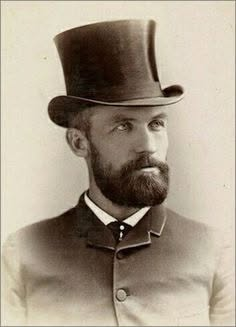
In 1889, in accordance with the accepted custom, by which the most gifted young Selleys were sent to study, one of old Alois’s grandsons — Kurt — was despatched to study medicine at the famous University of Vienna.
A little earlier the University of Berlin had also been considered, for the name of the famous anatomist, Professor Heinrich von Waldeyer, was known in the Ogrody, and Alois Selley had known him from years back, but it so happened that at the very same time the Firm was applying for the title of “Purveyor to the Imperial and Royal Court” in Vienna, so in the end the Council decided otherwise.
Such a title — had it been obtained — would have significantly raised the Firm’s international prestige. All the more so since, in Vienna, the Selleys, as subjects of the German Emperor, were foreigners. Foreigners, but not unknown, for it was the Selley Ogrody that, a few years earlier, had supplied all the floral decoration for the wedding of Archduke Rudolf and Stephanie of Belgium.
In such a state of affairs, the Family decided that sending Kurt to Vienna would mark good contacts with the Empire.
And besides, much more was bound up with his stay in Vienna than merely the opportunity to educate a family doctor.
For there was something in Kurt that no words can describe. There was simply no person who did not like him. From the first meeting. He had a fantastic ability to win people over. And on top of all that, he had something that, in the capital of the Empire, opened many doors, namely… a splendid appearance, and that in many situations meant much more than titles, connections or even money.
Whatever one may say, the departure for medical studies agreed with Kurt’s vocation, for he had wanted to become a doctor for as long as he could remember.
From his early years he was drawn to questions of what makes blood circulate in the veins, how the heart, the liver, the kidneys work… He wanted to know what the internal organs of man look like. All this was a passion for him, which he tried to satisfy by going to the great slaughterhouses and watching animals being dressed.
Work there went on without pause, for the army was waiting for deliveries. In the spacious, bright halls, butchers in bloodied aprons and with sleeves rolled high cut with razor-sharp knives at the slaughtered hogs, bullocks, cows and sheep hanging on hooks.
Kurt went as close as he was allowed. Although he was then a small boy, he was not afraid. Quite the contrary. He asked the butchers about particular organs, asked to be shown them at close quarters, and touched them with interest.
Great animal hearts, stomachs, intestines and whatever else there was interested him enormously. The butchers explained things to him sometimes, but usually they did not have much time, for production brooked no delay. Wachtmeister Vogel of Poznań was waiting with his wagons in the yard.
Such interests did not escape the notice of others, and even then it was whispered that Kurt should become a veterinary surgeon. And veterinary surgeons were always in short supply in the Ogrody. Thousands of animals required constant supervision and care. The Firm could not allow any disease and, in consequence, any infection of the meat supplied to the Army. The fear was increased by the epidemic of trichinosis then spreading.
But Kurt did not want to treat cattle and pigs. He only tried to learn the internal structure of organisms. In reality he wanted to treat people!
To prove it, he began to assist one of the family doctors — old Hermann — who was nearing the end of his days, was tormented by sciatica, very often dozed off, and in fact did very little any more. The Ogrody were not left without care, for besides Hermann there were three other doctors, but the whole Colony already numbered, together with servants and hired workers, almost a thousand people, so two doctors were not always enough.
It was decided, then, that Kurt would help him, assist him and learn.
Midwives always dealt with births and the first care of infants, but the whole burden of medical care for everyone else rested on the doctors’ shoulders.
And so, from assisting Doctor Hermann, Kurt’s medical education began, which was to have unexpected consequences for the Family.
Already in his first year of study he came into contact with Karl Landsteiner, who was conducting detailed research on blood. That field — in the scientific sense — was then in its complete infancy, and Landsteiner was feeling his way in the dark.
Kurt assisted him with great attention, and even took part in writing a few papers, but even then he decided to set up his own laboratory.
Nobody then had the faintest idea about blood groups, antigens and the possibilities of transfusion. All that was still to come. Among others, thanks to Landsteiner. Nevertheless Kurt Selley was an attentive student, and from his Viennese studies he brought back a quite new outlook on many matters. Mainly concerning the Family.
After five years, his stay in Vienna, also in terms of the family’s interests, turned out to be a great success, which very quickly translated into a flood of orders. Lucrative orders.
In connection with them, the Family Council decided to change the profile of production, and to provide Kurt with a real laboratory, equipped with the best apparatus that could be found.
In a short time they came to terms with the Swiss firm Fritz Hoffmann of Basel, and not long afterwards a transport of crates bedded in wood shavings arrived in the Ogrody, from which a whole, complete laboratory was unloaded. All the necessary apparatus, vessels, microscopes, furnaces and a great many other instruments.
Kurt’s father was August Selley, the youngest son of Alois. In the Ogrody he managed the bookkeeping department. A man of few words, in a frock coat buttoned up to his very chin, he spent whole days in the office, keeping the trading books, keeping an eye on the dozen or so clerks under him, and controlling the Firm’s finances.
His out-of-hours passion was the history of the family. It is hard, indeed, to say that it was only a passion, for the work of historian and chronicler of the Family was a distinct function, to which he had been obliged by the Family Council.
August, however, performed it with such enthusiasm that it became his best recreation.
Keeping the chronicle, drawing great trees of family connections, collecting documents and so on, absorbed him to such an extent that sometimes he entrusted the main work in the office to his deputy, and devoted himself to his favourite occupation. He looked through documents, noted something down, compared and wrote.
His work was made easier by the fact that among the Selleys nothing was ever thrown away or destroyed. All documents, certificates, deeds, contracts and so on were carefully preserved.
In consequence, the great books full of notes, descriptions, photographs and great sheets with family trees were rarely in use. The fruit of this Benedictine chronicling work of August’s lay covered in dust, waiting for someone who would give it a researcher’s attention.
After Kurt’s arrival from Vienna, his father’s office, full of family documents, was the second place to which he turned.
The first, by contrast, was the Family Council, at which those gathered listened to his detailed report on his whole five-year stay in Vienna.
It was as a result of that account that extremely important economic decisions were taken and the purchase of the laboratory was decided upon.
Speaking before the Council, Kurt told of the research conducted in Vienna by Karl Landsteiner, of their joint, and at a later time separate, work on analyses of the structure of blood, immunity and many other medical questions.
“I want to say,” he continued, “that the research I began has gone, and is going, down a somewhat different road than the one represented by Doctor Landsteiner. I think, too, that mine is more advanced…”
Here he broke off, as if a little embarrassed, waiting for the Council’s reaction.
The Selleys listened in silence.
“The purpose of my research was to find the answer to the question of our Family’s health…” he began very cautiously and as if with reserve.
“Even before I left for Vienna,” he said, “observing the work in our slaughterhouses, and afterwards helping Doctor Hermann, I noticed that in our family even the smallest cuts heal very slowly.”
To illustrate, he cited the accident of Hugo.
Hugo was one of the Firm’s best butchers. Two years earlier, while dressing a cow’s carcass, his knife had slipped and deeply cut his arm. So deeply that blood spurted in a bright stream, like water poured from a well.
The wounded man was taken to the family hospital, washed and dressed, but the bandages could not hold back the blood that kept flowing. Every available means was tried. The arm was bound tightly, the wound stitched, protected with ointments, and they waited. The patient was calm, but after some time it was noticed that the bandages were again soaking with blood, the wound was coming apart at the seam, and, most importantly, was rapidly darkening.
A second doctor was sent for, and after a brief consultation it was decided to amputate, which fortunately did not happen, for Doctor Hermann applied what he called the “Selley remedy”, which finally made the blood clot. To Kurt’s question why this miraculous specific had not been applied earlier, the doctor replied that it was used only in very exceptional, drastic cases. Why — he did not say.
Almost at the same time as Hugo, another butcher was also injured, a Pole from Neutomischel, whose severe cut sustained while slaughtering a pig healed, however, without any problems. In a few days. Without a trace.
“We know that is not all,” Kurt said. “In an enterprise like our ‘Ogrody’, accidents can always happen, and they do happen. And there is always the same problem. Wounds heal extraordinarily slowly.”
“There is also — as we all know well — the problem of our women’s monthly ailments… of childbirths… We all know what happens at the birth of children…”
“Our blood clots slowly… Very slowly…”
And the Selleys listened in silence.
After a longer silence, ninety-five-year-old Alois Selley, who at that time, that is in 1895, still headed the Family, took the floor.
“Everything we have heard here from our Kurt,” he said slowly, fondly stroking his beard, “is known to us.”
“We know what we are like and what threatens us. This matter has gone on for as long as I can remember, and certainly since we came here.”
“We have known of this infirmity of ours from the beginning, but whereas earlier, in spite of attempts, we could not cope with it, now I see that we did not send you, my boy, to study for nothing.”
“Who knows, perhaps thanks to you a medicine will be found that will heal the Family. We see that it is getting worse and more threatening, but we do not know why. What we have at present is only supposition. So set up your laboratory, investigate and search. You shall have whatever help you need.”
“But remember! Remember this well! There is one condition that must be kept:
“Do not change us, for the moment changes are introduced, we shall cease to exist!”
And all the Selleys knew well what changes he was speaking of.
Kurt left his grandfather Alois’s office with a heavy heart.
The other participants in the Family Council stayed on to discuss current economic, financial and family matters, but Kurt was no longer asked to join them. Besides, he did not feel well.
The obligation to unravel the mystery of the strange family illness rested upon him like a heavy burden, which — he knew well — was to remain with him for an unknown length of time.
And besides, the return to his native Ogrody was sad for him, depressing, not to say dejected.
He was leaving behind a wonderful Viennese time! Five years spent among interesting people, years of absorbing study, broken by a lively social life, balls, meetings, hunting trips and everything that life in a truly European capital brought with it, had changed him enormously.
Now he was returning to the family nest, which, although prosperous, familiar and homely, was nevertheless frighteningly different from that world!
The famous “Selley” separateness he now perceived as some infirmity that fettered life.
He remembered that other cousins, who like him had been sent to study, also returned changed. Almost always, however, they came to terms with returning home. They shut the door on their university experiences and became Selleys again.
Yes, it is true that sometimes, particularly in male company, over a mug of beer, they recalled past triumphs and experiences, but those were only moments. They always returned to the thought that Family is above all.
“Family makes life easier,” they said, “it gives property, security, safety… In the Family you need not worry about anything. You can calmly bring up children, who have their future assured. Assured! Do you understand?”
“What more do you need?” they added.
And in saying this, they had in mind first and foremost the Family, and only secondly their own families, which they founded in the shadow of that Great, Most Important and Dearest one.
This family “magnet” had a strange power that nobody undertook to explain.
It happened that some left for the family colonies in Argentina, Africa or Australia, but almost always they returned, and even when some of them decided to stay, they still stayed in the colony there, which was, after all, an inseparable part of the great Selley Family. Always within the Family, which everywhere had the same power of attraction.
It looked as though they were all “infected” by it!
Kurt left his grandfather Alois’s office and stood on the veranda. From somewhere in the distance came the lowing of cattle, farm calls and the distant sound of machines.
He was surrounded by familiar buildings, trees… The great windmill standing on the hill slowly turned its sails — as in the days of his childhood. The limes around the house rustled just as they had then, and among the old roses climbing the walls, swarms of bees and bumblebees busied themselves.
“There is something we fear,” it hammered in his head, “surely we must fear something, for otherwise we would live like others, like everyone…”
“Can this whole family world be bound up with some mysterious fear of encountering the challenges of the world?” he thought with regret, reluctance and, as it were, reproach that he himself was part of this Family.
“Who knows the answer? Perhaps nobody! Perhaps we all live as our ancestors decided, who for some mysterious reasons adopted this strange style?”
Again the Viennese times came back to him, and his thoughts turned to the research he had conducted, the conversations with Doctor Landsteiner and his enquiries into the different kinds of blood and its different systems. It was from him that he had heard of blood groups, which have an influence on so many things.
In this turmoil of emotions, thoughts and enquiries, he decided to visit his father.
He had a premonition that he must seek the sources of the family’s haemophilia, and, more importantly, the ways of curing it, in the past, but at the same time, far away in the recesses of his heart or mind, there wandered a vague thought, or perhaps a suspicion, that in this whole story something incomparably more important and more threatening was at stake than that hereditary infirmity. Something that froze the marrow in his bones and gripped his throat!
The office of August Selley, Kurt’s father, was piled high with papers, books and bookkeeping statements, but there was also a large cupboard in it, in which August kept the family chronicles.
His tireless work as a seeker was contained in many volumes of the painstakingly written history of the Selleys. In his research, August tried to reach back to the very beginnings of the Line. He collected all documents, copied, sealed, sorted and filed them in specially prepared albums.
At the moment when Kurt entered his father’s office, his father was not yet there. The council was still going on, and August, as chief bookkeeper, or perhaps rather financial director of the Ogrody, had to take part in it.
Earlier he had listened to his son’s discourse, but as usual he had sat in silence.
When August returned to his office, he found Kurt looking through the large sheets with genealogical trees that he had taken out of the cupboard.
He sat down in an armchair, looked for a moment, and slowly, weighing each sentence in his own way, began to speak:
“You see, my son, what you spoke of at the Council is important and necessary, but in your place I would be careful. My father is, as you know, already an old man, and it is certain that my sister Johanna will take his place.”
“You have not been with us for a long time, so how should you know…” he went on. “I know that Johanna favours your plans, for, like me, she knows well that we need fresh blood, but you see for yourself that as long as Father lives, nothing can be changed. Besides, he has many supporters in the Family…”
“But there is something far, far more important,” he paused. “Look at our family.”
At that moment August pointed to the sheets spread out on the table and to the cupboard with the neatly arranged volumes of family history.
“See how it has worked out over the generations. Look, read, and then we shall return to our conversation.”
He broke off for a moment. Kurt listened to him in astonishment, for he did not remember his father ever having spoken at such length. Usually it was hard to get one or two sentences out of him. It was plain that this time he was truly moved.
“And now, my son, tell me something more about Vienna,” he suddenly changed the subject.
“About Vienna?” Kurt wiped his forehead with the back of his hand.
Yes, he had much to tell, but about the most important thing, which took the form of the lovely Lilly Capri von Meracy, he decided for the time being to say nothing.
So he began to tell of balls, social life, the newly appointed prime minister of the Austrian government, the Pole Kazimierz Badeni, of a trip to a great exhibition of economic achievements in Lwów, and of many other, less important matters.
Of his research he said nothing, for he did not want to weary his father with things that might not interest him.
But it looked as though his father expected precisely that. He asked one or two questions, Kurt answered, at first in general terms, but with time in more detail, and at last, as if heedless of the fact that his father was not a doctor at all, he moved on to scientific language, full of specific, professional terms.
And his father asked questions, added something, and at a certain moment Kurt noticed in astonishment that he was dealing with someone who was “at home” in the subject.
He looked at him in surprise.
“But, Father! How on earth does Father know medical terminology so well?” he exclaimed.
“I read, my son, I read. For many years I have been trying to solve this ‘curse’ of ours.”
And as he said this, he smiled palely, as if in pain.
They broke off.
They returned to the conversation only a few weeks later. Kurt had by then read the chronicles, analysed the genealogical trees and his father’s notes.
In the meantime he had taken blood from several dozen Selleys and a dozen or so hired workers, and had begun work in his freshly equipped laboratory.
It was already the end of October, and the golden autumn was casting its last smiles upon the world. The Indian summer stretched in long bands, and the days were growing shorter and shorter. Kurt had already shaken off his post-arrival sadness and melancholy, although almost every day he sent letters to Vienna, to Lilly Capri von Meracy, who replied just as often.
There are those who say that “out of sight, out of mind”, but for the time being both Kurt and Lilly seemed to deny it.
Once more they sat with his father in the office. This time they knew that everything had to be said.
Kurt began. His father supplemented his discourse, added something, and, as a true expert on history, corrected what Kurt had not read in the documents.
And matters stood thus:
It looked as though the Selleys could not have children with outside women, and Selley women could not become pregnant by outside men. Selleys — women as well as men — could be fertile only with someone from the family, that is, with someone who possessed the same blood, or, in other words, the same kind of blood…
Whether it was only a matter of blood, Kurt did not know, but — as he supposed — it was precisely blood that could be one of the main causes.
At this point his father interrupted him.
“Remember, my boy, that it just so happens that you are dealing with the question of haemophilia, and so, quite unintentionally, you may be guided by something which, in the case of fertility, may be of third-rate importance.”
“I have taken that into account, Father,” Kurt replied, “I put forward the thesis about blood simply for lack of others, but we must start from something. Besides, it seems to me that Father, too, is inclined to put the matter in this way…”
August Selley was silent.
“Let us go on,” Kurt resumed his interrupted discourse, “comparing the fertility of over a hundred couples who, over almost two hundred years, married within our family, it follows that the closer the kinship, the greater the probability of having a child.”
“That is not all. Further observations, which may not be free of errors, for they require long research, point to a few strange, quite inexplicable regularities.”
August shrank a little in his armchair, like someone expecting a blow.
“These regularities,” Kurt said, “occur in almost all Selley families, and therefore it is hard to regard them as coincidences.”
“What regularities?”
“The first is that the sex of the child depends on the age of the mother. Yes, as I said, I may be mistaken, for this requires longer study…”
“I have made such compilations,” his father interrupted. He spoke quietly and looked tired.
Kurt looked at him, but did not take up the thread, for he suddenly saw that his father’s face was covered with beads of sweat. He bent over him and took his hand to feel his pulse, but the hand was deathly cold.
“Father, Father! Father must lie down at once. I must examine Father. Please!”
But something strange was happening to August Selley. His body twisted to the left, his arm hung limp, and his mouth twisted into a ghastly half-smile. Immediately afterwards he fell to the floor, dragging with him the whole pile of papers and notes that lay on the table.
Kurt rushed to help, to hold him up and lay him so that his father could breathe, but he himself could do little. He called for the servants, but by the time his medical bag had been brought and he could at last bleed the patient, the case was almost hopeless, for August Selley was no longer conscious, his eyes had sunk deep into his skull, saliva trickled from his half-open mouth, and irregular tremors ran over his whole right side. Spasms flew across his face.
After a while it all ceased. The patient lay in a twisted position, which, in spite of all efforts, could not be changed.
Kurt looked on in horror.
Only a few moments before they had been talking, exchanging views and observations; he had wanted to tell his father about Lilly, and now… now a cruel paralysis had deprived them of any contact. With effort, and with the help of his brothers who had arrived, he was carried to the bedroom.
Almost at once Johanna appeared, who even then was very actively standing in for Alois as Head of the Family. With her came August’s office deputy, Jürgen Selley. It was clear that in such a situation he would take over the financial management of the Firm.
Such a change had to be sanctioned by the Council, but already now Johanna ordered him to secure all papers and books in the patient’s possession.
Then a small clash occurred, for Kurt would not allow any interference with the family archive. Any office documents — if such were to be found in August’s private office — were to be handed over, but the family documents and chronicles were decided to be left where they were. In the end the patient was still alive, and although the hope of his recovery was slight, it was hard to dispose of his property as if he were already dead.
Kurt was shaking as if with fever. So many matters! The return from Vienna, the Family Council, the laboratory, haemophilia, the unfinished conversation with his father, and now his paralysis… And yet he had his own plans, visions of medical research, new ideas…
He sat by his father and looked on sadly.
Five years of medical study, and the first real examination of his life proved beyond his strength. He could not help! He could not even relieve him! There was no cure for apoplexy. Rather pointlessly, and without hope, he ordered his father to be rubbed with dissolved badger fat, but could that have helped at all?
Of returning to the family compilations, genetic and statistical searches, and all that “Selley curse”, he could not even think. Everyday life had painfully brought him back to reality.
“There is no point in grubbing about in that musty past, full of insinuations, prejudices and secrets,” he thought.
“You have to grapple with the present and move forward. First Father, then the laboratory, then… perhaps Lilly, and at the end, if there is time and opportunity, the solving of old riddles.”
So he decided.
Days and weeks passed, and August Selley was still alive. There was no contact with him at all, but slowly, slowly they managed to feed him. He could not eat much, but what he ate somehow kept him alive. Day and night nurses were at his bedside.
The new year of 1896 brought even worse events, for old Alois, August’s father and Head of the Line, also fell ill and withdrew completely from his duties. The rule of Johanna Selley began, which was to last a long, long time…
Kurt worked in the laboratory, treated the inhabitants of the Ogrody, wrote letters to fellow doctors who worked on blood research, and consulted them about his results.
He corresponded with Professor Sven Hedin of Uppsala, Edmund Biernacki of Silesia, of course his old Viennese acquaintance Doctor Karl Landsteiner, and also Josef Arneth of Heidelberg, and in all cases received many valuable instructions and remarks.
He was not alone! He was certainly not alone!

But the run of bad luck did not end there. In February 1896 a letter came to the Ogrody from Africa, posted in Bloemfontein in the Orange Free State, where more than thirty years earlier Karol Selley, son of Stefan, Alois’s brother, had founded a family colony.
His brother had left for America then, and three cousins, sons of Alois, had also emigrated from the Ogrody and founded family “branches” on foreign continents.
News flowing from those distant countries reached the Ogrody slowly, but fairly regularly. Besides, they tried to visit one another.
This time, the letter from Africa brought dramatic news.
The letter, written four months earlier, was unlike Karol Selley as he was.
In the Family he was known for his enormous enthusiasm and courage. It was precisely that almost legendary courage of his that was the main reason he had been sent to such a distant country. Now, by contrast, fear and uncertainty shone through the pages of his letter.
He had left the Ogrody for Africa back in 1864, immediately after the family’s decision to establish colonies abroad. With Karol had also travelled his two sisters — Adela and Erika — and several nearer and more distant cousins. Together, a dozen or so people.
They had then carried with them letters to Jacobus Venter, a prominent leader of the newly founded republic of Orange. Stefan — Karol’s father — had known Venter since the old days in Bohemia.
Thanks to these letters, and naturally thanks to the money they had brought, the modest group of newcomers fairly quickly bought a sizeable farm, began to set up a livestock enterprise, and fairly quickly things began to develop in a good direction.
So good and favourable that twenty years later, Gärten-Modder, as the newly founded Colony was called, could be regarded as prosperous. In any case it maintained a sizeable group of the family and several dozen hired workers.
In the letter, which in early spring 1896 arrived in the Ogrody and was read out at the Family Council, Karol described the extremely difficult and dangerous conditions in which his Colony had found itself after the discovery of deposits of gold and diamonds in the Orange Free State and the Transvaal.
Enormous numbers of newcomers from Europe, seized by a mindless lust for enrichment, went straight from the ships to the diamond fields on the edge of the Kalahari and tried their luck.
The well-run Colony was an extremely tempting morsel for those ragamuffins, starvelings and predatory rogues who, living anywhere and digging anywhere, were all the time looking for food and any kind of plunder.
Together with that sick and mad gold fever, English detachments of Cecil Rhodes’s British trading company came marching to conquer the country. The descendants of the old Dutch settlers, who had farmed in the Orange Free State for decades, managed to defend themselves and push England back, but it was already clear to everyone that the next attack would end in defeat. They were too weak.
Karol wrote that the English regarded them — the Selleys — as Boers, and in the event of war he expected no mercy from them. War, however, seemed unavoidable, for English warships were already putting in at the Cape Colony, bringing masses of troops.
“After consideration,” Karol wrote in the letter, “we have decided to send most of the women and children to the Ogrody, and we ourselves shall try to move our business to the German colony on the Atlantic. I have already made contacts in Lüderitz, and I have strong hopes that there, in a friendly country, under the protection of the Germans, we shall be free of plunderers, of all riff-raff, and above all of English soldiers, who would certainly make no ceremony with us.”
“So I earnestly ask you, take care of our women, and once we let you know that we have settled in the new place, send them back.”
The letter ended with the information that the group would be despatched by rail from Pretoria to Mozambique, from where it would sail by steamer from Delagoa Bay to Hamburg.
“So receive them,” Karol begged, “and surround them with tender care. I ask you this, in the name of our family love!”
Johanna read the letter and looked round at those gathered. Nobody said anything.
“Kurt will go to Hamburg,” she said in a calm voice. “Send for Benno, lodgings must be prepared for our guests.”
Kurt was not at the Council, for he was working in the laboratory, but when he learned that he was to go to Hamburg, he protested warmly.
“Father is ill,” he explained to Johanna, “the research has begun… How can I go? Please send someone else!”
But Johanna did not change her mind.
“A doctor must go there. We do not know what state they are in, how many of them there are, whether they are bringing some disease from that Africa… You must go.”
And Kurt went, for so it was in the Ogrody that the Head of the Family had the last word.
The train journey to Berlin, and then to Hamburg, went quite comfortably. Kurt’s head was full of thoughts of his father. August Selley was still unconscious all the time. He swallowed with great effort, but he ate and somehow kept himself alive. There was no contact.
“And he is only sixty-two years old!” he thought sadly. “What is that?! He could still have done so much!”
His thoughts also returned to the lovely Lilly, to his work, and to all the family matters that seemed to him at one moment strange, at another of no importance, and at yet another threatening.
In this state of affairs he arrived in Hamburg. According to information obtained from the agent, the passenger ship from Africa was to reach the Hamburg port in the coming days. He had to wait.
So he went to the hotel, and there, already on the first evening, strange thoughts connected with the expected group of women, who were returning from a distant country ablaze with war to their mother house, took hold of him.
And suddenly, quite unexpectedly, he began to be afraid. For it seemed to him that these women, unknown to him, who had left the Ogrody before he was born and whom he had never seen, were bringing something terrible with them…
Kurt sat as if on pins. Almost every day new information bombarded him. The point was that the city was still living through the cholera epidemic it had suffered four years earlier, during which more than eight thousand people had died.
Now, in the spring of 1896, things were relatively calm, but some sanitary regulations had not yet been revoked. One of them was said to be the quarantine of ships that put in at the Hamburg port.
Kurt, leaving the Ogrody, had had no idea of this, but now, in Hamburg, waiting for the arrival of the ship, everything was beginning to get complicated.
He visited the main Eppendorf hospital and talked to the doctors, but none of them could give him any constructive information. They talked a great deal about the ordeal of the epidemic, about Professor Koch’s research, and about the modernisation of the city’s water intakes, which, “thanks” to the epidemic, had at last been completed. All this was fresh and painful in their memory.
Whether the ship from Africa would be subjected to quarantine, they did not know. That was for the harbourmaster’s office to decide.
The great steamer belonging to the German East Africa Woermann Company, sailing from the port of Delagoa in Mozambique, reached the port of Hamburg only ten days after Kurt’s arrival. Only at the last moment was it decided that, since the ship had not called at any infected ports, it could be exempted from quarantine.
In the crowd of those waiting, news of events in the Orange Free State mingled with panicky rumours that the English might also attack Deutsch Süd-West Afrika, that is, the German colony where thousands of Germans lived. Many of those waiting had relatives among them.
Kurt listened to all this with mixed feelings. After all, it was precisely there — to German South-West Africa — that Karol Selley was to move the family business from the threatened Orange Free State! Precisely there! And he considered it a safe country. Now, in the jumble of information, different voices and remarks, Kurt himself did not know what to think of it.
For the moment he worried about how he would spot and recognise his guests. He consoled himself that a Selley, of all people, he would surely recognise at the ends of the earth, but truth to tell, he knew nobody from the arriving group.
A few of his cousins from the Orange Free State had at one time visited the Ogrody, but that was during his stay in Vienna, so there had been no opportunity to get to know one another.
All his fears, however, proved needless, for almost at once he noticed the lofty figure of a woman whose stature rose above the crowd of arrivals.
Aunt Erika Selley was already in the autumn of her days, but she held herself exceptionally straight, and walked decisively and confidently. Her sister, Adela, no longer had that presence, but she had, in its place, an enormous amount of femininity.
With them came a dozen or so children and grandchildren. Their luggage consisted of huge bundles and suitcases, for which a dozen or so porters were hired. For the first night they all settled in the hotel. They were to set off by rail for the Ogrody only in a few days’ time.
Even before leaving the ship they had been informed that they must remain in the town for a few days and undergo examinations. Kurt undertook to the authorities that he would take care of the arrivals. He presented his medical diploma and signed an official document stating that he would carry out the examinations. In this way the whole group did not have to report to the hospital.
All this was a leftover from the cholera epidemic of 1892, and the usual bureaucratic action of the authorities, who were being overcautious.
The arriving Selleys looked tired. They were all very taciturn.
Kurt tried to talk, but his cousins, and all the more their little children, were rather dazed by the city, the traffic, the people, and the change in general. Small wonder. They had behind them an almost four-week journey, first from the Orange Free State to Pretoria, then by rail to Lourenço Marques on Delagoa Bay, then by ship to Cape Town, and finally the long way along the African coast to Europe.
The ship replenished its water supplies, but at Matadi in the Congo, as at Monrovia in Liberia, it did not enter the ports, but lay at anchor in the roads. The passengers therefore had to content themselves with walks on deck.
Although the ship’s owner, the Woermann company, advertised its services as almost luxurious, it must be said that the comfort offered was not sufficient for such a long and exhausting voyage.
In Hamburg, Kurt organised a “field” consulting room in his hotel room, and asked each person in turn to come for an examination. In accordance with the requirements, he opened a separate health card for each person, which he was obliged to sign and stamp and to produce on demand by the authorities.
The first person examined was, of course, the leader of the group — Aunt Erika.
As Kurt had expected, all the guests did indeed have the Selley type of beauty, but what struck him was that they were extraordinarily alike. Examining them, he caught himself making mistakes in identifying them. They also bore strangely similar names. Erika’s children — Artur, Arnold, Armin, Arnulf, and so on, and Adela’s children — Derek, Dieter, Dieterich, Delbert, and the like.
Aunt Erika sat upright and tried to be pleasant.
“Kurt, Kurt! Yes, yes — August’s son! Why, you are my nephew! So you say you are a doctor! Just look at that, look! Very well, very well — examine me, but I tell you, I am as healthy as a hippopotamus; only this infernal journey has tired me out!”
“Yes, Auntie, I am a doctor…”
Afterwards the examination was rather cursory, but only cursory, for Aunt Erika did not undo even one button of her high-buttoned dress. Kurt hinted that he ought to examine her more thoroughly, at which he heard that he should behave properly!
“Please, Auntie,” Kurt was truly upset, “I am a doctor! I must examine you, Auntie, and all the others, because, first, such are the requirements of the authorities, and second, because I have orders to that effect from Aunt Johanna, who sent me here.”
“What do you say, my boy?! It is Johanna who decides in the Ogrody?! And what is happening with Uncle Alois? Is he dead?”
“But he is alive, alive, only he is already ninety-five years old and does not feel too well. Aunt Johanna now runs our Ogrody.”
It was hard to say whether this news pleased Erika or worried her, but it looked as though there would be nothing more of the thorough examinations, so Kurt set about signing the medical form certifying his aunt’s health. For the sake of order, he ran his eyes over all the sections. One, unfilled, caught his attention.
“I understand, Auntie,” he raised his eyes from the papers, “that your husband stayed with Uncle Karol in the Orange Free State, is that right?”
A shadow passed over Erika’s stern face, which might have been anger or impatience, or perhaps only a certain surprise.
“Yes…”
“And what is your husband’s name? I must write it in…”
“My husband? The father of our children?”
“Yes, that’s right…”
“Karol…”
“And the surname?”
“Why, Selley, of course! What, boy — do you not know your own family?”
Kurt did not answer. A terrible foreboding gripped him painfully, but he asked no further question. He signed the form and thanked his aunt.
Erika Selley went out energetically, rustling her long skirt.
Kurt passed his hands over his face.
“Can it be possible? Can it be possible?” he whispered to himself.
Suddenly, before his eyes there stood the lovely Lilly Capri von Meracy, and he felt a painful tightening of his heart.
“How could I bring this girl into such (!) a family?” he thought with enormous regret.
He still hoped he was mistaken! He still hoped that perhaps there was another Karol Selley, who was not the brother of Erika and Adela… He still had such a hope.
But that hope burst like a soap bubble!
During the examination of the second aunt — Adela — when, as in Erika’s case, he asked about her husband, he heard the same answer, to his horror!
The blood froze in his veins!
They left Hamburg by a very comfortable and fast train of the Prussian State Railways, which was called the D-Zug. It was quite an attraction, and the arriving young people and children, who had already rested after the long voyage, looked out of the windows with curiosity.
Aunt Erika sat stiffly and formally, but Adela, immediately after leaving Hamburg station, set about preparing food, and a pleasant, almost holiday atmosphere reigned throughout the carriage. There were peals of laughter, loud admiration of the passing landscapes, villages and small towns, and above all rather greedy eating.
Small wonder, for the young Selleys were thoroughly bored and worn out by the ship’s cooking, and besides, everything around them, including the unfamiliar food, was entirely new to them, a world they did not know at all!
Although the train had two very tastefully fitted restaurant cars, Kurt preferred to provision himself from the excellent hotel kitchen, and just before departure commissioned it to prepare food for the journey.
They were therefore abundantly supplied with baskets of the most varied provisions, among which were excellent eels, fried flounders, cold partridges, and also, or perhaps above all, various cakes with cherries and peaches and whipped cream. Nor was there any lack of very tasty bread baked in the hotel kitchen.
All this surpassed the railway restaurant’s menu in quality and taste. Besides, eating in the carriage allowed greater freedom, and for the young people it was far pleasanter than submitting to a certain formality in the restaurant.
But Kurt did not eat. He could not have swallowed a single morsel!
He sat as if dazed.
“Yes, yes,” he thought with effort, “there were those constant marriages within the family! With cousins, male and female, with aunts, and who knows who with whom, but never, after all, between brother and sister!”
What had happened in Karol’s family was absolutely unthinkable! Unimaginable! Unforgivable!
He was a doctor, he knew what the Selleys were like, he had after all tracked down their haemophilic infirmity, he was on the trail of various strange regularities in inheritance, but never, never had he supposed it would come to such a thing!!! A brother with two sisters?!
And could there be any explanation? Could there? How can one explain incest at all! And bigamy on top of it! After all, irrespective of the legal punishability of such unions, the atmosphere of such a family must have been frighteningly dangerous, if only from the moral point of view! So many children! Grandchildren! Surely they must have seen, must have known…
He was convinced that, if asked, he would hear some muddled explanations about isolation, about a distant, almost wild, inhospitable country, about the need to enlarge the colony, and also about the Selley saying “the closer, the more fertile” — but could any of that be an explanation at all?
And thinking thus, he did not know, for he could not know, that what he had now encountered was only the beginning.
Chapter 2
Immediately after arriving at the Ogrody, Kurt hurried to see his father, but there was no change in his state of health. August Selley still lay helpless, and it looked as though he had not long left, for he had grown very thin and his face had yellowed like wax.
His father — old Alois — was himself already infirm, and spent whole days sitting on the great veranda of the house, sipping water and muttering something to himself.
At home a few letters from Lilly from Vienna were waiting for Kurt. Usually he pounced on them, burning with impatience, but now he could not even bring himself to slit open the envelopes.
He put them aside on the desk for the time being. All the time he could not shake off some undefined sense of guilt. Guilt for the whole Family, which was so different from others.
While in Vienna he had not thought about it. The Ogrody were far away, and amid his studies, research, meetings and lively life there had been no time to split hairs, but now, especially after the terrible discovery of the incest, he felt that all the Selleys were unclean. All of them!
And it made no difference at all that those “African” Selleys were then far away, in a land forgotten by God and men! What difference could that possibly make? Does distance soften guilt?
With all his heart he wanted to talk about all of this with his father, for he was sure that he above all could explain much to him, elucidate and tell him, but that was now impossible, for his father lay without strength or spirit, and everything indicated that it would remain so until the end.
Kurt sat down heavily in the armchair. Again an avalanche of thoughts struck him.
“Perhaps none of it is true,” he tormented himself like a damned soul, “perhaps I imagined it all and blew it up out of proportion? After all, so far, I know nothing. Only what the two aunts said. That is all. Nothing besides that. And what did they say? Only a name. The name of their supposed husband, or perhaps husbands. And was that Karol really their brother? After all, there are many Karols. Among the Selleys too. Or perhaps I misunderstood, and it was all born in my head, charged with thoughts of family isolation and close, or perhaps very close, relationships?”
His head was buzzing, and he felt that all this confusion would drive him mad. His head was burning, he felt shattered and almost ill.
So he decided for the time being to leave everything to take its course.
“What is, is,” he thought, trying to calm his disordered thoughts, “I have no influence over it. In time much will become clear. Certainly.”
He also hoped that he would find some explanations in his father’s archive, in the Family chronicle and in the great sheets on which, in tiny handwriting, great family trees had been drawn.
Meanwhile the newly arrived Selleys were carefully settled in the flats prepared for them, and quite quickly things settled into their usual pace. Johanna had everything planned already. The children went to school, the young people went to work, and everyone was found suitable employment, with duties and pay defined.
In accordance with the original decision taken by the Family Council, which had met after Kurt’s return from Vienna, it was decided to change the profile of the enterprise. The new contacts and contracts Kurt had made in the Austro-Hungarian Empire meant that the Selleys decided to liquidate the production of exotic plants, which, being enormously labour-intensive, required too great a commitment of workers.
The laying out of magnificent gardens was beginning to go somewhat out of fashion, and the demand for fig trees, orange trees, banana plants and all other hothouse plants was falling markedly.
In this state of affairs it was decided that the main production of the enterprise would be animal husbandry, which had from time immemorial brought great profits.
The huge hothouses, furnaces, water connections and all the infrastructure connected with them were to be dismantled, sold and disposed of. In their place Johanna Selley planned to put up additional cowsheds and slaughterhouses, together with houses for the workers and access roads.
So there was work in abundance.
Kurt spent whole days conducting his laboratory research, was on call for accidents and wherever a doctor was needed. At the same time he visited his father, and only late at night could he devote himself to going through his father’s cabinet of documents.
Letters from the beautiful Lilly kept coming, but now, as it were, less often. In one of them she mentioned that she was leaving Vienna for the family estates in Styria, but without explaining why or for how long.
A few days after Erika and Adela arrived with their families, a Family Council was held, at which both women were heard. For most of those gathered, the family of Karol Selley from the African Colony of Gärten-Modder was completely unknown, so everyone awaited the account of Erika and Adela Selley with impatience and curiosity.
At about the same time the newspapers brought dramatic news of the economic crash in America, and besides that — as it were in the same breath — electrifying news from the distant Yukon, where in the Klondike stream two local miners — Carmack and Skookum Jim — had found gold!
This news echoed widely and nervously throughout Europe, and in a sense coincided with the diamond-and-gold rush in Orania and the Transvaal.
It might have seemed that as a consequence of these sensations the whole of Europe would empty, for everyone would go off in search of gold. Some to Africa, and others to the Yukon!
Erika Selley looked older than she really was. Perhaps her upright and haughty bearing made one get that impression. And yet she was not even fifty.
She came to the Family Council together with her sister Adela, who, however, remained in the background and only silently, from time to time, confirmed with a nod of her head what Erika said.
And Erika was rather sparing with words.
“We thank you for taking us in at the Ogrody,” she said, “but I assure you that our stay will not last long. We left home at Karol’s wish, but as soon as matters settle, we shall thank you for your hospitality and leave.”
Several members of the Council asked for an account of the situation in Orania, the state of the colony’s economy, the threat from the English, and so on. Erika answered rather briefly, but it was clear that she was not telling everything. She was polite, cool, and sparing with words and opinions. Only when she spoke of the bands of gold and diamond prospectors who dug wherever they pleased without any concessions did her voice harden and her mouth twist into an angry grimace.
Questions were asked about the project of moving the whole Gärten-Modder Colony to German South-West Africa, but it was precisely these questions that Erika answered with particular reluctance, dismissing her questioners with very laconic answers.
The leader of the Ogrody — Johanna — sat in silence. Immediately after Kurt’s arrival from Hamburg with the little party of guests, she had held a long conversation with Erika and Adela, and there was no doubt that the sisters’ appearance before the Council had been agreed with her in detail.
If Erika was taciturn, the same could not be said of the young people who had come with her, who had begun attending the colonial school.
Twelve-year-old Armin led the way among his new schoolfellows. One could feel that he wanted to impress them. He told stories about life in Africa. He told them colourfully, interestingly, and most importantly he had something to tell. Perhaps he embellished something here and there, perhaps he presented something more dramatically than it was, but even so, before the eyes of the young Selleys, who had never stuck their noses out of the Ogrody, there unfolded an extraordinarily exotic, beautiful and menacing world! They listened with bated breath and gazed at Armin as if at a rainbow.

He spoke of gold, of the search for diamonds, of herds of buffalo, great hippopotamuses wallowing in the marshes of the Orange River, of tall giraffes, elephants, lions roaming the savannahs of the Transvaal, and the listening children forgot about school, lessons and the teacher, who caught them and stood behind them with a menacing expression, but after a short while also listened with curiosity to Armin’s stories and very often allowed him to finish even at the expense of the lesson.
All of this did not pass without echo. The children told the stories they had heard to their parents, the servants, their older schoolfellows, and awakened hitherto unknown desires to see the distant world.
Meanwhile the recent news of the American economic crash, and even panic, which had sent unemployment soaring and cast fear upon the European markets, began to be confirmed more and more often and more and more clearly. The Selleys’ trade agents reported from Lübeck, Antwerp, Vienna and Berlin about shrinking orders for meat and its products.
Faced with these truly panic-stricken rumours, Johanna kept her cool and decided not to interrupt the works connected with the building of new premises intended to enlarge the animal husbandry. And as it turned out, she was right, for everything calmed down after the election of the new American president, William McKinley, whose decisive measures aimed at adopting gold as the guarantor of paper money quietened the mood on the stock exchanges.
They quietened the stock exchanges, but they did not quieten the growing gold and diamond fevers, and what had begun a year before was now — in 1897 — beginning to gather dizzying momentum. Thousands of fortune-hungry adventurers bought tickets for ships and set off on the long journey.
The signs of this fever, also under the influence of Armin’s stories, and those of his brothers and cousins, began to be felt in the Ogrody too.
First there were only stories during school breaks, then conversations among the elders after supper, and still later conversations among the workers in the slaughterhouses, cowsheds, granaries, barns, kitchens, and so on. Even the soldiers who took meat away in their wagons for the Poznań regiments hinted at it. Someone, it seemed, had deserted with the intention of going to the Yukon, but the gendarmerie caught him on the way and the poor fellow was sent to a penal battalion.
Johanna saw what was afoot and was not surprised when one day a few young Selleys came with a request for permission to leave.
Both Alois and Johanna had always held the view that the Ogrody, or even the Family, were not and could not be a prison. In the past there had been some individual departures, and even marriages outside the Family, but these were exceptions which almost always ended in failure and return.
It was said, half in jest and half in earnest, that the Selleys were not suited to life outside the Family. Why this was so is hard to fathom, but it seems that the main “blame” for this state of affairs lay with the upbringing, which from the moment of conception pointed to the Family and its tradition.
In this case, however, Johanna did not want to agree. She knew of the influence of the African guests on the other children, and she knew that gold has a power which hypnotises the most sober-minded.
She told the young enthusiasts that she had to think it over, for someone had to take over their work hitherto, and that she would give her answer the next day.
That evening she met Erika for tea.
Just during Johanna’s meeting with Erika, Kurt unexpectedly arrived. His aunt’s door was always open to him. When he came in, Erika was sitting at the table and, as usual upright, drinking tea. At the sight of Kurt coming in she made an indefinite movement with her hand, as if brushing away some invisible mosquito, but at once returned to her “official” pose, with lips tightly drawn.
“I do not want to disturb you, dear aunts,” he said, a little out of breath, “but Father is getting worse. I am afraid death may come at any moment. I think it would be right for Aunt Johanna to be there. Who knows, perhaps we shall manage to make contact with him… Sometimes, in the last moments, that happens…”
“But of course, of course! Erika, I am very sorry, but we shall return to our conversation a little later, for now ‘periculum in mora’… Kurt, let us go!”
Johanna was as always sober-minded and resolute. The three of them went together.
Kurt was not mistaken. August Selley was breathing hoarsely, and it was clear that death was already standing at his bedside. His head was tilted a little to one side, but to the astonishment of those who had arrived, he was looking quite lucidly. Throughout the whole period of his illness this had never once been noticed.
Kurt knelt by the bed, so as to be as close as possible to his dying father’s lips.
Johanna, although she usually showed no feelings, held a handkerchief to her eyes. For she was losing the soul closest to her — her twin brother — with whom many years earlier she had come into the world and spent not only her childhood but practically her whole life. August had indeed gone away for a few years to study in Munich, but that was long ago, and it coincided with the time when Johanna was head over heels in love with Gustaw, with whom, however, happiness did not favour her, for her fiancé went to war and was killed in the battle with the Austrians at Sadowa.
Of course the Family wanted to buy him out of service, but in this case they met with iron resistance from Gustaw himself, who insisted that he would be a soldier. Before the battle he was already a captain.
After his death Johanna vowed to herself not to try again, and kept her heart only for herself. The closest person to her therefore remained her twin brother, and so it stayed. Even when August married and founded his own family.
Now he was dying.
Erika stood a little behind, upright all the time as if on a military parade. The sick man moved his hand, but only so far as to slide it across the quilt. Suddenly he raised it a little and with his finger pointed at the door leading to the office.
“There… there… the Family… Cursed… Let him be cursed… Bru…”
And that was the end. August Selley breathed a little more deeply, and then grew still and died. Almost at once his face lengthened and yellowed, his eyes sank deep, and his features sharpened. Death took him into her hands, which soothed and erased all cares and worries.
For August Selley there was no longer the Family, the Ogrody, the financial ledgers, the bookkeeping affairs, nor, what may be most important, the family past with all its secrets. August was already above all of that, but unfortunately he did not leave his nearest and dearest in peace! His last words were strange, incomprehensible and disturbing.
Then there was the solemn funeral, the abundant funeral feast and a few speeches, but in view of the fact that the Selleys were not religious, the ceremony took place only in the presence of an official from Poznań, who drew up the death certificate and then stayed for the funeral.
The cemetery was on the Colony’s grounds, a few kilometres from the houses, that is, as they said, half a mile away. It had been founded several dozen years before, and hornbeams and lime trees had grown up around it, which rustled over the Selleys resting here in eternal sleep. It was here that August rested, and his secrets with him.
A few days later, when after the funeral the life of the Colony had returned to its normal rhythm, Johanna summoned Kurt to her.
“What do you think, Kurt? What did it mean, what Father said just before he died?”
“I don’t know, dear Aunt. I don’t know. He was pointing at the door to the office. So it seems to me, at least. Perhaps he wanted to say that something is in the office? Perhaps in his family archive? Or perhaps in the financial ledgers? Who knows? And then that curse? And at the end he broke off. Or did he not? Truly I don’t know! It seems to me that he began to say ‘Bru’, but what could that mean?”
“Well,” Johanna answered after a moment’s thought, “it is for you to solve this riddle. Go through all of it. Do not hurry. There is always time for bad news, for I think to myself that all of this bodes nothing good.”
“Very well. That is all for now. Now we must deal with those two who are so eager to go off in search of gold. What do you think?”
Johanna asked, but it did not look as though she expected an answer. She spoke as if to herself, so Kurt sat in silence.
He also had matters of his own which he wanted to raise with Johanna, but he waited for the right moment.
Just before his father’s death he was finishing one stage of his laboratory research into blood. He had drawn up his first conclusions and sent them in a letter to his old acquaintance and research partner, Dr Karl Landsteiner in Vienna. In reply he received word that he would be welcome to come and discuss his results and Landsteiner’s own.
“For there was emerging,” Landsteiner wrote, “a quite new, revolutionary way of discovering the structure and composition of blood. It is a matter of isolating the antigens in the red blood cells and grouping them into separate groups.”
Kurt burned with the desire to go to Vienna, but he felt that, as one of the two doctors in the Colony, he ought to stay.
When he told Johanna about it, he not only received permission, but an outright order to go.
“For a few weeks,” Johanna said, “we shall manage without you, and you go, work, and who knows, perhaps you will help not only the Family but many other people!”
Kurt went, and Johanna could at last return to the matter of the two enthusiasts who wanted to go off in search of gold and waited impatiently for her consent.
She did this all the more willingly because, after deeper reflection and a long conversation with Erika, she had decided to make use of the young people’s enthusiasm and send them to Orania.
For Erika’s and Adela’s affairs were not going well.
For almost a year there had been no news at all, not even the smallest, from Karol Selley. There was no word as to whether he had moved the colony to German South-West Africa or not, what the political situation in that part of Africa looked like, and whether the English were preparing for a new war with the Boers.
Such newspapers as the Dziennik Poznański, the Posener Morgenzeitung or the Posener Tageblatt, which were regularly delivered to the Ogrody, did bring news from the world, but it was often late, and sometimes even contradictory. It was hardly surprising, for the distance and the changing political and military conditions made it difficult to form an opinion as to what the true situation was.
In any case the fact remained a fact that since the arrival of Erika and Adela with the group of children, there had not been even a shadow of information from Africa. Neither a letter, nor a telegram, nor anyone who could credibly say what was happening! Both sisters wrote letters and waited.
Erika’s earlier assurances that the whole party had come for a short time and would leave the Ogrody within a short period were becoming less and less probable.
No one was throwing them out! Far from it! They were received with the greatest cordiality, all the more so since no one sat idle. The children studied at school together with the other children living in the Ogrody, the older ones worked, learned trades and were truly useful. Above all, they were family. They were all related, and although they had not known each other until now, one could feel the common blood.
In the course of more than thirty years of the African Colony there had been a few mutual visits with the Ogrody, and it had even proved possible to arrange three marriages, but on the whole these were different worlds and diametrically different conditions of existence.
Now Erika and Adela sat as if on hot coals, and every day they watched for the postman. As the weeks and months passed they became more and more deeply convinced that something terrible must have happened, and that they would never see their loved ones again.
It is well known that there is nothing worse than uncertainty. Every piece of information, even the worst, is better than sitting passively and waiting, during which the imagination works at full speed, bloody nightmares wake one from sleep and take away the will to act, and even to live.
While Erika still held herself together reasonably calmly, Adela was a bundle of nerves, trembling, shaken, and with eyes constantly wet with tears. Both had come only with the younger children, the eldest of whom was twelve-year-old Armin. The older ones had stayed in Africa.
The two young Selleys — Willi and Franz — who had decided to leave and awaited Johanna’s “blessing” were brothers, sons of Adolf, who in turn was a fairly distant cousin of Erika and Adela. Adolf was the overseer of the builders in the Ogrody, a sizeable group of whom worked on the building and repair of buildings and farm equipment. Under his eye Willi had learned carpentry, and Franz surveying, in which he was so precise that the Family even wanted to send him to Berlin to study, but in view of the work in the Ogrody the plan was postponed.
The brothers justified their decision to leave by the wish to see the world, to learn, and so on, but that was only a smokescreen, for it was well known that they had been infected with the idea of gold, of prospecting, and finally with the desire to experience the adventures about which little Armin told so colourfully and interestingly. Of course, these wishes and dreams were callow, youthful and perhaps even not very sensible, but neither their father nor their relations could knock them out of their heads.
The boys explained, they pleaded, and it was clear that if they did not get permission they would break away into the distant world anyway.
In this state of affairs, Johanna decided to seize the opportunity and kill two birds with one stone.
A few days after Kurt’s departure for Vienna, she summoned both brothers to her and declared:
“Very well, you shall go, but not to any Yukon — to Orania, to see what is happening there with our Colony. There is gold there too, and if you want to try your luck, you may try, but your most important task is to find out what is happening with Uncle Karol’s family. I shall take the financing of this journey upon myself. You will also be suitably equipped.”
The boys listened in silence. The argument about money was tempting, for it is one thing to travel hungry, and another not to worry about what to buy the ship’s tickets, the railway journeys, and so on with.
It is true that they had planned otherwise, but having waited already quite long in uncertainty for Johanna’s decision, and wearied by their father’s constant reproaches that they were leaving him because they were idlers who thought only of foolish things and not of honest work, they dreamed of breaking away and setting off on the road.
Their youthful impatience made them unable to think of anything else, work slipped from their hands, and their heads were full of thoughts of the Klondike, Orania, gold and hippopotamuses wallowing on the banks of the Limpopo.
So they did not think over Johanna’s proposal, for after all, what was there to think about?
Kurt was travelling to Vienna to meet Dr Karl Landsteiner. He carried a whole trunk of papers, the results of his research, and even blood samples, which he kept in specially constructed containers packed with ice. He changed the ice at stations, and fortified himself with the hope that the journey would have no effect on the composition of the blood.
Landsteiner and the conversations planned with him were important, but for Kurt it was equally important to get away from Vienna for at least a few days and pay a visit to the beautiful Lilly, who, according to what she wrote in her letters, was staying with her parents in Styria, in the mountain estate of the Counts von Meracey.
He thought of her, of his feelings towards her, and thinking, he tormented himself that even if by some miracle, in the future, he were to succeed in winning her hand, what would happen if it turned out to be true that the Selleys could not have offspring with strangers?!?
What would happen? Could he at all, with a clear conscience and an open brow, seek the hand of a young lady with whom he might perhaps be unable to have children?!?
And not that he did not know, for he knows!!!
And besides knowing, above all he is a doctor, who ought to tell the truth and be honest towards everyone, let alone towards his future wife!
The landscapes outside the train windows changed after entering Austria. The change was visible not only in the stations, villages and little towns they passed, but also in the behaviour of the border officials, the sellers at the stations and the appearance of the platforms. Everything seemed somehow less rigid than in Prussia. Perhaps poorer, but also a little more cheerful. At once he felt better and more buoyant.
Nevertheless, thoughts of those family infirmities which made the Selleys so different did not leave him the whole time. For besides those regularities, that the Selleys could have offspring only by uniting within the family, there was also haemophilia! For a brief moment he felt as if better, for he remembered what a fellow researcher from Finland had said, that men do not pass on haemophilia. If that were true, then at least their children — if they were to have any — would be free of this disease.
What comfort was that, though?! Almost none!
He grew sad again, and sunk in thought, he did not even notice that the train had already begun to brake before Wien Südbahnhof.
At about the same time, the two Selley brothers — Willi and Franz — were boarding the steamer of the “Norddeutscher Lloyd” line leaving Bremen and sailing to Lüderitz in German South-West Africa. The ship had a very limited number of passenger places. Its cargo consisted mainly of railway rails. The voyage was to last more than a month, for two stops were planned on the way, in the German colonies of Togo and Cameroon.
The brothers had tickets bought through the “Dom Handlowy Neumann i Hartmann”, which was the Ogrody’s agent for the trade in meat and its products. Immediately after arriving by train from Poznań, Willi and Franz reported there, bringing letters of recommendation from Johanna. They also showed cheques for a total sum of twenty thousand marks.
Just before departure, wandering about the port, they saw many men who dreamed of getting onto various ships — mainly those sailing to America and Canada. They heard conversations, and almost every other one concerned plans to reach the gold-bearing regions of the Klondike in the Yukon. They regretted a little that they were going elsewhere, but at the “Dom Handlowy” they were told that in the Transvaal and Orania gold was more easily accessible and there was less competition than in the snows of the Canadian North.
They were also somewhat consoled, seeing the crowds waiting in the port, that it is incomparably easier to travel the world with money than without it.
Thanks to them they were treated with respect, they were given a comfortable cabin, the food was excellent, and so they breathed a sigh of relief.
In accordance with the agreement and the promise given to Johanna, Erika and Adela, they were to do everything in human power to find Karol and his family. They felt equal to accomplishing it. Although breaking away into the world had taken a different form from the one they had dreamed of, they themselves had to admit that it is better to be of service to the Family than to travel in order to indulge one’s own whims and dreams.
In the Ogrody, the circumstances of the brothers’ departure for Africa were known only to a few. Johanna wanted no publicity, and in no case a contagious fever for departures. Another matter was that there were hardly any curious people, for the Selleys concentrated on work and on their own families and only sporadically spoke up in matters that were not their own. Such was their discipline and such their custom. Nevertheless, Erika forbade Armin his stories about Africa among the schoolchildren. Why needlessly stir up feelings.
The work on enlarging the cowsheds, piggeries and slaughterhouses proceeded steadily. Great mechanical cold stores were built, production lines organising the work of making meat products, and also a power station was built, which was to supply electricity not only to the houses but also to the farm buildings. In addition, water mains were laid everywhere, water reservoirs were built, and the whole undertaking was taking on very modern shapes. After the momentary setback during the American crisis of 1896, business was going very well.
The authorities looked upon all of this with calm calculation, and burdened all the novelties, and above all the income, with painful taxes.
Jürgen Selley, who after August had become the Ogrody’s chief bookkeeper, fought in the Tax Office like a lion, but the Prussian authorities were implacable.
Again weeks passed, and there was no news from Willi and Franz. Earlier a letter had indeed arrived from Bremen, which they had sent just before sailing, and then a short telegram from Lomé in Togoland, where the ship had stopped for a longer stay, but that was all!
Erika and Adela were going out of their minds.
It was already November 1898.
A little earlier the newspapers had brought the tragic news of the murder of the Austrian emperor’s wife, the beautiful Sissi! Everyone was horrified by the senselessness of this crime!
Europe was stunned, for it turned out that this seemingly unshakeable political calm and stability was not at all as certain as was commonly assured. In Austria-Hungary demonstrations of loyalty to the Monarchy, and to Emperor Franz Joseph in particular, began to be organised. How sincere and genuine they were, it was truly hard to say.
In Prussia, the nervousness of the authorities manifested itself in tightening the iron fist against anarchism, which was called the number-one enemy of state order.
In the Ogrody this sensational news was received without particular emotion or agitation. Work went on at a great pace and was planned on so broad a scale that from time to time, at conferences of the Family Council, voices were raised that perhaps the investments were too great, and that the Firm might not withstand the financial strain. The income from the sale of live animals, processed meat, and also the sale of vegetables, was steady and solid, but all the time they remembered the fluctuation of the market in 1896, as well as earlier falls in demand which occurred every few years, and some began to fear that something similar might happen again, and then the broad investments could cause the financial collapse of the whole enterprise. There was no longer any support in the sale of exotic trees and plants, for in accordance with the adopted plan the Ogrody were moving away from that activity. The great orangeries were being dismantled, and all forces were directed to the building of new premises and industrial installations.
Jürgen Selley, the Ogrody’s chief financier, assured them that the Firm’s financial situation was healthy, but independently of these public pronouncements, he conferred with Johanna almost daily, sent couriers somewhere, and brought in unknown guests who came and inspected the progress of the works. What it was meant to signify no one knew, but neither did anyone ask, for so far everyone was well and promptly paid, and additional bonuses had even been fixed for the completion of successive stages of the works.
The Ogrody certainly enjoyed an excellent reputation in the banks, not only Prussian ones, but also English ones, and most importantly — in the Parisian House of Rothschild.
The new year of 1899 brought no good news from Karol Selley’s Colony in Orania.
Erika was at the end of her endurance. In essence she had already almost lost hope of returning to Africa.
Two years had passed since their arrival at the Ogrody! Two years of waiting. Fortunately the idea of sending two young Selleys to Orania proved a blessing, for after an initial, fairly long silence, Willy and Franz began to send fairly regular, extensive letters informing them first of their arrival at the port of destination in Lüderitz, and then of the beginning of the search for Karol’s family.
The letters took months to travel, and when they finally arrived at the Ogrody they were already far out of date, but worse, they contained nothing positive. For it turned out that after the departure of the women with the children for Europe, a sudden collapse of the Gärten-Modder Colony had followed, caused by constant attacks by bands of robbers and so-called diamond prospectors, who turned out to be ordinary bandits. The point was that diamonds had been found on the Colony’s lands.
The Selleys had nothing to do with these finds. They carried on their animal husbandry and did not engage in prospecting, but suddenly, on the outskirts of their estate, strangers appeared who, without asking the Selleys’ permission, began to dig.
The Selleys rose to defend themselves, but the bands began to kill their cattle and burn their buildings. It was then, too, that in the western part of the Colony, in the dried-up bed of the Krom Elbow Spruit stream, rich deposits of diamonds were found.
That news was like a bolt from the blue, and with the speed of a prairie fire it spread through Orania, Griqualand, the Transvaal, and even distant Natal.
In a short time the place swarmed with prospectors, who joined those who had arrived earlier and, paying no attention to the Selleys, began to organise the ground, divide up plots and dig.
The Selleys defended their property with weapons in hand, until at last, yielding to the superior forces of the organised robbers, they turned to the English authorities for help. The army arrived, but the moment it realised that the Selleys were not English, it took no decisive action which would have caused the bandits to be driven out and the rightful state of possession to be restored.
By then, as a result of the fighting so far, only a few of Karol Selley’s numerous family remained.
At this point the news sent by Franz in his letters broke off. The last letter had arrived two months before.
Erika’s and Adela’s children, on the other hand, had settled in completely, made friends, and in their speech began to lose their distinctive accent. Another matter was that they were much more physically fit than their peers, engaged in various feats of strength, and — to put it plainly — were universally liked.
Seeing this, both sisters slowly reconciled themselves to the situation and to the thought that they would not return to Orania.
They sometimes sat on the veranda looking at the fields and the setting sun, and recalled the African sunsets, the splendid nature and the warm climate. Most importantly, they recalled Karol, their cousins, the years of work on the newly built farm, the toil of daily grappling with a new, pioneering life, and perhaps above all, the unceasing pregnancies, between which there were almost no breaks.
At the time of their arrival in Africa, Erika was sixteen years old, and Adela fifteen.
They knew well, for it had been instilled in them from birth, that the condition for the Family’s survival was children! According to these precepts, the first and holiest duty of the Selleys was to have as many children as possible.
That first year in the new country, in a different climate and among other people, was enormously hard for the little party of newcomers.
A certain easing was that the party of Selleys under Karol’s leadership was well equipped. Above all, it had with it letters from Stefan — the father of Karol, Erika and Adela — addressed to the then leader of Orania, Jacobus Venter. Thanks to them they received help in settling, which amounted to the Selleys being very quickly recognised as full citizens of the young state. As a consequence, they could at once buy land for the future Colony. There is no doubt that a considerable part was played in this favourable attitude towards them by the fact that they had arrived with money.
Those times now appeared to both sisters like another life, which had irrevocably passed. There, in Orania, they had been at home, and now in the Ogrody they felt they were eating charity bread. Yes, it is true that they had brought a considerable fortune with them, and Johanna was hospitable and cordial towards them, but still they always felt like guests here…
And yet they ought to have felt well, safe, and even better than there — in the distant country — where everything had turned out for them so strangely, so differently and, all in all, so sadly. In what they recalled there were many things, matters and events which they wanted to forget. The first years in particular were painful, sometimes incomprehensible and wounding.
They had gone with their elder brother, for such was then the decision of the Family Council. Another matter was that they themselves wanted to, for Karol had always been their guardian and protector. Their father — Stefan Selley — was a man of iron principles and iron discipline. It was to be as he wanted. Never otherwise. Any protests were forbidden. When he frowned, they trembled.
Around 1862 the idea arose of founding overseas colonies. The Council debated the composition of the parties destined to leave. It was then that the decision was taken that Karol should be accompanied by his two sisters. He was a dozen or so years older than they. They were seized with unspeakable joy! At last they could break free from their father’s tyranny!
The eldest brother of Karol, Erika and Adela — August, called Gus — had been appointed to lead the party going to America. Others went to Australia, Canada and Argentina.
Karol’s party left last.
From Hamburg they sailed at the end of 1865, to reach the Cape Colony a month later — already in 1866. From Cape Town, within a few weeks, they reached Orania.
Then events moved very fast. Both sisters became pregnant almost simultaneously. It had to be so. There were no special conversations, doubts or torments. There had to be children. The sooner the better. The Colony was “in statu nascendi” — in the moment of being born! Everything was one great act of giving birth. Other women also walked about heavily, and those who did not walk about — wept. That weeping resounded where a couple were too distantly related to each other, and among the Selleys “distant” already meant in the third degree!
The regularity of Selley fertility was inexorable. The more distant the kinship, the smaller the chances of offspring.
Seeking foreign women was out of the question. It simply would have made no sense. Besides, there were no such women.
The sisters knew that this is how it was and how it had to be! Even before leaving, in the Ogrody, they had been told in one sentence that Karol was their sole guardian. And they took note of that.
They sat now on the veranda of the house in the Ogrody and involuntarily returned in their memories to those years.
They recalled all the births, and there had been quite a few of them. Adela had sixteen children, and Erika — in the course of some twenty years of childbearing — had managed nineteen. A few times there were twins, twice triplets, and once Adela even gave birth to quadruplets — all girls.
The children grew up like a dream, for there was plenty of room, cousins by the dozen, good food and much freedom. As for that freedom, it lasted only for a time, for ten-year-olds already worked on the farm, everyone had their duties, and there were no concessions for anyone.
Africa! Southern Africa! A land seething with splendid nature, abounding in herds of splendid animals, boundless savannahs, lazily spreading rivers and streams. Somewhere to the north loomed the dunes of the great Kalahari, from which on hot days mists or vapours of heated air rose.
There was a great deal of work. Often more than could be borne. And although the Selleys employed Kaffirs — natives belonging to the Bantu people — there was still a constant shortage of hands, for the Colony was growing at a rapid pace.
But over all of this — as both sisters recalled — there hovered, as it were, a sadness. A sadness which they could neither name nor say where it came from. Perhaps from the fact that they shared the same man? But surely not… A few times they talked about it. In more than thirty years, only a few times.
The first time was when Karol went off to look for a few head of cattle which had strayed somewhere deep into the savannah. They worried then whether he would return, whether a lion or a rhinoceros had killed him, or whether he had become fatally stuck in the marshy expanses of the Riet River. They worried whether he would return and be with them again. It was just then that they began to speak of their love for him, of their attachment, and of which of them might be closer to Karol.
Their voices hardened, and they exchanged one or two words too many, but right after that they heard a child crying, so they went together to see which one it was and to comfort and cuddle it.
Then there was something else there, but without ill will or bloodshed. Just a few unnecessary words which during work, in the heat of the day, escaped them not in order to wound, only to give vent to weariness.
They felt that this sadness came from something else.
Or perhaps it was not sadness? Perhaps it was only a sadness as delicate as silk, barely perceptible, a disquiet? Perhaps a shadow of pensiveness, or perhaps of melancholy, which made them sometimes stop in the middle of the day, straighten up from their work and feel as if touched by a strange chill.
Pangs of conscience? Regret? A sense of guilt? No, certainly not! And even if something of the sort had come, it would in any case have been effectively covered by the merry laughter of the children, the sight of their joyful little faces and that dear, domestic commotion which is the most splendid reward for the toil of bearing and bringing up children…
Those rare moments of a delicate feeling of chill occurred when thoughts of God, unexpressed in words, came upon them.
No, they were not religious. Just as all the other Selleys were not religious, who had quite effectively replaced religion with family love, faithfulness to principles and deep respect for work. It is true that from old, probably still Tyrolean times, certain customs remained with them which could be called religious, but that was all.
In the African Colony even those vestigial customs were not celebrated. Moments of pensiveness came upon both sisters particularly when, in the evenings, they went out in front of the house. The children were already asleep.
The women stood and looked at the last rays of the sun dying beyond the distant horizon. The sky blazed like a great savannah fire, but it was not fire, only a bloody glow crowning the ending day.
They looked at it, suspended above the distant, barely visible range of mountains looming on the horizon.
And it was just then that they had the impression that God’s Power hovered above them… They both felt it. At the same time. They then took each other’s hands and so remained. They felt that this Power of God touched their hearts, but they did not know whether that touch was loving or… punishing…
They did not know this, but in such moments they looked at each other and clasped hands more tightly.
In such moments they knew that they felt and thought the same. Then they returned to the house, for there was still something to be done there, to wash the children’s clothes and prepare the beds.
Now, when many years later they sat on the veranda in the Ogrody and thought of those moments, they too preferred to remain silent.
It happened, however, that one day, when they were again sitting together in front of the house, a moment of great sadness came upon them once more. Both looked at the surrounding fields and at the great piles of bricks, beams and all kinds of building material which had been prepared for building the new cowsheds and slaughterhouses. And it was just then that Adela said in a low voice:
“Sister, do you remember those evenings?”
Erika sat in silence.
“Erika! Do you still feel it?”
“Yes, I feel it…”
Then Adela held her breath for a moment, and then said quickly, as if she wanted to get it out of herself.
“Sister, sister — did it have to be so? Did it???”
And she wept quietly, and sobbing began to shake her shoulders.
And Erika put her arm around her, pressed her face to her wet cheek and whispered:
“Yes, it had to be so! We have our Family!”
And she too wept.
And then they said nothing more, nor did they recall anything more.
The sun was already setting and evening was approaching when suddenly, unexpectedly, both weeping women felt above them the familiar Power of God, which, just as once before, without any announcement descended upon them and covered them with peace. Quite as there, in distant Orania, when in the evenings they stood beside each other and looked at the blood-red setting sun.
Then they had not been sure whether to expect reward or punishment, but now they suddenly felt — and felt it with unshakeable certainty — that together with this Power there came to them a clear and distinct answer.
From that evening everything began to fall into place more joyfully. More joyfully and more calmly, and most importantly, the old sadness which had once hovered over them in their African Colony of Gärten-Modder dissolved irrevocably.
Kurt’s stay in Vienna lasted longer than planned. Besides the endless conversations and joint research with Dr Landsteiner, there were also numerous conferences in other laboratories, analyses of the Selley blood samples Kurt had brought, and the drawing of conclusions which were to crown the joint work on the theory of blood groups.
Kurt had much to think about, for as it turned out, when compared with the results of other scholars’ work, the Selleys’ blood behaved differently from others. It looked as though it contained an unknown component which did not allow it to be assigned to any group.
At last, after a few weeks of poring over the laboratory, he managed to tear himself away from Vienna and go for a few days to Styria, to the estate of the Counts von Meracey, to talk with the beautiful Lilly.
He already knew and felt that they were not meant for each other. Now, after these unclear research results, he realised better than ever that he must not risk a relationship with a foreign woman.
And this filled him with burning regret, for on the one hand he felt his heart reaching out to Lilly, and on the other he knew that it would be selfish cruelty to deprive her of the possibility of having offspring.
For now he was certain that this, as he called it, “Selley family regularity”, was a fact from which there was no escape.
So he travelled as if to his execution, for he had no idea at all what and how to say. He felt that Lilly favoured him, perhaps even loved him, and his heart was tearing to pieces.
“All of this is so terrible,” he thought, riding in the carriage from Allerheiligen bei Wildon station to the little palace of Koloman Capri von Meracey.
“Why can I not, like everyone else, marry a girl who is not my relation, my cousin? What have we done wrong? Why does some inexplicable curse hang over us?”
And thinking this, he recalled his father’s recent death and his mysterious curse! What was it?
At once he promised himself that after returning to the Ogrody he must devote time to this, and who knows, perhaps in the capacious cabinet of family documents he would find the answer to the questions tormenting him.
The new year 1900 began with an avalanche of news about the swelling war in Orania and the Transvaal.
In the Ogrody they waited every day for the fresh newspapers to be brought, which on their front pages carried dramatic news of the heroic Boers fighting against the regular, rapacious English troops.
They waited for the newspapers, and in them for every scrap of information in which the name of the Selleys might be found, but so far without success.
Johanna thought with anguish of Karol’s lost family, and also of Willi and Franz, from whom there had been no news for a long time. At the Family Council she showed a calm face, but in the depths of her soul she reproached herself for having allowed this departure. The parents of both young men came to her, asked questions, tried to be calm, but Johanna saw their drawn faces and, in their eyes, a poorly hidden reproach.
The newspapers wrote of groups of volunteers organising in Holland and France, who were setting off for Africa to support the fighting Boers, while the Boers defended themselves like lions, inflicting defeat after defeat on the English. Unfortunately, valour alone was not enough, for the volunteer units in many cases could not stand up to the regular English units.
Erika and Adela assured Johanna that Karol with his family, and also Willi and Franz, if they were alive, had certainly joined the Boers, but truly it was hard to say whether that was meant to be a consolation. Besides, both walked about as if lost, for this new, ever bloodier war took away their last hope of returning to Orania.
As the conflict grew and England’s involvement increased, the sympathies of most European countries embraced the heroic Boers, but England would in no way repeat the defeats it had suffered a few years before in clashes with them.
At the head of the fresh fifty-thousand-strong corps which had landed in the Cape Colony, the notorious Lord Kitchener was placed, the unconquered conqueror of the Mahdists at Khartoum. England saw in him the victor and defender of the interests of the British Crown.
And the war went through changing fortunes, until at last, after a whole series of battles and fights, it changed into a dirty, bloody pacification. The English began to build concentration camps, in which they locked up whole Boer families. The conditions prevailing there caused Boer children and women to die by the thousand.
All of this squeezed tears from their eyes and aroused anger directed at England, which in its greed had no restraint.
Everyone was going out of their minds, for this war, although waged almost at the end of the world, was taking the Selleys. Their children, brothers and cousins.
Then, quite unexpectedly, news came from the Selley Colony in America.
This Colony had been founded by the party which, under the leadership of August, called Gus, had left the Ogrody first. That was in 1865. August was the brother of Karol, Erika, Adela and the whole host of the remaining siblings — the children of Stefan — of whom there were seventeen in all. In view of the fact that among the Selleys the name August recurred more often than others, each of those bearing it was given a nickname. August, the son of Stefan, was called Gus.
The Colony they founded was situated in the Wyoming Territory, at the sources of the Grey Bull River. It was mainly engaged in cattle breeding. The incessant fighting with the Crow Indians hardened the colonists, who over the years grew in strength and into new lands. They called their Colony Grey Bull Farm.
They had rare contacts with the Ogrody, but they knew about each other, and at one point, Helmut Selley from the Ogrody, visiting the farm, fell in love with his cousin Adriana and, after obtaining her parents’ consent, carried her off to the Ogrody, where they had a beautiful brood of children.
The letter which arrived at the Ogrody at the end of February 1900 was written by Gus.
Johanna read it to the Family Council, interrupting from time to time and pressing her handkerchief to her eyes.
And Gus wrote that he had received news from a trade agent in Chicago, whose son had gone to the Transvaal to support the fighting Boers as a volunteer. That agent, a Dutchman by origin, had family in Africa. The son had been eager to go, supposedly to help his kinsmen, but in fact he could not sit still at home, he was a good-for-nothing such as there are few of, and only a torment to his father. So he let him go, the son went, and in a short time he sent a letter.
In it he wrote that in the Transvaal he had made friends with a certain Franz Selley, whose brother had fallen in the battle of Spion Kop in Natal, and who was together with him in a unit formed from the remnants of the “Komando Pretoria”.
This Franz Selley — the agent’s son from Chicago wrote further — came from Prussia and had come to Africa to look for his family.
The agent asked Gus whether this Franz was some relation of his, for he had been struck by the coincidence of surnames.
And that was all. Only that much and yet that much! At last there was some sign of life from that country engulfed in the turmoil of war!
At last something could be done.
Various voices were raised calling for help to be sent, for the Selleys to be rescued and all of them brought home, but Paul Selley, the grandfather of Willi and Franz — the aged Paul Selley, brother of Alois and Stefan — who was present at the Council, cut short the emotions, saying:
“We cannot allow more of our boys to die in this cursed war. The Selleys are not destined for war. We must wait until the war is over. I believe deeply that those of us who are there will survive, and that what follows will become their great opportunity!”
And he spoke as if seized by a prophetic vision, for that was exactly how it was to be.
The Council bowed before the old man’s grey head, and no more was said about it.
Kurt Selley’s visit to the house of the Counts von Meracey was probably the most important moment in his young life so far. When he thought about it, he felt that even his scientific research did not have such momentous consequences for him as those few days he had spent in Styria, at the side of his beloved Lilly.
Riding from Allerheiligen bei Wildon station to the von Meracey palace, he trembled all over and was sure that he was going in order to talk with Lilly, pay his respects to her parents, and then “leave and never return”.
He was sure, for besides everything else he realised that even if he overcame all his inner resistances, forgot about the “Selley hereditary regularity” and in the end asked the old count for Lilly’s hand, he would almost certainly not be accepted. The aristocracy very rarely admitted strangers into its circle, although exceptions occurred, and sometimes very notable ones.
Besides, that was not the point. He simply felt that, in spite of everything, he was not even allowed to try.
Why, then, was he going? Why did he fan within himself this ember which he was sure was only waiting for the right moment to burst into flame?
He felt — and that was the most important thing — that Lilly favoured him, and perhaps even more than favoured him. The letters she wrote to him testified to this irrefutably. Perhaps there was a little girlish exaltation in them? Perhaps an infatuation with an exceptionally handsome and splendidly presented young man? Who knows?
Nevertheless, these very letters, and especially the last one, had tipped the decision to travel to Vienna. Of course, he had gone to Dr Landsteiner, to his university colleagues, and to exchange views on the research being conducted, but he realised that had it not been for Lilly, who knows whether he would have decided.
There was also something else which, willy-nilly, he had to take into account, and which additionally tore at his conscience and shook his self-assurance.

For after his return in 1895 from his studies, he had come across Romi Selley in the Ogrody, a rather distant cousin, who worked in another part of the Ogrody, so they knew each other only from rare family gatherings organised on the occasion of the New Year or the name day of the Head of the Family.
At that time about thirty Selley families lived in the Ogrody, not counting the servants and hired workers. The houses of the individual families were scattered over the huge grounds. It happened that some families did not see each other for months.
In any case, Kurt met Romi and they talked pleasantly. Perhaps there was even something more between them than just a pleasant chat… Suffice it to say that matters were left unsaid.
And these unsaid matters wandered about somewhere in his head.
With this whole burden of feelings, emotions, inner struggles and torments he travelled to the little palace of the Capri von Meracey family.
He and Lilly had met during his studies, at a gala performance at the Vienna court theatre, at the opera “Manon”, to which Kurt had received an invitation from the court. He sat in the stalls, in the back rows. A few rows in front of him sat Major General Count Koloman Capri von Meracey with his very young daughter Lilly.
The performance teemed with dignitaries of the court, chamberlains, privy councillors and aristocracy, but that was hardly surprising, for the performance had been honoured by the presence of His Imperial Majesty, who was at that time being visited by the Russian Tsar with his wife.
That Kurt had received the invitation he owed to the friendly relations which the Selley Family maintained with the house of the Czech family von Wrbna-Freudenthal, from which came the mother of Lieutenant Field Marshal Prince Rudolf Liechtenstein — the Grand Master of the Court. These relations had continued uninterruptedly from the old, still Czech times of the Family, and were crucial in establishing young Kurt’s contacts with important people at court.
During the interval of the performance, he was introduced to Count von Meracey, who asked Kurt about his grandfather Alois. They talked for a while, and at the end came an invitation — perhaps only a polite one — to pay a visit in Styria.
And it was just then, in the theatre, during the interval, that Kurt and Lilly looked into each other’s eyes perhaps a little too deeply.
He had received the invitation, so he went. That first visit of his was cheerful and unconstrained. Walks, horse rides and afternoon teas under the spreading oak.
It looked as though no one had any doubt that the young people were drawn to each other. And that this was so could be seen from Lilly’s flushed eyes, from Kurt’s voice stifled with swelling emotion, and finally from the polite words in which one could easily discern something much more than mere courtesy.
No one had any doubt, but also, strangely, no one interfered, discouraged or forbade.
Lilly’s mother pushed plates of exquisite fruit towards them, the old count poured wine, the servants brought course after course, and the atmosphere was pleasant and unconstrained.
“I have heard that you are on the way to interesting medical discoveries — is that true?” Lilly’s father asked.
“How is it going? What are these studies about?”
Kurt did not want to bore anyone, but pressed by the count he began to tell, to explain, and probably went a little too far, for at some point he noticed a knowing look exchanged between the parents.
That knowing look which Lilly’s parents exchanged during Kurt’s first visit sank deep into his memory. During one of the next meetings he told her about it, but she laughed merrily and dismissed the question.
“Do not worry about such things, Kurt! My parents value you very highly and like it when you come…”
“And you?”
And Lilly looked into his eyes and said with a smile:
“I do too…”
Now, as he travelled to this — as he promised himself — last visit, that meaningful look returned to him and brought a burning blush. It occurred to him that in this family he might always be regarded as a stranger.
For a brief moment he wanted to call out to the coachman to turn the carriage around and drive back to the station, but in the end he did not do it.
He did not do it. And it was a good thing, for this visit changed everything.
First there was the greeting, but no longer as before, and Kurt became even more convinced that this time it had to be ended.
It is true that the old count shook his hands warmly, then asked about his work, his research, how long he would stay in Vienna, when he had to return home, to the Ogrody, and when he would come again, but all of this seemed somehow forced.
And then, after afternoon tea, there was a long conversation, Lilly’s serious little face, and that strange confession which explained everything.
They walked slowly along the park avenue. In the distance the rocky slopes of the mountain could be seen, below covered with forest which gleamed golden in autumn. Lilly wore a fur-trimmed overcoat, for the sun was already setting and the chill was coming down from the mountains.
Kurt wanted to begin speaking, but did not know how. He wanted to tell her of his love for her, and that he could not make her unhappy, for most probably they would not be able to have children, and that he asked for forgiveness, and something else besides, but he said nothing, for Lilly began first.
“Kurt,” she began quietly, “please do not come any more…”
He stopped as if rooted to the spot.
“Yes, do not come,” she repeated. “You know that I love you, but I am ill. Very ill,” she added seriously, but a little childishly, “and truly I do not know whether and when I shall recover.”
“What are you saying?! Lilly! What are you saying? I love you!”
“I do too! But we cannot be together! I am ill…”
“Ill?! Lilly, Lilly — I am a doctor!”
“I know, but no doctor can help my illness. Dr Virchow from Berlin was here… You must have heard of him. He said there is no cure for it, that a transfusion of blood is needed, but there is something wrong with my blood. My blood is ill, Mr Kurt… Very ill… and besides, somehow different… That is what Virchow said. And he called the illness leukaemia.”
There was a moment of silence. They stopped. After this confession Lilly raised her eyes to him, and Kurt said very calmly:
“Lilly, nothing is lost! You will be well. I shall give you my blood. I am convinced that it will cure you!”
And Lilly looked like a child woken from sleep, timidly, but with awakening hope.
“What are you saying, Kurt? What are you saying?”
But she could say nothing more, for she began to cry, so he took her in his arms, and so they remained.
And then there was a long conversation together with her parents, and after that telegrams to Dr Virchow, to Landsteiner and others, consultations, preparations and the fixing of the day of the transfusion.
“You understand, dear colleague,” Landsteiner said, “we cannot say whether your blood will certainly agree with the patient’s body, but we know for certain that the patient’s blood has certain features in common with yours. You know that we cannot answer the question of how safe this transfusion will be and how far it will halt the development of the disease. One must be aware that it may kill. The decision belongs to the von Meraceys, and of course to you.”
And after a moment he added:
“Virchow had already mentioned transfusion earlier, but he was afraid to risk it. Now we know more. Our research shows that your blood, or rather the blood of your family, may have exceptional properties…”
“I think so too,” Kurt said, “I think so too. Do you remember, doctor, the results of the analyses of those blood samples I brought? They are promising. So I believe.”
The transfusion was performed two weeks later.
Meanwhile several telegrams arrived from the Ogrody, in which Johanna, not knowing about Lilly’s illness and the planned transfusion, urged Kurt to return home as soon as possible.
In the Ogrody, in view of the huge investments, several dozen additional workers had been employed, and a second doctor was indispensable. The one who had remained after Kurt’s departure could not cope.
Another matter was that Kurt’s departure, planned for a few weeks, had been prolonged enormously. Three months had passed since he had left home, but for the time being the sick girl could not be left. He had to wait for the result of the procedure performed.
A few weeks later it was already known that Lilly’s recovery was well under way!
The girl’s parents, together with Kurt, wept with happiness, embraced their daughter, then wept again and laughed at the same time. As long as the world has existed, no one had ever seen Count von Meracey weeping, and yet — it happened! And the old father was not ashamed of his tears.
Then the time came for a calm conversation between Kurt and Dr Landsteiner.
“There is no doubt,” the scholar said, “that your Selley blood has extraordinary properties. If it agreed with this patient’s blood…”
At this point both doctors began to discuss the strange case, to compare it with the results previously obtained, and so on. It must be said that there were still a great many unknowns, but with full certainty, from this moment on, the formulation of the theory of the existence of blood groups entered its final stage.
Then the time came for an even more important conversation — Kurt’s with Lilly.
The wedding of Kurt Selley and Lilly Capri von Meracey took place a year after the dramatic days of the transfusion and the waiting for the results.
By way of a complete exception in the Selley Family, the wedding ceremony took place outside the Colony, in St Stephen’s Cathedral in Vienna. This time tradition had to be abandoned and they had to bend to Lilly’s request, who, as a Catholic, wanted to be married in church.
Another matter was that no one objected very much, for the Family’s visit in force to the capital of the Empire was an extremely attractive opportunity to break away from constant work. For many Selleys it was their first train journey, their first sight of the distant world and their first encounter with the splendours of Vienna.
The wedding was conducted by the Archbishop of Vienna himself, Cardinal Anton Josef Gruscha; the cathedral was bursting with a crowd of guests, among whom the great aristocracy mingled with the Selleys who had arrived in large numbers, the choirs sang, the incense was fragrant, and the splendid mood carried far onto the Stephansplatz, the neighbouring streets, alleys, and indeed the whole of Vienna!
The von Meracey family was related widely and highly, and there was no lack in it of princely blood, Austrian as well as Hungarian or Bavarian, so the wedding of the beautiful Lilly echoed widely. Naturally there were comments and “outrage” at the mésalliance she was committing, but there were also voices which presented Kurt Selley as an excellent doctor, and also — and this was not without significance — drew attention to the wealth of his family.
Someone came out with a quiet proposal to obtain the title of baron for the Selleys, but when this information, by unknown ways, reached Johanna, she firmly refused to accept any honours of this kind.
The young couple looked extraordinarily handsome, Lilly dazzled with her gown and jewels, and Kurt drew sighs and made women’s eyes dreamy.
After the ceremonies, there was still time for a honeymoon of a few weeks, during which the newlyweds went to Italy, and then at last the time came to return and settle in the Ogrody.
Kurt returned to his medical duties, to his research and correspondence, but secretly he dreamed that he would at last be able to return to his father’s great cabinet, in which volumes of family history and scrolls of drawn family trees awaited him. For all the time the incomprehensible words of his father, who in the last moments of his life had cursed some “Bru…”, sat in his head.
It was already the second half of 1901 when the news of the murder of the American president McKinley shook public opinion. News also arrived that the murderer was the descendant of Polish emigrants, a certain Czołgosz, who within barely two months of the crime committed was executed in the electric chair.
In the Ogrody there worked a group of Poles, who commented widely on this event, for one of them supposedly knew the Czołgosz family, but for most of the workers these were distant, altogether insignificant matters.
Almost exactly at the same time something happened which for the Family was of far greater significance.
Franz Selley returned! The same one who two years earlier had left with his brother to “seek gold”, and in fact to find the family of Karol lost in Africa in the Colony in Orania. He returned! And he returned unexpectedly, without any warning. The letters informing of his arrival came when he was already there, and at the Family Council he gave a broad account.
He recalled his meeting and acquaintance with the American from Chicago, who turned out to be the son of the agent working for Gus Selley of Wyoming, but that was only a margin of his story.
The worst news was that his brother Willi had indeed fallen during the bloody battle for Spion Kop hill in Natal, and the best, that Karol Selley, although very ill, was alive, and the family had set about rebuilding the old Colony.
Franz had come to present the state of affairs, but above all with an important proposal which required deep reflection.
The point was that the African Colony of Gärten-Modder desperately needed people. Franz brought from Karol an ardent appeal for the Ogrody to conduct a voluntary recruitment of those who would like to go to Orania and join the Selleys there.
Erika and Adela did not need to be told twice, and almost at once they began to pack, but they with the children were far from enough. Young men and young married couples were needed, and above all there was needed willingness, enthusiasm and faith in the success of the undertaking. Just that was not so easy and simple, for life in the Ogrody was like “being in clover”. There was excellently paid work, family backing, and, to put it plainly, security and far-reaching care. In reality the average inhabitant of the Ogrody, or rather it should be said, the average Selley, did not have very many worries.
The decision to leave for distant Africa required renouncing these comforts, peace and prosperity, and setting off for an uncertain, pioneering life.
It is true that the Colony in Orania already had its traditions, but the wars with the English had undermined the stability of the country, and no one felt safe there.
In this year full of events, something else happened which definitively closed the old, Czech period of the Selleys and in some sense introduced the twentieth century for good.
Alois, almost a hundred years old, the father of Johanna, August and a dozen others, died. The old patriarch had not taken part in the Firm’s work for a few years, but his voice always counted, and Johanna talked with him about the Family’s affairs almost every day.
In the rush of events, decisions and daily work, only a few people noticed the danger approaching rapaciously, which suddenly, unexpectedly, appeared on the horizon.
And this danger had to be faced!
Chapter 3
“The only thing we have to fear is fear itself” /F.D. Roosevelt/
Investment in the Ogrody was booming. New cowsheds, slaughterhouses and warehouses were being built, but most importantly something entirely new was being organised, namely the production of tinned food. This direction of development best matched the growing demand. Neither the sale of live animals, nor of frozen meat, nor of fresh meat yielded such staggering profits as the production and sale of tinned food was to yield.
Besides, it was not only about meat! Halls were also being built in which the production of tinned vegetables and fruit was to be carried on.
All this swallowed up vast sums, and truth to tell, the Ogrody’s chief financier, Jürgen Selley, spent many nights in the office, calculating, analysing the firm’s financial state and forecasting the future, but more and more often he was seized by worries and fear. He reproached himself, for after all a financier cannot be afraid, because his actions ought to rest on sober economic calculation, but there were moments when he did not trust himself.
He shared the results of his calculations with the Family Council, but the Council accepted them without going into detail, for it simply believed and trusted that Jürgen, like no one else, knew the economic condition of the Firm and knew how to steer it safely through the turbulent time of expansion.
But the truth was that the financial state of the Ogrody was strained to the limits of its endurance.
They were still managing to service the debt, current production still brought in quite decent profits, there were still no visible reasons for alarm, but Jürgen knew that the Firm was balancing on a thin line, and that the smallest wobble, some minimal delay in the receipt of payments, would set the catastrophic, inexorable dominoes falling!
Jürgen was a seasoned professional. His late chief August Selley had taught him to understand finance on the living organism of the enterprise, and had taught him well!
He was a seasoned professional, and therefore he realised how delicate the situation was.
What was additionally extraordinarily risky was that the Firm, despite his firm protests, kept buying new land. It was an obsession of the older generation, which unfailingly believed in “investment in land”. Its chief advocate had been Alois Selley, who had only just died, and it must be said that he was not alone in it. The Selleys had always believed in land as capital that is lasting and indestructible!
This expansion of their holdings further strained the Firm’s budget, and Jürgen worried about it a good deal. His warnings and alarms met with the reply that money for buying land, if for nothing else, had to be found.
And there were more and more alarms, and news of them, by strange paths, spread throughout the Colony. Hushed conversations began, enquiries and fearful questions. Another matter was that nobody believed that the Ogrody faced any serious crash. Nobody. The Selleys had always held that the Family was unshakeable and able to withstand every difficulty. Nevertheless, this time there was something in it, for Johanna had received an extraordinary number of applications to leave with the “African” group.
She had not expected it, but she did not object. She only stipulated that no more than twenty people would leave with Erika, Adela and their children. No more.
The whole group left amid tears, smiles, countless embraces and wishes of good luck.
One of those seeing them off was Romi Selley, Kurt’s cousin, who, in a group of girl friends — cousins — was bidding the departing farewell.
Romi — Kurt’s passing flame — despite her full twenty-two years, had not yet married, but it must be said that she was bursting with life. She shot glances in all directions, laughed often and ripplingly, at work she would tilt her head back to toss her hair gracefully, and most importantly — she was everywhere.
No, no — she had not forgotten her handsome cousin, nor that hot evening when, as if by chance, but perhaps not entirely, they met on a horse ride through the Ogrody. Kurt had then only just returned from his studies. It was June, and the evening breathed with the heated love of the surrounding nature. Everything that lived called to one another lustfully, joined in loving embraces, fertilised, prepared nests and got ready to start a family.

Romi rode astride like a man, but she was in a dress which, as she rode, had rucked up high and bared her legs. Her hair was loose, with two red flowers, picked somewhere along the way, pinned into it. Still with their stems.
They talked to each other standing side by side, so that from time to time they touched legs. With every such touch, scorching flames shot through Kurt, travelling from his leg, through his heart, right to his brain. He felt his head spinning, and that in a moment something would happen that he would not be able to stop.
And Romi saw it and felt what was happening to him, for not only did she not move her horse away, but she pressed it still closer so that the touch of their legs would last as long as possible.
Kurt saw a small trickle of sweat running down her neck and losing itself between her breasts. Her horse, too, trembled all over, as if the charm and allure of the girl riding it had passed to it as well.
For a tiny moment Kurt caught himself thinking that he would like to be that mount and be able to feel Romi as it felt her, but it was only a fleeting moment, for suddenly, without any preamble, Romi leaned over from her saddle and kissed him full on the lips. It was a long, wet and hot kiss, which made Kurt afraid he would faint.
And Romi, as if that were not enough for her, hitched her dress up still higher and in one movement passed over onto the horse Kurt was riding. She sat down before him, face to face.
Her horse stood motionless, only from time to time shaking its skin, as if seeking the sweet touch of Romi’s body.
The memory of that June encounter returned to him at various moments. Perhaps because it was so different from other fleeting “conquests” and erotic experiences of his student days.
He could not forget it. He could not forget Romi’s eyes burning with passion, her hair, which with the flowers tucked into it tickled his face, the touch of her body and the uncomfortable position when Romi sat right before him, almost on the horse’s neck.
Even when he was riding on that supposedly last visit to Lilly and wrestling with his thoughts about what to do, the image of Romi, heated with excitement, returned to him.
He could not, but neither did he want to forget it, although by then he already knew Lilly and felt that he was in love with her. The evening with Romi disturbed the purity of that love, stirred wild thoughts, desires, tormented his imagination with tempestuous, erotic images and longings.
Romi was a more distant cousin of his, for as he had read in the drawn-out family connections, they had a common great-grandfather. Once, in his childhood years, he had played with her brothers, especially with the elder Markus, who excelled at all sporting games. Now Markus worked in the Ogrody as one of the grooms; he knew horses superbly, and in that field there was no one better than him. He understood them.
Something of a puzzle was that Romi was not marrying. Not that she had no suitors. There were more than enough of them, but Romi rejected them all so effectively that as a result she had reached twenty-two, and such an age among the Selleys could already border on spinsterhood.
Then, when in 1901 the whole “African” group with Erika, Adela and Franz was leaving the Ogrody, Romi was among those seeing them off. Kurt stood with Lilly and tried not to look in the direction where Romi was, but his eyes, despite himself, cast quick, seemingly stolen glances, which did not, however, escape the notice of some of those bidding farewell.
Yes, it was true that Romi had not yet married, but that decision was not without reason. Officially it was said that she had not met the right one, but at the same time, for some time now, a strange rumour had been circulating in the Ogrody, of which it was said that it might not be a rumour at all.
Kurt knew about it, but as a doctor he was bound to secrecy. It had happened, namely, that during his medical rounds of the Colony, he had come across, quite by chance, certain information which seemed to confirm that rumour.
He never told anyone about it, but the matter disturbed his peace, aroused something like anger, jealousy, excitement and fascination.
And the point was that Romi supposedly loved her brother Markus.
No, no! For Kurt, this was by no means an earthquake!
In the end he knew, or rather suspected, the story of Erika, Adela and their brother Karol.
In the end he knew the Selleys, their history and their “regularity”.
He took the rumour about Romi as calmly as calmly could be, for he knew that the Selleys are as they are and that in no measure can common standards and patterns be applied to them! Even so, the rumour about Romi and Markus was something that even among the Selleys was hard to swallow!
True, Erika and Adela had also gone that way, but there it was a matter of survival! Of survival in different, foreign, hostile conditions!
Romi, on the other hand, was at home, in the warmth and safety of the Ogrody and the power of the Family! And while one could, at a pinch, turn a blind eye to unions between first cousins, or perhaps even between an aunt and a nephew, or an uncle and a niece, a union of direct siblings would certainly never have been accepted by the Council. Even if a pregnancy were involved.
It looked, however, as though hot-blooded Romi paid no heed to the gossip, and it happened that even before people’s eyes she kissed her brother on the lips.
“He is my brother,” she would answer the astonished, “my brother, whom I love! What is wrong with that?”
“One ought to love one’s family, oughtn’t one?” she would add with a roguish narrowing of her eyes.
And it was taken at face value. For a time.
In the course of time, however, it was noticed that this family love of Romi’s for Markus went much further than could be accepted between siblings. Then, too, the rumour arose which spread widely through the Ogrody and finally reached Johanna’s ears.
Kurt never mentioned any of this to his Lilly. It never even crossed his mind. He had something else on his mind.
What tormented him was the paralysing fear of whether they would be able to have children. That thought had not left him since the very moment of the wedding. He thought about that infernal “regularity”, according to which the Selleys cannot have offspring with outsiders!
And about “the closer, the more fertile”.
On the other hand, he remembered the conversations they had had with Dr Landsteiner before the blood transfusion for Lilly. Her blood had an unusual character, apparently close to the blood of the Selleys. He took comfort, then, in the thought that since that was so, perhaps by some strange, most strange chance they were so close to each other that the “regularity” would take them for kin and allow them to have a child. He spoke of it with his young wife, and his voice trembled a little, but Lilly would then gently take his hand, look into his eyes and say:
“Don’t you worry, my dear! God will give us offspring. I pray fervently for it.”
He was not a Catholic and he was not religious, but he took his wife’s words like a balm that soothed his nerves and thoughts.
Nevertheless, the sleepless nights, the constant thinking and tension made themselves felt, and one evening, when they had gone to bed, he noticed that he was not ready for love.
He was a doctor and ought to have known how a man reacts to prolonged tension, tiredness and sleeplessness, and yet that small failure in bed wounded his masculine pride and sense of self-worth to the core.
Strange, neurotic thoughts seized him. He was only thirty years old, after all, but through that bedroom mishap he suddenly felt old. The next evening, on the pretext of work, he slipped out of the bedroom so as not to go to bed with his wife.
Could anything have been more foolish? Probably not, and he wondered at himself, but the boyish fear of a second failure proved stronger.
He went to his father’s study and sat in his armchair. It was already dark, but Kurt did not light the lamp. Somewhere in the distance the calls of the night watchmen and the barking of dogs could be heard, but apart from that there was silence. He looked around at the familiar furniture, portraits and knick-knacks, which he remembered from childhood and which had been here long before he was born. Now they reminded him of bygone times.
From the great, darkened pictures, the Selley men of old looked at him sternly, without smile or indulgence. Their white jabots and the black of their frock coats had something religious about them, dignified, but at the same time menacing. They smelled of the Inquisition!
Kurt looked at them and thought of his father’s words. Old August, with his half-paralysed hand, in his last gesture had pointed towards the study door and cursed some “Bru…”.
“Now, which of you is Bru?” Kurt asked quietly.
“Which of you has earned the curse, eh?”
“Or perhaps all of you…” he thought, with a certain irritation.
“Which of you started it? And which of you is to blame for our stewing in our own infernal sauce, coupling with one another and, most importantly, seeing nothing wrong in it?”
And he felt like pounding those solemn ancestors with his fists. Anger seized him. The tiredness and the fear that this “bedroom impotence” might stay with him for longer made him feel sleepy and resigned.
And then he suddenly saw the figure of his wife, who with quick steps crossed the corridor leading from the bedroom and entered the study. Immediately afterwards he felt her sitting on his lap and pressing his tired head to her breast. In a single moment they began to make love. The old, paternal armchair creaked dangerously, the Selley men of old looked down from the walls, and they made love so passionately, as if their love had only now blossomed in full flower.
What he now experienced with Lilly cast into the far distance everything he had lived through until then. Even that memorable encounter with Romi receded into the distance and did not even deserve to be remembered.
Kurt saw as through a mist the solemn faces of his ancestors, but now he paid them no heed. They no longer angered him, he no longer wanted to pummel them with his fists. On the contrary, he began, in his thoughts, to mock them.
“Well, so what?! What will you say now? You may frighten me as much as you like, and we shall have children all the same! You will see!”
And he wanted to thumb his nose at them, but his hands were busy with something from which he would on no account have wished to tear himself away.
And it was good, indeed better than ever before. They made love at every opportunity and without occasion. They wanted to give the lie to statistics, “regularities” and Selley curses. They were together and were almost happy. For full happiness they needed a pregnancy, and that… that did not come.
Lilly suffered. And it showed. A dozen or so months had passed since the wedding, and the year 1902 was drawing to a close, and with every monthly period, arriving like clockwork, Lilly became more nervous. She tried not to show it, but people in the Ogrody could count, and Lilly’s flat belly confirmed them in the belief that taking a stranger as one’s partner for life might end in sitting alone in a quiet house where there would be no child’s cot, no nappies and none of that family warmth that children give.
Kurt felt her inward weeping, her almost aggressive urging him to make love now, at once and without delay. Love was becoming a duty which, in haste but precisely, had to be carried through to the end.
Meanwhile Romi Selley was already in her second pregnancy. From the first she had sturdy twins, like ripe apples. A few times she came to Kurt for an examination, but there was nothing to examine, for the girl was as sound as a bell, strong and cheerful.
At one such visit she said, as if in passing:
“If I were yours, you would already have someone to nurse!”
It struck Kurt like a thunderbolt, and he was just, just about to explode, but he pulled himself together, for he remembered who he was and where he was. Keeping calm, he said only:
“But you are not mine, only your own brother’s…”
“You’d better believe it! You’d better believe it! Markus is husband and brother to me, and it is nobody’s business!”
She was angry, though, at that dig, like a wasp, so she added quickly and venomously:
“You didn’t want me, so now you sit with a barren woman!”
And she left. And Kurt stared, seeing nothing, and breathed heavily to cool down from the anger flooding his mind.
“Romi, Romi!” he thought. “What has it come to! There were rows, of course, Johanna tried to persuade them, Romi’s father clutched his head, but the brother and sister had their way, set up a small house for themselves, Markus sat with the horses, Romi was at home, and slowly, slowly the uproar died down and the ‘dust of battle settled’.”
Nobody gossiped any more.
And with the arrival of the first children, matters quietened down, and Markus and Romi became an ordinary family, working and bringing up children.
That desperate waiting for a pregnancy and the frantic attempts to seek new, often strange ways of conceiving literally devoured Lilly psychically and physically. She grew thin, had strange states balancing between euphoria and complete resignation, and in the end stopped going out of the house. She waited for her husband. As soon as he returned from work, in nervous excitement she dragged him to bed, undressing herself, whispering something and giggling.
And with Kurt, too, things were not well, for such moments, full of tension and hysteria, took away the rest of his masculine vitality. That first bedroom failure, which had then given him black thoughts, was nothing compared with what he was going through now. More often he could not than he could. It came to the point that he felt dread at returning home, at the sight of Lilly, aflame, with flushed cheeks, who in her peignoir approached him and from the doorway began to kiss him with burning lips. He was afraid of it, for he knew that in consequence nothing would come of it.
A moment later they lay beside each other, painfully silent, for that silence hurt almost physically. Usually it was so that Kurt made excuses, and Lilly wore a pained half-smile on her face, and with that grimace on her face tried to say something, as if to comfort and assure him that next time it would be wonderful.
But that next time was even worse, or rather weaker, and Kurt again saw his wife’s painfully twisted mouth, her tearful eyes and a clumsy covering of her nakedness with the petticoat thrown aside earlier.
Even later he stopped making excuses and simply got up from bed, took a bottle from the cupboard and poured himself a large glass of cognac.
Sometimes everything was fine and it worked, so both rejoiced like children that perhaps now, perhaps after this successful lovemaking, they would at last be granted a child, but the hope of pregnancy burst like a soap bubble with the first monthly bleeding.
Both were at the end of their endurance.
Lilly spent long moments at the prie-dieu, praying fervently. It happened that even in the middle of the night Kurt saw her, chilled, in only her nightdress, with her hair spread wide, kneeling with closed eyes and tightly clasped hands. Her long fingers, clenched until they hurt, were quite white, her lips moved in rapid prayer, and her shoulders trembled as after long weeping.
Additional tragedy was added by the fact that in March 1903 a miracle really did happen and Lilly became pregnant. The indescribable joy was, however, quite quickly crushed by a miscarriage, which meant that for a few weeks Lilly did not get up from bed. In the physical sense she was not ill, but her personality, or perhaps her mental state, was catastrophic.
Kurt examined her, surrounded her with care and strained all his thoughts and skills, but he could not help her. It was plain to see that Lilly was fading away.
In this state of affairs, after many letters written to doctors he knew, Kurt decided to take his wife to Zürich, to the then-famous Professor Eugen Bleuler, who was surrounded by the fame of an excellent psychiatrist. Probably the best in the world. Bleuler worked at that time at the Burghölzli — the widely known Psychiatric Clinic of the University of Zürich. One of his assistants was Dr Carl Gustav Jung, and it was he who received Lilly Selley when in May 1903 she arrived with Kurt at the Burghölzli.
Johanna was sincerely interested in the affairs of Kurt and Lilly. She was with them, comforted them and showed them help, but what help could there be. Only when the idea arose of taking Lilly to the Swiss clinic did the Family’s help prove essential, for Johanna told Kurt that all expenses — and it must be said that they were quite considerable — would be covered by the Firm.
Dr Jung’s care was invaluable. His professional contacts with the Austrian neurologist Freud were fully supported and assisted by Professor Bleuler and bore fruit in joint publications, an exchange of experiences and opinions. He was a specialist. Kurt knew it. Dr Landsteiner said the same, as did his fellow doctors from Berlin and Freiburg. Bleuler himself had the best opinion of him.
Lilly was given an excellent flat in the Clinic, fully equipped and with round-the-clock care, and it looked as though nothing more could be done.
A few days after their arrival at the Burghölzli Clinic, Lilly’s father, old Count Koloman Capri von Meracey, arrived, and almost immediately a conversation took place between him and Kurt.
“Well, my dear fellow,” the Count began, nervously smoothing his grey side-whiskers, “I need not tell you how distressed we are… Forgive me, please, but is it known yet what is the cause of your difficulties in the matter of having offspring?”
But Kurt noticed almost at once that the old aristocrat was asking only for form’s sake, for he knew the answer and, worse, already had a settled opinion on the subject of the Selleys.
And the Count went on speaking:
“Yes, we are grateful to you to our dying day for saving our daughter from that dreadful leukaemia, but it would be a tragedy if we were to lose her now. I shall not stir from here until we are certain that she will be well, and then, if you will allow it, you will come to our house for a longer rest.”
“But Father,” Kurt answered, perhaps too quickly, “I cannot allow myself a longer holiday, for my work will not allow it; nevertheless, if Lilly agrees, then naturally let her go to Styria. Perhaps the mountain air will indeed do her good. And then we shall return to our Ogrody…”
But on hearing this, the Count bit his moustache and began very carefully and slowly to fill his pipe.
Kurt returned to the Ogrody tired and full of desperate thoughts about what to do next. It was already June. He had to return, for Dr Jung had explained to him very convincingly that Lilly’s therapy would last a few months, perhaps longer, and that there was no guarantee that in the course of that period the depression would pass completely.
“With all certainty,” he said, “the best medicine for everything would be a pregnancy, but at this stage I would firmly advise against intercourse, for unsuccessful attempts could decidedly worsen the patient’s condition.”
“We shall work,” he continued, “on making the patient aware that there is nobody’s fault in this, and that in such a situation it might be worth thinking about adoption… Changing her hitherto way of thinking — most understandable, after all — is our aim.”
“You understand, my dear colleague,” he explained, “the point is that your wife should not take the impossibility of becoming pregnant as a defect, but as something normal. Something she accepts and with which, perhaps, she will have to come to terms.”
“I do not hide from you that this will be difficult, but we have already had similar cases here in the clinic. Two of them ended in adoptions of children, and so in some measure in the fulfilment of the woman as a mother, but in two others there were divorces.”
“You may call that our defeat, but there is no question that those women returned, in some measure, to health.”
“In some measure…” he repeated twice, thoughtfully.
“You know, my dear colleague,” he went on, “that a woman always puts her motherhood first, and only second her relationship with a man.”
“Do not lose hope. For the time being you can do nothing to help here. We shall keep you informed. Depression is an illness whose development it is impossible to predict.”
“It also happens that it recedes completely,” he added, which sounded very unconvincing.
All this was as sad as sad could be, for besides what he had heard from Dr Jung, he had a hundred times sadder conversation with Lilly. After a silent journey from the Ogrody to Zürich, once in the Clinic, Lilly at last spoke.
“Kurt, my dear, I shall never return to those Ogrody of yours…”
And Kurt shrank as if before receiving a blow, for that expression “those Ogrody of yours” told him almost everything.
“I shall never go back there,” Lilly continued quietly and calmly, “and I beg you, by everything, to stay with me and not go back either. They will understand… They look at me there with hatred…”
And Kurt shrank still further, for that “they” said even more.
“They will understand that we must live separately, far from them, far from all this” — here Lilly’s voice rose to a shrill crescendo — “far from all this sick atmosphere, your sick customs, your sick, infernal, sinful, godless life!!!”
At this cry, which filled the room and carried along the corridors, Dr Jung appeared in the doorway, and just behind him a nurse.
He approached the Kurts. Lilly, seeing him, stretched out her arms and cried in the same high tone:
“Don’t let him go back there! Don’t let him!”
Her face changed under the cascade of emotions. She looked as if she were mad.
“Explain to him that it is hell there! Hell! I want to save him! I want to save our marriage! We shall never have children there! It is heeell…!” And she burst into long, desperate sobbing, which sounded as if it had torn itself out of her very innermost being, where it had lodged from the beginning of her life and been held back first during her illness, then during the whole of her stay in the Ogrody, until at last now.
Immediately afterwards she was given an injection and fell into a deep sleep, during which from time to time she trembled all over and her legs made small kicking movements, as if trying to find a more comfortable place.
He returned in despair and full of the blackest thoughts, but return he must. Immediately after that wretched outburst and after a long, refreshing sleep, Lilly was in a heaven better form, apologised to him for her behaviour, talked for a while about trivial matters, but at the end repeated what she had earlier, in such exaltation, cried out:
“Kurt, my husband! What I said is my decision. I shall never return to the Ogrody. If you truly love me, you will understand. I want you to stay with me. We shall live wherever you wish. In Styria, in Vienna or wherever. Father will refuse me nothing. I am certain that if we live far from your family, we shall have children… Think about it, and remember that I love you more than life!”
He returned, because return he must! All this was so difficult! So tangled and complicated!
Dr Jung assured him that Lilly had to remain under observation in any case, so he returned.
“Do go, my dear colleague,” Jung urged him, “we shall keep you informed as things go. Be of good cheer, but you understand, as to the question of where you are to live, I do not feel authorised to decide.”
But Kurt did not expect that of him at all, and was even a little surprised that the doctor spoke of it at all.
Perhaps Jung, under pressure from Lilly, felt obliged to touch on the matter, but Kurt did not trouble his head with it for the time being, for even without it, he felt that too much had fallen upon him.
He knew, however, that in many cases time can be the best doctor, and that it might be worth trusting it.
Through the train windows, landscapes of fields, towns and small towns passed by. He looked at them but did not see their beauty. In his ears, all the time, Lilly’s high-pitched cry rang: “It is hell there! It is hell there!”
And in the Ogrody he was needed like air, for the Firm had employed several hundred new workers to speed up the completion of the building of the tinned-food factory. As a result, almost a thousand people now worked in the Ogrody, who had to have constant medical care, and for the time being there were only two doctors — he and Olaf Selley, son of Adolf, and brother of Willi and Franz, who had in their time gone to Africa to seek gold and find Karol Selley and his family.
Olaf was a good doctor, but what did that mean for such a host of workers. Kurt was therefore needed in every respect! They were also awaiting two young Selleys, who were just finishing their medical studies in Munich and naturally already had their practices in the Ogrody assured, but they had to wait for them to pass their final examinations.
Fortunately, in the medical room of the Ogrody there worked several nurses, not counting two midwives, and they looked after minor accidents and illnesses.
This accelerated pace of work was crowned by the earlier opening of the factory, and it was just as well, for orders for the delivery of tinned meat were already arriving at the Ogrody. The orders came from the 6th Army Corps of the VIth Military District of the Prussian Army. The contract ran into millions of marks.
Almost at the same time, information arrived from the Selleys’ commercial agent in London that the British Royal Navy was interested in placing a similar order. That offer, however, the Family Council firmly and politely rejected. Too fresh was the memory of the war with the Boers in Africa and the destruction of the Gärten-Modder Colony in Orania.
With the huge orders for the Prussian army, the time of financial uncertainty and of investment expenditure stretched to the limits of possibility came to an end in the Ogrody. A river of money was approaching the Selley Family, which was to flow uninterruptedly for years to come.
The news of the start of production, of the orders and of the growth in employment in the Ogrody fell upon Kurt immediately after his arrival from Switzerland. From the very beginning he was plunged into a whirl of work, examinations and a whole avalanche of current affairs. The enterprise was spreading its wings.
Meanwhile Lilly was in the Burghölzli Clinic, slowly recovering. Dr Jung informed Kurt of the results of the examinations. At one time they were optimistic, at another less so, but after a few weeks she was already strong enough that, at her own request, she left the Clinic and was taken by her father to their house in Styria.
Only from there did she write Kurt a long letter.
In the letter Lilly repeated what she had said in the clinic. She loves Kurt, she wants to be with him and with all her strength to have a child with him, but she will never return to the Ogrody. She also begs her husband to cut himself off from the Family and from that “infernal, devilish atmosphere” which is to blame for all their problems.
The letter left not a shadow of doubt that Lilly would keep her word, and was dramatically clear that trying to persuade her to return had no chance of success.
Kurt held it in his benumbed hand, paralysed by the weight of the situation and the terrible dilemma. He was afraid he would not be able to meet it.
Choosing between his wedded wife and the Family seemed clear and beyond discussion, but… but not for a Selley!
And Kurt was aware of that.
Nevertheless, he rejected all hesitation and restraints and began to pack. He also went to Johanna, but just there he met an unexpected obstacle.
“Kurt,” Johanna said, “I understand your decision, but for the time being you have duties here which you cannot leave from one day to the next. There are people here who need you. Go to your wife for a few days, explain it to her and come back. Then, when our newly qualified doctors arrive from Munich and can replace you, you will decide what to do. If you want to go and live outside the Family, you will go, and if not — you will stay.”
Kurt listened fairly calmly, but that “if you want… to live outside the Family, you will go” stung him to the very heart, for it had in it a delicate hint of a warning. Or did it only seem so to him?
He left with a strange feeling of guilt. As if he could go, but he felt that the Family had applied a delicate brake which somehow slowed that planned journey.
He walked at a slow pace home. The sight of the open suitcases and the things prepared for departure seemed painful to him. As if those dead objects were witnesses to his betrayal. He felt a growing reluctance to leave, to make decisions and to choose. He felt tired and even discouraged by all the problems he had had to wrestle with.
Suddenly he felt a growing resentment towards Lilly. Resentment that she was putting him before the necessity of choosing between her and the Family.
Why was she doing this? Why did she call his Family hell? What did she know about it? Yes, it was true that the case of Romi and Markus was in every way strange and might have seemed to her — as a Catholic — sinful and devilish, but what had he to do with them?
It was a good thing she did not know about Karol, Erika and Adela — it suddenly came into his head. That would really have been something!
Again the thoughts about blood analyses, various theories and hypotheses returned to him, but just now those were barren thoughts which had not much to do with the choice facing him.
On this occasion, however, the thought came to him of the laboratory, which he would have to move or liquidate, and that further disturbed his feverishly racing thoughts.
He walked about the flat, rather aimlessly, running his hand over the furniture, knick-knacks and books. He came to the great cupboard with the volumes of family history. He took in his hand one of the rolls on which his father had meticulously drawn out the family connections. He unrolled it on the table. He did it mechanically, without looking. He wanted to do something, to occupy himself with something and at last to stop thinking. That unrolling of the long roll suddenly reminded him of the planned studies of the family chronicles and genealogy.
How little that interested him now! How insignificant it was in the face of the present!
He was acquiring a kind of disgust for those old folios and tables, which again drew his attention to everything that Lilly called hell.
He poured himself a cognac, leaned with both hands on the edge of the table and looked at the spread-out sheet, which covered the whole table.
At first he looked without interest, but as time passed he began to notice familiar names, so he took in his hand a large magnifying glass and began to look more closely at the drawn-out family connections.
Almost at once he found himself, then naturally his father, his grandfather Alois, his great-grandfather Bruno, his great-great-grandfather Otto, and so on. His father’s small, calligraphic handwriting was clear, but in a few places the ink had faded or the pen had left too much ink, so some names were hard to read.
It was getting later and later. Midnight had passed, and he was still sitting at the table studying his Family.
The great sheet curled up at the corners, so Kurt weighed it down with four heavy brass cartridge cases, which his father had used for just this purpose. The cases came from the war with the Austrians, but they were still as shiny as if they had only just fallen from a cannon breech.
The first thing that struck Kurt’s eyes was the astonishing uniformity of surnames. All persons bore the same surname. Maiden names sounded the same as married names. The whole family tree consisted of Selleys and only Selleys. A Miss Selley married a Selley, and their children married Selley girls and married Selleys.
Kurt stared at this incredible thicket of people, some of whom were alive and many of whom had already departed, and could not believe his eyes. He began to work out who was who, who had borne whom, who was what to their spouse, and so on and so forth, but it was an incredible puzzle which made his skin crawl and the Selley blood congeal in his veins.
Only now did he realise the enormity of the work that had had to be done to construct such a compilation. But in essence it was not that work that mattered, but the degenerate, unnatural, perhaps even caricatured picture that emerged from it.
It looked as though for generations the Selleys had “bathed” only in their own blood! He saw marriages of cousins of the first, second and further degrees, there were marriages between different generations, there was even one or two that skipped two generations! Many he was unable to decipher, for he was already tired and the small letters danced before his eyes. He closed his eyelids for a moment and almost at once a swarm of “Selleys” written in small, calligraphic handwriting surrounded him. They surrounded him like glow-worms that shine in the darkness.
He fell asleep in the armchair, and the next day he set about packing his suitcases with energy. He carefully rolled up the roll with the family tree, hid it deep in the cupboard, and then went to Johanna to say goodbye.
“I am going to my wife,” he said, a little brusquely, “I shall return as soon as I can.”
And Johanna looked at him gravely and replied:
“Go, my boy, see your wife, and then come back. We need you here!”
And, he did not know why, those last words again seemed to Kurt a warning.
Meanwhile, a few days after Kurt’s departure for Styria, and of course quite independently of all his troubles and torments, there arrived for Johanna a long-awaited letter from Africa, with a great deal of news in it, some sad and some fascinating.
The letter, written by Erika, explained what had happened from the outbreak of England’s war with the Boers, through the attempt to found a new Selley Colony in German South-West Africa, to the return to Orania and the beginnings of the rebuilding of the Gärten-Modder Colony.
First of all, the whole group with Franz, Erika, Adela and the children had arrived safely in Mozambique, and from there by rail through Pretoria reached Bloemfontein in Orania. There they had already been met by Erika’s elder sons, who took the arrivals by wagon to the Colony.
At last, after almost three years, the family could be together.
Not all were happy, for some of the children longed for the Ogrody, but nobody paid any attention to that, for Erika had from the very beginning introduced an iron-fisted rule, and everyone had to be drawn into the treadmill of daily tasks.
That rule was connected with the sad news of Karol’s death, the founder of the Colony. He died after a long illness caused by cancer of the stomach. He was only sixty-six years old, but he died fairly reconciled to his fate, for in his last moments he lived to see the post-war compensation from the English!
The new authorities not only confirmed the Selleys’ former state of possession, but additionally issued them a licence to extract minerals, which was to be understood to mean that the Colony had the right to establish a diamond mine on its territory.
That was a great thing, and it sweetened Karol’s last days, for with such a permit they could calmly, without fear, set about exploiting the dried-up bed of the Krom Elbow Spruit, in which a few years earlier the Selleys had come upon rich deposits of diamonds. It looked as though by that road the Family would have a truly comfortable livelihood assured.
So Karol Selley died — if one may say so — calm and happy. He did not die alone. He had around him his two sister-wives and the shared, numerous crowd of children and grandchildren.
Standing in the face of death, he looked upon them with love and gratitude for their work and help in building a new family home, which, however changeable its fortunes, nevertheless had an assured future before it.
He died held by the hands of his two beloved sisters, without whom that splendid Family — his most precious inheritance — would never have come into being.
That he knew for certain!
Did he see and feel the monstrous, moral disorder of his two unions? Decidedly not. He believed that in the conditions in which he found himself he had no other choice. He was aware that had he joined himself to a foreign woman, he would have remained childless.
After Karol’s death, the Head of the Colony became his sister and wife Erika Selley, who, thanks to the diamonds, in a fairly short time raised the wealth of the Colony to an unheard-of level.
Johanna read this letter only to the members of the Family Council and strictly ordered its contents not to be spread abroad, especially the information about the diamonds. She remembered well the gold and diamond fevers which broke out now in Africa, now in the Yukon, befuddled young people’s minds and pushed them into the far world. She already had a good example in Willi and Franz.
She wanted no tensions, no requests for permission to leave, no departures themselves and no great disappointments. She felt responsible for the whole Colony, for the whole Clan, and especially for the young, who after all did not know the world. They did not know it, for their life was bound up with the Ogrody. There were among them those who from birth had been no further than Poznań, and there were those who had been nowhere.
Besides, above all, the coming multi-million orders required an enormous effort from the whole Family. Every pair of hands was in such a situation worth its weight in gold.
Production went at full steam. Day and night. Without any breaks. They worked in a system of two shifts. Each shift lasted twelve hours. In the middle of the shift a dinner was prepared by the Firm. All the workers lived on the premises of the Ogrody. Free of charge. One could say — barracked.
Such working conditions were fairly exceptional in Prussia, and few employers could compete with the Ogrody, but even so it was not easy to find workers, from whom the Selleys demanded precision, speed and in many cases knowledge of how to operate machines.
In the wake of the orders from the Prussian army and of the offer of the British Royal Navy, rejected by the Family, in the autumn of 1903 there arrived in the Ogrody an envoy of the Russian Minister of War, General Kuropatkin, with a proposal to sign a contract for the supply of tinned food for the Far Eastern Russian armed forces, whose numbers, in expectation of the anticipated war with Japan, were successively being increased there.
Such an order entailed still greater employment of workers from outside. Even now, the Ogrody were full of strangers. The Selleys, of whom in 1903 there were almost two hundred, were a minority. The young met strangers at every step, boys got to know girls, girls boys, hormones seethed like burning lava, and even a twelve-hour working day was no obstacle to organising nightly, passionate encounters in various parts of the Colony.
In this state of affairs Johanna decided to summon the Family Council, enlarged to include the fathers of families, of whom there were already more than thirty. All came, except Kurt, who was still staying in Styria.
After a longer moment of silence, looking rather attentively and sternly over the faces of those gathered, she said:
“My dears! You yourselves see that in our Ogrody we now have many strangers. Repeat, then, to your children and grandchildren what we all know:”
“The Selleys cannot have offspring with strangers!”
“I know,” she continued with a certain tension in her voice, “that youth can be blind, for it listens to the heart and not to reason, but in this case our children must remember it! Tell them so!”
Here she broke off.
Among those gathered, silence reigned. Nobody spoke.
Johanna waited a moment and added in a strong voice:
“And let nobody think that he can leave the Family and the Ogrody with impunity! Let nobody think so! We need everyone! We have work, and it must be done!”
“And whoever wants to leave and thereby throw a stumbling block in my way, he will drag his whole family with him! And if ever such a family wanted to return to the Ogrody, I would not allow it!”
“We need to be together!”
And at these words a deafening silence fell among those gathered.
Kurt knew that in the Ogrody he was needed like air. Could it have been otherwise? Hundreds of people, constant work, new, mechanised production in the tinned-food factory, and naturally frequent births, sometimes some illnesses — all this cried out for medical care.
Olaf alone — the Colony’s second doctor — not only could not cope, but had in addition a weakness for schnapps, with which he usually began the day, and then, in the course of his work, “fortified himself” with it every now and then. It ended in a long after-dinner nap, after which it was already time for afternoon tea and another solid glass.
Johanna wrung her hands and waited, as for rain in a drought, for the arrival of the two newly qualified doctors. They were due to arrive any day.
Kurt counted on them too, for their presence would free him from the whip of the necessity of returning. And he did not want to return. For the time being he sent letters, explained and assured that he was returning, but not just yet…
Certainly he felt the weight of remorse, that he had left his “post”, that he had in fact abused Johanna’s trust, and so on, but what was he to do? On leaving the Ogrody he had had a sincere wish to return quickly. After all, that was precisely what Johanna had asked of him. Nevertheless, when he arrived in Styria and saw Lilly, he knew at once that he would not leave soon. Perhaps never, although he did not express that thought in words, nor did he even admit it. For the time being.
Lilly was rested, relaxed, and already in the first moments he noticed that this was a completely different person from the one who in the Swiss clinic, with a sick gleam in her eye, had cried out about the “Selley hell”.
She was calm, but at the same time one could feel a resolve in her. As if she were afraid that Kurt would urge her, beg her and try to persuade her to something she did not want. Both knew well that their joint return to the Ogrody was beyond any discussion.
Kurt had before his eyes the whole time the great sheet with the whole ghostly web of family connections, which he did not feel able to unravel.
“Perhaps it really is ‘hell’,” he thought with horror.
“How could it have come to this?”
And he was almost certain that these most various, tangled connections were only the tip of a monstrously great iceberg, which in its interior concealed still more monstrous secrets.
He was a doctor. A doctor educated at a European university, who had spent almost five years of his life outside the Colony and who, thanks to that, saw what for the average Selley was unnoticeable.
“But how was it with the others,” he wondered, “with the others who went away to study, and then returned all the same, married in the Ogrody and took part in the daily life of the Colony without rebelling, without questioning the existing rules, customs and traditions?”
These questions persistently returned to him, and he tried to find answers to them. There was no question that many Selleys were aware of their otherness, but at the same time they knew of the famous Selley “regularity” which meant that if they wanted to have children, they must, simply must, do it within the Family.
That was one thing.
Secondly, the Family provided prosperity and security. That was important, and there were cases of those who left with the intention of making a life for themselves outside it, returning in humility.
There were cases of married couples leaving, but they too returned.
Kurt, as a doctor, knew all this. He talked with his patients, and it is well known that a doctor is trusted and believed. The Selleys confided in him, told him things, sometimes complained, but never about the Family. All, without exception, had well-paid work, the feeling that they were in a community, and that never, ever would they be hungry, homeless or abandoned. Even in very advanced old age.
“Could there be a more powerful magnet,” Kurt wondered.
“How can one be surprised at those who, having finished their studies, paid for by the Family, returned to the family nest?”
They were employed at once, had the possibility of building a house and a loan ready. Perhaps they had moments when they wanted some changes, but at the same time they saw the undoubted advantages flowing from staying in the Family, and having their own little family, a wife, children and a home, that was really important.
Kurt’s head ached! All these thoughts about the Family made him feel a pain in his temples, and he felt like drinking a cognac.
For the time being he had to solve his dilemma in life and decide what he was to do.
Lilly’s father urged him to stay in the Styrian palace, which was occupied only during the hunting season anyway, and stood empty the rest of the year. The old Count lived in Vienna.
“You may live here,” he said, “for as long as you wish. Besides, it is Lilly’s property anyway, for it is already two years since I transferred the title of ownership to her.”
It was tempting, but leaving the Family and living far from it did not fit into Kurt’s head! He could not, he did not know how to and he did not want to free himself from the family ties. He had been brought up that way, and he had grown up with the conviction that “there is no life outside the Family”.
Even he, an educated and, after all, worldly-wise, relatively young man, was fully aware that he was not able to cross that.
It was just as with Catholics, who were born and grew up in the awareness that “there is no salvation outside the Roman Church”. The famous phrase “extra Ecclesiam nulla salus” sounded in their hearts and minds so strongly and lastingly that tearing oneself away from it became impossible.
The phrase that “there is no life outside the Family” was all the stronger, since the Selleys could have “life”, that is offspring, only and exclusively within the Family.
So after a few months’ stay in Styria, Kurt decided to return to the Ogrody. Not for long. For a few months. He wanted to put the affairs of his practice in order, work in the laboratory, take a few volumes of the family chronicles for study, and then return to Lilly. Such a temporary solution put off for a while the decision as to what they would do.
In the Ogrody he found enormous changes. The great orders for the Prussian army, and also the approaching deliveries for the Russians, had changed the look of the Colony. Everywhere work seethed, many new buildings had arisen, new faces were to be seen everywhere.
But all these changes were nothing compared with those that awaited Kurt when, half a year later, he returned to his wife, for his beloved wife… his beloved Lilly… was pregnant! Joy flooded their hearts!
They literally did not know themselves for joy! After the sad and depressing period of trials, depression, hospital and almost resignation, Lilly blossomed like a splendid, fresh flower.
They went for walks in the snow-covered park, looked at the picturesque mountains, breathed the splendid, clean air and felt as if in paradise. There was no more talk of where they would live, no more talk of the Selley “hell” and of any resentments, for all that no longer had any meaning. Everything had been overshadowed by the wonderful expectation!
A child! Long awaited, prayed for, wept over and longed for! Lilly never stopped smiling, looked at Kurt as if at a picture, and walking, pressed herself to his arm tenderly.
Their joy radiated widely around and spread in far circles. From Vienna came Lilly’s father, then a few friends, and among them Kurt’s friend and partner in blood research, Dr Karl Landsteiner, whose fame as a serologist was already recognised not only in Europe, but also in America.
The gentlemen stayed a few days, partly for the hunting, partly for the air, and above all to look upon the joy of Lilly Selley, and also, discreetly, upon her rounding belly. Lilly naturally hid it a little, for such were the customs then, but not too much — just so, for form’s sake. There was much laughter, many heartfelt wishes and innocent jokes, and when most had already left, Kurt had the opportunity to talk calmly with his friend.
Lilly had already gone to bed. Outside the windows the snowstorm was growing stronger, and they sat by the fireplace drinking cognac. Great setters lay down close to the fire, resting their muzzles on their paws and squinting before the sparks that shot out from time to time.
“Karl,” Kurt began, “what do you think could have brought about this change? After all, it seemed that there was an incompatibility between us… You remember our conversations, don’t you? What could have changed?”
Landsteiner smiled under his moustache.
“It simply happened as it usually happens when two young people go to bed together,” he joked.
“Yeees,” Kurt said drawlingly, “that is just the point…”
“What is the point, my friend — do you not make love to your own wife? What is this? Has she become pregnant by the mountain air, ha, ha, ha?!”
“Well, I don’t know, I don’t know… I was away for almost half a year…”
“What sort of suspicions and improper remarks are these, Kurt?!?” Dr Landsteiner raised his voice slightly.
“No, no! Karl, don’t misunderstand me, but where does this pregnancy come from, since I cannot even remember when, before my departure, we last made love…”
“Then remember! Or you know what — don’t remember! Don’t remember, don’t torment yourself and don’t think! This is your child and only yours! You are married and you have a child — is that not as it should be?”
“No doubt, Karl, no doubt, but you see — I have doubts!”
“Then don’t have them! What will it gain you to investigate something that never happened! And hey, hey — Kurt — just don’t let it ever enter your head to ask her about it! You would destroy the marriage! Remember!”
“Karl, after all we both know well that a child inherits its father’s blood… So after the birth I shall be able to make sure, won’t I?”
And Karl Landsteiner took a little sip of cognac, stroked the dog lying there, and after a moment said:
“I advise you not to, I advise you not to. Why dig and check? This is your child and that’s that! Let’s drink another glass and go to bed.”
But Kurt did not sleep that night, nor the next. The doubt, which at the beginning had been only a small seed, grew like a poisonous ivy, which entwines and chokes everything it meets on its way.
He tried to explain to himself that, strictly speaking, it was not known which month of the pregnancy it was. He knew from his medical experience that there are cases when a woman does not realise her condition even up to three months after conception. There had been in his practice women who bled for quite a long time. All this might have been, but one thing made his calculations meaningless, namely that he could not recall the last intercourse with Lilly.
He could not recall it, but that did not mean that that intimacy had not taken place.
Karl Landsteiner’s words rang clearly and warningly in his ears:
“Don’t remember! Don’t remember!”
And yet he struggled and chafed like a horse trying to rid itself of a hard bit.
The very next day, Kurt set out on a horse ride. Lilly slept a little longer, and besides she would not have gone with him anyway, for lately she had already felt a little heavy. She often embraced her belly with both hands, stroking it gently and speaking in a whisper, just as one speaks to a small child. It was her treasure, which was more precious than all the treasures of the world.
So he went alone. Besides, he needed it.
He rode along a snow-covered mountain road. Great caps of snow, covering the branches of the spruces, hung down on both sides, and when brushed against, sometimes fell on him. The horse went briskly, tossing its head and steaming.
The cold air revived Kurt. Those two sleepless nights had undermined the clarity of his mind. Now he was sobering up. The dark nightmares that had earlier presented him with strange, sick images were falling away from him.
He shook himself off.
“What, after all, has happened?” he thought, patting the horse’s neck. “Nothing, or almost nothing! The fact that Lilly did not at once pass on the happy news to me was quite understandable. At first she was not sure, and then I myself kept her in uncertainty, for I simply did not know when I would come. So she decided to wait with the surprise.”
Much more important was the fact that he really could not remember when they had made love before his departure for the Ogrody. He simply could not remember. That was a little strange, but in the end it sometimes happens like that.
But beyond all this, the most important thing was the fact that, after all, he as a Selley could not have children with a foreign woman! He could not! That was that! And if he could not, then where did this pregnancy come from???
The road now went down, towards the frozen stream. The horse went more cautiously, but twice it slipped a little on the icy roots. The stream was very close.
Kurt paid no attention to it, for his thoughts circled around whether he ought, in some delicate way, to share his considerations with Lilly.
Everything in him cried out that it would be fatal for their marriage, that Lilly would never forgive him such a lack of trust, that he would gain nothing by it, but rather lose everything, and yet, in spite of everything, he was enormously tempted to ask his wife to explain his doubts!
It tempted him despite what Landsteiner had said to him so plainly, despite the inner voice which forbade him such a risk, and even despite a certain elegance and good upbringing!
And even if — he thought on — in spite of everything he asked… And even if Lilly told him that it was not his child, what would he do? What could he do at all? Take his hat and leave? Leave his wife, expecting a child, and go away? Wave his hand? Or perhaps kill her, the child and, in the end, himself?
He smiled at this last, melodramatic solution.
It happens — he considered, being already on the bank of the stream, frozen at this season — that extraordinary times require extraordinary solutions. That was how it had been with Karol Selley in Orania, who, wanting to be sure that he would have offspring, took his own sister as his wife! More than that! Two sisters! He knew well that as a Selley he could not count on children with a foreign woman. He knew well that the further the kinship, the smaller his chances of offspring. So he took the sisters, and as a result he had from them in total thirty-five children.
And at the very moment when he was thinking of that great crowd of Karol’s children, his horse stepped onto the ice. It went a little stiffly and at a certain moment stopped. Kurt froze.
He was afraid to make a single movement, for he knew well why the horse had stopped. The ice was too weak! He gently touched the horse’s neck, wanting to reassure it that he knew, that he understood and that he trusted it. And the horse pricked up its ears and slowly began to back away. Kurt did not touch the reins. He kept his hand on the horse’s neck, leaned a little forward and entrusted himself wholly to the animal. And the horse kept backing away.
Suddenly, when it was already very close to the bank, the ice broke. The horse’s hind legs plunged into the water. It jerked with a great effort and began to strike the ice with its forehooves, which also began to crack. The black, seething water of the mountain stream roared in the widening hole in the ice. The horse fought with enormous effort. Already its hindquarters were under water, already only its head and forelegs were above the surface, but it was already plain that this was the end, that it would not manage, that it would die, for the current dragged it, pushed it under the ice and shoved it down the stream.
The moment the horse began to back away, Kurt had taken his feet out of the stirrups, but when the horse began to sink and Kurt wanted to throw himself towards the bank, one of his legs got tangled in the loosely hanging stirrup leather. He jerked in panic, but to no effect. The drowning horse dragged him with it under the ice.
At that moment a thought flashed through his mind, quick as the blink of an eye, that all that he had thought about before, with which he had tormented, gnawed and wearied himself, no longer had the slightest importance. The slightest! Now only one thing matters: to extricate himself from the deadly grip and get to the bank!
Chapter 4
The Turning Point.
A dozen or so days after Kurt’s blood-curdling accident, Lilly gave birth to a tiny, black-haired little girl. It was February 1905.
Kurt Selley could neither see her nor hold her, for he was still lying ill with severe pneumonia, which had very nearly cost him his life. The macabre accident in the mountain stream, during which he lost his horse and only by superhuman effort managed to get himself out onto the bank of the frozen stream, had first left him lying senseless, and then he fell ill and for a long time fought for his life.
It was then, after the ice had broken and after the dramatic moments in which he was certain that it was the end, and when at last he caught hold of the saving bank, that he was a step away from death. His soaked clothes froze on him with terrifying speed. He was enormously weakened and trembling all over as if with fever, but he knew that he must walk, crawl and keep moving, if only not to give up and not to freeze to death.
That road of suffering ended with a chance meeting with a group of hunters, who covered him up, gave him vodka to drink and took him to Lilly. Even then he had such a high fever that the doctor who arrived gave him little chance of surviving. Only towards the end of March did Kurt begin slowly to get out of bed. It was then, too, that he saw his little daughter for the first time, a tiny girl, dark as agate, who smiled like a little angel.
Kurt looked at her with love. He was not at all surprised that the little girl was so different from the Selleys, who without exception had very fair skin and blond hair. Lilly said it was the Hungarian blood of her mother, who had been black-haired, black-browed and black-eyed.
“A true Hungarian woman!” she kept repeating.
The birth of the child, and with it Kurt’s accident, were naturally reported to the Ogrody, but Johanna confined herself to warm congratulations and a beautiful necklace, which she sent as a present for the little one.
Having learned that Kurt was with his wife and in good care, she promised every help that might be needed, and herself turned her attention to the dramatic changes in Russia, which, after the January unrest and the massacre in St Petersburg, had echoed widely across Europe and were beginning to have a fundamental effect on the great deliveries which the Ogrody were sending to the Russian Army in the East.
In the meantime, a railway siding had been built right up to the cannery on the Ogrody grounds, and multi-wagon transports were leaving regularly for Russia.
The first sign that Russia as a customer was ceasing to be reliable was the delays in payments.
All this fell upon the Firm at a moment when the great investments made in the Ogrody were only just beginning to pay for themselves. So there was much to think about.
Johanna mobilised the Russian agents who looked after the deliveries, but their room for action was growing ever narrower, for Prime Minister Witte’s government was ineffectual and without influence, the ministers corrupt, and the senior officers at Headquarters so frightened that, as a consequence, nobody was able to take a decision about paying what was owed to the Selleys.
And yet it was a matter of great sums, which under the contract ought to have been paid in gold.
All this gave rise to an unease which could be felt throughout the Ogrody. Yet people believed that the Family would cope with everything. They believed, because it had never yet happened that the Family could not help itself!
Meanwhile, in the Kurt family’s mountain palace, things were going better and better. Above all, little Dalia was a true ray of sunshine for her parents.
Perhaps not even a ray, but a full sun! Lilly carried her in her arms, kissed and fondled her; Kurt, however weak he still was, stroked her dark little head with delight. It seemed as if heaven had descended from its heights and come to dwell in their mountain home.
Above all, they were at peace. At last they were free from waiting, from the need to take decisions, and from all planning. They lived for the present day, rejoicing that they were alive, that they had someone to live for and, most importantly, that they were together.
All the spectres of the past had gone. Perhaps not entirely, for in Kurt’s luggage there still lay a few volumes of the family chronicles, brought from the Ogrody, but Kurt did not even look in their direction. He did not want to think about reading and delving into the old, dark recesses of Selley souls, their demons and incomprehensible affairs. He did not want to know any more.
Yes, he knew very well that the research into blood, begun and carried on for so many years, he would have to continue, but he had already decided that he would gradually hand it over to colleagues, and in particular to Dr Landsteiner, who was far more advanced and who had just published a new treatise on blood groups.
After his mountain accident and long illness, Kurt felt that something had turned over inside him!
Suddenly, with exceptional clarity, he saw the beauty of life. Its beauty and its fragility.
He began to take delight in the morning rays of the sun, clean bed linen, fresh bread, cool wine, and above all he was filled with happiness at the sight of his little daughter, who was growing up healthy, reaching out her little arms, sometimes crying, babbling, and simply being there!
He had never known that a child could give so much joy. In spite of himself he thought of those huge Selley families, in which often a dozen or more children were brought up. Sometimes he had wondered where they found so much love in themselves to surround them all with it, but now he understood. Now that he had his Dalia, he felt ready to have more and more of them, and that he would certainly not run short of love even for a hundred!
He was a new Kurt! He was a new man. That he knew for certain.
Peace and quiet were shattered by a letter from the Ogrody, which arrived in May. It was businesslike, but between the lines one could read a nervousness unheard of among the Selleys. It was written by Jürgen Selley, the Firm’s chief accountant.
In the letter, Jürgen Selley asked him for advice. For some time he had had prolonged, severe pains in his legs and arms, which almost made it impossible for him to work.
“And as for work,” he wrote, “I have now almost more than I can bear, and no few worries either, for the tax office is breathing down our necks and lording it over our Ogrody, the Russians are not paying, and the bank interest weighs like millstones round our necks.
All this requires my constant presence at the Council’s meetings, and you do not even know, dear cousin, how burdensome it is for me. None of them realise our situation, and they live in such detachment from reality that sometimes I almost feel like crying, but somehow I would endure all this if it were not for these furious pains.
Dear Kurt! You are a doctor, and I have always known you to be an excellent one. Help me, then! Tell me how I am to cope with these pains, and what it is. These doctors of ours are inexperienced youngsters who give me some ointments to rub on, from which my skin now only itches, while the pains are just as they were. Now I have also got some bruising under the skin!
Help me. I beg you! When will you come down to us? I heard from Johanna that you have a beautiful little daughter! I would love to see your little family and embrace them. Do come without fail, for the pains keep me from sleeping and I am almost losing my mind, and there is so much work that I hardly want to live any more…”
Kurt put the letter down and sat motionless for a long while.
He was not yet fully recovered, but the letter struck him like a whip.
He had to go! He had to! He could not leave a sick and tormented man.
“Here I sit like some pasha, doing nothing, while the Family works and fights!” he reproached himself.
Of course, he had to leave Lilly and little Dalia, but go he must! He comforted himself that it would not be for long.
He decided to travel via Vienna and call on his friend Landsteiner. Who knows, perhaps he would have some view on these pains in the legs and arms? Who knows? Besides, he wanted to hand over part of his research to him and simply talk.
He began to pack, and his gaze fell again on the few volumes of the chronicles he had brought from the Ogrody. He took them in one hand, then in the other, weighing them for a moment as if checking whether they were heavy, but he did not decide to open them. Suddenly, as he hesitated, passing the old volumes from hand to hand, he remembered his father’s last words and that strange curse, the meaning of which he had still not managed to solve.
“Bru…, Bru…” he thought — what on earth was that supposed to mean?
But at once he shut the trunk firmly and went out, angry with himself for returning again to the past and to all that, with all his heart, he wanted to forget.
He turned his thoughts to Jürgen’s ailment and how he might help him. He already had his own theory, but he wanted to consult Landsteiner about it.
And just before his departure, as he was saying goodbye to his wife and little daughter, he heard news so extraordinary as to be almost unbelievable!
Lilly was saying goodbye to him on the steps of the house. May was resplendent in splendid weather, the birds were singing, and a wonderful scent of spring came from the mountains. Lilly was holding Dalia in her arms. She was wearing a fairly light dress already. The light spring wind played with her hair, and she looked so beautiful and maternal that Kurt was almost struck dumb. And it was just at that moment that Lilly whispered:
“My dearest husband… I must tell you this before you leave! I am not quite sure yet, but I think we are going to have a second child!”
And hearing this, Kurt felt himself not only the happiest man in the whole world, but even in the whole universe!
He could not utter a word, only knelt before Lilly and kissed her feet.
Chapter 5
He travelled to Vienna as if in a delirium. He could not believe that only so recently they had dreamed of a child, and now they would most likely have a second! Joy gave him wings, and he did not so much walk into his friend’s house as run in, his coat flying open and a smile on his face. Karl bombarded him with questions about the reason for such a fairytale mood, so they sat down and Kurt began to speak.
They had a moment for a bottle of wine, for a pleasant exchange of news, but in the end the conversation turned to Jürgen’s ailments and Kurt began to speak of the possibility of blood clots.
“That surprises me,” Landsteiner began, “because after all we know that the Selleys have rather the opposite problem — genetic haemophilia.”
“Precisely,” Kurt replied, “but if these are not clots, then what? And what, besides, are these subcutaneous bruises supposed to mean?”
Both knew that such speculation, without examining the patient, led nowhere, so they began to speak of the latest results of the blood research conducted by Landsteiner.
“Most certainly,” he said, “different kinds of blood show different properties. That was the subject of my latest dissertation. I must give it to you to read.”
“You as well as I have examined more than a hundred blood samples taken from the Selleys, and you must surely have noticed that your blood is different from those we took from other donors. It differs fundamentally and has properties not found in any other…” — here Landsteiner hesitated for a moment — “any other… human blood,” he finished uncertainly.
“What does that mean?” Kurt almost stammered. “Karl! What are you trying to say? What are you trying to say?!? Not human??? Then whose?!”
“I don’t know, I don’t know, it is hard to judge, but I know for certain that in the past — a fairly distant past — attempts were made at transfusing animal blood…”
“Karl! Karl!” Kurt almost choked. “How can you even think such a thing?”
At that question Doctor Karl Landsteiner helplessly spread his hands.
With his head full of strange, irritating and disturbing thoughts, Kurt boarded the train bound for Poznań. The splendid, almost euphoric mood into which the news of his wife’s possible second pregnancy had put him gave way to troubled thoughts about the unknown origin of the Selley blood and about what he would find in the family Ogrody.
And they were not very cheerful thoughts.
Kurt could not believe his own eyes. In literally the few months since his departure, the Ogrody had changed enormously and, one might say, were changing almost before his eyes.
Above all, strange faces were visible everywhere. The workers of the cannery, the slaughterhouse, the cowsheds, the stables, the railway siding, the cooks, the farm labourers and many, many others were people from outside. New buildings had arisen, a railway ramp, access roads and loading yards. Everywhere one could see great enterprise, for that was the way with the Selleys, that they always tried to introduce innovations that eased work and raised its efficiency.
Johanna greeted Kurt with open arms, and when she learned that she might for the second time become a “cold” grandmother, her joy was enormous. Yet already after the first words Kurt sensed quite clearly that matters were not going as had been foreseen.
A deep wrinkle cut across Johanna’s forehead.
“Listen, Kurt — it’s good that you’ve come. Jürgen is not well. You will go to him presently, but allow me to tell you how things stand with us now.”
“I am listening attentively.”
“You know, after all, that this terrible war in the East has left Russia weak, that it is unable to hold back the revolution which — I hear — has already reached even Warsaw, and it is only a matter of time before it reaches us, our Ogrody,” she laughed bitterly.
“Oh, surely it is not as bad as that, auntie,” Kurt interjected. “The tsarist regime, as I have read, crushes every revolt bloodily, crowds go off to Siberia… But true enough, it is true, Russia is weak. It is true that there were demonstrations in Warsaw too, but it is far from revolution there. Everything suggests that the tsar will ask our emperor for help, but how will that end?”
“Above all, there are enormous difficulties in extracting from them what they owe us,” Johanna continued. “They do not pay, and it is a matter of more than half a million roubles. In gold.”
“Believe me, my boy, such a sum is no trifle for us! We have great payments to make… It is a good thing, at least, that our army pays us regularly, and I will tell you honestly that I regret turning down that English offer! Whatever one may say, with the English there would not be such troubles as with these Asiatics.”
“We do have some hope, it is true, because Stürmer is intervening in our case, who has great influence in the Supply Administration in Petersburg, but whether he will manage to settle it is hard to say. If he should fail, we shall have to turn to the Court.”
“Never mind that,” she waved her hand as if, contrary to what she was saying, the matter were trivial. “Go to Jürgen now, and then come back. I still have something to discuss with you.”
“But, but — how are you feeling after your adventure in the mountains?”
“Well, auntie, almost well now,” he answered, but he saw that Johanna was no longer listening to him, for she had bent over her desk.
Jürgen lay in bed and it was plain that he was suffering. His legs were covered with purple-violet bruises. He could move them, but each time he groaned.
“Kurt — how good that you have come! How good,” he repeated, and at that moment tears came to his eyes and he began to cry.
One did not need to be a doctor to state that the patient’s condition was serious. He was very emaciated, and although after a moment of crying he tried to smile a little, the sight of this man, healthy until so recently, wrung Kurt’s heart.
He examined Jürgen as thoroughly as he could, but the symptoms he observed corresponded to no disease known to him. He therefore took blood and decided to examine it in his old laboratory, which had waited patiently for him.
It was pleasant to take the instruments in hand and look through the eyepiece of the microscope. He had not done it for a long time and felt like a pianist who, after a long break, approaches the piano, gently touches the keys and recalls a familiar touch.
Already after the first examinations he noticed strange anomalies in the sample he had brought.
Suddenly, for no reason he knew, Landsteiner’s words about the Selley blood came back to him.
“Could it be possible that at some point in the family history an animal blood transfusion took place?” he now asked himself, with a pretended belief that it was not true.
He sat down heavily on the laboratory stool.
“Of course it could,” he answered himself boldly. “Such cases had taken place many, many years earlier. He had read about it. It was true that those old accounts might be unreliable, but could they be ruled out? Of course not!”
“Transfusions of blood like that were certainly attempted!”
“Why, even now, in conversations with fellow doctors, such questions were raised. But asking is one thing, and doing is another!”
He went out in front of the laboratory to cool off a little and take in some spring air. Despite everything, he still felt weak after that long pneumonia.
He stood at the entrance, lit a cigarette, and at that moment he saw Romi! Romi Selley — the sister and wife of Markus.
It was a June evening too. Just as then, when they had met on horseback and when Romi had jumped from her mount and sat right in front of him — almost on the horse’s neck. In spite of himself a blush flooded over him, but he quickly drew on his cigarette, so as not to give himself away.
But Romi was no longer the girl of old, bursting with health! She stopped by the lime tree growing right beside the entrance. She looked tired. Her kerchief had slipped down onto her shoulders.
“I heard that you had come, and so I came at once.”
In her voice there was not a trace of the old malice with which she had once thrown at Kurt the mocking remark that his wife was a barren woman.
“Kurt, Kurt — I beg you… save my children! They are very ill!”
“What is wrong with them, Romi?”
“They cannot walk and their little legs are all covered in spots.”
“All the children?”
“No, only our first twins.”
So he went without delay, but already after the first examination, to his astonishment and almost to his horror, he knew, and had no doubt about it, that it was the same illness that Jürgen Selley had contracted.
He returned home with his head full of heavy thoughts. In his medical practice he had seen various cases, but what he had seen in Jürgen and in the twins of Romi and Markus was different. He was almost certain that it did not concern the skin. It looked like some infection of the blood, but as to where it came from and why, almost at the same time, in three people, he could find no answer. He took comfort in the hope that in the laboratory he would find at least part of the solution to the riddle. And time was pressing, for the sight of Romi and Markus’s very weak children stood before his eyes like a plea for help. Worst of all was that he felt his own helplessness. People said that he was a good doctor and he wanted to believe it, but he knew that this mysterious illness surpassed his knowledge and experience.
But for the moment he could no longer look into the microscope, and besides he still felt weakened after his illness, so after returning home, somewhat against his will, he went into his father’s study.
He was angry with himself, for he had promised himself that he would leave this rummaging in old papers alone and would not return to the past, but something drew him, for he felt that here too, in the old documents, a part of the truth about the strange illness was hidden. And not only that. He felt that going through again, this time thoroughly, all that his father had occupied himself with such care throughout his life was his duty. As a doctor, too. He also remembered Johanna’s request — her command — to solve the riddle of his father’s last words.
The windows in the office were covered with heavy shutters, so he pushed them open to let in a little of the splendid June air. His father’s desk, the papers, the half-open cupboard — everything was as he had left it before his departure. Even the bottle of cognac stood not in the cupboard but where it had been then. He poured himself a glass and took the first volume. His father’s small, careful, bookkeeping handwriting reminded him of the time when, still during his father’s lifetime, he had looked through these chronicles and had already then talked with him about the family haemophilia.
Several weeks passed, and matters not only failed to move forward, but it looked as though they were getting worse and worse.
Kurt longed to be home, with his wife, sent telegrams and letters, and tormented himself like a damned soul. On the one hand, duty held him with the sick, and on the other, an overwhelming desire to see his wife and little daughter drew him to Styria.
At last he tore himself away for a short time, leaving the sick in the care of the young doctors of the Colony. He promised to return, perhaps with his family, and in saying so he cherished the hope that Lilly, despite all her prejudices, would agree to come to the Ogrody.
In the meantime, however, to Romi’s terrible despair, one of the twins died. The other fought for its life, but it was plain that it would not last long. The blood infection had spread through the body and reached the heart. At least, that was how it looked. Romi was losing her mind and tore at her dress, her hair, and howled like a wounded she-wolf. Straight after that she threw herself at Markus, cursing him, saying it was his fault, because he had violated her — his own sister — and because of that they had now lost their little child!
The Selleys kept silent, for they all remembered how it had been with the siblings and how old Uwe, the father of both, had begged them, by everything, not to do it. They all remembered how Romi kissed her brother in front of people, and not at all as one kisses a brother, but as a true lover. They remembered how heavily she breathed and with fire in her eyes cried out:
“What?! Am I no longer allowed to love my brother???”
Johanna too had spoken with them then, and Romi did nothing but toss her hair, laugh with white teeth, and was so carried away, so beside herself, that was how much she wanted that Markus. Everyone saw it. And now she cursed that beloved brother-husband? She shouted that he had violated her?
It was known, however, that despair speaks another language and takes reason and sobriety from people. That was why they said nothing, although, truth to tell, such an accusation of violation could have terrible consequences among the Selleys.
Within living memory nothing of the kind had taken place, but in family recollections accounts of two such cases and of blood-chilling executions had been preserved. It was long ago, very long ago, but the memory of them was kept from generation to generation as a warning!
And sometimes, when in Selley company, over a mug of beer, the young men went a little too far in some coarse jokes or boasting, there was always some older man who, looking sternly, said:
“We Selleys surround our women with special care! Special! Remember! Remember that well!”
And saying this, he moved his threatening gaze from one youth to another, and they fell silent obediently.
Unlike Romi’s child, Jürgen lived, and there was even a short time when he got up from bed and went to the office, but in sum only to hand matters over to his deputy Erwin. He no longer had strength for anything else.
Erwin Selley was the brother of Willi, who had been killed in the Boer War with the English, and of Franz. He had completed his accountancy studies in Berlin at Humboldt University and had gained good practice working in the Ogrody under Jürgen’s direction. He was a good specialist.
Now he was taking over the Family Bookkeeping Office together with a dozen or so officials and the whole enormous burden of difficult matters, foremost among which was the recovery of payments for deliveries of tinned food for the Russian army in the Far East.
Johanna regarded it as a matter of life or death for the Firm, for the Ogrody might not survive the loss of half a million roubles in gold, and then they would have to save themselves either by selling land, or by taking out large loans, or by both.
In this state of affairs, it was decided to use the old family contacts with the chief of the general staff of the German army, Field Marshal Alfred Count von Schlieffen.
Fairly soon a message was received from the Russian Ministry of War, specifically from the office of the minister himself, Alexander Rödiger, that the matter would be checked and, should the deliveries already have been received, the sums would be paid.
“A weight off my heart, a weight off my heart,” Johanna repeated with enormous relief. “Never again any business with the Russians!”
But from receiving the letter with the promise to the money there was still a long way to go.
In September 1905 Lilly was already in her sixth month of pregnancy. Dalia was growing up like a dream, so Kurt decided to go to the Ogrody again.
Just before leaving he received the terrible news of the death of Romi’s second child, and a request to come urgently because — as was written — Jürgen Selley was slowly approaching his last days.
He travelled as if to his execution, for he could not imagine the tragedy of Romi and Markus. Besides, in the letter he had received there was a significant remark that among the inhabitants of the Ogrody a strange fear of the illness was growing.
Johanna wrote that a dozen or so workers had given up their jobs.
What happened in the autumn of 1905 seemed, to many inhabitants of the Ogrody, a true miracle! After a long and murderous illness Jürgen Selley recovered!
He was already in such a critical condition that Johanna had ordered a coffin to be prepared and flowers to be brought into the funeral home, but when one October morning Kurt came as usual to the sick man, he saw him sitting up in bed. From that moment recovery proceeded at a lightning pace, and after a week everyone already knew that it would be well.
Kurt had arrived a few weeks earlier. He was certain that he was coming for a funeral. He had brought with him a sizeable packet with the results of analyses and their description from Doctor Karl Landsteiner, which he had collected from him while passing through Vienna.
He expected much from it, but for the moment he observed the convalescent, carried out check examinations of the workers employed, and in the evenings played with Dalia and rejoiced that Lilly felt well, and even — one might say — better than in Styria.
In the Ogrody, after all, there were plenty of girl cousins, aunts and great-aunts, and also a whole swarm of more distant relatives, who created a pleasant feminine atmosphere of interest. Lilly had longed for it, for in her family home her female company had been limited only to the old housekeeper and the maids. Here, in the Ogrody, she could confide, talk and share the joy of expecting a child.
The doors of their house hardly ever closed. There was always someone there, and with that company, tea and good biscuits at hand, there was much laughter and cheerful conversation.
Kurt was universally liked in the Ogrody, and not only because he was a doctor, but because, in truth, he had a winning nature and there was no one who did not like him. As a matter of course, this universal sympathy spilled over onto his wife, and no one any longer remembered, or wanted to remember, the time when, during her previous stay, Lilly, struggling to become pregnant, had been losing her mind and in the end had left for Switzerland.

All this was cheering, but it was hard to forget and pass over the unimaginable tragedy of Romi, who, after a period of despair and desperation, had fallen into a stupor and in sum did not leave the house. If she did at all, it was always with the child in her arms, which she clutched with all her strength, as if afraid she would lose it.
At this time her Markus was hardly ever at home, for Romi had not thrown words to the wind and had indeed pushed him away “from table and bed”. So he lived in the stable with the horses. What was happening in his soul, no one knew, but no one wanted to know either, for Markus was a fellow like a beast, did not like anyone meddling in his life, and — to cut a long story short — he could be dangerous.
The rumours about unrest among the workers connected with the illness of Jürgen and the children of Markus and Romi were greatly exaggerated. Apart from those dozen or so who had left, everyone clung to the Ogrody fairly tenaciously. Besides, no other employer in the Grand Duchy of Poznań offered better conditions. The Selleys were a support for many, including Poles, against whom in recent years a hellish campaign of persecution had been unleashed, throwing them out of work, while their children were forcibly Germanised. The notorious HaKaTa organisation led the way in this terrible campaign. In the Ogrody, by contrast, everyone had an enclave of peace.
All these matters of the state’s aggression against the Poles were alien to the Selleys, and perhaps even indifferent to them. In providing their workers with good living and working conditions and peace, they were guided solely by well-understood self-interest, for a worker once taken on and trained was more important to the Family than anything else.
With Jürgen’s recovery and some calming of spirits over payment from the Russian Ministry of War, Kurt at last had a little time for himself. Lilly was already “five to twelve” and the birth was expected any day.
So he returned to studying the materials received from Landsteiner.
And Landsteiner wrote as follows:
“All three blood samples, coming from the three patients, that is Jürgen Selley and the twins Brigitte and Siegfried Selley, the children of Romi and Markus Selley, show the same properties. These properties do not occur in other examined members of the Selley family. Here followed a technical description and hypotheses.”
Kurt paused for a moment and almost at once it came into his head that Jürgen and the children must have been linked by some similarity. He rushed to the great roll with the family connections drawn out.
“Who were Jürgen’s parents? Everyone knew about his father, Hermann, the former doctor of the Ogrody, but about Jürgen’s mother somehow nothing was heard, nor spoken. In any case Kurt knew nothing about her. According to the list, her name was Helga and she had died in the year of Jürgen’s birth, that is in 1850.”
But beside Helga the names of her parents were not given, so Kurt opened the volume marked with the dates 1840–50 and began to read. Slowly he understood.
He was not yet certain, he did not yet want to go directly to Jürgen. Besides, that would have been pure cruelty, for Jürgen had not yet fully recovered. So he went to Johanna.
They sat at the large dining table and drank tea, but after hearing what Kurt had come with, Johanna ordered a carafe of cognac to be brought.
“Yes,” she began slowly, “Hermann and Helga were brother and sister, but fortunately or unfortunately Helga died in childbirth. I was already sixteen then, so although there was both a wet nurse for feeding and help from everyone, I helped with the upbringing, but I knew little. Something was said about it, but as usual not too loudly, rather discreetly… You know how it is with us,” she added with a painful smile.
“I know, auntie, I know. Karol with two sisters, Romi with Markus, and now this… I am afraid, for it looks as though such unions really do have a poisonous effect!”
“Poisonous,” he repeated emphatically, “poisonous!”
“Even in the form of this illness, from which Jürgen has barely recovered, and Romi’s children died…”
“I dare not even think of the family in Africa… Landsteiner writes that the illness may have been the effect of an additional stimulus which awakened such a reaction, but what it could have been is not known. I will do everything to explain it!”
“In any case, auntie,” he added in a firm voice, “I ask for firm opposition to every similar attempt at siblings joining together. I ask for an explicit ban! Expel them from the Family! This must end! It must!”
Johanna nodded her head, but in that movement Kurt noticed with horror a certain resignation, so strange and unheard of in this woman, usually so tough and domineering.
The conversation with Johanna, her gesture full of resignation when he asked her for the strictest possible ban on unions between siblings, and in general the events of the last months, shook Kurt.
There was a great deal of obscurity in all this, of silences, of feigned ignorance, and of some old family secrets about which no one knew anything to the end. Even the family chronicles, in which he had for some time been trying to find answers to the questions tormenting him, in a strange way passed over some fragments of history, or glided over them with the help of a dozen or so meaningless sentences.
And there were a great many questions, and with all his medical knowledge and, after all, very varied practice, Kurt could not get to the heart of the matter.
Three months after the conversation with Johanna he set out on a horse ride, to tear himself away a little from the treadmill of everyday occupations, gather his thoughts and enjoy the weather. From time to time he needed such a “cleansing”. It was April 1906.
A few months earlier Lilly had given birth to a tiny little girl. There was joy without measure, but a little sadness too, for the little one was so tiny, thin and quiet that at one point a terrible fear arose as to whether she would survive. Worst of all was that she did not cry at all.
So he rode at a walk along the factory buildings, the warehouses, the railway ramp and further on the houses for the workers, until at last he rode out into open space, where in the distance huge herds of cattle grazed. All this was Ogrody land, the lion’s share of which was already cultivated, but the Family constantly bought new land, which was still wasteland.
It was a warm, fresh April, spring was fragrant, and the horse snorted quietly.
And again he returned in thought to Jürgen’s illness and the children of Romi, to their origin and to all those matters he dreamed did not exist at all!
As early as January he had sent an extensive letter to Erika in Orania with questions about health and whether any of the children had suffered from pains in the legs, but he did not expect an answer for probably half a year, for letters usually took several months.
The same questions kept throbbing in his head.
Where did unions between siblings occur in the Family? Why did they exist at all?
He tried somehow to explain them to himself, but all the time he felt unsatisfied and knew that far beneath the surface something unknown and terrible lurked, something from which everything had begun, which was the source of the Selleys’ otherness, which set them apart and in some sense stigmatised them.
Besides, there was no doubt that part of the blame lay with the upbringing, which quite clearly gave the young generation to understand that “the closer, the more fertile”. Certainly no one said this expressis verbis, but such information reached the awareness of young Selleys by various routes.
Kurt called it in his thoughts an “atmosphere of permission”, or at any rate “of non-rejection”. Most certainly — he thought on — the explanation that the Family was constituted by the number of children convinced young people. That was the cornerstone of Selley upbringing. In such an atmosphere they grew up.
But from accepting the thesis of an “atmosphere of permission” to siblings actually joining together was still a very long way.
In his reasoning Kurt could not explain a very basic question, namely, how among the Selleys mutual sexual interest between siblings arose at all.
After all, nature — he thought, agitated — had secured us with an automatic mechanism, according to which a sister does not see in her brother a sexually attractive partner, and vice versa. In accordance with this inner mechanism, siblings are asexual towards one another.
How then did Karol marry two of his sisters, Jürgen’s father also take his own sister, and Romi her own brother? How did it happen?
After all, with the exception of Karol’s case, who found himself in foreign, unfriendly territory, the other two couples lived in communities full of possibilities. Besides, even Karol had a choice. Perhaps a small one, but he had one.
But leaving that aside — he considered further — how did it happen that these three, or rather, counting Karol’s two wives, four couples, could be attractive to one another at all?
For Kurt there was not the slightest question that by some incomprehensible chance and by unknown means, this inner protective mechanism, which safeguards siblings against joining together, had been broken!
These scattered thoughts made him once again begin to promise himself that he would stop interesting himself in all this. He felt, however, that sooner or later he would be forced to return to it. Just as when he had received the news of Jürgen’s illness.
For the moment he was absorbed by the thought of the tiny newborn daughter, whose condition he also could not diagnose and for whom he desperately sought a way to help her. Worst of all was this constant silence. A child should cry — he worried terribly, but before Lilly he showed a calm face and assured her that everything was all right, although he knew well that it was not all right.
In June at last a notification came from the Reichsbank in Berlin that the Russian Ministry of War had paid to the Selley House three hundred thousand roubles in gold. That was far less than the five hundred expected, so the Selleys demanded explanations. The Russians delayed their answer, but after interventions in the Chancellery of the Court, at last a laconic piece of information arrived, that part of the railway load of tinned food had spoiled and been destroyed, for which full responsibility lay with the sender. Defective packaging was indicated as the cause of the loss.
No one in the Ogrody believed such a strange explanation, and yet it looked as though nothing more could be done and the Selleys would be forced to reconcile themselves to the monstrous loss. Johanna fell ill over the news, but after some time she returned to work, for in the meantime an extremely rare letter had arrived from the American Colony Grey Bull Farm of Gus Selley in Wyoming, with news that electrified several inhabitants of the Ogrody.
It was the first letter from Gus Selley in more than six years. The last had come in February 1900. Gus had then passed on news, obtained through his agent in Chicago, that Willi Selley had been killed in Africa, in the battle of Spion Kop.
And then six years and no news! It was true that trade agents from Bremen and Hamburg had written several times to the Ogrody, passing on information from their American partners that the Grey Bull Farm firm of Wyoming was on the market, sold beef and paid all its bills on time, but that was all. Apart from that, silence.
Johanna, proceeding on the assumption that “no news is good news”, did not write either. To tell the truth, she did not write also because she had always regarded the Ogrody as the Mother of all the foreign colonies, and in connection with that she did not impose herself, but only waited for a signal from her “children”.
And the “children” did not write, for they went through various turns of fate, of which the African Colony was the best example.
About the colonies in Australia, Argentina or Canada almost nothing was known, except for information brought by the few guests who came on visits to the Ogrody. There were, however, as few of those visits as a cat’s tears. In a busy world of work and business, and with the enormous distances, there was no time for it.
Now Gus Selley told in the letter of the successes of Grey Bull Farm, of almost half a million acres of land, of herds of cattle many thousands strong and many other truly “American” achievements, but he also wrote of troubles which, as it turned out, were the main reason for sending the letter. He wrote as follows:
“…I am already seventy-three years old and my strength has been worn away in hard work. The time has come when I would gladly welcome help, but there are fewer and fewer people and no one wants to take over the business. You will surely remember that my Adriana was taken by Helmut, son of Uwe, and carried off to the Ogrody.
“I allowed it then, but now I see my mistake and I would like to have them with me. Have regard for the good of the family and order them to come here to Grey Bull, to help me and carry on our enterprise further. They owe me this help, and if they do not satisfy my demand, let them know that even on my deathbed I shall curse them as I did a few others who resisted my will.”
There was still a good deal of less important news in it, and finally at the end a repetition of the demand for help. The letter was written in old, pompous German, which no one in the Ogrody used any longer.
Johanna took off her spectacles and laid it on the table.
“What does he mean by it?” she asked, looking around those gathered.
But the Council kept silent, for these were strange words, a strange letter and some strange, unknown Gus, who, although from the same nest and blood of Selley blood, was nevertheless a stranger and somehow inhuman. It was hard to understand the harshness and ruthlessness towards the children, but most important of all, it was not understood at all why suddenly, out of the blue, Gus should be without care.
At the time when, almost forty years earlier, he had left for America, he had taken his family with him, and also a dozen or so cousins, some of whom also had their own families. It was a large company. How could it have happened that from that number there was now no one to help?!
And since with Johanna everything had to be settled at once, Helmut and Adriana were summoned without delay and shown the letter.
Helmut read it, laughed a little spitefully and said:
“My father-in-law was and is a hard man, and to cut a long story short, he caused his children and loved ones a great deal of trouble. It is quite possible that they abandoned him and he was left alone…”
He did not want to say more, but Adriana, after reading the letter, started, slapped the table with her open hand and added sharply:
“We are going nowhere, and do not even mention it to me. And I am not afraid of any compulsion, and I tell you this, that if you push us to leave, we shall leave the Ogrody, but not to any America, only somewhere to Poznań or Berlin, and that will be the end of it… There, on the farm, one can only expect death! Father alone is to blame!”
She was angry as a wasp, her eyes flashed, and in the end she slapped the table with her hand once more.
But Johanna did not like such scenes, looked at Adriana and said firmly:
“Calmly, calmly, no one is throwing you out of here, nor ordering you to do anything. Don’t you raise your voice at me, Adriana! I showed you your father’s letter, who wants to have you near him. What is wrong with that?”
“And what does the old despot mean by threatening me with a curse at once?!” Adriana screamed.
And it was plain that anger was taking hold of her.
“What permission is he talking about? Why, we escaped from that hell, and to this day I repeat to Helmut how happy I am that he tore me away from there. Now father is whining, but then he was such a little devil that it would be hard to find a worse one…”
“What are you saying, Adriana,” Johanna interjected, “why, I remember your father well. I am almost the same age as him. Before he left he was quite all right. I remember how he left. True, he was perhaps a little hard, but that was precisely why he was sent. For departures they chose those who, it was known, would cope. I see, however, that America has changed him… What was it like with you there? Why do you not want to go so much? After all, as I read it, a great estate is waiting for you there.”
Adriana calmed down a little, drank some tea and sat without answering. It was plain that she was chewing something over inside herself, tormenting herself and choking, but she had zipped her mouth shut and said nothing more. Helmut, on the other hand, was as if calmer, and after a little while began to tell.
“I was not there long, and then we left, for to cut a long story short — the wilderness there was unbelievable, constant danger from the Indians and no law. The farm was already large then, but the work was beyond human strength, almost unbearable, no comparison with our Ogrody. Everything had to be arranged anew, buildings put up, land fenced, hunting done and defence against the Indians.”
“Then — as they told me — when they opened the railway, a few more people came, but still not to those parts. After only a few weeks I knew that it was not for me. Then we left too…”
“You meant to say ‘they ran away’!” Adriana suddenly spoke up.
At that very moment the door opened and the late Kurt came in, who had had to go to an accident at the factory and been delayed. He knew nothing about the letter or what the Council was to discuss, but Johanna informed him in a few words what was what, so Kurt himself took the letter in hand and after a moment said:
“Would that mean,” he asked, “that Uncle Gus’s Colony has lost people? And why?
“What happened to the children, grandchildren and perhaps even great-grandchildren, if there were any?
“Why does Uncle Gus speak of some cursing on his deathbed?”
But none of those gathered had an answer to these questions.
Kurt walked home thinking about the letter he had read and about what he had heard from Johanna and the other members of the Council. In no case did he want, nor did he even think, of interfering in a possible departure of Helmut and Adriana to America, but he most certainly wanted to know the answers to his questions. There were, besides, more of them.
“Where did such a request-demand from Uncle Gus come from? Could he suddenly have felt an irresistible love for his daughter and in his old age wanted to have her by his side, or could it really be that he had no one to leave his fortune to? And if so, how could that have happened? Where were the other children? What had become of them?”
It came into his head that perhaps, on account of their father’s despotism, they had left and made a life for themselves outside the Colony. That would certainly not have been “in the Selley way”, but in the end anything was possible… That might explain the present loneliness of the old tyrant.
And as for Gus being a tyrant, Kurt somehow strangely had no doubts at all. True, he did not know him, but the very tone of the letter, the senseless threat of a curse, and above all the words of Helmut and Adriana painted a fairly unambiguous picture of the old colonist, whom the harsh conditions and the lack of accountability to anyone had shaped just so.
“That’s just it,” thought Kurt as he made his way home, “that is precisely another, and who knows whether not the most important, problem of our Family! The lack of any accountability, to anyone or anything.”
Those who in successive generations led the Selley line always felt that they answered only “before God and history!”
That is to say, given their irreligiousness, only “history” remained.
The Family always counted, and only the Family, which made its own laws and its own norms of conduct, while solid wealth allowed them to be enforced within their own world, isolated from others.
“We need nothing from anyone, but we also decide about ourselves!”
So it was in ancient times in Tyrol, so it was in Bohemia and so it is now in Prussia. Of course, the same model of life and morality was carried to the foreign Colonies. How could it have been otherwise? Besides, conditions favoured it.
Both in Orania and in Wyoming, as well as in Argentina, Canada or Australia, the lands on which the Colonies arose were remote and far from civilisation. These were places where the law did not operate, and even if it somehow made its presence felt, it certainly did not interfere in the affairs of the rich, and that is just what the Selleys were.
“More pieces of the puzzle are finding their places,” Kurt mused.
The picture of the Family was becoming ever clearer in his head. He was becoming ever more convinced that a day would come when the whole mysterious mosaic would be finished and all the questions would find their answers.
And straight afterwards he was struck by the thought of what then! What would come of it? Would he try to repair what centuries-old customs, convictions and ways of looking at the world had shaped?
On the one hand he had neither the inclination, nor the strength, nor the preparation for it, but on the other he felt that he must do something, or at least try, because it was his duty, because he must not close his eyes to the moral evil which without any doubt lurked beneath the cloak of love for the Family.
“But how do I know,” it suddenly came into his head, “that our Selley morality is evil? And who ever made him judge over his own Family and gave him the right to say what is good and what is bad. In other words, does he have any right at all to claim that what the Family has decided is wrong? And why? Because it is different from the laws and morality of others?”
This new thought flooded him with such a hot blush that he had the impression he had suddenly put his head into a blazing stove. He had no answer to these questions.
He stopped.
“How much happier Lilly was with her fervent faith in God,” he thought.
There were moments when he sincerely envied her that. For her, God was the reference point of everything and a refuge from evil. And through the prism of her faith she kindled in him doubts concerning the legitimacy of the Family’s laws.
He remembered how, back in Switzerland, in the Burghölzli Clinic, she had cried out about the “Selley hell”!
Suddenly anger seized him!
“And why on earth should the Selleys create some sort of ‘hell’?” he thought, upset.
“How can one be sure that it is not, for example, religious morality that creates this ‘hell’?
“Why does someone have the audacity to lecture us? And what does this Selley ‘hell’ of ours consist in?
“After all, we work, we love one another in the family, we give work and housing to many people… What is it about? Is it about how others see us??? But we don’t care about that!”
And he fairly bristled with fury, and straight afterwards felt a surge of pride that he was a Selley!
He reached home. Lilly received him with the little child in her arms. She hardly let it go. Little Dalia chattered joyfully, but Lilly only smiled painfully, stroking her head with one hand, while with the other she pressed the quiet little child more tightly to herself.
Quite like the unhappy Romi, who after the death of the twins could not part from the little son who remained alive.
Kurt kissed his wife, but in the coldness of her lips he felt that pain, hidden tears and sleepless nights were returning to his home again.
He poured himself a cognac, thinking at the same time that perhaps lately he had been drinking too much.
He sat down at the table. It was quiet now, because Lilly was putting the children to bed.
Again he spread out before him the large sheet with those “monotonous” kinship tables, in which everyone bore the same surname. He set his glass of cognac on it and rather mindlessly moved his gaze from one generation to the next.
And although he had looked at it many times, he suddenly noticed something that set all his nerves on edge. He saw that mysterious “Bru”, whom on his deathbed his father August Selley — the Firm’s bookkeeper and the Family’s chronicler in one person — had cursed.
He quite failed to understand how he could not have noticed it until now.
After all, that “Bru” could be no one else but Bruno Selley — his great-great-great-grandfather. So it followed from the table! No one else!
Kurt rushed to the cupboard with the family chronicles, but with that sudden movement he knocked the spread-out sheet and spilt the glass of cognac standing on it, which in a thin, amber rivulet began to make its way among the multitude of ink-written names of the Selley family.
He flung open the cupboard doors and began to look for the right volume of the chronicles — the one describing the beginnings of the Family’s stay in Bohemia — but the excitement, and also the slight cognac haze, made a few volumes slip from his hand and fall to the floor with a crash. He came to himself. He was a little afraid he would wake Lilly and the children, but the house was quiet, only as usual at night the distant barking of dogs could be heard, with which the watchmen made their rounds of the Colony.
At last he found the right chronicle and was about to sit down and read, but his attention was caught by the cognac-stained sheet with the kinship tables. So he hastily wiped it with a handkerchief, heedless of the fact that he was smearing a large part of the drawn-out tree. His hands trembled, but the longer he wiped, the larger the smeared ink blots became. So he threw the handkerchief aside, poured himself a fresh glass and sat down heavily in the armchair. He began greedily to run his eyes over the pages, but not only did he see the name Bruno nowhere, he did not even see that passage which ought to describe the Family’s journey from Tyrol to Bohemia.
“What the devil,” he thought, “my father was always so scrupulous and thorough… Could he really have found no information about this period?”
And indeed there was no information. There was, however, a small mention of a certain Ekkehard Selley, who had still farmed in Tyrol.
Kurt pounced on it like a hawk on a rabbit, because he remembered from the table that Ekkehard was Bruno’s father.
But the mention he had found was extremely laconic.
“The youngest son of Ekkehard committed an offence for which he was excluded from the Family.”
That was all. Kurt wiped his brow with the desperation of a man who cannot understand.
“What is it about?”
He rose from the armchair and went to the sheet with the family tree as if in the hope that he might find some clue there, but to his horror he saw that the badly wiped cognac stain had obliterated not only letters, but even whole names, dates and connections between the generations.
Cold sweat broke out over him.
“What on earth have I done? What have I done?!”
He bent over the table, grabbed the magnifying glass, began to read something out, to whisper something, to sip the cognac in haste, to glance at the cupboard and around him, until at last he fell into the armchair and fell asleep.
They say the morning is wiser than the evening, and indeed — Kurt woke up strangely rested and with a fresher mind. At once he also tidied up the chronicles, without looking at the great, already dried stains, rolled up the large roll and went to work, but anger at himself, pangs of conscience and a sense of guilt robbed him of peace and joy.
In the evening he visited Johanna. He found her talking with Jürgen. The desk was strewn with open account books.
As it turned out, after the temporary collapse connected with the loss of two hundred thousand roubles from the Russian contract, a bright light shone for the Ogrody. The German government doubled the existing orders for tinned food for the army, and moreover signed a five-year contract for the supply of pickled meat for the Silesian army corps.
The advance on the deliveries was paid, and with it almost immediately the great banks sent the Selleys offers of long-term, low-interest loans.
This river of money made the older members of the Council press for buying new lands, Johanna tried to mediate, and all together felt that a truly golden time and a great economic boom were approaching the Ogrody. Some younger Selleys even began to murmur about buying automobiles.
The matter of Gus Selley’s letter also returned, and the question of Helmut and Adriana’s departure to America to look after their father, and also — and this was perhaps more important — to take over and maintain the gigantic Grey Bull farm in Wyoming.
The matter returned because, once tempers had cooled, both of them came to Johanna and declared that they had decided that first Helmut would go alone, look into how things stood on the spot, and afterwards — if all was well — Adriana would come with the children, of whom they already had nine by then.
Johanna told Kurt this, but something troubled her and it was plain that she wanted to seek his advice.
“Well, what does auntie think about this whole American affair?” he asked, encouraging her to talk.
Johanna clouded over for a moment.
“I really don’t know what to think. It all looks strange. It was the same with Karol’s colony in Africa. Always something…
“I don’t even want to know how the others are managing in those distant countries. It frightens me. I’d rather not know.
“I remember how in 1864 — that will be over forty years ago now — they left. Grandfather Rudi was still alive. He and my father pushed for founding those foreign colonies, urged people on and kept repeating that it had to be so, that we must care for the future and safety of the Family and that only thanks to this would we survive.
“After leaving Tyrol, and then Bohemia, they were obsessed with the idea that the Family would have nowhere to go, and then the colonies would provide it with a way out of every difficulty.
“And you must know, my boy, that in those times things were various, because people like us were persecuted, regarded as dissenters and heretics. They took us for enemies of the ‘true’ faith! We defended ourselves, defended ourselves, but we were still too weak and we lost many of our own.
“All this made us close in on ourselves, cut ourselves off and build prosperity. Because money gave us independence and strength. And that is what we needed.
“Besides, you know all this! You know and are familiar with it! After all, we have talked about it so much.
“But you must know that every group that left the Ogrody at that time was well equipped. Everyone had enough for a good start, for buying land, cattle and for putting up houses. Everyone! Great sums went on it, but the Council so decided and so it was.”
“Very well, auntie, but how do you think it could have happened that in this American colony there are suddenly no people, that old Gus begs his daughter to come and threatens with a curse?”
Johanna was silent for a moment and said:
“You know, Kurt, I’m afraid that…”
And here she broke off, and Kurt leaned towards her, took her hand and asked, looking into her eyes:
“What is auntie afraid of? What?”
“I’m afraid that this Colony in America no longer exists,” Johanna answered slowly. “The land is probably still there, but the people have scattered, or died out…”
“Whatever is auntie saying! Where does such a foreboding come from?” Kurt fairly bristled. “After all, Uncle Gus is alive! In the end, someone must have written that letter!”
“Someone must have written it…” Johanna said as if to herself. “Gus may be alive…”
“Yes,” she added in a stronger voice, “it is a good idea for Helmut to go and see what is happening there. He will have to be equipped.”
And then Kurt felt that he envied Helmut for going, for tearing himself away from everyday life and, who knows, perhaps experiencing something unheard of. How gladly he would have gone on such a long journey! He was tired, drained of energy, enthusiasm, the desire to act and curiosity, and he was certain that the journey would restore his strength and joy.
Lilly was dear, that was certain, but she had such changeable moods… And now that tiny, quiet, non-crying Mila had begun to absorb all her love.
His only ray of light was the black-haired Dalia, but loving her with all his heart, Kurt could not discern in her even a trace of the Selleys.
Lilly always repeated with cheerful conviction that Dalia was exactly like her mother. Of course he believed her, because he wanted to believe, but now, when everything in him had weakened, when he had strange moments of resignation and lack of any sensible purpose, he began to analyse and examine that cheerfulness of Lilly’s — just as he did in his laboratory with blood samples.
Suddenly he began to see insincerity in that cheerfulness and to suspect that Lilly was hiding something from him. He was frightened, because he knew that such a suspicion might awaken in him a monster that would be worse than the most terrible disease. At once he began to defend himself against it with all his strength, but he did not have much of it and the monster began to grow in him.
“Landsteiner was right,” he thought, “a hundred times right, Dalia is mine and only mine! What will any suspicions and doubts give me? Nothing! They will deprive me of peace, of joy, and in consequence destroy our love! Better not to check, not to dig, not to search…”
So he explained it to himself and cast the poisonous thoughts out of his head, but he knew that he would never be able to root them out completely!
So he went to the stable, to look at the horses and tear himself away from that confusion of thoughts seething in his head.
At the entrance he came upon Markus, Romi’s brother-husband. He remembered that Romi blamed him for the death of the twins, had thrown him out of the house and did not want to see him. So Markus sat in his stable like some wild boar, did not speak to people, had shut himself off and only worked.
Kurt felt in him a kindred soul in “unhappy happiness”, in tornness, weariness and loneliness. So they sat down to smoke a cigarette.
“You live in the stable, Markus?” Kurt asked.
“In the stable, yes. Romi — the bitch — drove me out of the house. She’s gone completely mad. She blames me for the children!”
“I know, I know… And what do you intend to do?”
And he asked so because he wanted to receive an answer to his own pains and torments. And although he was a doctor educated at a European university, a scientist, the author of a few dissertations and, after all, a fairly experienced man, in his soul he expected advice from this simple man, who with his incestuous love for his own sister might know and see what Kurt did not perceive.
“And what am I to do?” he answered after a moment’s silence. “The child must be given food, the house kept up, work done. I give her money, and although she snorts like a she-cat and says she won’t take it, she takes it all the same. I won’t bring the dead back to her…”
“Will you go back to her?”
“Now she doesn’t want me, but I’ll wait. I know her. It will pass. After all, we’ve been together since birth, so how could it be otherwise?”
“You know, Kurt,” he added, stubbing out his cigarette, “maybe it’s true that I shouldn’t have taken her for a wife, but I never forced her! Never! Ah, better not to think about it any more! It’ll work out somehow.”
And this answer seemed to Kurt a good medicine for him too.
Better not to think too much, and everything will work out.
Thinking so and so comforting himself, he returned home and lay down beside his already sleeping wife. He could not fall asleep. He thought about Lilly, about the children, about Markus, about Helmut’s departure, and at last he himself no longer knew about what, when suddenly, to his immense amazement, he heard in the night silence the quiet whimpering of Mila! For the first time! He sat up abruptly in bed, and Lilly with him, and both sat listening to that wonderful voice, that long-awaited whimpering, which at once filled their souls with happiness!
Mila was crying! And crying ever louder, with a healthy, childish cry. Lilly rushed to the little bed and, her face flooded with joyful tears, looked at the tiny little daughter, who as if awakened from a long sleep was stretching out her little arms before her.
From that moment everything seemed to Kurt simpler, easier and more joyful.
“If only Romi would go back to Markus,” it flashed through his mind.
Meanwhile everyday life brought new matters and challenges.
First of all, Helmut left for America.
From Cuxhaven he sailed on the huge transatlantic liner SS Deutschland, belonging to the Hamburg America Line company. With him, more than two thousand emigrants of the most varied kinds were sailing to the dreamed-of America. All of them crowded in the lower classes, but Helmut had a first-class ticket and hardly noticed the hard, often wretched conditions in which those travelling to the dreamed-of “Promised Land” travelled. Fortunately the voyage lasted only five days.
And the year 1907 was the year when European emigration to America reached its peak. Over a million people poured through the wide-open American gates, not yet restricted by strict regulations.
Helmut travelled with mixed feelings, because on the one hand it was hard for him to leave the flock of children, his wife and the cosiness of the Ogrody, and on the other he knew that he must go. He looked at the vast ocean and recalled his first stay with Uncle Gus, the moments of meeting Adriana and their departure-escape from that farm lost among the mountains and prairies, surrounded by splendid and wild nature.
Just before his departure Johanna sternly ordered him to write as soon as possible a letter reporting on the situation in the Colony.
“Write everything as it is there, for much depends on it,” she instructed him as he left.
Immediately afterwards, once Helmut had been seen off, her attention turned elsewhere, because, following earlier arrangements, a group of bankers from the Deutsche Bank came from Berlin to the Ogrody with a proposal for an extremely lucrative investment connected with the building of the famous Berlin-Baghdad railway.
The Deutsche Bank offer concerned the Selleys’ participation in the permanent provisioning of the teams of workers and labourers working on the building of the Berlin-Baghdad Railway. The matter brooked no delay, for just at the time of the building of the difficult section between the Ayran and Fevzipasa stations very serious problems had arisen with provisioning the people working there. In the Amanus Mountains an eight-kilometre tunnel was being dug through, and that work could not be interrupted. The undertaking was run by the Germans. The bank financing the construction paid excellent money for ensuring smooth supplies.
The choice of the Selley Firm was the result of the excellent recommendation given to it by the Prussian Army.
The Family Council was divided. All too well remembered were the painful losses that had resulted from the Russian contract. In the contract now proposed, as there, long-distance transport was involved, which was always risky.
True, since the Russian experience the tinned-food production line had been modernised, new packaging introduced and particular attention paid to the quality of the packed products, but the fear remained.
Johanna conferred with Jürgen and the family lawyers, but held back from answering. The young members of the Council, on the other hand, were full of enthusiasm. They shouted, got excited and wanted to sign, but Johanna dampened their spirits.
“Nothing in haste,” she said in a firm voice, “we will not repeat the same mistake. We are still licking our wounds after that cursed Russian contract! We don’t need losses!”
But as she said this she felt her old age. She was already seventy-three years old and aware of the limitations that flowed from it. She felt that she no longer had her former energy, courage and the ability to take risks, so needed in business.
She feared failure, defeat, another loss, the danger flowing from a risky decision… in a word, it was just then, during the discussion of the Deutsche Bank offer, that she first thought of handing over the helm of government into younger hands. For the time being it was only a thought, but that thought began to germinate.
She still tried to think about everything and everyone, but she caught herself caring less and less about it. She thought about the distant Colonies, about how they were managing and whether they still held together, but rather in terms of memories.
From Orania, where a new government favourable to the Boers had been formed, news came from Erika and Adela about the excellently prospering diamond mine and the ever better financial condition of the Colony. That was heartening, but straight afterwards the thought of Helmut’s American mission returned to her, of his fate and why, the devil, he did not write?!
And in this too she saw her old age. More often than before she was irritated and impatient. Waiting for the letter from America was killing her, and although she repeated to herself that what will be will be, she was becoming more and more unbearable.
“Just let me get that youngster into my hands and he’ll remember what it means not to carry out my orders!” she shouted.
And Helmut, as if he had heard her lamentations across the ocean, at last sent a very extensive letter which, unfortunately, not only failed to calm the old lady, but so upset her that she had to summon Kurt to give her something to calm her, perhaps to let blood, or perhaps simply to drink a cognac with her, because she had noticed that this helped her most.
Helmut’s letter was so extensive that Kurt read it out at the Council. Johanna had no strength for it.
And the letter presented the Grey Bull Colony as a rather miserable, and above all almost empty, place. Old Gus was dying. There were few people.
It all began back in 1885, when in Rock Springs there was a brutal attack on the Chinese miners employed in the coal mine belonging to Union Pacific. The white miners wanted to found a trade union, the Company rejected all their demands, until at last, in answer to the strike, it employed Chinese, who showed no interest at all in founding a union. The whites treated them as strikebreakers, flew into a rage and attacked. Many Chinese miners were killed, some fled, and the enraged crowd began a search.
The Company brought in the army, but the unsettled tempers did not calm down at all, and even spread far beyond Rock Springs and the whole of Wyoming.
The Chinese were blamed for everything, public feeling was hostile, and as far as America stretched the ominous slogan appeared: “The Chinese must go!”
Even before these events and the whole campaign, the Selleys of Grey Bull employed several dozen Chinese, who on account of their diligence and conscientiousness were valuable workers. After the pogrom in Rock Springs about twenty Chinese miners came to Grey Bull with a desperate plea for rescue, defence and shelter.
And the Selleys not only took them in, but stood in their defence, and when packs of trackers appeared, they cocked their weapons and ordered the enraged attackers to clear off.
The consequences were not long in coming, and over the next few months there was no end to the harassment. At a certain moment a few Selleys began to consider the idea of leaving the Colony and moving elsewhere, but as it turned out they were already then being called “friends of the Chinese”, and that could be dangerous.
Then too one of Gus’s sons, Adalbert, came forward with a proposal to leave Wyoming, cross the Canadian border and join up with Uncle Sebastian’s Colony there.
Hearing this, old Gus flew into such a rage that he even lost his speech and only sat with bulging eyes. He had to be revived with whisky. Having come to himself, he banged his fist on the table and roared:
“Whoever leaves this land and me, and thereby spits on the Family, him I shall curse to the grave! God forbid you take such a step, for we did not settle in this new country to retreat before difficulties and surrender to a handful of ragamuffins!”
Then a Chinese man who was present — one of those employed long before — began to beg him not to endanger his family, and that they — all the Chinese — would leave, to turn misfortune away from the Selleys.
But it was already too late for such a sacrifice, and everyone knew it. Perhaps they would not even have been killed, but the Selleys were already on losing ground, because with the label of being “Chinese friends” came a sharp fall in the demand for their cattle.
It began to get “hungry and cold”, and when one day fire appeared in the farm buildings and the barns with the harvest burned down, some of the Colony’s inhabitants began to pack their wagons.
Helmut’s letter was full of postscripts, explanations and additions, and it was plain that he had written it in instalments, as the situation developed, which on the one hand did not look too rosy, but on the other was extremely interesting. It concerned, namely, the unknown history of Sebastian Selley’s Canadian colony.
Before he got to it, however, Helmut presented in fairly good detail a picture of the house at Grey Bull Farms.
At the moment of his arrival, Gus lay like Lazarus. It turned out that when another small group of Selleys left Grey Bull Farms, amid the “obligatory cursing” and another fit of fury, Gus was struck by apoplexy, taking away not only the power in the right side of his body, but also his speech and hearing. So he lay mute and deaf, relying on the care of the faithful Chinese.
“The whole problem,” Helmut wrote, “was that a large part of Gus’s family had lost heart for work at Grey Bull, and Gus’s son Adalbert kept renewing the proposal to make contact with Sebastian’s Canadian Colony.”
Business limped terribly, there were no buyers for the beef, and something had to be thought up to at least support several dozen people, not to mention expansion.
The pogroms against the Chinese had long ceased and in that respect things were better, but on the market a certain unpleasant residue remained, some shadow of hostility towards the Grey Bull Farms firm, and the agents gave to understand that the Selleys were still seen as foreign and unreliable. Someone, somewhere, had spread the criminal rumour that their meat “is not good”, which further reduced the already small number of buyers.
“The idea of joining up with the Canadian colony,” Helmut went on reporting in his long letter, “concerned joint work in supplying the distant fur-buying posts, villages, settlements and little towns situated from the American-Canadian border all the way to York Factory at the mouth of the Hayes River on Hudson Bay.”
At this point Johanna interrupted Kurt, saying:
“Well, I see that, contrary to my fears, Helmut has acquitted himself well and writes at length about what is happening there, but let us leave it for tomorrow, because now I feel tired.”
The Council began slowly to disperse, but Johanna detained for a moment Kurt, who was already leaving.
“I really don’t know what to think of it, or whether to send Adriana with the children to that America,” she began.
“Everything suggests that it is not the place for her, but on the other hand her own father lies there without spirit or feeling, awaiting death. It would not be good if death caught him in loneliness. Whatever one says, he gave everything to the Family, and that it turned out as it did, nothing can be done about it now. Besides, who knows how it will be? There is a huge stretch of land there… It would be worth thinking about…”
“What does auntie mean by that?”
“Only that no one knows what will happen when Gus dies, and as we hear he may die any day… Unless he has already died! It would be a pity for the Family to lose such a fortune. Enough of these losses already. It’s good that at least those in Africa have finally got back on their feet and, as Erika writes, are doing well out of their diamonds… And that things are going somehow for us here too.”
Kurt went out. The day was already ending, but he walked with a brisk step. Whereas before he had returned with pain and a bleeding heart, now, when Mila cried, stretched out her little arms and began to kick her legs, he returned as if on wings, and he could never get enough of looking at her, taking her in his arms and laying her on her tummy so that she would lift her head! How it delighted them! Lilly was as if in heaven and loudly offered up prayers of thanksgiving.
The next day they returned to Helmut’s letter. It was written so broadly and in such detail that almost everyone had a similar impression that between the lines Helmut wanted to convey to the Family some suggestion or message.
Then, in 1865 — Helmut wrote — when five different groups were leaving the Ogrody, the groups of Gus and his cousin Sebastian sailed together to America. The S/S Germania of the Hamburg America Line sailed from Hamburg to New York, calling at Southampton.
Both groups together got as far as Chicago, but there the two families parted. Gus with his people headed for Wyoming, and Sebastian with his family reached Minnesota and there, having loaded themselves onto barges and canoes, set off up the Otter Tail River, leading to the great Red River, which carried them further north towards the British territory of Rupert’s Land, of which it was said that it was a land of furs.
Sebastian was counting on just that. Of all the sons of Alois and Stefan Selley he alone had no inclination for farming. He was drawn, on the other hand, to trade.
The road north, to the land ruled by the great Hudson Bay Company, was for the Selleys torn from the Ogrody an incredible experience. A world so wild and primeval opened before them that they fairly cowered in their boats before its might.
The first two years were a true trial of strength, but in that time they managed to build a headquarters, establish a transport network and begin fairly regular deliveries of food, tobacco, clothing and everything needed by those settlements lost among the forests and lakes, buying up hides and furs.
Chapter 6
The house that had been named Selley House stood on the Nelson River, north of the great Lake Winnipeg. From there boats and wagons laden with goods set out, and once emptied at their destinations, they were loaded again with furs.
And it was precisely in combination with such a flourishing firm of Uncle Sebastian’s that Adalbert, Gus’s son, saw a great opportunity for his Colony in Wyoming! An opportunity that would free him from the need to seek the favour of American buyers. He saw himself supplying the Selley House firm with pickled beef and all the other products it wanted.
Kurt broke off his long reading of the letter, which in many passages repeated itself, lost itself in digressions and returned again and again to the same questions.
It was evident that it had been written over the course of a good few weeks and, although chaotic and indistinctly written, it nevertheless gave a picture of life in the colonies, about which nothing had been known in the Gardens for so long.
And again, just as before, Kurt was seized by some inexplicable jealousy. This time it concerned the pioneering, hard life described by Helmut, in which there was no room for doubts, torments and weaknesses.
Altogether he was going through a strange period of impotence. He could not concentrate on his laboratory research; it seemed to him that he was stuck in it and unable to move forward. He had the feeling that he had reached an invisible wall, behind which, he was sure, lay the solution he was seeking, but it was beyond his reach.
He was walking home again. And just as he was reaching the door, a mad idea came into his head.
From what Helmut writes — Kurt considered — the cooperation between the American colony of Grey Bull Farms and the Canadian colony of Selley House must already have lasted a good twenty years. In such a long time a great deal must surely have changed.
From the final passage of the letter it looked as though relations were good and fruitful. That contradicted somewhat what he had written at the beginning of his account, that Gus’s Colony was in a poor state, but perhaps — Kurt thought — that had been Helmut’s first impression.
Tired after the long journey, he had seen Gus lying lifeless, the great, neglected house and the boundless prairies all around. Such a sight could certainly have had a depressing effect.
The last passage of the letter, in which he wrote about the development of the Selley House transport firm, the improvement of meat shipments from Wyoming, and above all about the intention to move all the business from Wyoming to Canadian Manitoba — was, however, so positive as to be almost enthusiastic.
What those plans to close the great American farm would look like, Helmut did not write.
Kurt stopped to think. Why, the estate of Uncle Gus’s family was hundreds of thousands of acres! An enormous fortune! Whatever would Johanna say to that?
As a result of all these thoughts and reflections, as he reached the door of the house, a sudden, remarkably vivid and tempting idea of moving to Canada came into his head! With his family!
The idea seized him so violently that he almost lost his sense of reality. He saw himself far from the Gardens, far from everyday problems, in a new country full of possibilities… After all, as a doctor he would certainly be needed there. And Lilly? And the children? Nothing could be simpler! They would be with him! They would build themselves a house, lay out a garden and live as in paradise!
Such wild, crazy ideas began to swarm in his head and took hold of him to such an extent that, as soon as he had opened the door, he shouted:
“Lilly! We’re going to Canada!”
And with that shout, he suddenly deflated. All his excited enthusiasm left him as quickly as it had come. Lilly came out of the children’s room, put a finger to her lips and whispered:
“The children are asleep! What has happened? Why are you shouting?”
And Kurt said nothing in reply, only kissed her on the cheek, then went to the cupboard, took out a bottle of Martell and poured himself a large glass.
But the seed had been sown, and it was to wait for the right moment to sprout…
From that evening he sometimes caught himself thinking about the departure methodically — just as if it really were going to happen. He planned, arranged, organised. All in his mind. Exactly as if they really were leaving. The laboratory? No difficulty! He would take it with him. And what of it — could research not be done in Canada? Even better, for he would have new material to analyse. After all, no one knew whom the Selleys had married on the other hemisphere, whether they had had offspring, and how the famous Selley rule held there, that “the closer, the more fertile”?
All this occupied him so much that one day he decided to confide in Johanna.
Meanwhile the Gardens were seething with increased production; the slaughterhouses, butchers’ shops, smokehouses and the canning factory were working at full capacity, for new orders — especially those for Turkey, along the route of the Berlin–Baghdad railway under construction — brooked no delay. Johanna was trembling over fulfilling their obligations as well as possible. She wanted to avoid what had happened during the fulfilment of the contract with Russia.
She was panic-stricken at the thought of it, and accordingly she checked, asked questions and kept watch, until at last the increased effort presented the elderly lady with a heavy bill. One day she fainted. Kurt was with her from the first moment and from then on did not leave her day or night. Johanna, however, was strong and hardened, and her momentary weakness slowly passed.
At the same time a large parcel arrived from Karl Landsteiner at the University of Vienna, and although Kurt was tempted to immerse himself in the accounts of his latest research, he had to wait, for the time being he wanted to stay with Johanna. He felt, however, that in that parcel he would be able to find at least part of the answer to the old questions, which also concerned the explanation of how it had come about that he — a Selley — had succeeded in having offspring with an outsider woman.
So passed the last months of 1907, and in January a second letter came from Helmut, in which, as in the first, he gave a great deal of information about the current life of the two colonies.
The most important news was that of the death of Gus Selley, which had ended his suffering and terrible infirmity. That news electrified Johanna!
She was already feeling better, and although Kurt advised her not to upset or exert herself, she still did not let go of the helm of government from her iron hand.
The continuation of the letter calmed her somewhat, though not to the extent that she stopped snorting and grumbling.
“Another loss! This must not be squandered,” she muttered, tapping the tabletop with her clenched fist.
And Helmut wrote in his own somewhat untidy way.
It seemed that after Gus’s death they had begun to draw up a plan of action, and the idea of selling the estate had arisen, but in spite of turning the whole house upside down, no document of title could be found.
It looked as though Gus had taken the land and grazed his cattle on it on the basis of nothing but a verbal agreement with the Crow–Absaroka Indians, who in their treaties with the government had no strictly defined boundaries to their territories and considered themselves owners of, if not everything, then certainly of whatever they themselves wanted.
The search of the house did, however, have one good result: gold was found, which old Gus had evidently received from the Indians for the home-made whisky he sold them. Adalbert suspected that it was precisely this whisky that had helped his father to settle the grazing rights with them and keep the peace in his farming.
Of the famous Homestead Acts of 1862, concerning the allocation of land to new settlers, the Selleys might not even have known.
So Helmut wrote.
Johanna banged her hand on the table once more.
“Am I to understand from this that the land he boasted so much about was not his property?!?” she shouted.
But no one knew the answer to that question.
Helmut returned from America in the spring of 1908. He had been away for almost a full year. Longing Adriana welcomed him like a newly-wed husband. The children were beside themselves with joy, and when it turned out that with Helmut had come two large trunks full of all sorts of things, there was no end to the general rejoicing.
Even Johanna bestirred herself a little and graciously offered Helmut her cheek to kiss.
And from Helmut there radiated an enthusiasm which, for some unknown reason, was strangely infectious. Young and old Selleys listened with enormous curiosity to his stories of the long journey. There was silence, no one interrupted, and the children opened their mouths wide and did not take their eyes off him.
And he painted before them a picture of another, distant and wide world, where everything was different from in their native Gardens.
He told of New York, where he had spent a few weeks, he told of Chicago, of the boundless prairies in Wyoming, of the journey north to Uncle Sebastian’s house in Canadian Manitoba, of the couriers employed by the Selley House firm, of crossings over lakes, piles of hides and furs, and of the strenuous work to which all newcomers set themselves. And there were thousands of them!
These new arrivals first gazed with reverence at the spaces beyond the eye’s reach, then crossed themselves broadly, spat into their hands and began to cultivate that fabulously fertile Canadian soil, which gratefully rewarded them with true wealth — splendid golden wheat.
It was a time when the whole province, and with it the whole country, was riding the crest of a boom unprecedented in history. There was work for all who wanted to work, and although people arrived in such multitudes, there were still never enough of them.
It must be admitted that Helmut had an exceptional gift for storytelling, and his listeners would not let him finish, demanding more and more.
In the following days, at the Family Council itself, Helmut was asked for a detailed report on the economic situation in both colonies.
Then, too, there was time for his quiet conversation with Kurt.
“I think,” Helmut said, “that this is an opportunity for many of us. I am not saying we should liquidate the Gardens and move to Canada, but for many of us, especially the young, it is a game worth considering.
“You see, Kurt,” he continued with enthusiasm, “the Gardens employ many outsiders anyway. A firm is a firm — I understand that — but is there any future in this European reality, swollen with problems?
“Russia, revolts, revolutions, some problems with contracts! Millions of regulations, restrictions, prohibitions! One cannot move… And besides, do you not see that all this is somehow old? Emperors, kings, some puffed-up stupidities! And do you know what Canada is? Do you know that it is a completely new country for everyone!”
“What do you intend to do, Helmut? Are you going back there? To Canada?” Kurt asked.
“No, no! I have already talked it over with Adriana. Not to Canada. You see, we must go to Wyoming. After all, it is her home, and her father ordered her to come. Whatever it will be like there, so be it, but Johanna is in favour of our keeping Grey Bull. If need be, we shall pay for that land. If we cannot buy it all, then at least half. It is still a great farm. There are none like it anywhere here in Europe. After Father there is left a little of that Indian gold he got for the whisky, and there are considerable sums in paper dollars, so there will be no poverty. I am telling you this because you ask, but I advise you to go to Manitoba, for as a doctor you will have far more work there. Go to Uncle Seb!”
“Seb?”
“Well, Uncle shortened Sebastian to Seb. Everyone does that there. Convenience, Kurt, convenience! A new world, a new country, a new name!” Helmut enthused.
“So you are not Helmut any more either?”
“You should know it! The Chinese on the farm at once began to call me Hall.”
“Hall Selley?”
“Of course!”
“And Selley won’t suit you there either?”
“No, I won’t touch the surname, for it is the property of the Family, but the first name is mine, and I can even shorten it to a single H!”
They laughed merrily, and Kurt ordered beer to be brought.
But the conversation turned to more serious subjects, and Kurt at last forced out what he had wanted to ask from the very beginning.
“Listen, Helmut… I mean Hall, are there many new marriages among them there?”
“Plenty.”
“Among our own people?”
“Where would they be from! With Uncle Seb a few girls married Icelanders, of whom a sizeable colony sits by Lake Winnipeg, and again two of my cousins took Ukrainian wives, for you must know that Ukrainians arrive there in the greatest numbers. They know how to work the land almost as well as the Selleys, and their girls are as pretty as raspberries!”
“And so?” Kurt was trembling with curiosity.
“And what should there be? They beget children, bear them, bring them up, work…”
“They have children?”
“Of course! Why should they not! You see what a country this is! It is only here that everything has gone sour like cucumbers in a barrel and for so many years has stewed in one place. I tell you, Kurt — go to Canada, and you will yet live to see five more!”
And Kurt looked like a man woken from a deep sleep. He drank a large gulp of beer, wiped his moustache and fell to thinking.
“What is this about? What the devil is this about?” he thought.
“What difference does it make where I father children? In Prussia or in Canada! But if it really is true that the Selleys can have children with outsiders in Canada — then, for God’s sake — why can they not have them here in the Gardens!”
“Indeed,” he mused, somewhat dazed by two tankards of beer, “we too fathered our children with Lilly outside the Gardens, ha, ha, ha!”
“Can anyone explain that?”
And after returning home he sat down and went back to a close reading of the results of the analyses he had in his time received in the parcel from Karl Landsteiner in Vienna.
Lilly protested, bustled about the house, now taking a child in her arms, now laying it in its cot, her dress rustling, and altogether she was one great agitation.
“What is going on in your head?” she said in an agitated voice. “Why should we move somewhere to the end of the world? Do you not fear God at all? Am I to take the children and go somewhere, no one knows where, to some wilderness, just because you have taken a fancy to it? Are we badly off here in the Gardens? If you want to go somewhere, why not to my father, to Austria?”
And so it was, for Kurt’s idea of a joint departure for Canada caused enormous confusion at home and truly enraged Lilly.
The children were thriving splendidly. Dalia was already three years old, she ran everywhere, spoke in full sentences and was altogether developed beyond the usual measure. Mila, too, had come round, and although not as lively as her sister and quiet all the time, she nevertheless had something mischievous in her eyes that testified to a cheerful disposition.
In the daily care of the children Lilly was helped by a young Selley girl — Ada, the youngest daughter of Adolf Selley. Her two brothers, who in their time had gone to Africa, one of whom had been killed there, were much older than she, and she hardly knew them. She was only eighteen.
In spite of the protests and lamentations, Kurt was maturing in his decision to leave, and Helmut only encouraged him in it and poured oil on the flames.
“We shall go together,” he said with unflagging enthusiasm, “I shall show you everything, you will stay with us in Grey Bull, and then, if you wish, I shall take you to Uncle Seb. In Grey Bull you will lack for nothing, for the Chinese help with everything. The house is large, there is room to spare. Lilly will take Ada with her to help with the children, my Adriana will help too… So what will it be, Kurt? Are we going?”
So they went!
It was the middle of August 1908. Lilly was at last won over by the argument that there in Canada she would become pregnant from “the very air”, for there — as Kurt whispered in her ear — the “family curse” no longer worked, and there was no “Selley hell”, only true “heaven”, and he, Kurt, would do his best to prove it to her.
Earlier there had been long conferences with Johanna, and after various deliberations it was agreed that such a departure would be advantageous for the Family.
Nevertheless, it was a great blow to Johanna. She kept telling herself that all this was happening for the common good, that they ought to do so, but the pain did not ease.
She was aware of the approaching changes, of the growing militarisation of the state and of the inevitable reshuffling of forces. The revolutionary movements in Russia, the repeated acts of anarchist assassination and the constant social tensions pointed to a general weariness with the existing order of things.
Everything still held together by the force of military alliances, the “friendship” between Germany and the already decaying Austro-Hungarian Empire still endured, but at every step one felt the growing strength and aggressive policy of Germany, and in Johanna’s wise mind that boded no good.
There was no question that, like her fathers, grandfathers and all the Selleys, she felt gratitude towards the Germans for having received them, allowed them to take root, grow rich and stabilise, but that gratitude had nothing whatsoever in common with patriotism or “love of country”.
The Selleys had never been, nor felt themselves to be, Germans or Prussians. Just as they had not felt themselves Czechs, or earlier Austrians. They came from northern Switzerland, but when was that?! Three hundred years ago!
The Selleys were simply Selleys, and that was how they felt.
And now, in 1908, Johanna Selley had a strange premonition that their stay in Prussia was drawing to an end. Perhaps not at once, but within the next dozen or so years. And that did not look very long.
And that was the main reason why she agreed to Kurt’s departure. Slowly, slowly the time was coming to begin preparing a new place for themselves. And Canada looked interesting.
Meanwhile business was going splendidly, payments for deliveries to the Prussian Army arrived punctually, the agreement with Deutsche Bank concerning supplies for the workers building the Berlin–Baghdad railway brought great profits, and the Gardens were enjoying a wonderful boom!
On the Colony’s grounds one saw more and more motor cars, everything was electrified, there was running water in every house, the slaughterhouses and butchers’ shops were fitted with enormous cold stores, and the approach roads were paved.
In this state of affairs, in August of that memorable year 1908, Kurt and Lilly Selley boarded the great transatlantic liner “Kaiser Wilhelm der Grosse”, belonging to the Norddeutscher Lloyd company and sailing from Bremerhaven to New York. With them travelled Ada Selley — nanny to their children — and besides them Helmut with his wife Adriana and a whole crowd of older and younger offspring. There were also a few more distant cousins, and as guardian of the whole party, the Selleys’ London agent, the solicitor Ira Murchison.
His presence was the result of Johanna’s express instruction, for she was financing everything.
Just before leaving the Gardens there was a farewell. Good food at long tables set out under the lime trees, endless schnapps and a barrel of cold beer helped them to come to terms with the departure of their loved ones. There were no tears, for almost everyone was convinced that the Kurts were leaving only for a time. They were going to see the family colonies, they would stay a while and return. It had been the same in the past. Some returned, others found themselves wives, and all such visits strengthened the family ties. All those who were saying goodbye to the Kurts were sure it was the same. They would go and return.
He himself felt a little ill at ease, but Lilly, strangely enough, had a smile on her face and even radiated happiness. It was evident that she had overcome her fears, her dislike of change, her dread of the new, and was filled with joy at escaping from that — in her opinion — stifling atmosphere of the Gardens, which had been the cause of so many of her tears.
A little towards evening Romi arrived too, with Markus. Her advanced pregnancy was already visible, so Kurt discreetly breathed a sigh of relief, for that meant Markus no longer slept with the horses but in his wife’s soft bed.
But in spite of the perfectly prepared journey, the excellent service, the first-class cabins on the transatlantic liner and all the amenities, unexpected troubles appeared, which no one could have foreseen.
Already on the ocean two of Helmut’s nine children fell ill, and just as three years earlier with Romi’s twins, it began with pains in the legs and a bloody discolouration of the skin. Spots appeared too, fever and delirium.
Dagmara and Emil lay lifeless in the cabin, and Kurt did not leave them for a moment. At once he also forbade any talk of it, and above all any spreading of it outside the family.
The solicitor Ira Murchison was naturally admitted to the secret, but he did not even want to see the children; only in conversation with Helmut and Kurt did he express his greatest concern, for, as he said, if such news spread about the ship it would cause incalculable consequences. Not only for the Selleys themselves, but for everyone. It was a question of panic over an unknown disease, of the reaction of the American authorities, and also of the real danger of the disease possibly spreading.
Kurt at once interrupted him, assuring him firmly that the disease was in no way contagious, that he knew it from his own practice and had no fears.
Unreassured by this, Murchison left, and Kurt ordered the complete isolation of the sick children.
Meals were to be brought only and exclusively by Adriana, but in any case that was of no consequence, for the children could not eat. Just as with Jürgen at the time, and also with little Brigitte and Siegfrid — the twins of Romi and Markus — the sick children went through surges of temperature, did not eat, and above all great violet-blood-red blotches appeared on their legs and arms.
Kurt wanted to return to the cabin, but first he went out on deck once more to cool his burning head.
He remembered well how it had been with those cases. Both Jürgen and Romi’s twins were children of siblings. Jürgen had recovered from the illness, but the children had not… Why? That was the first question he had been asking himself since those days. The only explanation could have been the strength of an adult organism, but who knew?
The second, quite fundamental question was what caused it. Its roots certainly lay in the incestuous unions of the parents, but in this case nothing of the kind was involved!
The ocean wind cooled his forehead and allowed him to think more easily.
“But Helmut and Adriana are not brother and sister,” he thought feverishly.
He remembered well what he had read on the great sheet of family connections. According to it, Adriana was Gus’s daughter, and Helmut the son of Uwe Selley. It was true that they were related, but not so closely. It looked as though they were simply rather distant cousins. They had only a single great-grandfather in common! What was wrong with that? Many couples in the Gardens were related to each other in that way. That was the “Selley norm”. Perhaps not as fertile as the unions of first cousins, but there were children.
And at that moment a thought struck Kurt which in a fraction of a second took possession of his whole mind like an octopus.
It occurred to him, namely, that for distant cousins the Helmuts were “too fertile”!
They had nine children, year after year, and among them — a rarity even among the Selleys — triplets! Such fertility did not occur in unions of such distant, by Selley standards, kinship!
He went down from the deck and went to see how the children were. Helmut was sitting by their beds with his face in his hands, and close by knelt a weeping Adriana. At the sight of Kurt coming in she stretched out her hands to him.
“Kurt, Kurt! Save our children! I beg you!”
And she sank to her knees again.
“Calm yourself, Adriana,” Kurt said quietly, “your children are strong and will recover!”
“I am afraid, I am afraid,” Adriana wailed, “for Romi’s children died, remember?”
“They were tiny! Dagmara and Emil are older and stronger! They will recover, you will see!”
And he touched Helmut’s arm to ask him to step outside.
They went out together and sat down in the lounge. The waiter served cognac. Helmut drank greedily and at once ordered a bottle to be brought.
For a while they sat in silence. Helmut poured himself generously, almost to the brim, and drank, but Kurt did not drink. He wanted a clear head. He had to begin somehow, but the longer he thought, the harder it was for him to formulate the question, so he asked without preamble:
“Helmut, do you know why Romi’s children were ill? Do you know why Jürgen was ill?”
Helmut looked at him in astonishment, but did not answer, only poured himself another.
“Well, among other reasons, because their parents were brother and sister! Did you know that?!”
And Helmut, who at that moment had a full glass at his lips, choked, coughed, splashed cognac about and began to brush himself down and wipe himself.
“What are you saying, Kurt? What do you mean?” he said quietly. His beard was wet with cognac, and stains had appeared on his shirt and tie…
“He definitely took too big a gulp,” Kurt thought, rather pointlessly, “he should not pour it so full…”
The waiter hurried over obligingly and began to help, wiping the table, and after a moment brought a clean glass and poured.
Helmut sat without a word, and Kurt leaned towards him and asked very quietly:
“Would you like to tell me something? Remember that I am a doctor and I am bound by confidentiality. Tell me what you know about your parents. Tell me, Helmut, it is important…”
And as he asked this, he knew well that this information would not cure the children, but would only satisfy his curiosity as a researcher, so he suddenly felt ashamed of this reaching for other people’s secrets. He felt like a sacrilegious thief breaking into a temple, not to gain anything from it but for the sheer pleasure of rummaging about in the sacred interior.
“No, no,” he said quickly, “tell me nothing, Helmut! Now we must think of the children! I have at my place that ointment I gave those little children, and…”
He spoke quickly, nervously, and at last poured himself a Martell, for he was afraid that all this was dragging him back to those matters he so much wanted to forget! And he also thought that perhaps the desire for that forgetting had been one of the main reasons for the decision to leave?!
He drank it at a gulp and looked at Helmut. And Helmut sat grave and calm — just as though he had taken no alcohol at all.
“Listen, Kurt, I must tell you this…” he said in a resolute, sober voice.
Kurt froze.
“Could this be it?” it flashed through his mind.
And Helmut took a deep breath and said with emphasis:
“This must finally be said! This must be said at last! It must!”
“You see, Kurt — my wife Adriana is my sister! Yes, Kurt, we are brother and sister. That is what you wanted to hear, is it not?”
“But, but… how did that happen? How is it possible? After all, you are Uwe’s son, and Adriana is Gus’s daughter…”
“No, Kurt. Uwe was my foster father. Like Adriana, I am Gus’s son. I was born in 1864, a year before he left for America. But that is not all! That is not all!”
Helmut sobbed like someone who has wept for a long time and cannot calm himself.
“Kurt, Kurt… that is not all… Our parents were… brother and sister too!”
“Whaaat?!!”
And Helmut breathed out like someone who has cast off a crushing burden, and reached for the cognac. He was in no hurry. He held the bottle in his hand but did not open it, which the waiter, seeing, came up noiselessly, gently took it from him and poured two glasses. A little fuller than usual.
“Helmut! What are you saying? I went through our family tree very carefully and saw what was written, and what was written was that your father is Uwe! Where did you get the idea that he is not? But if it is as you say, then why did your parents leave you in the Gardens?”
“I do not know that very well, but I was given to the house of Uwe, my grandfather Stefan’s brother, and so it remained. I always considered him my father, but on his deathbed he told me how it was. Straight afterwards I went to America, and there I met my real father, that is, Gus, and his daughter, my sister Adriana. We took a liking to each other, although I already knew that she was my sister. That was, as you probably remember, in 1886.
“What a sister, I thought to myself! I had never seen her before. She was like a stranger to me.
“I thought about what the dying Uwe had told me, but now that I had fallen in love, I did not want to believe it. I told myself that my foster father was delirious, that at the moment of death he was having visions and was simply mistaken. And thinking that, I knew I was deceiving myself, and doing so in order to take Adriana.
“And Adriana?” Kurt put in.
“Adriana knew nothing, for I told her nothing. All the time I was to her some distant cousin from the Gardens who had come visiting. All the time she asked me about the Gardens and Prussia, and then about the Family and everyone in turn. She had never been there, for she had been born in Grey Bull.
“Father knew about us, but he did not know that I knew he was my father. He knew about us and our love, and he chased us away, swore at us and reached for his stick. We were already of age, so I told him that we wanted to marry and asked him for his consent, and if he did not give it we would marry anyway. Adriana stood behind me.
“The old man drank that whisky of his that he distilled for the Indians and sold for gold. He sat sprawled at the table. And you must know that in that wilderness, where at night one heard wolves howling and one never knew whether the Indians might get at our cattle, the old man had gone wild like some bear that does not come out of its den all winter and in spring looks only for a quarrel. He dressed in skins, always had his weapon with him, and said of himself that he was a westman, that he was building this country anew, and that what he had was all ‘by his own hands’ and stupidities of that kind!
“When he heard what I was asking him, he laughed with that mocking laugh of his, then banged his pistol on the table and shouted:
“Never will I allow it! You have come here and want to rule?! And do you know what you are saying and what you want? I would sooner shoot you dead on the spot than allow it!”
He was red in the face, and I already thought apoplexy would strike him.
“She is your sister! Your sister! You want to marry your sister???” he finally burst out.
“And shouting this, he pounded the table with that Colt of his, as if he really meant to shoot me.
“Adriana stood like a pillar of salt, but then she said in a low voice:
“Come, Helmut, Father is drunk and says whatever comes into his head! Let us go from here!
“So we took ourselves off, and from that moment we began to plan a quick departure. The old man still raged about the house, not knowing what to do with himself.
“It is quite possible that he himself once wanted to tell me that I was his son, but it turned out as it turned out, and as he was not a man to regret anything, he only fumed with rage.
“It was all because of that whisky he distilled for the Indians and sold for gold…” Helmut repeated, like a refrain.
He fell silent. Kurt said nothing either, and then they drank the cognac, and the waiter waiting nearby poured again.
The lounge was almost empty, for the ocean was rocking a little and some felt seasick, so they stayed in their cabins.
“And what happened next?” Kurt asked. “Did you run away, or did the old man simply agree?”
“After some time he softened a little,” Helmut went on, “he did not threaten with his pistol, and even from time to time said something more friendly, and after a few days, when we had gone out together to put up a fence, he said:
“What I said, that you are brother and sister, is true. Remember that. Take care.
“And that was the end of it, and of his consent to our marriage there was never any more talk. I took that ‘take care’ as consent, and as meaning he would not stand in our way.
“We left some six months later, and when it came to the farewell he was no longer angry, and even took Adriana’s head in his arms and said:
“Shall I ever see you again?
“But there was no more time for tenderness and sentiment. We had had enough. Our younger brothers drove us to the railway, for the Chinese, who did everything on the farm, were afraid to go to town. It was barely a year after the massacre at Rock Springs, and the bad blood towards them had not yet cooled.
Helmut fell silent again. The ocean could be heard growing more and more agitated. At that moment the solicitor Ira Murchison came up to them.
“Doctor,” he addressed Kurt, “you know that the day after tomorrow we reach New York, do you not? What will become of the children? You know there may be trouble on entry? The Americans do not let sick people in…”
Chapter 7
America, America…
In spite of the solicitor Murchison’s fears, everyone in the Selley party was admitted to the territory of the United States. The presence of the Selleys’ Chicago agent — the invaluable Lars Dijkstra — certainly helped in this: the same man who in his time had met Franz Selley in the Transvaal and let Gus in Grey Bull know of it, and he in turn the Family in the Gardens.
Lars’s father had been the Selleys’ agent for years, and after his death his son had enormously developed the trading business, made new contacts, and even quite effectively tried his hand at politics.
It was he who, together with Erich, the brother of Adriana and… of Helmut, and a few Chinese to help, had come to the port to welcome the arrivals.
Lars Dijkstra had connections among the officials, he was recognised everywhere, spoken to, he said something here, greeted someone there, and everywhere he felt at home.
His father had come to America as a young boy from Holland, and in his own understanding had remained a newcomer all his life, but Lars was already an American through and through, a veteran of the Boer War, a more than wealthy man, and above all someone who was looked upon with ever greater attention as a future politician, perhaps mayor of Chicago, perhaps a member of Congress, and who knew — perhaps even president, for why not? After all, this was America — the land of opportunity, in which anyone could be whatever he wanted!
So it was in his presence that the whole Selley party was received, and among them two sleeping children wrapped in blankets, who were not woken, but allowed to be carried straight to the waiting carriages. The solicitor Ira Murchison dealt with all the formalities, while Lars joked with the officials, laughed broadly and told jokes.
The pile of trunks and suitcases was carried by porters to a separate van, and the whole cavalcade set off for the newly opened Plaza Hotel, where rooms had already been booked for everyone.
The two sick children were put in a separate room. It was decided that it would be a colossal risk to set out with them on the long journey to Chicago, and then on the still more arduous one to Grey Bull in Wyoming, so it was agreed that the Kurts, together with Adriana, would stay in New York until they recovered, and the rest, after a few days’ rest, would set out on the road west.
Almost immediately after their departure Kurt found a fairly nice flat not far from the Plaza, and moved the sick children there. A hotel is a hotel; sooner or later someone would have noticed, talked, and the gossip might have gone round the town. And that would have been dangerous!
He therefore decided to protect the children, try to treat them and wait for God’s merciful compassion. Lilly prayed aloud, Adriana did not leave the little beds, and they waited.
Before leaving, Erich Selley took Kurt aside and said:
“I shall leave Chang to help you. He treats people for us in Grey Bull. He is reliable, quiet, and most importantly he has his own methods which — I know myself — can put even a dying man back on his feet. I remember how he cured Big Jeremiah, whom a she-bear had mauled. He patched him up so neatly that the fellow now works as before. And we had already dug his grave.
“Erich, Erich,” Kurt did not know whether to laugh or to cry, “thank you for your help, but how can one compare a man mauled in the forest with the illness of these little chicks? Perhaps your Chang is good at patching up wounds, but what he can do for this unknown disease, I really do not know… Well, let him stay. Certainly, any help will be useful.”
And Chang stayed.
Kurt considered the situation. Once more he read the documents he had in his time received from Dr Landsteiner. The results of the examinations of blood samples from Romi and Markus’s children, and also from Jürgen, indicated that their immune system had not coped with some stimulus which in others might have been, and no doubt was, quite harmless. Landsteiner compared it to different reactions to the same stimulus. For example, to a bee sting. Some go through it without a problem, while others suffer, fall ill, and experience unheard-of sensations. Such a reaction might be described as an inborn defect of the immune system.
It is not said — Landsteiner wrote — that every union between brother and sister will create such a defective system.
That, Kurt thought, was of no importance for the moment. What mattered was what had caused such a reaction.
At the moment — Kurt considered — when I discover what this mysterious stimulus is, I shall know how to fight it.
But his certainty rested on no premise. He simply believed it so.
Meanwhile the little children were growing more and more ill, and six days after their arrival everyone was sure the end was approaching. The children were already so thin as to be almost transparent, only on their arms and legs did they have great red-violet blotches.
Then the Chinaman Chang went with Kurt to New York’s Chinatown to do some shopping. Kurt went, for as they say, a drowning man clutches at a straw. They walked about the stalls, little shops, holes and alleyways, until at last Chang had gathered a whole bag of purchases, showed Kurt by signs to pay, and they returned to the sick children.
Chang at once set about cooking, mixing and grinding, until at last he made an ointment with which he rubbed the children. In a large pot he prepared some dark drink and began gently pouring it into their mouths with a spoon.
He explained something in Chinese as he did so, spoke calmly and gave the impression of knowing what he was doing. Fortunately Adriana, from her childhood and youth in Grey Bull, where she had been surrounded all the time by Chinese, of whom several dozen worked on the Farm, knew Mandarin. Fortunately, for Kurt, besides German naturally and Latin, spoke only rather schoolroom English.
“We are to wait until the evening,” Adriana translated. “Chang says there will be an improvement.”
So they sat and waited.
Kurt took out the Martell and offered it to the women and to Chang, but they declined.
So he poured only for himself.
It suddenly occurred to him to ask why Chang had waited so long before going to Chinatown and buying the specifics he had only now given the sick children, but he at once answered himself that, after all, what did it matter? After all, their effect was as yet unknown.
Well, one must wait, he thought — there would still be plenty of time for all the answers.
So he drank the cognac calmly, and straight after it a second.
He took up again the folder of documents from Landsteiner. One of them was the opinion of Dr Clemens von Pirquet of the Children’s Clinic in Vienna, who a year earlier had worked on allergies and used the new word “allergy”.
Kurt poured himself yet another. “Allergy,” he thought, “who knows?”
It was fairly quiet, for the windows of the flat looked out on the park, so after a while, perhaps under the influence of the cognac, he dozed off a little, but suddenly a voice woke him.
It was little Dagmara quietly saying “Mummy, Mummy!”
Adriana sprang up from her chair, bent over the child and sobbed with joy, for at first glance it was clear that the little girl felt better. Straight afterwards Emil stirred, and then Adriana wept so bitterly and with such enormous relief that Lilly had to calm her and hold her.
At that moment Chang went up to the children, uncovered them and began to massage their legs. He also told them to bring plenty of water to drink, and at once began to give it to them. Indeed, they drank it with extraordinary eagerness.
From that time, within a few days the children were already strong enough to begin slowly sitting up. The blotches on their legs and arms quickly faded, and strangely, they left clean skin, without any discolouration, peeling or roughness. It was as smooth and fresh as though no illness had ever touched it.
Adriana hugged and kissed Chang, but he defended himself and drew back, and even after the kisses discreetly wiped his cheeks. Not so discreetly that it went unnoticed, but no one held it against him, for not everyone likes being kissed. And that was understood.
In spite of the fairly rapid recovery, they did not set out on the journey west until a month later. The children were already almost completely well. They had grown thin during the illness, but Adriana and Lilly indulged them with food, and it was plain to see that things were going well.
Meanwhile Lilly went almost every day to the splendid Cathedral of St Patrick, generally regarded as the greatest church in America. Just a few months earlier all the work connected with the building of the Lady Chapel had come to an end there, and it was there that Lilly’s prayers, thanksgivings and petitions found their place, for she felt that although the children’s terrible illness had passed, they would all, the children as well as all the Selleys who had arrived, still need much strength and endurance in this new world.
She caught herself, however, in the strange fact that she did not miss anything. Neither the Gardens, nor her family home in Styria, nor even the quiet, comfortable life of the sphere to which she belonged. Suddenly it seemed to her idle and aimless. Certainly she thought of her old father, but she knew him well and knew that the old gentleman, having his hunting, his wine and good food, and from time to time trips to old Vienna, would somehow bear it that his daughter lived in America instead of in the Gardens.
Above all, she treated their departure all the time as something out of a fairy tale. The ship, new people, movement, shops, streets full of strange vehicles — all this was so different from what she knew. Even from Vienna!
After a long journey by train and by horse they at last reached Grey Bull, and there, amid splendid nature, the sight of majestic mountains, herds of bellowing cattle and crystal-clear air, not only did Dagmara and Emil recover and fully regain their strength, but everyone felt as if in paradise, for nothing could bear comparison with that delicious, divine country! Neither Switzerland, nor Styria, nor the Gardens!
The house was enormous, but there were many people too, for besides the Helmuts and their nine children and the four Kurts, there was also Adalbert’s family of a dozen or so, and besides them a whole crowd of his younger siblings — Erich, Martin, Werner, Charlotte and Meta.
Another thing was that no one sat at home, and few even slept there, for most were on the road with meat transports to Canada, to Uncle Seb’s colony, which according to Adalbert’s accounts had developed impressively. They were also waiting there for Kurt and his little family, for Johanna from the Gardens had announced this arrival in several letters already.
Everyone worked, for work sought people, and there were still always too few of them. The economy was going at full steam, towns were being built, railway lines, mines, great factories were being founded, motoring was becoming ever more visible, and in truth there was no better time to arrive and to make a new life on a new Continent!
Not only American life, but Canadian life too, for although it was a much younger country, which was only trying its strength, one nevertheless felt that it had inexhaustible resources of strength, energy and means.
Just as a young eagle preparing to fly spreads its wings wide and feels within itself a power in which it believes will carry it high to the summits of the world, so Canada was ready for the task. Above all, it opened itself wide to people from all over the world. There was only one condition. Work. Whoever arrived and set to work, won. Whoever arrived and did not work — lost. And lost utterly.
Some time after their arrival in Grey Bull, Kurt casually asked Adalbert how it was with marriages, whether there were marriages with outsiders in the colony, but he met with astonishment.
“Of course! And with whom else would they be?”
“Well, you know how it is with us, don’t you? Always among ourselves…”
But a sort of angry spasm crossed Adalbert’s face, and he threw out harshly:
“I don’t know how you live there in Europe! This is America, Kurt! America! Remember that! And stop talking, and even thinking, about those old stupidities!”
And it was already clear that anger was seizing him, and — as Adriana had once mentioned — in this he was like his father, who at the slightest thing banged the table with his Colt, shouted through the whole house and threw furniture about.
Stefan, Adalbert’s grandfather, was like that too, a despot and a tyrant whom even the Family Council had to restrain and calm, for with his furious temper he spoiled the blood of everyone around him.
Kurt did not take up the heated discussion.
In the evening he rode out on horseback for a longer stroll, and riding past the great barns he suddenly saw Chang.
Kurt’s professional pride suffered. He had not been able to cure Helmut’s children, he did not know what medicines to use, and in sum it had turned out that he was the assistant of the Chinaman Chang, with whom he did not even have verbal contact, but only carried out his orders.
“Pay for the medicines, bring water, towels…” All this by signs, or through Adriana, who acted as interpreter.
Now, as in the evening he rode at a walk past the great barns and saw Chang’s tiny figure, his wounded pride told him to ride past, but curiosity and an irrepressible desire to learn the medical secret were stronger. He dismounted and addressed Chang, and he bowed several times in his usual way and, saying nothing, remained with his smiles. Then he began to make various gestures, and Kurt understood that Chang wanted to say he was happy that the children were well. With that the subject was exhausted, so they walked on in silence.
The sun was setting, shimmering with the most splendid colours, but the distant mountains were now only silhouettes, standing out black against the red-orange sky.
The sight inclined one to reflection, for in this boundless ocean of prairie and mountains, and beneath the immense canopy of the heavens, man seemed tiny, insignificant and defenceless. Prayer came to one’s lips of itself, for all this seemed to compel one to turn to the Creator and acknowledge His power.
The charm of the moment touched Chang too, for as he walked he began to murmur something quietly, repeating — as it seemed to Kurt — the same phrase.
Kurt was not religious, but his wife’s fervent faith touched him every day. He saw her praying, after all, and felt her trust and surrender to God. Perhaps for that reason there were moments when he thought of Him and, without expressing it in words, prayed.
Once, when his father was still alive, they had talked about the Selleys’ irreligion, and he had learnt that the reason they had departed from their former, fanatical faith and religious discipline was the cruel persecution they had suffered in the distant past.
It had not happened overnight, in a day or a year. That process, according to his father — the family historian, after all — had lasted decades. His father told of bloody massacres, of an institutional campaign against their community and terrible persecutions, which in the end led the Selleys slowly to drift away from religion. Perhaps not from faith, but from all its outward celebrations. It was precisely in those old, dark times, three hundred years ago, that they had decided to close themselves within their own family circle. And so they had remained.
Kurt walked with Chang. He led the horse by the bridle and proceeded slowly, for the Chinaman trotted along in little steps. Suddenly he stopped and said in fairly correct German:
“I understand a little German. When Gus was angry, he always spoke German…”
Kurt brightened, and again thought, why was Chang telling him this only now? They had been together for over a month! Quite as with the late giving of the Chinese medicines to the children! What was wrong with this man?! What lay dormant in him, and along what paths did his thoughts run?
All this, however, was a mystery, but for the moment he did not ask. He waited, not wanting to startle the moment.
Slowly, weighing his words, he asked about the medicines Chang had given the children, but heard only a few names in Chinese. He then asked why he had decided to treat them only after more than a week, but to that too he received no clear answer, although he understood only that this time had been needed to determine what the illness was.
“Chang was not sure what it was,” he said, “but afterwards he was, and then he treated it…”
“Well then,” Kurt tried further, “what do you think, where does this illness come from?”
And then, after a short silence, Chang said something that made Kurt freeze like Lot’s wife.
“The parents… Brother and sister…”
And saying this, Chang smiled in his own way, as if a little apologetically.
After that walk and conversation Kurt could not come to himself for a long time.
“How could this Chinaman have drawn such a far-reaching conclusion?” he thought, agitated and nervous. “How could he know about the Selleys’ family affairs? Could he have learnt it on the Farm? In what way? After all, no one here talked about it, Adalbert was what he was and would never have said anything about it, and the young ones might not even have known.
Already after his conversation with Adalbert, Kurt had realised that he could not talk here about family unions and all such matters. Nevertheless he delicately questioned the household, and it turned out that his cousins’ unions with outsiders produced offspring, and in two cases very numerous offspring.
Kurt lost himself in conjectures and inquiries. He wrote a few letters to Vienna, but held back from sending them, for all the time he comforted himself with the thought that he would manage to solve this squaring of the circle himself.
And life went energetically forward, and before winter they had to think about the journey to Canada, to Uncle Seb. That was how it had been planned, and Kurt did not want to change anything.
He did not want to stay in Grey Bull, for whatever one might say, relations with Adalbert were difficult. It was true that most of the time he was not on the Farm, but when he was, everything balanced on a knife’s edge, for his crazy temperament and some inborn wildness made living together impossible.
Besides, he himself often mentioned that Seb could not wait for guests and watched for them impatiently.
Lilly, too, was pressing for the departure, so one day the trunks were packed, farewells were said to the family and the Chinese, and under the care of Erich and Werner Selley, and with a dozen or so helpers, they set off with a transport of pickled meat for Canada.
The route was already fixed, and went to Billings in Montana, where the goods were transferred to wagons of the Northern Pacific railway. Two freight wagons were intended there for the Grey Bull Farm of the Selleys, which went through Grand Forks in Dakota to Winnipeg in Manitoba.
From there the road led by water, to the northern end of the great Lake Winnipeg, and on through Lake Playgreen to the Nelson River.
It was a long road, especially as the transfers in Billings and in Winnipeg took two days altogether, but it also had its charms, for one travelled through vast prairies, saw stations and little stations, farms scattered here and there, and altogether a country so enormous as one would seek in vain in Europe. What Adalbert shouted was true, that it was another world! America! A country for giants!
Before leaving, the Kurts said a particularly warm farewell to the Helmuts, the children, the household, and especially to Chang, who smiled apologetically all the time.
So they set out on the long road to Uncle Seb, to Manitoba, to Canada, to a new land of which Johanna said that who knew — it might become the last stop of the Selley Family’s centuries-long wandering.
The Canadian Colony of Seb Selley was different from the other family Colonies scattered about the world. It was certainly different from the parent Gardens in Prussia.
Above all, alone among them, it had nothing to do with farming. “Selley House”, as it was called, was a transport company which, besides regular haulage, dealt in warehousing, transhipment and the organisation of supplies for the countless customers who, scattered across the boundless spaces of the North, depended on deliveries from the south. Where they were and worked, among thousands of lakes, forests and treacherous peat bogs, they needed food, clothing, weapons and everything that allowed them to survive. They also needed transport to carry their hides and furs, which were still a source of livelihood for many.
The country was being built, and then, in November 1908, when the Kurts, after their long journey, at last reached the Colony of Sebastian–Seb Selley, the economy of that young province was already going like a storm. From 1900 to 1908 the population of Manitoba alone had doubled, and although it kept growing, it was still a drop in the ocean against the needs of that enormous land. A land which was larger than the whole German Empire, larger than the Austro-Hungarian Empire, and three times larger than the whole of Great Britain! And that was only Manitoba, for Canada stretched far to the east to the Atlantic, far to the west to the Pacific, and still further to the north to the Arctic Ocean! It was a vastness which the arriving immigrants were not even able to comprehend!
Only the three prairie provinces, stretching from the Rocky Mountains in Alberta to the gates of Ontario, covered a gigantic area of almost one million eight hundred thousand square kilometres, and that was more than three Frances put together! It was a true home for millions, for there really was room for everyone to spare!
Seb Selley, who had no inclination for farming, at once perceived that these arriving multitudes of people would need everything, from a sewing needle to a threshing machine, from salt and paraffin to an axe, a saw and a hammer, from clothing to nails.
There were those who said they would manage on their own, that the forests and prairies would feed them, and the skins of the animals they hunted would clothe them, but these were only pipe dreams, which very quickly punished the rash with death. The North in particular could be merciless, and without pity for those who threw down an ill-considered challenge to it.
Trappers, professional hunters of hides, people of the lakes and forests, as well as settlements lost in the wilderness, farmers and railway workers, all of them needed saltpetre, salt, weapons, paraffin, tools, and sometimes vegetables, eggs, fruit, whisky and a million other things. And all of it had to be brought to them! Someone had to take “the bull by the horns” and grapple with the distances, the lack of roads, of beaten tracks, of bridges, and the lack of… everything. Such a daredevil had to grapple with an unfriendly road, sleeping under the open sky, listening to the howling of hungry wolves, and the terrifying cold of the North.
Seb knew that in such an enormous country, where distances were measured not in miles but in days of travel, transport would be the basis of development. It was true that there was a railway, but the line to the north, to Hudson Bay, was only just beginning to be built, and in the process gigantic difficulties were encountered, if only in the form of the ill-famed peat bogs, which, pretending to be solid ground, could swallow whole stretches of track already laid. In such cases one had to dig down to truly solid, rocky ground, on which alone rails could safely be laid.
The labourers employed there needed food, clothing and tools, and just like those who, at the other end of the world, were building the Berlin–Baghdad railway, they depended on regular supplies!
And Seb Selley knew how to ensure that regularity of supply.
He was a born, far-sighted organiser. Seb Selley knew how to foresee and plan, and that was his enormous advantage. And besides that he was solid and punctual. And for that he charged accordingly.
It was he, and not Adalbert, who had organised the transport from Grey Bull in Wyoming to Manitoba. It was Seb who had rented the great warehouses on the outskirts of Winnipeg, in which the goods brought in were stored and sorted. It was he who kept his hand on the pulse of all deliveries and knew who was where, and when he would be at his destination.
Seb was wise and far-sighted, and above all he had a winning manner. It looked as though Kurt had inherited from him, his uncle, that trait so often helpful in life. In contrast to his wild cousin Gus, Seb was like a soothing cool shadow in hot weather. Gus was a little devil “straight from hell”, and Seb all angel, or perhaps even archangel!
The Kurts felt it at once on arrival. How different it was, how kind and heartfelt! Lilly even wept with emotion, and when Uncle Seb embraced her warmly and kissed her on the forehead, Lilly bent down and, out of gratitude that he was as he was, kissed his hand.
And yet such softness and warmth in no way suited that harsh, virgin country, in which one would rather have expected someone of Adalbert’s stamp, with a weapon in his hand, a great knife at his belt and a bottle of whisky half emptied.
The Kurts came alive again. As in Wyoming, the house was large, but different from the one there. Here, in Selley House, there was constant movement and new faces. Couriers, wagons, boats, loadings, unloadings, bustle everywhere, checking goods, preparing transports, dispatching them, and so on. The office buzzed with work, a few dispatchers worked on papers, received telegrams, telephoned, talked with arriving Indians, Métis, Scots, and all that mosaic of people of such varied origin who in different ways and by different means worked for Seb. It was they who were the couriers, carriers, oarsmen and the bodyguard watching over the safety of the transports.
Some of them came to Selley House every few days, others every two or three weeks, and still others more rarely. Then they arrived with boats laden with bundles of furs, chests of dried fish, and also — which was not to be “despised” either — little bags stuffed with gold dust.
The first days in Selley House passed in getting to know the surroundings, the customs of the house, and long conversations by the fireplace. There was whisky too, but drunk differently from at Adalbert’s in Grey Bull. Somehow more calmly and gently, without fear that someone would suddenly shout something, bang his fist on the table, or worse, throw a knife at the wall.
Seb was calm, and Kurt cherished hopes of conversations about the Family, about the past and about the Selley problems, but already on the first day he realised that these were vain hopes and that nothing of the kind would come of it.
At the first question about family marriages Seb said in his winning voice:
“Leave that, my boy. Leave it. This is another world and another life. If you want to go back to the Gardens, you will go back, but if you decide to stay, I advise you not to look back but only forward!”
“All right, Seb,” Kurt stammered a little, “you know that Johanna intends in a while to sell the Gardens and move the whole Family here — to Canada. She is afraid of war there, of slumps in trade… She thinks that perhaps Canada will be better for the Family…”
And Seb looked at Kurt with a smile, sipped his whisky and answered:
“There is no doubt at all that it will be better, but my dear sister must remember that the moment she arrives here, she must forget what was. She must start anew. Without baggage. For if not, that baggage will drag her, and those who come with her, backwards like a millstone.
“And that, Kurt, applies to everyone! To you too!” he added with emphasis.
The year 1909 was marked for the Kurts by a great event, which definitively contradicted the conviction widespread in the Family that the Selleys could not have children with outsiders.
Lilly was pregnant! For the third time!
The two little girls, Dalia and Mila, were thriving splendidly, and now the family was to grow again.
If the first child could have been regarded — by some unbeliever — as a chance, and the second as another such “accident at work”, then no one in his right mind would have said that about a third pregnancy! No one!
“There must be something in this Canadian air that works such miracles,” Lilly said in a delighted voice.
And indeed, life among the forests and lakes, in the constant bustle and work of many people, had in it something Lilly had never experienced before. Above all, she felt enormously needed, useful and happy to be doing something for others. In spite of her pregnancy she worked in the dispatch office, around the house, with the children… She marvelled at herself that she could manage it! For the first time in her life she really worked!
Of course, in the Gardens she had looked after the children a little, served tea, and even dusted the piano, but apart from that she had servants for everything. A nanny for the little girls, a maid for cleaning, a cook for cooking, and a few boys who looked after the horses and everything there was to do about the house. In sum, everything was brought to her.
Here, in Selley House, it was different, for there were no servants at all, and if one wanted something done, one had to roll up one’s sleeves oneself.
Until now she had not realised how much joy that could give. And she could not marvel enough at how it had come about that she had not known it. She had the feeling that in that former life of hers, as she called it, her “other life”, she had wasted a great deal of time. And she did not want to go back to it. Besides, nothing indicated that they would go back at all.
Johanna wrote fairly regularly and reported on all matters in the Gardens, but these were matters that concerned them less and less. They were glad, of course, that business was going well, that the Gardens were working at full capacity, but that was already somehow beyond them. Not only that. Kurt grew ever more reluctant to return to the Selleys’ family “regularities”, their dark and strange affairs, which he wanted to forget.
But those dark affairs were to remind them of themselves painfully, for only in fairy tales do heroes, wearied by terrible adventures, win in the end and then “live happily ever after!”, while the life of the Kurts, or of the Selleys in general, was, appearances notwithstanding, far from a fairy tale.
For the time being, however, general joy and happiness reached their peak, for towards the end of 1909 Lilly gave birth to twins! Two boys!
No one had expected that! Not even Kurt, who during his examinations had somehow not heard the second heartbeat. With some embarrassment he explained to himself that this and that, but the fact was that as a doctor he ought to have known.
Lilly teased him about it a little, but without malice, rather with love and gratitude.
“What a present you have given me! What a present!” she repeated, delighted.
So it was with the Kurts. It would have been hard to imagine a happier time, but meanwhile from the distant world a monster was approaching which was to threaten everything. Family happiness, freedom and the future of the whole Family.
That monster was the approaching war!
Disturbing news from Europe was beginning to reach even this side of the Atlantic, to seep into politics, and also to penetrate the transport company of Seb Selley, lost in the forests. Of necessity it poisoned everyone’s mind.
News of the annexation of Bosnia, of tension between Russia and Germany, of senseless armaments and of ever sharper speeches by the rulers, left no doubt that a terrible war was approaching with rapid steps, and everyone was only waiting for the spark. Two great blocs of states bound by alliances were sharpening their teeth, rattling their sabres and loading their weapons.
Seb Selley still laughed, still joked that no war had access to “Selley House”, lost in the forests. Wild Adalbert from Wyoming still shouted that only now would beef prices go up, and Grey Bull would be the greatest supplier to the American army, but all this was rather pathetic, for reality was to prove quite different.
Chapter 8
During those few years between 1910 and the outbreak of war, the Colony’s business developed at such a dazzling pace that Kurt, and even Uncle Seb, began in their letters to urge Johanna not to delay, but to sell the estates, the factory and all her property and come with the whole Family, but Johanna would not hear of it.
“No hurry,” she wrote, “I cannot suddenly dismiss people, I cannot break contracts, and I cannot take responsibility for dozens of families who would have to be torn from the Ogrody and moved to another country.”
“Yes,” she wrote, “I had all this in my plan and I still have it, but we shall do it slowly, gradually, over the course of five, six, or perhaps more years, and not in a mad rush!”
And it was hard to deny she was right. Seb calmed down and admitted his sister was right. As it turned out, the events to come showed clearly that wisdom and foresight spoke through her.
In Canada the war made itself felt even before 1914.
Increasingly often it happened that the German-speaking Selleys met with hostility, and even a certain aggression, on the part of English-speaking Canadians. Hearing of this, Seb ordered everyone to use only English. Without exception. Even at home.
And matters were indeed becoming dangerous, for when one day Adalbert, who had come again from Grey Bull with a transport of beef and in the transhipment warehouse shouted out in German in his own way, one of the Irishmen growled in his face that this was Canada and that he should go away with his German… and here there followed a whole volley of curses.
Adalbert grabbed a knife, but not only did he get a punch in the face, but to make matters worse a few Irishmen kicked him unconscious, broke two of his ribs and warned him not to show himself at the transhipment depot again.
That was alarming enough, and when Seb heard of it, he had no illusions that the worst was yet to come.
And the bad atmosphere grew. Hostility towards the Germans was becoming universal.
In talks with Seb, Kurt, with fire in his eye, repeated that the Selleys were not Germans at all, but Seb answered:
“They think we are! Nobody here looks at what flows in our veins. What matters is that we speak German, and if we speak German, that means we are Germans! That is all!”
And in this respect Seb was right. He did not know, however, that the worst was nearer than could have been supposed.
When war broke out in July 1914, Kurt and Lilly’s twins were already five years old, and in accordance with Seb Selley’s express order they spoke only English. That order covered all members of the Selley House Colony. Without exception.
But even that did not free the Selleys from their Germanness, which was attributed to them a month later, when Canada entered the war.
All Germans, Austrians, Hungarians, Turks and Bulgarians were declared allies of the enemy, their registration was ordered, and then their internment in special camps which were opened in various parts of that enormous country.
A distinguished officer, a veteran of the Boer War, Major-General Sir William Otter, was placed in charge of the whole operation.
Thousands of so-called “friends of the enemy” and possible “spies” were listed, and in cases of suspicion of any sympathy towards Germany they were sent to internment camps. This was no trifling matter, for in the case of such a “sentence” the property of the internee was confiscated, and he himself was forced to remain in confinement and to perform heavy work, for which he was paid at rates that mocked any requirements of subsistence.
Seb Selley, after almost fifty years in Canada, considered himself a Canadian, but even in spite of such a long time, his German accent was still quite noticeable. Besides, it was not only his accent that betrayed the Selleys’ origin. People knew about their country of origin, because nobody had ever made a secret of it.
That is why nobody was surprised when, in August 1914, just after Canada entered the war, a patrol of the Royal North-West Mounted Police appeared at Selley House on the Nelson River with an order to register them.
Seb was approaching eighty and, although he was still hale and strong as a horse, his age was already making itself felt, so the officers did not force him to travel to Winnipeg. Also, in view of the importance of the Selley Firm and its impeccable reputation, they decided to carry out his registration on the spot; the others, however, were ordered to present themselves at the camp in Brandon.
Many young Selleys were on the road with deliveries, but immediately on their return they were to submit to registration without delay.
Seb assured the officers that almost all the Selleys had already been born in Canada, and that of the original group which had come from Prussia in 1866 only a few remained, but no account was taken of that.
“Everyone is to report to the camp at Brandon,” it was announced. “Without exception! Otherwise, the next police visit will end with handcuffs and being brought to the camp by force.”
The Kurts were in the worst, or perhaps the most dangerous, situation, having arrived only six years earlier and being regarded all the time as fresh newcomers, and so, as soon as the police patrol had left, Seb summoned them to him.
“In my opinion,” he began, “you must go either back to the Ogrody, or to Adalbert, or hide somewhere in the north, because if you stay here, they will take you to the camp, and that must not be allowed.”
Kurt stood as if turned to stone. He could not believe what his uncle was saying! How could that be — after all, they had come to Canada of their own free will, they worked, they had children, they did nothing against the law, and they were to be shut up in a camp??? In a prison? With children?
Had they committed any crime? Had anyone accused them of anything? Was their only fault that they had come from Prussia and spoke German? Was that even any kind of offence? Why were they treated like this?
And a great sorrow flooded his heart!
And he had even urged Johanna to sell the Ogrody and come to Canada with the whole Family! What madness, he reproached himself, what horrendous rashness and naivety!
But besides these bitter thoughts, something had to be decided, and without delay, for nobody knew how much time they had.
It was settled that they would return to Grey Bull in Wyoming.
Lilly was troubled, but not beyond measure. Rather, she comforted her husband.
“It will pass, Kurt! It will pass like a bad dream! Perhaps it is meant to be so? Perhaps God wants to lead us through such an experience? Perhaps it is needed?”
Hearing this and feeling Lilly’s faith and trust, he felt somehow better and looked to the future with some hope.
They made the journey to Wyoming together with a group of young Selleys, whom Seb had charged with looking after Kurt’s family and bringing them safely to Adalbert, and on the way back they were to take a transport of pickled beef.
Throughout the journey Kurt sat in silence. He could hardly wait for its end and could not rid himself of black thoughts.
When they arrived, Adalbert was not there, but the household received them with extraordinary warmth, and Chang in particular never stopped bowing, smiling and repeating something in Chinese.
And the news from Europe was more and more worrying, and there arose an additional fear about what would become of the Ogrody, the Family and the Firm.
Kurt helped those in need, did his research, and in the evenings rode out on long horseback rambles. Winter slowed everything down, but not for long, for the spring of 1915 burst out like a volcano. With it, two terrible pieces of news electrified America and put its hitherto neutrality in the terrible war in great doubt.
The first, truly terrifying news was the Germans’ use of poison gas! That was at Ypres in Belgium! The newspapers stressed that amid the panic and the all-pervading shock, only the Canadian troops held their positions and did not give ground.
Reading this, Kurt, in spite of all his sorrow, felt a pleasant tingle of pride. Canadians!
Immediately after this news, American public opinion was roused against the Germans, and Kurt began to be afraid again.
Shortly afterwards came another blow. This time it concerned the torpedoing by a German submarine of the great transatlantic liner Lusitania! And although in this case some twelve hundred passengers died, the matter was not entirely clear. Above all, the ship was carrying ammunition, and before embarkation the passengers had been warned by the German embassy that the ship would be in waters affected by war operations and that they were travelling at their own risk.
That, however, was of little importance, for after this tragedy anti-German feeling reached its peak.
Kurt and his family, and with them the whole Grey Bull Farm, were crushed.
Everyone prayed for an end to this hellish war, and the Kurts prayed that they might at last find a peaceful place for themselves. For they knew that there was no return to the Ogrody for them.
Contrary to what Kurt thought and expected, the Ogrody were functioning and doing well, except that a dozen or so young Selleys had been called up to the army. These were those who in their time had done their compulsory military service.
There was no mass conscription yet, but those who, with two years of training, were already prepared for it, swelled the ranks of the armed forces of the German Empire, enlarging the existing army from about eight hundred thousand soldiers to almost three and a half million.
The mood was martial, patriotic and boastful. Long gone were the times when the Selleys could buy their boys out of service in the Prussian army. Those practices were over, and nobody even tried to apply them now.
Besides, nobody of the young generation of Selleys would ever have allowed any exemptions from the army. The Family was changing before the eyes of the old generation of Johanna, her brothers and cousins. The changes taking place in people, in their attitude to the past, to the history of the Family and its dark secrets, were tangibly visible.
It was truly fascinating how much everything was changing along with the war. Everyone in Europe felt that only the year the war broke out had begun the twentieth century. And it felt the same in the Ogrody.
Besides, what was truly worrying for Johanna and the other older people, among the younger members of the Family an extraordinarily strong sense of national belonging was being born. The young Selleys were beginning to feel themselves Prussians, they pressed towards war and would not even hear explanations and admonitions that the Selley Family had never identified itself with any nationality. At any rate, not to the extent of dying for it.
Nobody wanted to hear of it!
“We have lived here for years,” could be heard all around, “we work here, we pay taxes, we speak the same language, so we are Prussians! We love this fatherland of ours and we want to serve it! Yes, we are Selleys, but that is not a nationality! We are Prussians!”
And it was no use explaining that some years ago the Family had come from Bohemia, earlier from Tyrol, and still earlier from Switzerland.
And the war was proving monstrously bloody, long and senseless. Already in September, in the great battle on the Marne, three Selleys died. Together with them fell three hundred and seventy thousand of their comrades-in-arms, destroying, by that tragic road, the plans for the lightning occupation of France.
On hearing of this painful loss, the eighty-year-old Johanna clenched her teeth and once again thought that her time was passing and that she should step aside from leading the Family. Besides, most meetings of the Council were already conducted by Jürgen, who, although himself no longer young, was valued by everyone for his exceptionally open and professionally minded intellect.
He was now the brains of the Family and, although the last word still belonged to Johanna, she never again took any decision without consulting him.
In spite of the war, or perhaps thanks to it, business was going splendidly. Deliveries for the building of the Berlin-Baghdad railway continued all the time, great transports of supplies for the army went out, the canning factory worked at full steam, land was constantly being bought up, and the Selleys were doing better than well. It is true that many workers had left, who, like a dozen or so Selleys, had gone to the army, but others were found for the vacated places.
Kurt’s letters from America were read out at the Family Council, but nobody knew at all what position to take. The Boer War was recalled, and the camps set up then for the Boers by the English, and this was compared with the information about the Canadian camps that Kurt wrote about.
Franz, who had then returned from Africa, told terrifying things about those places. Listening to Kurt’s letters, people began to imagine a similar horror. Voices were soon raised to bring Seb’s whole Colony back to the Ogrody, or to move it to America, but those who said so did so only out of the need of aching hearts, and not out of reason, because such operations were simply no longer within the power of the Ogrody.
Sending money was therefore proposed, but in this matter too nobody knew whether the Canadian Colony needed it at all.
People were a little surprised at Kurt’s worried questions about the situation of the Ogrody, because it followed from them that he had no idea of the situation at all and nobody knew why he thought the Ogrody were in some terrible trouble. An exact explanation and reassurance were therefore sent to him.
And all these anxious questions of Kurt’s really came from the fact that Kurt himself was in trouble from which he saw no good way out. He sat with Lilly and the children in Grey Bull, but he realised that such a situation could not last for ever. Something had to be decided, all the more so as nobody knew how long the war might last.
The transport escorts arriving from Canada said that in the country there was already talk of a planned general call-up to the army, because the human losses in Europe were enormous and Canada would have to send more soldiers. They also spoke of the possibilities of exemption from the duty of service, and above all of the growing reluctance of French-speaking Canadians to serve the British Crown in the army.
The Métis employed by Seb Selley even threatened the government in Ottawa, and in particular Prime Minister Borden, that he served the Queen while forgetting his first duty of serving the good of Canada.
Unlike Kurt, who was torn and at a crossroads, Lilly lived a normal life, brought up her four children, taught the older ones, had many cousins and distant relatives around her, and left the rest, that is, the planning of the future, to Kurt. She saw nothing wrong in staying in Grey Bull permanently, but neither did she resist returning to Canada.
“While this terrible war lasts,” she said to Kurt, “nothing can be planned, because no one knows what will happen…”
And Kurt, wanting to use the time and satisfy his old curiosity, began to make friends with Chang. At first he had to keep asking Adriana for translations, but with time he picked up more and more Chinese words, Chang helped himself with German and English, and they began to communicate better and better. And Kurt drew on the Chinese man’s medical knowledge with both hands.
And he had much to learn, for Chang revealed fascinating things to him of which Kurt had not the faintest idea. As a token of gratitude, he invited him to his laboratory, taught him how to handle the microscope, showed him the path of his studies of blood, and saw genuine interest in Chang’s eyes.
Their daily work together brought them enormously close. Kurt felt that from this unassuming Asian he was learning more than during the whole of his Viennese studies!
Jürgen Selley, the son of Hermann, was sixty-five years old in 1915 and it was hard to say that he was young, but nobody else was better suited to be the Leader of the Family than he.
He was Johanna’s cousin, but he was a full sixteen years younger than her and treated her as a mother. Indeed, he had been brought up by her, because his own mother – Helga Selley – died giving birth to him.
In June 1915 Johanna decided to step down from the position of Head of the Family, naming Jürgen as her successor.
And it must be said that in those unsettled, wartime conditions it was a very good choice.
Jürgen, a born bookkeeper, but above all a modern economist with a very open mind, believed that the basis of the Family’s survival was its wealth. He pushed aside all other, bygone matters. His illness, which he had gone through ten years earlier, the vague suspicions about the kinship of his parents, and all the other so-called “Selley regularities”, he put away in the “lumber room of oblivion”, to which he decided not to return. He knew that they contributed nothing, and only disturbed peace and clouded clarity of mind.
And he needed that clarity as he needed oxygen, for although the Ogrody were flourishing, all business was going splendidly and everything pointed to a wonderful boom, the whole was becoming a very complicated economic machine, the number of workers had reached almost two thousand, the Family had grown to over two hundred people, and managing this organism required new solutions.
In this complex structure a clearly established hierarchy was needed, and it was precisely with that that Jürgen began his rule.
His closest assistant was Erwin, the son of Adolf. He and Jürgen were linked by a rather distant kinship, as the Selleys reckoned it, but they paid no special attention to that, because what linked them professionally was much more important to them. Erwin had graduated from the Humboldt University in Berlin and had brought back from there a fascination with the German way of life, the development of science, economics and culture. Germany was for him the absolutely dominant state, or rather power, which in his feeling had no equal in Europe, or perhaps even in the world.
He saw in them inexhaustible strength and power, but apart from this fascination he had a deep conviction that this well-oiled machine could be deadly dangerous. For Erwin never blinded himself, and besides the advantages he always knew how to see the disadvantages too.
Everyone supposedly felt and knew this, but on the other hand the Ogrody formed an enclave which to a large extent cut its inhabitants off from the outside world. Besides, everyone worked almost without a break, orders piled up, production ran at full speed, and there really was no time to look at what was happening around them. Erwin was another matter: he had spent three years in the very heart of the Empire, had made many contacts during his studies, and had taken part in countless student discussions with which the university seethed.
He finished his studies with distinction and returned to the Ogrody in 1905, just at the time of Jürgen’s illness. He proved then enormously helpful and effective, and that was remembered.
Now Erwin, already at that very time, was convinced of the coming, inevitable war and shared his thoughts and predictions with Jürgen, stressing that the Family should secure itself solidly for that time. It was he who was the first to instil in Johanna the idea of possibly moving the whole Firm somewhere outside Europe, which, as he said, would be engulfed by a fire destroying the old order. For although Erwin felt admiration for Germany and the development of its economy and science, at heart he remained a Selley, and the good of the Family, or rather the good of the Firm, remained his priority.
In the first period of the war, in view of the excellent economic situation, he spoke more and more often to Jürgen and Johanna about the need to prepare a plan for placing capital in safe places, diversifying investments, and securing the Family and the Firm in case of war operations which could be catastrophic for the Ogrody.
“They could be,” he stressed during their talks together.
“Perhaps they will not be,” he added, “but we must be prepared.”
And Erwin had such a plan prepared.
In view of the developments on the war fronts, these proposals were worth considering, all the more so as the incoming revenues far exceeded expenditure, and both Johanna and Jürgen looked around more and more impatiently for new investments. For the time being, war operations did not allow any risky purchases.
And the German troops swept forward like a storm and at the beginning of August took Warsaw, throwing the Russians out of most of the Polish territories, and went on eastwards, pushing the Russians from their positions.
The Russians were in retreat and the Tsar himself took personal command of the armies, but by this move he not only failed to strengthen the morale of his generals, but rather undermined their faith in success, for the old staff officers were aware of his military abilities.
The German successes indicated that there should rather be no fears as to the stability of Prussian, or in particular Selley, interests, but Erwin renewed his requests to look at his plans for securing the Family.
And as if there were not enough perturbations in Seb Selley’s Canadian colony and earlier ones in Gus’s American colony and still earlier, almost forgotten, troubles of Karol’s African colony, in the autumn of 1915 a strange piece of information came to the Ogrody that during the great invasion in the Dardanelles, or as it was said, on the Gallipoli Peninsula, among many, many others three Selleys of the Australian ANZAC Corps, which fought there in battle against the Turks, had died.
This information came to the Ogrody so unexpectedly that Johanna rubbed her eyes in amazement, trying to remember who was meant.
The letter, posted in Australia, was signed by Robert Selley, who was known to be the son of Hans, who fifty years before had left the Ogrody and founded a colony in Australia.
During that half-century there had been almost no news from there. The enormous distance meant that contacts were minimal. Letters did not arrive, those sent from the Ogrody received no answer, but this was explained by hard work and perhaps a reluctance to write them.
There was one single case when one of the young Selleys went from the Ogrody to that distant colony, but never returned. He married there and stayed.
The letter from Australia with the tragic news of the death of three young men inspired Erwin and Jürgen with new thoughts and broadened the plans concerning the securing of the Family.
All this was important and timely, for letters came from Kurt in Grey Bull, Wyoming, saying that America would certainly break with its neutrality and enter the war against Germany. Kurt wrote of his great fears that in such a case the Americans might intensify the campaign against the Germans and, like the Canadians, shut them up in camps!
Johanna sat in the armchair holding Robert Selley’s Australian letter. She was not looking at it. She simply held it, lowered onto her lap.
The unexpected news from the family with whom there had been no contact for so long crushed her and robbed her of her strength. She sat motionless.
“First our three boys from the Ogrody, who died on the Marne,” she thought with effort, “now again three from Australia have fallen at Gallipoli… All young, the new generation of Selleys! They left so suddenly and so senselessly! And earlier Willi, who died in Africa, in that strange war that was not his own! And even earlier, much earlier, her youthful and only love – Gustav, who fell at Sadowa…”
“But it was always said that the Selleys were not assigned to war,” the old saying came back to her, “so why? Why did they go to fight for strangers? Why?”
And somehow she could not answer that for herself. She seemed to know, she seemed to understand, but it was all so different!
She had always done only what all the generations of Selleys before her had done! She protected the Family, she worked, she kept away from strangers… That was how she had been brought up, and that was how all the Selleys were brought up. Nothing more! But that upbringing, in the face of a world changing so fast, was now proving old, unreal, past!
Everything was beginning to look different, because the accursed wars had broken into their world, their life, and had already taken eight young boys, who could after all have had wives, children, and perhaps even grandchildren.
Johanna remained lost in thought and felt a strange resignation and discouragement coming over her. The prolonged tension, the necessity of taking decisions, the avalanche of various matters and pieces of news – all this made her feel exhausted, drained of strength and all energy. How happy she was that Jürgen had taken over the helm of government, that she had Erwin beside her, that business was going well! How happy!
Suddenly she felt that she was ready for death, and for a tiny moment she was even surprised that she did not fear it at all.
The letter slipped from her hand and fell noiselessly onto the carpet.
“So many boys have died! And what for? What for?” she repeated endlessly in her mind.
“If only my Kurt were here… Well, never mind, let him stay there in that America or Canada…”
Old times were beginning to merge with the present for her. She sat without lighting the lamp.
She remembered her childhood in her parents’ house, still there – in Bohemia – then the arrival in Prussia, her brothers and sisters, her twin brother August, and the others.
And then many of them scattered in the frantic time when the idea of founding foreign colonies was developing. Her younger brothers left too. Hans to Australia, dear Sebastian to Canada… And the others? August stayed in the Ogrody. They were always close to one another. Right to the end, when from his deathbed he cursed some “Bru”.
And yet she knew very well what he meant, but she could not tell Kurt, so she told him to study the family chronicles. Simply so as not to speak, not to dwell on the old sins which, despite the passage of time, stuck in the memory and poisoned the memory of those who had gone.
It was good that all that had passed! Were those old Selleys looking out from the dark portraits better than today’s boys? Than those who had fallen on various fronts, giving their young lives for the incomprehensible greed of the great and the powerful?
But Johanna Selley, the daughter of Alois, could no longer answer that question.
Her head bowed still lower, and in the silence of the evening her soul flew away, to meet somewhere in the world beyond all the dead Selleys, who, who knows, perhaps even there formed a separate Colony!
Chapter 9
The news of Johanna’s death depressed everyone. Telegrams with notifications were naturally sent to all of the Family, as well as to contractors, banks and offices which, by reason of various connections, interests and dependencies, ought to know about it.
Everyone mourned her. They mourned with genuine grief, for Johanna, although severe and firm, had remained in human memory as an upright, solid and uncommonly honest person in all her dealings.
Condolences came from all sides. Telegrams also came from Seb in Canada, from Kurt in Wyoming, from the Helmuts, from the German agents in Hamburg and Bremen, from the lawyer Ira Murchison, from Dr Karl Landsteiner, and even from the Chicago agent Lars Dijkstra, who already held a high position in the administration of President Woodrow Wilson.
There was no hurry with the funeral, because in spite of the war many guests were to come, and they had to be given enough time for it.
His presence was announced even by Lilly Selley’s father, the old Count Koloman Capri von Meracey, who was to come from Vienna.
The body of the deceased was placed temporarily in the cold store.
The organisation of the funeral ceremonies was entrusted to Olaf Selley, the son of Adolf and Frieda, who was known in the Ogrody for his ability to settle difficult matters.
Olaf had a home education, which meant that he had finished only the Selley school in the Ogrody, but he was, as they say, a clever boy by birth, and it very quickly turned out that in all dealings with the Prussian authorities he was invaluable.
Some time before the war, in spite of his father’s protests, he had spent three years in the Prussian army, where he had risen to the rank of Offiziersstellvertreter, which could be regarded as a deputy officer. He was proud of it and liked to show himself in uniform, which also carried over into later times, when he had finished his service and moved into civilian life. He always wore his uniform now, which he displayed with pride and visible satisfaction. In all talks with the Prussian authorities such an appearance was excellently received and opened many doors closed to civilians.
In a militarised Prussian society, the uniform was, if not everything, at any rate an enormous help in all dealings. Olaf, besides, had an exceptional bearing and made an impression wherever he appeared. His uniform was “as if from the needle”, his moustache pomaded, his boots shining, and in general he considered himself an officer, to which by reason of his rank he had not really any right, but he considered that he had, and behaved accordingly.
So Olaf was appointed by the Family Council to organise the funeral of the late Leader of the Family.
Already a few days before the appointed date the expected guests began to arrive. They were lodged, fed, entertained, driven about the neighbourhood, tours of the factory were organised, and for those who wished, horseback excursions.
All this favoured conversations, contacts, exchanges of information, opinions and views. Especially as the war was going on, the theatre of operations changed almost daily, and it was hard to foresee how the situation would develop.
Then, too, quite unexpectedly, there appeared an exceptional guest whom nobody expected, and whose arrival was to have far-reaching consequences for the Family.
The unexpected guest turned out to be a certain Feirgil Selley, who had come from Freiburg. Nobody in the Ogrody knew him, and even the almost ninety-year-old Uwe Selley, the last living member of the old generation, did not know who he could be.
The matter was strange, for the Selleys knew about one another, and even if they were born and lived in the overseas family colonies, they could still easily be located, and it was known “who had begotten whom”.
Kurt’s late father had worked all his life on updating the family trees and supplementing the chronicles. There was an unwritten rule that all information concerning the marriages, births and deaths of even the most distant Selley families was to be passed on to him, with the relevant documents attached. This custom made it possible to locate every member of the Clan.
The appearance of someone about whom nobody knew anything aroused understandable surprise and curiosity.
The stranger was distinguished by an imposing bearing and impeccable manners. Perhaps even slightly old-fashioned, which, for his age, about fifty years, seemed a little amusing.
Olaf Selley once again checked the list of the invited, as well as those who were known to be coming without an invitation, but Feirgil Selley was on neither of them. He therefore went to Jürgen, who told him to receive the guest without going into details, adding that for his part he would check the family documents, including the great roll with the family connections. He did not doubt the guest’s credibility, moreover, and was sure that he himself would say who he was.
But Olaf, from the very beginning, that is, from Feirgil’s arrival, had conceived some strange doubts which he could not shake off. For Olaf had the nature of an investigator. His uniform made him feel called to maintain order and discipline and to watch over the observance of the laws, and in this case he had a vague feeling that Feirgil had something to hide and, most importantly, that he did not belong to the Family.
“Who could he be?” Olaf wondered. “If he were not called Selley, it would be quite probable that he was one of the agents working for the Ogrody, but the surname was misleading! If Selley, that meant he must have been one of the Family, and yet nobody knew him!”
The funeral ceremonies lasted two days. The late Johanna was bid farewell by everyone with a genuine tear in the eye. She was laid to rest in the Selley cemetery, beside her fathers, brothers, uncles and many cousins.
The wake was more than abundant; the cooks surpassed themselves. A countless number of dishes, among them tasty roast geese, suckling pigs stuffed with buckwheat groats, sausages, various vegetables, bigos, “fish, mushrooms and cold meats”, and with that, ice-cold beer brewed on the spot, unending schnapps and numerous desserts. At the very end, coffee, cognacs and good cigars, and finally, for the older guests, a longer, solid nap.
Only on the third day could people return to regular life, including to the conversation with the unknown guest.
He was asked into the office, where Jürgen, Olaf and old Uwe were waiting for him. A little earlier, but already after the funeral, the guest himself had passed on a request for a meeting, during which, as he said, he wanted to raise an important matter.
So they waited for him with curiosity.
Feirgil sat down in the armchair and without preamble declared that the law firm Leibnitz and Sachs of Basel, acting on his behalf, had applied to the Poznań Oberlandesgericht court for the right to part of the Ogrody landed estate.
That part had been fixed at more than half of the whole. He added that his arrival had nothing to do with the death of Johanna Selley, of which he had not even known. He had come because he wanted to look around the estate which would be awarded to him and whose ownership he was to take over immediately after the court’s verdict, which, in his words, was to take place in a short time.
The assembled gentlemen looked at the newcomer with some amusement, and Uwe began to get ready to leave, muttering that it was a waste of his time on some jokes.
In spite of the whole rather humorous situation, Jürgen wanted to remain a polite host to the end, and asked:
“And on what basis, dear sir, do you make such a demand?”
And Feirgil, without batting an eyelid, replied:
“All the details and the relevant documents have already been filed with the court. I will only say that the matter is quite old, and concerns an agreement which many years ago was made by two brothers – Ernst and Bruno Selley, the sons of Ekkehard. It was an agreement concerning the inheritance from their father.”
And that was all.
Silence fell, but not for long, for Jürgen asked:
“And who was your father, if I may ask?”
“Klaus Selley, cousin…”
But that was already a little too much for Jürgen.
“I have never heard of him! Thank you for the conversation. You will be shown to the door,” he said dryly.
Feirgil wanted to say something more, but Olaf went up to him and gently took him by the elbow. Feirgil recoiled violently, but for the great Olaf he was no match, so without further protest he headed for the door.
Still in the doorway, he turned round angrily and said in a raised voice:
“We shall meet again, and then it will be I who throw you out of the door!”
And there it ended. For the time being. Old Uwe only waved his hand and went to doze in the armchair, but Jürgen and Olaf sat down to talk.
“Well, what does Uncle think of it?” Olaf began.
“Some impostor, and not in his right mind,” Jürgen began, “but it must be checked. Take Wolf and go to Poznań. Find out what is what.”
Now Wolf Selley was the family lawyer, and his real name was Wilhelm, but it was the way in this family that they were all “Wolfs” and lawyers. He had taken over the practice from his father Wolfgang Selley, who was also called Wolf, and who was Jürgen’s cousin on his father’s side.
This Selley law firm of the “Wolfs” played an immensely important role in the Family, and all agreements, contracts and documents in general had to be countersigned by it. The Wolfs, as they were popularly called in the Ogrody, sat very high in the Family Council, but without the right to vote, for they always appeared in the capacity of independent advisers. Advisers or arbitrators. They did not take sides.
In the Ogrody they were enormously valued for their knowledge, effectiveness, ability to assess a situation soberly, and for their professionalism in general.
In the family structures they formed a force which, on various, sometimes very difficult occasions, rendered great services to the Ogrody and to the Firm in general.
And so it had been for generations.
In their firm they employed only members of their own family. Olaf worked very closely with them.
The next day, after the meeting with the strange “cousin”, Olaf and Wolf went to Poznań.
In spite of the supposed cousin Feirgil Selley’s announcements, the matter of his property claims against the Selley Family was not at all easy or quick.
Immediately after the first meeting at the Poznań Oberlandesgericht, the lawyer Wolf Selley was informed that, although the application to change the title of ownership of the landed estate “Ogrody” had indeed been filed, the case required far-reaching expert examination of the documents submitted, consultations, on-site inspections, and so on. The whole procedure could take a very long time.
Wolf was known, and it was known whom he represented. The Selleys were widely respected and esteemed. All this was obvious, for the Family had for years been written in solid letters into the reality and landscape of the Province of Poznań, but besides that, and perhaps above all, people knew of the Selleys’ wide contacts, their connections with the Ministry of War, and even with the imperial court.
That is why, during lunch with the deputy president of the court, Ludwig von Bitter, the atmosphere was friendly, even cordial.
“Yes, it is true,” von Bitter said, “such papers came from Switzerland and we know this firm of ‘Leibnitz and Sachs’, but that means nothing yet. After all, anyone may bring a credibly documented case, but the problem lies in how far that ‘credibility’ is really credible.”
“It is obvious that checking this fact is the court’s business, but if I might suggest something” – at this point President von Bitter raised a small glass of Underberg to his lips “with grace” – “a discreet check of where it comes from and whose little interests are hiding behind it. That would help a great deal.”
“I do not doubt that you gentlemen have such possibilities and that in this little way you will make our work easier and save us a great deal of expense.”
President von Bitter had a tendency to use diminutives, which sometimes created very misleading impressions.
“Most certainly,” – here Wolf leaned confidentially towards the president – “the Ogrody will take an interest in this provocation and will not fail to inform the esteemed president as soon as possible.”
“And by the way,” – Wolf’s voice took on a light, perhaps even slightly familiar tone – “I must tell the president that the Selley Family will be very glad to involve itself in this building of a club for the members of the court that has been started…”
And at that moment the three gentlemen reached for their glasses, and von Bitter and Olaf lit cigars. The lawyer Wolf did not smoke.
Jürgen received the account of the visit to Poznań calmly and in the end said this:
“Do you remember that all the chronicler’s notes, archives and documents were kept with us by Uncle August, and then by Kurt. Kurt left and I know that he took some papers with him. I do not know which ones and I shall not go digging into it. All that lumber is here, in Uncle August’s office, under lock and key. After Kurt’s departure Johanna decided it should stay so. Nevertheless, I shall write him a letter asking about those great-great-grandfathers who supposedly had some unclear business between them. Perhaps he knows something, or perhaps he will instruct us where to look for it.”
He was silent for a moment and after a while added:
“It may seem strange to you that I attach any attention at all to this impostor’s statements, but I will tell you honestly that I have an unclear premonition about this unexpected matter. It worries me a little.”
“Olaf!”
Olaf jumped smartly to his feet.
“Yes, sir!”
“Go to your quarters and pack. Tomorrow you will go to Basel. Hang about there a bit – as only you know how – and find out everything about this fellow. Discreetly, Olaf! Very discreetly!”
“Yes, sir, Uncle Jürgen! Uncle can count on me!”
“Leave your uniform at home. That will be better.”
“Yes, sir!”
Olaf went, the letter to Kurt was sent, the last guests from Johanna’s funeral left, and life returned to some sort of normality.
Dramatic news kept coming from the various theatres of war, the most terrible of which was the German attack at Verdun. As if that were not enough, at the end of June the great Franco-British offensive on the Somme began. In the prolonged fighting the armies bled each other appallingly.
On both sides hundreds of thousands of soldiers died, and nobody saw an end to these monstrous slaughters, unseen for centuries!
In the comfort of the well-ordered daily life in the Ogrody, reading this terrifying news was especially strange, terrible and painful.
Somewhere far away, death bloodily mowed down countless young men! They died in clouds of poison gas, torn apart by grenades, stabbed with bayonets, hanging on barbed wire, lying in trenches with their legs torn off… They died without loved ones, without comfort, without care!
From the other side of Europe came no less terrible information about the Russian troops’ attack on Galicia and Bukovina!
Europe was burning, but what was exquisitely cruel was the fact that it burned only on the fronts. As if glowing hooks tore at it only in special places. Not embracing the whole.
Besides the letter to Kurt in Wyoming, Jürgen also sent a long letter of condolence to the Australian colony Pilbara Selley Station, which many years before had been founded by Hans Selley’s group, and whose son Robert had sent the news of the death of three Selleys in the Battle of Gallipoli.
In it he reported on the situation of the Ogrody, the work, the factory and the Family, at the same time asking for news from Australia.
He asked because the matter of the colony lay close to his heart. Johanna had repeated many times that the Family’s basic strength was sticking together, or at least keeping in contact.
“Our strength lies in this,” she repeated. “If we know about one another, we shall also support one another and help one another.”
And she said this possessed by the obsessive idea of preparing for the Family a permanent, common place in which it could live and flourish.
“Prussia,” she said prophetically, “has no such future!”
Jürgen was convinced that behind the mysterious Feirgil Selley there stood no real threat, but he preferred to err on the side of caution. From his professional experience as a financier he knew that in the military-bureaucratic system of Prussia a skilfully prepared case, once introduced into the system, after some time began to live a life of its own and, once set in motion, was extremely difficult to reverse.
In other words, the application filed by the Swiss law firm, challenging the title of ownership of the Ogrody, could cause the Family incalculable harm. Even if it turned out to be complete nonsense.
It was not hard to guess, and Jürgen had felt it from the very beginning, that it was a matter of ordinary blackmail, but the question arose of what or who stood behind the blackmailer and what trump cards he had, which would have to be faced during any negotiations.
He did not doubt that Olaf would bring answers to these questions, for so far he had never failed, and in a few negotiations that were rather awkward for the Ogrody he had proved positively invaluable.
Jürgen was, moreover, additionally at ease about the matter being settled, for Olaf, besides his inborn cunning, was also uncommonly brave, of which he had given proof more than once or twice.
Meanwhile Jürgen’s letter sent to Kurt found him still in Wyoming.
So far, information had come from Uncle Seb at Selley House in Manitoba that the Kurts should not yet return, because although nothing serious threatened them, the Canadian authorities had not yet repealed the laws on the internment of Germans. So there was no point in taking risks.
On the other hand, Uncle Seb reported that the transport business was going quite well and that the firm had begun a new undertaking which was to open a new chapter in its activity. It was a matter of opening a chain of shops selling food and all kinds of household goods. This project, according to Uncle’s account, was gathering great momentum and promised large profits.
The problem, however, lay in the fact that the eighty-three-year-old uncle no longer had as much strength as before, and yet he did not want to hand the business over to anyone. He kept everything in an iron grip, and although he was extremely pleasant in manner, he could be very firm.
This mattered because his sons were eager to take over the business, and even in secret, but in agreement with their mother, they had come to an understanding among themselves about the division of responsibilities.
It was only a matter of persuading their father to retire, and in this they counted very much on their mother’s help.
Their mother, and Seb’s wife, was his own niece – Meta – the daughter of August Gus of Wyoming. Nobody, however, troubled themselves much about this kinship, or even remembered it, for the marriage was extremely happy and over the course of a dozen or so years it had produced eleven children – six sons and five daughters.
So Jürgen’s letter found the Kurts still staying in Grey Bull.
Kurt had never abandoned the return to Canada, but while waiting for it – and he was sure that he would live to see the return – he used the time as best he could, helped Chang with his healing, learned Asian medical secrets from him, and in the evenings studied the family chronicles he had brought with him, three volumes of which he had taken from the Ogrody.
The letter received coincided with news which, although it arrived late, still managed to electrify those who, before coming to America, had been subjects of the Habsburg Crown. For Emperor Franz Joseph had died, who from time immemorial had been the very image of the age. During his reign generations were born and died, states rose and fell, and the whole world changed, while he endured! His figure was the symbol of the Austro-Hungarian Empire.
In 1916 it was already obvious that although the old emperor had outlived his age and, during the terrible war, was already in a sense a relic of the past, and his policy followed almost entirely “on the German leash”, people still loved the image of the good-natured emperor, whose face, framed by side-whiskers, looked fatherly upon his faithful subjects.
Such a faithful subject, and probably one of the most faithful, was Kurt’s father-in-law, the old Count Koloman Capri von Meracey, who immediately after the death of his emperor sent Lilly a despairing letter, in which there was even the worrying sentence that now there was no longer anything to live for, and that he was preparing for death, after which he hoped to see the face of his monarch again, to serve him, and so on and so forth!
Lilly wept sincerely, for on the one hand her heart went out to her old father, but on the other she saw that a journey to Europe was out of all plans.
In Europe, meanwhile, things were getting worse and worse, the war was reaping a bloody harvest, and at the beginning of 1917 not only the fighting troops, but everyone without exception already felt its terrible touch.
The Ogrody were holding up well, but for some time there had been a shortage of food throughout the country, and great pressure was put on agricultural producers to increase deliveries to the market. At the same time, transports for the army were absolutely top priority, and in this respect nobody had any preferential treatment. All suppliers had unconditionally to fulfil the contracts concluded with the government.
In spite of this colossal pressure, Jürgen Selley, after a rather stormy meeting of the Family Council, decided to organise free deliveries to the food points which in many towns distributed soup and simple meals. For the rationing of food was already universal throughout the country.
Such a move met with clear recognition from the authorities of the Province of Poznań, as well as from the councils of individual towns. Knowing of the Selleys’ generosity, there were more and more frequent requests, indeed pleas, for care for the families whose men had been called up to the army.
Besides regularly feeding all the workers of the canning factory, the Ogrody now issued several hundred meals a day and additionally supplied several dozen soldiers’ families with food parcels.
The whole production of Selley tinned food now went solely and exclusively to the armies fighting on the fronts. Enormous difficulties arose in connection with fulfilling the contract for deliveries for the building of the Berlin-Baghdad railway, and this in turn caused pressure from the Deutsche Bank, the main shareholder in this strategically enormously important investment.
In view of such a situation, the Council decided that both production and all work in the Ogrody was to be carried on day and night, seven days a week. The work was divided into two twelve-hour shifts, and the Ogrody seethed with work without interruption.
In view of this extraordinary wartime atmosphere, it was also decided to strengthen considerably the guarding of the whole area, and mounted, armed guards were to be seen in every corner of the estate.
All this created tensions beside which the nonsensical story of the strange “relative” from Freiburg, who supposedly had justified claims to the Selley estate, paled and might have receded into the background, had it not been for one enormously important thing!
For Olaf Selley, who on Jürgen’s orders had gone to Basel to find out about the background of the whole affair, gave no sign of life.
As if he had vanished from the face of the earth!
In view of Olaf’s disappearance, some steps had to be taken, but Jürgen hesitated, for he counted on Olaf knowing what he was doing and, if he did not get in touch, having some plan in it. He therefore decided to wait a week, and if during that time there was no signal, only then to notify the police.
Meanwhile the Ogrody were in the thick of the struggle to meet delivery deadlines, and there was not a single day without telephone calls and urgent telegrams from the Supply Department of the Ministry of War, from the office of Chancellor von Bethmann Hollweg, and even from the staff of General Ludendorff.
The slaughterhouses worked without interruption. The butcheries, processing plants and smokehouses tried to keep up with the needs of the factory so that production went on without stoppages.
The one and only Achilles’ heel was the packaging. The stock of tinplate, from which it was produced on the spot, was replenished irregularly, and there was constant fear that it would run out.
There was nothing to be done about it, for the tinplate came from the rolling mill in Essen, which was barely gasping under the weight of war orders.
The Selleys’ agent from Bremen had been specially posted there to watch over the regularity of deliveries. His presence in the rolling mill gave the Ogrody a certain guarantee that the necessary quantities of tinplate would be allocated to the Ogrody, but nobody could guarantee that the production of tinplate would not at some point be stopped altogether. And there was no other supplier. For war changed everything.
In this state of affairs, the management of the factory in the Ogrody presented the Family Council with a plan to switch to glass packaging. Such a decision involved enormous changes in the production of tinned food itself, and above all in its transport. The consent and approval of the recipient, that is, the Prussian army, was also necessary. So the Firm had its “hands full”.
All those working in the Ogrody were exempt from any general call-up, for all those working in food production were subject to such an exemption, but it must be said that the threat of call-ups existed. In view of the enormous losses at the fronts, new recruits were constantly needed, and the government reached for every reserve.
Such was the situation of the Selleys in the fourth year of the war, the end of which was neither to be seen nor could anyone even foresee it.
Jürgen’s letter was read in Grey Bull, Wyoming, many times. Kurt was torn by conflicting feelings. On the one hand he was immensely happy that with his family he could be far away from this never-ending war, but on the other he felt pangs of conscience that he sat there safe and quiet, while across the ocean people were dying, millions needed medical help, and the whole of Europe was being transformed under the blows of the hammers of history.
He felt guilty that he was not there where, as a doctor, he ought to be and to help.
The letter from the Ogrody amused him a little, for in view of these monstrous transformations and tragedies, dealing with the affair of some hapless impostor smacked of a joke, but he took the request for family information seriously and at once set about studying the chronicles he possessed again and answering the letter.
During his long stay in Grey Bull, his friendship with Chang proved hard to overestimate, for the Chinese man taught him not only the secrets of Asian medicine, but also the art of meditation, his attitude to the world around him, and above all the balance of life. He did this slowly, without any haste, as if the world around them did not exist and there was nothing that could distract them from their intended aim.
His teachings were useful every day, indeed every hour.
Kurt made use of them at every step. His attitude to Lilly, to the children, to the Helmuts, and even to wild Adalbert, had undergone an enormous change. He was calm, kind and sensitive. Such an attitude was useful in his work too, and even in his laboratory research or his studies of the family genealogy. For all this required patience. Asian patience, which in its depth is able to discover the greatest secrets and solve every task.
From the whole set of family chronicles he took from the Ogrody only the three oldest. They seemed to him the most interesting precisely because of their age. They touched on the beginnings of the Family and the remote times of the Selleys’ departure from Switzerland and the founding of the Colony in the Ötztal valley in western Tyrol.
He had read them already. Immediately after his father’s death. He had wanted then to find out as quickly as possible the meaning of the words his father had spoken on his deathbed. He did it then on Johanna’s instructions, and also out of his own curiosity, but he read hastily and carelessly, mainly because he simply could not decipher many words.
The chronicles were written in the old Gothic script called “Kurrent”, but not the one he knew from school and read without any problems, but some ghostly, unknown variant of it. To make matters worse, the old Selley chronicler used signs known only to himself, which made some words simply impossible to decipher.
Then, at the first reading, he was terribly annoyed by it, he fumed and helped himself with cognac, but now, sitting on the veranda under the wide sky of Wyoming, in accordance with Chang’s teaching, he read slowly, thoughtfully, returned several times to the sentences he had read, and without hurrying savoured the old German.
Then he felt that from the chronicle he was reading a somewhat different content emerged than before. He was beginning to understand it differently.
From somewhere in the abyss of time there emerged the image of the sixteenth- and seventeenth-century Hutterite communities, who, unlike other branches of the Anabaptists, shunned strangers and, wanting to cut themselves off from the sin and licentiousness of the world, shut themselves away in colonies, in which they themselves, without any distractions, worshipped God and worked on the land.
Then came persecutions, attacks, stakes, deaths in the flames and tortures. Some fled, others broke, and still others endured in the hope that the hell of hatred would pass.
It was then that the figure of Ekkehard Selley appeared, whose father had been burnt at the stake, while he himself, with the surviving handful, took refuge in the Alpine Ötztal valley in Tyrol.
Kurt remembered from the great sheet showing the family tree, onto which in a moment of weakness he had spilt cognac, that Ekkehard had a son, Bruno, but neither there nor in the chronicle was there any mention of a second son – Ernst, of whom the stranger Feirgil from Freiburg spoke.
Kurt came to that strange sentence which he already knew from his earlier reading of the chronicle, and fell into thought.
“The youngest son of Ekkehard committed an offence for which he was excluded from the Family.”
Who was that youngest son? After all, the chronicle mentions only one – Bruno. The great table of connections said the same.
And what offence could it have been?
Kurt read on.
And suddenly, to his astonishment, at the bottom of the page he came upon a passage which earlier he had either not noticed or had not been able to decipher at the time. He did not remember.
He deciphered it with effort, for the last line was written on the very edge of the page, which in a few places was somewhat frayed, so that some words were illegible. And the passage was unimaginably important. It read as follows:
“…and the whole community remained in prayer, hidden from the guards, but it happened that Bruno revealed this place to them and all were put to death. And all this through his anger, because he would not be obedient to the will of his father.”
Oh! Kurt clapped his hands with joy at his discovery. Why, this could be the key to the whole riddle! To explaining the words of his dying father, to explaining the Family’s wandering from country to country, to the usurping demands of the mysterious Selley from Freiburg, and who knows, perhaps to the other “Selley regularities” whose solution he had sought so eagerly.
How could he have failed until now to notice, to read, to analyse those few lines? He could not explain it to himself.
All this was neither clear nor distinct, but in the end it was something to which the explanation of the questions troubling him could be attached.
He thought to himself that it would be worth having a drink of cognac, or even of that whisky which old Gus distilled and sold to the Indians, and a few barrels of which still stood in the cellar of the house, but instead he poured himself water from the jug and drank it at a gulp.
Since his first talk with Chang, which he had had after arriving from Manitoba, he had not drunk. That was one of the first lessons he had heard from him then.
“Do not drink, Kurt, you will be a better man,” Chang said then. And straight after he added: “by drinking now you are not better… you are worse…”
And Kurt took this very deeply to heart, for he knew that he drank, and knew that he drank too much, and most importantly, he was frightened that Chang knew it.
So he did not drink, and in the quiet of his heart he was proud of it. He had also noticed that since then he thought more clearly, more precisely and more calmly. For the ability to build inner peace was the second lesson his Chinese friend had given him.
He sat on the veranda, looked at the vastness of the prairie, the distant Absaroka mountains, and slowly began to analyse the passage he had read. He did not hurry. Around him everything stood still. That was how he felt. That was how Chang had taught him. The blood in his veins flowed more slowly and more lazily. The beats of his heart became rare, and rarer still, and their sound rang in his head like the strokes of a bell. Boom… boom… boom… He had the impression that he was asleep, but he was not asleep, only slipping into a land of meditation and wonderfully deep peace.
The wind came from the Bighorn and bent the grasses, which in this measured bending were like waves on water.
Kurt remained motionless. Suddenly it seemed to him that he saw a distant picture of people talking in quiet voices. They sat in some cave, into which light seeped through a small window. The murmur of voices was interrupted by distant, threatening shouts, which could be heard now nearer, now further away. Then they rang out louder and louder, until at last they swelled into one terrible tumult, full of the clash of weapons and the weeping of women. And suddenly, above this murderous confusion, one desperate voice rose:
“Bruno, Bruno, what have you done?!? Cursed be you, cursed!”
The vision vanished, but Kurt was now certain that this distant story in time had begun precisely then, and afterwards had begun to live a life of its own, passing from generation to generation and poisoning the blood.
Betraying the whole Family to death could have been an act of revenge taking its origin from a sense of wrong at being pushed aside. Perhaps from property, perhaps from power, perhaps from love…
And yet this old criminal Bruno Selley was the ancestor of the whole Family! Could we all be the descendants of a usurper who delivered the family of his fathers to perdition?
Kurt felt his skin go numb. It was not cold, but this blowing wind made him shudder all over as if drenched with a stream of cold water.
How can that be? Could we all be carrying this guilt of Cain in our hearts?
And again he thought that it would be good to have a drink of whisky, but after a moment he again poured himself water from the jug and drank it at a gulp.
He got up and headed for the horse paddock. He saddled his horse and rode out into the prairie.
He rode without any particular aim and considered the contents of Jürgen’s letter, the passages of the chronicles he had read, and finally his vision.
“If this ‘supposed’ Selley from Freiburg filed his application with the Poznań court, he must have supported it with documents.”
How did it happen that Kurt’s father, a historian, genealogist and family chronicler, did not know about them? How did it happen that this Feirgil was in possession of them? Where did they come from?
There was no answer to these questions. Jürgen wrote that Olaf had gone to Basel and to Freiburg to find out something. Perhaps he would succeed!
So thought Kurt, but he did not know that from Olaf there was still not only no news at all, but not even a sign of life.
The German police, notified, established that Olaf Selley had certainly crossed the Swiss border, but what happened afterwards was not known.
In view of such information, the lawyer Wolf Selley turned for help to the private detectives’ office Elsinger Investigations in Neuhausen am Rheinfall in the canton of Schaffhausen, and after a short time received from there the astonishing information that the Olaf they sought had been seen only once, in the company of a certain Fritz Platten, who supposedly was preparing the departure of a group of Russian communists from Switzerland to Russia.
“What? How? Have you lost your mind, Wolf?” Jürgen shouted in reply to the news the lawyer had passed on to him.
“Have you gone mad? Olaf with some communist? And who the devil is this Platten, and what has he to do with this impostor who started all this nonsense?!?”
Jürgen banged his hand on the desk and really lost his cool, which happened to him extremely rarely.
“We have known the Elsingers for a long time,” Wolf explained, “they are good detectives and they have never let us down. I rule out any mistake, but it seems to me that behind the whole affair there may be the communists, who are hungry for money.”
This Feirgil may be a real Selley from some forgotten line, but I have the impression that he did not act alone, but was connected with a wider company of impostors and swindlers, which without doubt is the whole communist rabble of the Russian emigration. I know from Elsinger that there are, or were, several dozen of them there. Their leader is a certain Lenin, and his right hand, on the part of the Swiss communists, is this very Platten.
Jürgen sank into his chair, resigned.
“Olaf must be found at all costs, do you understand, Wolf? At all costs! Even if you had to go to Switzerland, Russia, or even Madagascar yourself!”
“We must have Olaf back!” he repeated emphatically.
“That stupid, unnecessary business hardly concerns me any more! Now the most important thing is helping Olaf! Is that clear, Wolf?!?”
“You have at your disposal everything you need! Act!”
And with this order the lawyer of the Ogrody, Wilhelm Wolf Selley, left Jürgen’s office.
Chapter 10
The spring of 1917 was a hard test for the new, glass tinned-food containers. It looked as though, despite the enormous effort put into switching production from tin containers to glass ones, the operation had proved a failure. Perhaps not a complete one, but in wartime conditions at any rate.
The point was that the great railway transports of supplies did not, for obvious reasons, reach the trenches themselves, or the front line itself. They stopped at a certain distance, where the loads were transferred onto wagons of light railways, for which the rails were laid quickly, straight onto the ground, without any more solid securing. That made it possible to move them about as need required. But even they did not reach the fighting troops, and so there arose the need for yet another transfer onto lorries and horse-drawn wagons.
Such solutions, however, could not cope with the ubiquitous mud, in which the rails of those light, feeder railways bogged down, along with the wagons, horses, lorries, soldiers’ boots and, in the end, the smashed crates of glass jars.
The transfers, the changes of transport and the devilishly difficult approaches meant that the losses of tinned food were enormous. What the tin containers could withstand was impossible for the glass ones.
Orders came for specially meticulous securing of deliveries, so in Ogrody the methods of packing the tinned food in crates were changed, they were packed round with wood shavings and straw, all the while taking care to preserve the weight of the individual crates, for that had to meet the requirements laid down in advance.
Jürgen hardly ever left the factory, he was everywhere, he looked into everything and tried to overlook nothing, for deliveries to the army were a matter of “to be or not to be” for the whole of production, and that had been devoted entirely to orders for the military, with the result that not a single tin of food went any longer to the “civilian” market.
And it looked as though the war had no end. At the beginning of April America declared war on Germany, but for the time being, people spoke of a relatively modest number of soldiers sent.
In any case, despite the monstrous losses in men and equipment, Europe remained stuck in a murderous war, which was already spreading to the Near East and Africa.
The moment he heard the news of America entering the war, Kurt took the immediate decision to return to Canada. He began to be afraid again.
“What for, why, what threatens us here???” Lilly wrung her hands.
“Another move, Canada again? And if they shut us up in one of those camps of theirs, what will you do?” she asked with tears in her eyes.
And Kurt thrashed about like a loach in a fish trap. He was undecided, restless, and even began to plan a return to Ogrody, but Lilly put a firm veto on that! Anything but that!
Chang advised staying.
“In Grey Bull nothing threatens you,” he urged, “before long everything will return to normal. You’ll see! You are needed here!”
“In Canada, at Uncle Seb’s, there are also people who need care even more,” Kurt answered. “Here, in Grey Bull, there is you, and there, at Uncle Seb’s, there is no doctor at all. People aren’t made of iron either.”
And indeed, at almost the same time, an alarming telegram came from Meta, Uncle Seb’s wife, begging for help. It turned out that Seb was dying and his days were numbered, but that was not, in fact, the most important thing. In the end his death was awaited almost with longing, for his sons could not wait to have a free hand in running the business.
The most important thing was that in Uncle Seb’s “Selley House” colony there had suddenly appeared some strange run of miscarriages. Four young married women had miscarried in a short time. Kurt remembered what his uncle had once told him, with a certain irritation, that in his colony young Selleys had no difficulty in joining with outsiders, Selley girls married boys from outside the family, and everything was in order. He would not even hear of the “family regularities” Kurt had told him about at the time.
Now, however, it turned out that there was something in it after all. Perhaps having nothing to do with the family’s old isolation, but certainly to do with the uniqueness of Selley blood.
Kurt was sure of just that! He had no doubts at all! He based his certainty on observations, analyses and some experience. But what was perhaps most important was Chang’s opinion, who also saw the cause of the miscarriages in the composition of the blood, only he understood it differently and explained it in a quite different way, unknown until then to Kurt.
In any case, there was no more hesitation, and in June 1917 the Kurts crossed the Canadian border again and set off for northern Manitoba, to Uncle Seb’s Selley House.
By this time, in Ogrody, the Selley “Wolf” law firm was already on the trail of the wanted Olaf, who, if the information from the Swiss detective agency in the canton of Schaffhausen could be believed, had last been seen in the company of the communist Fritz Platten.
It turned out that Olaf had also been seen at the railway station in Zurich, just as a train carrying a group of Russian communists was leaving. Whether he had boarded the carriage with them was unclear. What he was doing there was a real mystery. Was Feirgil there? How had he come by such connections? Nobody knew. Neither the informants nor the detectives.
In this state of affairs, Wolf himself set off for Basel for a meeting at the firm of “Leibnitz and Sachs”, which had filed an application on Feirgil’s behalf with the court in Poznań. He went there in the hope of managing to make contact with him and in that way somehow clarifying the matter of Olaf’s disappearance.
The lawyer Leibnitz, however, sheltered behind professional secrecy and gave Wolf no clue at all. The case seemed to have no solution, but Wolf was not a man who could easily be turned aside from a road once chosen. All the more so as he had express instructions from Jürgen.
As a shrewd observer of the political situation he knew that Russia was already running on its last strength, and that the Germans were only waiting for some spark capable of blowing the tsardom off its saddle. He also knew that the faithful ally until now — the Austro-Hungarian Empire — was already creaking at its foundations, and that the new emperor would not only save nothing, but would actually contribute to the complete collapse of that decrepit colossus.
In this state of affairs — Wolf reasoned further — the Germans would not hesitate before the most reckless games, one of which — Wolf was almost certain of it — might be the game with the Russian communists, who might neutralise Russia and thereby contribute to a German victory.
What all this might have to do with Feirgil and Olaf, Wolf did not know, but he had a premonition that Feirgil’s whole game over the change of title of ownership, which might be connected with swindling the Selleys out of considerable sums, had been inspired by the communists, who did not want to be so very dependent on the Germans and were looking for money to carry out their revolutionary moves in Russia.
And although such a hypothesis seemed very probable to Wolf, it nevertheless had the flaw that it gave no answer to the basic question of what had happened to Olaf.
He therefore decided to make use of the services of someone who might help. In view of the price and the terms it was the “last resort of last resorts”, but what was to be done — a drowning man clutches at a straw.
Botho Schluge was no ordinary spy, but a perfectly trained intelligence officer, and, most importantly, he was one by vocation. He worked in Section III b of the General Staff of the Imperial German Army under Colonel Walter Nicolai, but he had a completely free hand and the colonel in no way cramped him.
Earlier, before the war, Botho had been an intelligence officer in Königsberg and one of the organisers of the spy network in that region, and even then he had made himself known as an exceptionally able intelligence officer. He was then transferred to the Russian section of counter-intelligence. He had to his credit a few exceptionally delicate operations on Russian territory, and in a few situations he had miraculously escaped the noose or a firing squad, and in the best case Siberia.
As it is, however, in the “great world”, even states hostile to each other have unwritten customs of mutual exchange of spies and a certain tolerance of their activities, which could be expressed by the not very pretty saying that “one hand washes the other”, or a similar one — “you scratch my back and I’ll scratch yours”.
The Selleys knew Botho Schluge through his chief — Colonel Nicolai, with whom they had maintained contacts at the time of the signing of the first contract for deliveries to the Prussian army.
It was at that time that a few officers of Section III b looked for some time at the life and work of Ogrody. Army Command wanted to be sure with whom it was doing business and to whom it was entrusting the feeding of its soldiers. Nobody was surprised by that at the time, and in the final agreement there was even inserted a tiny little clause, in which the Selleys agreed to “periodic inspections” of the production lines by “specially appointed officers”.
The Selleys, of course, had not the slightest doubt as to the role of those inspectors, but they accepted their presence quite willingly, for it gave them a sense of calm and a certain guarantee in the event of complaints from the military recipients for whom the goods were intended.
Botho lived for a few months on the Ogrody estate, and even managed to “make friends” with a few Selleys. One of them was Olaf, who, as usual in uniform and full of admiration for his “fellow officers”, assisted him during inspections of production.
Now the time had come to cash in on that “friendship”. At least, that was Wolf’s view.
If anyone in the whole wide world could find Olaf — he reasoned — it was Botho.
He was naturally aware that such help from a professional spy had its price, but he also had a deep conviction that there was no other way. Despite the wide-ranging searches, and the help of many people, as well as the spending of certain sums of money, the Olaf affair had got no further than the preliminary information about his contact with the Russian communists.
Wolf stuck to his hypothesis about the part played by the Russian communists in Olaf’s disappearance. He was a seasoned lawyer, who hears where others do not hear, trusts nobody and suspects everybody. The Wolfs were like that. Law was their family profession, and they sucked that professional, legal perspicacity in with their mothers’ milk.
He stuck, then, to this “Russian-communist” hypothesis, because something in him kept crying out that this affair, from the very beginning, had a political basis.
In spite of everything, directing a private request to a state spy had to have Jürgen’s consent. Wolf knew that well, for while the position of his firm was exceptional in Ogrody, it could in no way authorise independent contacts at such a level.
And Jürgen received the proposal with reserve.
“You see, Wolf,” he said after long thought, “taking on a debt to this Botho means entering into a dependence from which it will be not so much very hard as simply impossible to extricate oneself, but…” and here Jürgen paused… “but it looks as though there is no other way out. We must get Olaf back at any price!”
“If he is still alive,” Wolf said quietly.
“He is alive! He is certainly alive!” Jürgen cried. “He must live! And if they have killed him, then all the more must we know the truth about who did it!”
And he sat down heavily.
Wolf went over to the little table and took a bottle of cognac.
He poured it out and handed a glass to Jürgen.
He could see that his chief was suffering, that he was thinking about his decision to send Olaf to Basel, about that nonsensical visit of “cousin” Feirgil and about his poor judgement of the whole affair, which from the very beginning ought to have been laughed out of court, the swindler thrown out of the door, and above all not received in the house or tolerated at Johanna’s funeral.
And indeed Jürgen blamed himself for all of it to the point of pain. He could not forgive himself that he, a sober-minded pragmatist, could have allowed himself such mistakes.
He drank the cognac and at once held out his glass towards Wolf, who poured him another.
He realised that now, in accepting Wolf’s proposal, he was putting a collar round his own neck, and perhaps that of the whole Family, and depriving himself of a part of the independence which was the chief value and principle of the Selleys.
He realised that Botho would name a price for his help. And that price might be terrifyingly high!
“We decide for ourselves! We owe nothing to anyone and we depend on no one!”
That was the Selleys’ motto! That was what was instilled into young Selleys from the moment they began to walk and talk.
Of course, business was done, many different contacts and agreements were made, but the interest of the Family was always put first. Its interest, independence and integrity.
Any, even the smallest, departure from this principle could be regarded as treason! And Jürgen was aware of that, and on the other hand he knew that he could not leave Olaf without help! He knew that well!
In this conflict and inward self-flagellation, he held out his hand with the glass again, and Wolf poured him another good cognac, which eased the pain and gave a sense of relaxation. But Jürgen knew well that it was only an illusion, so he stopped at this third one, and then he stood up and said:
“Very well, Wolf, go to this Botho and settle what you have to settle…” And Wolf went.
Botho looked at Wolf without blinking an eye. That was just how he was. As if his face had been cut out of cardboard.
And Wolf was reserved too. From the moment he entered the beautiful building of the Parkhotel Kurhaus in Bad Kreuznach, where the Headquarters of the General Staff of the Empire were housed, he had gained the deep conviction that his visit made little sense, for people like Botho always say only what they want to, and what they say is very rarely true. There was no turning back, however. He had to enter the office. In spite of everything he wanted to make sure.
After a preliminary, meaningless exchange of words and reminiscences about Ogrody, Wolf’s request for help in finding the missing Olaf was finally reached, and then Botho took a grey folder from his desk and, without opening it, placed it before him. He tapped it with his finger and said, rather unexpectedly:
“Yes. I know that you are looking for him all over the country. You are looking, spending money, asking the wrong people, and what for?”
“Wolf, Wolf,” he went on with a good-natured smile, “did you really not know that Olaf works for us? You should have come to us straight away! You would have spared yourselves needless trouble!”
“We know everything,” he added, “only we don’t always say so, ha, ha, ha!”
At once, however, he grew serious, looked at Wolf with a heavy gaze and added:
“Only a few weeks ago this was strictly secret, Wolf. Strictly secret. Now things have changed and I can tell you that Olaf is well and we hope that he will soon return to you.”
Wolf breathed a sigh of relief. He thought that was the end of the conversation and that he would extract nothing more, but he was mistaken. That same evening Botho proposed a joint dinner.
Wolf was an old hand and knew the intricacies of human psychology. That joint dinner fitted perfectly into the scenario of the meeting.
From the first telephone call he had felt that Intelligence knew about Olaf and had been almost certain that Botho, even if he said anything, would probably say something perfunctory, and only on account of Ogrody’s position and its spotless reputation as a supplier to the army.
The joint dinner, however, gave him a clear indication that the information Botho was passing on was in fact no longer secret at all. It looked as though Botho was somewhat disgusted by the whole affair.
There may have been, but only “very possibly”, in this contact with the old spy, some note of warmth from the days when Botho had lived in Ogrody for a few months, but Wolf had no illusions that people like him always know where the limits are that they will never cross.
He expected no revelations, therefore. He was happy that he would be able to bring Jürgen good news. For beyond all doubt, it was good news!
“Olaf is in Russia.” Botho raised a glass of ice-cold Oppenheimer to his lips.
And at that moment Wolf understood why Botho was talking about it at all.
Simply because the whole operation was by now nothing but a fiasco and a discreditable memory of a badly prepared operation by the secret services of the Empire.
He knew from newspaper reports about the statement by Alexander Kerensky’s Provisional Government that the Bolshevik leader Lenin, who had arrived from Switzerland, was a German agent, and also that his party acted on German orders.
From what the newspapers reported, the Provisional Government controlled the situation, many Bolsheviks had been arrested, and Lenin himself had fled no one knew where. It was suspected that he had fled to Finland.
It was July 1917 and it was clear that at that time the Germans had recognised that the idea of sending Lenin to Russia as a cuckoo’s egg had misfired.
“Is Olaf under arrest there?” he asked.
“As far as we know, he is not,” Botho replied, “but you know yourself that with that hellish Russia you never know… Don’t worry, somehow we’ll get him out of there.”
And they did get him out! True, a few months passed, but Olaf returned! He was emaciated and as if aged, but he had returned, after all!
Jürgen breathed a full breath and, although he was a fairly cool and level-headed man, at the moment when he saw his nephew something broke in him and the long tension and waiting wrung tears from his eyes.
But the story of the mysterious swindler Feirgil “Selley” and Olaf’s disappearance demanded more precise explanations. Jürgen, however, waited for a suitable moment.
He was tormented at the same time by the thought that, while cooperation with the state secret services was in itself nothing reprehensible in his view, the fact that one of the Selleys was their collaborator aroused enormous anxiety.
Yes, it was true that some Selleys served in armies and died at the front, but in every case those were individual decisions of young people and, on the whole, each of them met with the Family’s disapproval. They were mourned, their memory was honoured, their families were surrounded with tender care, but they were not approved of.
In Olaf’s case the affair took on a flavour of involvement which went beyond ordinary military service.
The details of “the Feirgil and Olaf affair” were returned to only after a few days. In Jürgen’s office, besides Olaf, Wolf was also present.
And Olaf told his story as follows:
“On the very first day after my arrival in Basel, a Fritz Platten, previously unknown to me, came to me at the hotel and announced that he was coming with an order from Botho Schluge, that I was to be included in the escort supervising the departure of Lenin’s group to Russia. It was a last-minute decision, because someone there was missing.
“He also told me not to worry about Feirgil any more, because ‘they’ would take care of that and that it had been a ‘mistake’.
“I wanted to let you know about it at once, but he would not let me, he showed me the order in writing, and a few days later we left by train for Berlin.
“Then there was the long journey to Sweden, then Finland, and at last Petrograd…”
“Wait, wait, Olaf,” the agitated Jürgen interrupted, “what ‘mistake’ are you talking about? That swindler forced his way into our House, threatened to take us to court, lied about something! It was from him that everything began!”
“From him and not from him,” Olaf answered calmly, “let my uncle allow me to explain.”
At almost exactly the same time as Olaf Selley was explaining to Jürgen and Wolf who Feirgil “Selley” was and telling the inside story of his disappearance, in far-off “Selley House” in Canadian Manitoba, Sebastian Seb Selley, the founder of the family colony there, was breathing his last.
After a few months of illness and no small suffering, a good death at last covered him with its cloak and allowed him to rest. It must be said that he had earned it solemnly, for a cruel cancer had tortured him mercilessly for a few months.
Kurt was with him almost all the time. From June, when he and Lilly and the children had reached Uncle Seb’s house, he sat by his bed and, as far as he was able, tried to ease his suffering.
His uncle believed in tobacco and alcohol and maintained that they eased his pains, but as the illness progressed he himself became convinced of the absurdity of such talk. He lay on a bed covered with a splendid bearskin and writhed in pain. The sight of this great man, strong as a horse, suffering like a damned soul, was so painful that his wife Meta literally flooded herself with tears.
And although she was a tough woman, who in her pioneering life, adorned with eleven childbirths, knew how to manage and no weakness ever took hold of her, looking at her dying husband and friend she felt as if the ground were slipping away from under her feet.
This husband was also her uncle, and whatever one might say, there was more than thirty years’ difference in age between them, but never, never did she regret that she had once, as a seventeen-year-old girl, said “yes!”.
There may not have been great love in her then for this huge, bearded man who smelt of campfire smoke and freshly dressed skins, but she saw in him an escape from her father, living with whom filled her with fear, even loathing, for old Gus Selley was heavy beyond all measure.
And perhaps she should also have been afraid of this Seb from Canada, for after all they were full brothers, blood of their blood, bone of their bone, but fortunately they differed from each other like day from night. Seb was like a tasty slice of bread and butter, while Gus could only be compared to a glass of the whisky he distilled himself and sold to the Indians.
Eleven childbirths! Six sons and five daughters. All of them already bearing English or French names. God forbid German ones! Seb watched over that with an attention worthy of a better cause, for Seb, from the very moment of his arrival, that is from 1866, had considered himself a Canadian and only a Canadian. All the time, whether asked or not, he trumpeted around that anyone who comes to this new country should cast off the old baggage, forget what was and look to the future.
The young generation liked that very much, for after all they had no baggage. They had been born in Canada already. It was different for those who in those old days had arrived with Seb, then still Sebastian, and were taking their first steps on this virgin soil. His cousins who had come with him then remembered Ogrody well and everything connected with it. Order, cleanliness and discipline, and above all well-organised work and the sense that the Family would cope with everything.
Here, on the spot, in the wild forests, among French-speaking Métis, English-speaking Scots and Ojibwe-speaking Indians, they felt like strangers. Fortunately they had each other, their language and their customs. They were strong through the Family and cherished in their hearts everything that reminded them of that Family.
They did not want to cast off that “baggage” Seb was shouting about. They did not want to, but time did its work, and as the years passed a few died, others grew old, new children were born, who according to Seb’s strict instructions were to speak only English and French. No German! So Seb said, and it must be said that his authority in the colony was enormous, beyond comparison greater than Johanna’s in Ogrody. There there was the Family Council, joint discussions, even mutual persuasion. Here — in Selley House — there reigned “absolute monarchy”, or even “dictatorship”. Here Seb ruled, and there was no appeal from his decisions.
It had always been so, and even when he was already lying on his deathbed of bearskin, his look, his movement and his rarely spoken word carried the weight of an order. The only person who could somehow impose his view on him was Kurt, to whom he listened as a doctor.
Kurt gave him morphine, a certain supply of which he had once bought in Chicago, but there was a problem with that, for Seb could not deny himself whisky, which, mixed with morphine, gave terrible results. He did not drink much, but even those few small glasses made Seb lose consciousness, ramble whatever came to his tongue, wet the bed, leap up like a madman and thrash about the room like a man possessed.
Kurt tried to take the bottle of whisky away from him, but Seb flew into such a rage that it seemed to Kurt that this was rather his brother Gus, and not the kind, warm-hearted Seb. So he quickly gave back the whisky he had taken, stopped giving him morphine, and began to ply him with tea made from some mixed herbs which Chang had given him when he left Grey Bull.
It is hard to say whether it helped with the pains, but probably it did, for after drinking it Seb lay quietly and only mumbled something under his breath.
There is no question that the children waited for his departure. They loved him, but they saw his suffering, their mother’s pain, which, together with the awareness that the illness was fatal, made waiting for their father’s death wearisome.
They waited for his departure because at last they wanted to run the business in their own way, and not under the stern dictation of their old father. And the fact was that, especially for the younger children, Seb really was old, for he had fathered the youngest, Alice, at the mature age of sixty-two.
Of course, he was then sturdy beyond all measure, and whenever he was at home he took his young wife to the bedroom, and sometimes made love to her right by the fireplace, but it was also true that he was already advanced in years and seemed somewhat embarrassed by this last pregnancy of his wife. Another matter that he did not care very much, for Seb rarely worried about what people said about him. Perhaps only with the exception of language and origin. That was some thorn of his which he could not get rid of. His Achilles’ heel.
He could not bear it when people said of him that he was a German. He tried to learn English as quickly as possible, and it must be said that he was doing well at it. Not as well, admittedly, as with French, but that was easier inasmuch as he worked mostly with the Métis, who spoke French.
Seb died in the autumn of 1917, at a time when in Ogrody they were still struggling to secure the glass tinned food effectively in transport, and when Russia was shaken by a widespread revolution, spreading like a forest fire over ever new expanses of that enormous country.
At the same time the inexorable war went on, which, with the arrival in Europe of General Pershing’s American corps, was changing its face and slowly, slowly drawing towards its end.
Seb Selley died and was buried not far from the House, on a hill, under an old fir tree, which spread its branches protectively over his grave. It was already late November, but the snow was not yet very deep, and the ground was not frozen.
An icy wind blew, chilling everything to the bone. People stood round the grave unmoving. On hearing of the death of the universally respected Patron of “Selley House”, from distant corners, from trapper settlements forgotten by God and men, from farms, villages and settlements, and even from Winnipeg, there came all those who for more than fifty years had known and respected him.
Dakota Indians and Ojibways could be seen, as well as those from Tadoule, Seal River, Shamattawa and Fox Lake. There were trappers who almost never left their forests and hunting grounds, oarsmen, porters, solitary hunters, fur traders, beaver hunters and those who traded in fish… All dressed in skins, bearded, with faces lashed by the north wind, rain and frost. They all looked at the freshly heaped grave and tears flowed from many an eye. They were saying farewell to their Seb!
The Métis dragged a great boulder on horseback and dug it in at the head of the grave. One of them carved three words on it:
“Seb Selley – Canadian”
Someone later said that it should also have been in French, “Canadien”, for many Frenchmen from Quebec and northern Ontario worked for Seb, and he himself spoke French better than English, but it was nevertheless decided to change nothing. They did not want to disturb the peace of the Dead.
“Let him rest in peace,” the Indians said, “he has laboured enough already.”
The life of the Colony returned to its usual rhythm, and Kurt at last had time to attend to the women Meta had written about, who strangely, almost serially, had miscarried. At first there were four of them, and since the Kurts’ arrival two more had occurred, and that was at the very least remarkable, so Kurt took blood from all the women and their husbands and began his investigations.
He also wrote at once a letter to his old friend Karl Landsteiner, who, on account of the war in progress, had moved from Austria to the Netherlands and, from what he had written in his last letter, was contemplating coming to America.
Kurt sat over the microscope, comparing and examining, but he could not rid himself of the thought that these sudden miscarriages must have something to do with Selley blood and with those cursed “regularities” he so much wanted to forget, which came back to him like an Australian boomerang.
Such an association reminded him a little of the terrible tragedy of the distant Australian cousins, who had died far from home in the battle of Gallipoli.
In fact he knew nothing about that distant colony, which Hans, the brother of Seb, Johanna and his own father, had founded many years before. The thought came to him that perhaps one day, when the horror of the war was over and the children were grown up, they would all go together to Pilbara Selley Station, get to know the Australian family and the world there.
But those were for the time being only dreams, and the reality after Seb’s death was beginning to be somewhat complicated in “Selley House”.
Although the plan of action after their father’s death, which Seb’s children had agreed among themselves, looked fairly clear, the problems began almost the day after the funeral.
It had been agreed earlier that the nominal Head of the Family would be Seb’s eldest son Frank, but that agreement was almost at once subjected to sharp criticism from the twins Jeremiah and Jean, who considered that nobody had the right to interfere with the network of sales outlets of which, according to the agreement, they were to be the managers. Not even Frank.
And in contrast to the calm and level-headed Frank, the two brothers must have inherited their temperament from Uncle Gus, for during those discussions they shouted, banged their fists on the table and insisted that the independence of their trading network was beyond discussion.
The point was that Jeremiah and Jean wanted to buy goods for their shops not only in the family Selley House, but also from other, often quite unknown, and therefore untested, suppliers. They had their own purpose in this.
Frank trembled over the reputation of the Firm, and all he wanted was to maintain the old custom that the Firm should stock itself with goods imported by itself! In this long-proven way, excellent quality of goods and smooth deliveries were maintained, and that was the basis of the Firm’s good reputation.
Contrary to earlier hopes, managing the Selley House Firm was turning out to be a road through torment.
Kurt, uninvolved in these disputes, pored over his blood investigations, went, as was his custom, on long horseback rides, and slowly regained his balance.
His stay in Wyoming, the changing news from Europe, the lack of a clear vision of what would come next, all this meant that for a time he felt as if he were in a trap.
It was when he received from Meta the news of Seb’s mortal illness and the mysterious series of miscarriages that he felt his enthusiasm for work and his energy as a researcher returning, but then somehow it faded. Only now, when they were already on the spot, did he begin to gain the conviction that this was just it! That here was their place, their home and their future!
He understood Uncle Seb better and better, and that obsessive desire of his to break away from the past and bind himself to the new country!
“Leave that old baggage behind and become Canadians!” his words came back to him, which he had so often repeated.
And although in the ears of newcomers such words might have seemed sacrilegious, for how could one forget the past, the Homeland and the old life, Seb repeated his own!
And even when, at the beginning of the war, those infamous internment camps began, the registration of Germans, Austrians and Turks, Seb kept emphasising that evidently it had to be so! And, following the example of the Americans, he said “Right or wrong – my Country! Canada!”
Meanwhile the news from Europe was not promising, and the first enthusiasm connected with the arrival of General John “Black Jack” Pershing’s American Expeditionary Corps had cooled considerably.
The Americans settled in the French trenches and for the time being remained there just like the other Allied forces, which had been sitting in those trenches since 1914. The war went on, bathing those accursed trenches in common blood, and it looked as though it would last until both sides had bled themselves to the end.
And yet, with the spring of 1918 the war receded, as it were, into the background, for suddenly, no one knew whence or how, another spectre appeared, which feared not even the greatest armies in the world.
That mortal monster appeared quietly and without warning. In the face of its presence, everything that until then had seemed important ceased to have any meaning.
“The Spanish Flu” was coming.
The Spanish flu struck the Selleys on almost all fronts. Kurt forgot about sleep and food and was with the sick all the time, their numbers constantly growing. All the investigations and analyses of the Selley problems had to give way and make room for the daily struggle to keep the sick alive.
In June 1918 less than half of the numerous Selley House Colony remained. Even those fell ill who, by common sense, had no chance of catching the virus, because they lived in remote places.
The terrible flu made no distinctions and affected the old as well as the young, the strong as well as the weak, those living in larger settlements and the loners who hunted on the peripheries of civilisation. It looked as though there was no escape from it and no shelter.
Similar news came from Wyoming, from Grey Bull, but there the death toll was smaller. Chang fought there, but his tireless devotion to the sick meant that the virus caught him too.
Helmut Selley, who was with him at his death, wrote afterwards that already in the last moments of his life Chang thanked him and all the Selleys for receiving and protecting those Chinese miners who in 1885 had fled the memorable massacre at Rock Springs, and who had found their Home at the Selley family’s Grey Bull Farm.
Reading this letter, Kurt wept bitterly! Chang! Wise, calm and good Chang, who had saved Helmut’s children, was always where he was needed, and for the group of Chinese in Grey Bull he had been a father and a guardian.
From Ogrody there was no news, but the lawyer Ira Murchison from London wrote to Kurt that there too there were cases of the illness, and agents from Bremen, Berlin and Poznań reported a fall in production and a disturbance of the food market. Fear hung over Europe.
The worst of it was that the accursed war still went on, and the Spanish flu did not spare soldiers on either side, reaping a greater harvest than bullets, bayonets and gas. A harvest all the crueller for striking young people worn out to the last, who spent the best years of their lives in conditions that mocked humanity, in muddy trenches in which they had been hopelessly stuck for several years.
This loss caused by war and epidemic “had” to be made up, and so in Canada a decision was taken on general conscription, which aroused a spirited revolt mainly among the French-speaking inhabitants of Quebec.
And in addition, or above all, the economy had to increase its efforts in order to feed those fighting and make up the shortages that had arisen on the market. Under the War Measures Act in force, any hoarding of food, making of stocks and speculation were branded.
Iron discipline was introduced in controlling food stocks, and inspectors, supported by the police, had the right to enter houses and warehouses which they suspected of not complying with the authorities’ instructions.
Food for those fighting!
In this state of affairs, food producers and distributors were on the one hand enormously important, but on the other they were under constant, watchful observation. They knew neither the day nor the hour, for in the event of an inspection and a finding that stocks were unjustified, a fine awaited them, and even imprisonment.
Jeremiah and Jean Selley, who after their father’s death had shouted and leapt at their siblings’ throats, fell silent and grew humble.
Their network of travelling shops suffered from a lack of people, for as a result of the flu they had lost a dozen or so salesmen and suppliers, and to make matters worse, the private contacts on which they had wanted to do well had vanished into thin air.
In this state of affairs there was nothing left for them but to go, cap in hand, like prodigal sons, back to Frank, to the House.
Frank, who was the image of his father, received them warmly, without reproaching them for their rebellion, assured them of help and the resumption of supplies. The twins breathed a sigh of relief, but as it sometimes happens in life that the one who has been given a gift can come to hate his benefactor, so they too kept grateful faces, but a thorn in their hearts.
For the time being, however, everything was done to survive. Almost all those who, after going through the flu hecatomb, remained alive and at work, had, as workers in food distribution, exemption from the need to join the army, but the Métis and the French cursed the government in Ottawa anyway, threatened and cursed Canada’s dependence on the British Crown.
“This is Canada,” they shouted, “our country! We have nothing to do with Europe and her wars!”
And it must be said that Frank, Kurt and the others liked such a way of putting it very much, for that was just how they felt, but the truth was that similar slogans might fall under the wartime censorship law. After the bloodily suppressed revolt against general conscription, which had broken out on the streets of Quebec City, tension was widespread.
Despite all these social upheavals, despite the war and even despite the murderous epidemic, work had to go on, food had to be received and sent out, deliveries and people controlled, and orders filled.
Wheat prices rose to more than two and a half dollars a bushel, but meat, although a little cheaper than before the war, did not enjoy such demand.
Kurt tended the sick all the time and could not wonder enough that he was healthy. It looked as though he had become immune to the Spanish flu, although he knew well that no such thing existed. His twelve-year-old Mila, however, fell ill, catching the Spanish flu at a moment when the epidemic was thought to be already in retreat.
Lilly wept, but only quietly and when no one saw her. She prayed fervently for the recovery of that beloved little daughter, who had for so long been so very quiet, weak and living in the shadow of her elder sister.
She prayed, and the good Lord heard her plea. Mila recovered, but she came out of the illness so weak that even in November her little face still showed the illness she had gone through.
At last, in November, the war ended! At last!
The world breathed with unspeakable relief, but for millions it was a day of mourning, tears and grief.
Countless crowds of young people all over the world did not return to their homes. Countless crowds returned maimed, worn out by war, crippled for life. Almost ten million soldiers died. In thousands of Canadian homes, fallen loved ones were mourned.
And it was as with the biblical Jeremiah:
“A voice was heard on high of lamentation, of mourning, and weeping, of Rachel weeping for her children, and refusing to be comforted for them, because they are not.”
The end of the war was the beginning of a completely new world. For everyone. The beginning of new conditions of life, a way of thinking and planning for the future. In the whole of Germany, already abandoned by the emperor, revolution was seething. Revolts were spreading to Wielkopolska too. In Poznań the Poles were fighting for control of the city, and the frightened Prussian authorities were organising volunteer Border Guard units, which, together with Freikorps and Selbstschutz units, were to defend the Reich against the Bolshevism supposedly flowing in from the east.
In this unsettled and uncertain situation, Ogrody tried at all costs to preserve neutrality and calm. But could there be any talk of calm, when everything around was crying out for change, and the Poland now forming wanted at last to rid itself of German rule.
Even on the Ogrody estate, in the tinned-food factory, meetings of the workers began, and towards the end of November they approached the management, and the management in turn approached Jürgen, with a demand for the allocation of a hundred horses and provisions for a unit being organised, which was to be an answer to Field Marshal von Hindenburg’s call to form volunteer troops called the “Freikorps”.
“And whom do you want to defend us against?” Jürgen asked, standing before the delegation of workers.
“Against the Bolsheviks, Mr Selley! Against the Bolsheviks! And against the Poles!”
Jürgen looked at them with dislike.
“You, Otto, are to defend us against the Poles? Why, you work shoulder to shoulder with a Pole! Does he attack you?”
And in fact it was so. The whole factory workforce, and those employed in the stables, cowsheds, slaughterhouses, smokehouses and in the whole Firm generally, formed such a mixture that sometimes it was hard to say clearly who was who. There were also quite a few mixed marriages, which used a German-Polish jargon.
As the day went on, hot heads cooled, reason prevailed, for in truth, in Ogrody everyone had a good life, and the first women cooled the heated heads of their menfolk.
Production fell, nevertheless. The army kept ordering, but in smaller quantities now. Apart from that, for the first time, there were delays in payments.
It was similar with the great contract for the building of the Berlin–Baghdad railway, about which ever louder voices were raised, saying that the new balance of power would deprive the Germans of the right to carry out the investment. A letter came to Ogrody from the chief investor, Deutsche Bank, saying that all shares in the undertaking were being transferred to a Swiss bank in Lucerne, which for Ogrody might mean a change of contract.
All this heralded changes which might not only shake the Ogrody Firm to its foundations, but even deprive it of its main sources of income.
In the face of such epoch-making changes, Jürgen convened the Family Council and presented the situation.
In the answers to the question of how the situation was to be judged, the prevailing views were that at all costs other contracts should be sought, instructions should be issued to the foreign agents to increase their efforts in this field, and at the same time employment should be reduced, perhaps even part of the estate sold, and they should wait.
Apart from a dozen or so thousand hectares of cultivated land, Ogrody had several thousand hectares of wasteland, bought in the days of Alois’s rule, which were then to be an investment of capital.
It was these that were the first to go “under the hammer”, or rather were put up for sale. For the time being, however, there were no buyers. In uncertain times, with no one knowing what the post-war order would look like, nobody wanted to invest. The great landowners — the Prussian Junkers — lay low like hares under a hedge, feeling that the old days would never return. All that was left to them was trembling over the preservation of their present possessions, for the stench of revolution in Russia was already spreading all over Europe. Nobody even thought of great purchases.
Jürgen did not agree to dismissals of those employed.
“For the time being let them work. If there is no work, we won’t throw them out of the gate either. They have their homes here. Food too. Ogrody will manage.”
And at these words, old Uwe Selley went up to Jürgen and shook his hand.
“Those are a Selley’s words,” he said, “the Family has never left anyone in need. And so it will remain. Bad times will pass.”
The very next day after the meeting of the Family Council, Jürgen sent his assistant, the invaluable Erwin, to Poznań to find out how matters stood.
Erwin went, and happened upon a great gathering of delegates of the German people’s councils, who had formed the German People’s Council of the Province of Poznań and organised a march through the streets of the city, shouting at the tops of their voices “Deutschland, Deutschland uber alles”.
The chauvinistic atmosphere of these demonstrations made a painful impression on Erwin. He wanted to return, but he decided to visit the family of a university friend, and in that way stayed in the city for Christmas.
Immediately after Christmas, however, the news broke that, accompanied by an English military mission, the well-known pianist Ignacy Paderewski had come to Poznań, and had delivered a fiery speech to the crowds gathered from a balcony.
The mood was enthusiastically Polish, patriotic, and clearly pointed to a shift of forces.
Erwin did not wait. He returned “as fast as his horse could carry him” to Ogrody and, straight from the entrance, made for Jürgen.
“I am certain that what is happening there now will end in blood,” he said from the doorway.
“German blood,” he added.
He was not far from the truth. The Uprising was beginning.
Uwe Selley, Helmut’s adoptive father, who was Erwin’s great-uncle, listened to this news from a deep armchair.
“Why are you getting so excited, my boy,” he spoke up with a smile, “what is to be, will be. If Prussian blood is to be spilled, then it will be spilled. What is that to us?”
Erwin was struck dumb at such a naive remark from the good-natured grandad.
“But grandad! Do we have it written on our foreheads that we are not Prussians? Surely nobody round here has any doubt that we are! Forgive me, but what is brewing there in Poznań threatens us in the highest degree!”
Jürgen listened in silence, for his thoughts were still on what Uwe had come to him with, and which had been so suddenly interrupted by Erwin’s abrupt entrance.
And old, ninety-two-year-old Uwe had come to Jürgen with a somewhat strange, but extraordinarily interesting, indeed fascinating proposal.
Chapter 11
In 1836, when the Selleys arrived in Prussia, Uwe was only ten years old, but he remembered a great deal. He remembered leaving the old House in Bohemia, the long journey in wagons, the camps by great campfires, meat roasting on spits and the barking of fierce dogs that circled the whole cavalcade, sniffing and keeping watch. He remembered arriving at the new place, the building of houses, then the raising of great greenhouses, outbuildings and the never-ending bustle of many people.
Rule was then exercised by his elder brother Alois, older by almost twenty-five years, who knew how to organise work, take a difficult decision, surround others with care, and scold when necessary. Alois was just. It was this justice of his that set him apart from others. His leadership was accepted quite naturally, and even his father did not question it.
Uwe remembered a great deal. He remembered how, a dozen or so years after the new place had been named Gärten, later changed to Ogrody, his father died. On a narrow forest road, his light carriage was carried away by horses bitten by gadflies, and after a short but mad ride they smashed it to splinters against a stack of timber lying nearby.
His father was killed on the spot.
He was not old, but he had always kept somewhat in the background, leaving initiative and full authority to Alois. That was just how he was. When his father died, Uwe was already over twenty. He inherited a house, which came in all the more handy as he had just then become attached to Krista, with whom he intended to start a family.
A few years later they already knew that nothing would come of it, for Krista could not become pregnant. Other Selleys said it was because they were “too distantly related”. Perhaps that was true? The fact was that although Krista was his cousin, she was, it seemed, a somewhat distant one!
So they lived alone, until little Helmut came their way, left by his nephew August, who was leaving to found a colony in America.
“I am leaving him, that he may be a son and a comfort to his uncle,” August said as he was leaving.
“Once we are settled, I shall send for you,” he added.
But he never sent for them.
Then came the wonderful years of bringing up the boy, until, as a man of twenty, he left for America, from where he brought back Adriana, of whom Uwe knew well that, like Helmut, she was a daughter of August, by then already called Gus.
But he said nothing. He did not want to lose that beloved little son, who was and was not his.
What wonderful years those were, when they all lived together in Ogrody, the granddaughters ran about, laughed and played, and he rocked in an armchair on the porch of the house and sipped beer from a tall, carved tankard.
Then, when the letter came from Gus, in which he wrote that he wanted them to return to America, and later in 1908, when they left with the Kurts, he too wanted to go with them. His heart tore at the thought of being with his adopted son, with his sister-wife, with his granddaughters, but he felt it was no longer for him, for more and more often he had moments when he felt as if “his brain was flowing out of his skull”.
After such moments, for a while he remembered nothing. His memory returned, but those distressing moments of “losing his mind” repeated themselves. There were also times when he did not recognise those close to him. All the time he kept repeating that as soon as he felt a little better he would board a ship and go to Grey Bull Farm, in Wyoming, but somehow he never felt well enough to carry out that intention.
He stayed in Ogrody. His Krista had long been dead, so he remained alone, in the same house that had come to him from his father, killed by the horses.
The family surrounded him with tender care, and it must be said that he lacked nothing, not even “bird’s milk”, but the moments of dementia repeated themselves more and more often.
In the intervals between them his mind was sharp as a razor, and in conversation he then seemed seventy years younger, but unfortunately those intervals were not long.
It was during one of them that he visited Jürgen, bringing with him a bundle of old documents which, according to what he said, had lain in the capacious sideboard “forever”, and certainly since 1846, that is, since the death of his father Rudolf.
“So Uncle has not looked into that sideboard since then? Why, those may be very important papers!” Jürgen exclaimed in astonishment.
“But I have looked, I have looked,” Uwe waved his hand impatiently, “but then it grew harder and harder for me, for Krista had blocked everything with plates and other dishes, and pushed those odds and ends so far into a corner that they could not even be seen.”
“And as for what you say about their importance, I will only tell you this, that if they really were important, someone would have claimed them. Perhaps Alois, perhaps Johanna, or perhaps someone else… Keep them, look through them or throw them away. They are no use to me. I am bringing them for the sake of order, for I know you like all kinds of papers. That is not what matters! That is not the point!”
He waved his hand, and after a moment went on:
“Now, as I am losing my reason and my memory, and I see that it will not get better, I have had everything cleaned out, for I want to leave order behind me, and give away what I have while I am still alive, and march to the other world without baggage. So I am bringing you this junk, for whom else would I give it to, and it may be of some use to you. All that is unimportant, for I have come to you about something else! Certainly not about that!”
Jürgen looked at him with curious eyes.
“I have come to you with a proposal, Jürgen! A good proposal! Only do not refuse an old man!” he said hurriedly, as if afraid that a moment of weakness, of what he called his “brain flowing out of his skull”, was approaching.
“But please, dear Uncle! By all means! Whatever Uncle wishes!” Jürgen even rose from his chair.

“Let us hold a family reunion, Jürgen! Please! A great family reunion of the Selleys! Let us invite everyone from abroad! I will pay for everything. What would I keep it for? I want to see them all, talk and joke with them once more! What do you say to that, my boy? While I am still alive! What do you think?”
As he said this he flushed with emotion and excitement, for it was plain how important it was to him.
“But my dear Uncle, my dear Uncle,” Jürgen even stammered, “why, that will be hundreds of people! Why, there are almost two hundred of us here on the spot, let alone the families from Africa, Australia, America, Argentina, Canada? Really, will it be feasible at all?!”
But even as he said it, he suddenly noticed that old Uwe was looking somehow strangely, vacantly and unfamiliarly. He tilted his head to one side and looked at Jürgen as if at a stranger.
It lasted a good while, and Jürgen was already reaching for the telephone to call a doctor, when suddenly the door opened with a crash and Erwin strode in energetically with news from Poznań.
By that time Uwe had already come back to himself and was looking at the newcomer with clear eyes.
It was only the next day that there was a little time to think over the old patriarch’s proposal, and above all to look at the “unimportant papers” that had lain in the old bundle in the sideboard for so many years!
That same day, however, an unexpected cataclysm shook the whole of Ogrody in a terrible way! An aeroplane flying westward bombed the Selley cannery!
Nobody knew who had bombed the factory in Ogrody. Some said the Germans, others the Poles. The truth was that at the same time a German air raid had taken place on the airfield at Ławica near Poznań, and then a Polish reprisal was supposed to have followed, but the reports of it were contradictory, misleading, and nobody really knew what to make of it.
There was no question that the aeroplanes were German, but even about that there was no agreement. As usually happens in such cases, some said one thing and others another.
For the Selleys, however, it made no difference, for the loss they had suffered was almost irreparable. The damage was not great, the bombs had damaged only one part of the factory buildings, but unfortunately the part in which the main production line was situated. Another bomb hit the storehouse with spare parts.
In normal conditions the repairs would not have taken more than a few weeks, but the January conditions of 1919 were far from normal. Be that as it may, production stopped and could by no means be resumed until the damage was repaired.
To make matters worse, in some strange way a fire broke out at the same time in the great stable where several hundred horses were kept. In this case too, as with the air raid, no culprit could be named. It was said that the fire had started from fragments of exploding bombs, but that was a little strange, for the stable stood quite far from the factory. Here the losses were indeed enormously painful, for in the confusion and the panic that arose, over a dozen horses were lost.
With his characteristic energy, Jürgen undertook the clearing up, the repairs and the mending, and within two weeks things were more or less in order, except that production still could not be carried on.
Orders could not be fulfilled, and they suddenly proved even more pressing than before the Treaty of Versailles was signed. The point was that in Ukraine, Volhynia and Lithuania there were still great masses of regular German troops, who were now being prepared for evacuation and transport back to Germany. These withdrawing and demobilised armies had to be fed all the time,
and that, in view of the destruction of the factory, the Selleys could not provide. This in turn entailed penalties, of which the Ober-Ost command reminded them in daily telephone calls.
There was even a telephone call from the commander-in-chief himself, General Wilhelm Groener, but for obvious reasons that too achieved nothing, for the repair work was carried on day and night, without a break, and it could not be done any faster.
Jürgen convened the Council, but all he obtained was the information about the losses presented by Erwin. Apart from that, there was no one who could guarantee a date for the completion of the repairs and the resumption of production.
It seemed as if the heavy, cloudy January sky was falling on the Selleys’ heads.
To make matters worse, the frost slowed the work, and there was no shortage of current breakdowns, which also had to be put right.
It was in the middle of January, after a dozen impossibly busy and turbulent days and a few sleepless nights, that Jürgen at last sat down in an armchair.
It was evening. He took out a bottle of cognac, poured a full glass and set it, uncorked, on the desk, thinking that he would pour himself a second one straight away.

So recently — he thought with an effort — old Uncle Uwe had sat here, presenting his plans and dreams of organising a great reunion of the Family. Then Erwin had come in with the news from Poznań, then there was the bombing, the fire, the squealing of horses maddened with terror, the shouting of people, some cries…
It seemed to him that all of it had happened terribly long ago! Not a dozen or so days before, but months or even years before.
He returned to Uwe’s proposal, or rather request.
“What does it matter now,” he thought. “Who, in such a time and in such conditions, could think of reunions at all?! Poor old man! That was his dream! Well, it will have to remain in the world of his dreams and fancies…”
Suddenly he remembered the bundle of old papers left by Uwe. It still lay unopened.
Partly out of curiosity, and partly to relax, he took it in his hand.
From the bundle of papers tied with string there wafted towards him the smell of old tobacco, lavender and leather.
He poured himself another.
Old contracts of purchase and sale, old bills of exchange, loan agreements, some donations, names unknown, foreign, saying nothing. Among them a hard, sealed envelope with many Swiss stamps, its seal broken but stuck down again.
Inside, Jürgen found a carefully folded, thick sheet with the huge Gothic inscription “Dreyfus Söhne & Cie, Banquiers”. The document was printed, and at the bottom were three sweeping signatures, also with wax seals.
Everything looked very “official” and formal, but Jürgen knew at first glance what it was. In his profession he had seen many similar documents. It was a bank mortgage bond, issued on 16 May 1834 in Basel, in the name of Mr Otto Selley, for the sum of one million francs. The redemption date was set at twenty-five years. There were other conditions as well, but after the first minute Jürgen’s hands were already trembling.
Suddenly he forgot his current troubles, the repairs to the bombed production line, Uncle Uwe’s fantastic proposals and the telephone calls from the command of the German troops being evacuated from the east.
Suddenly he forgot everything, for he felt that, by means of the old mortgage bond he held in his hand, a strange feeling of euphoria was flowing over him, like the one he remembered from childhood, which he had felt at the beginning of every long-awaited holiday.
Even so, almost at once, with a smile, he suppressed it in himself, for after all he was no longer a little boy in short trousers, rejoicing at time free from school, but a cool-headed pragmatist, a businessman and, as it happened, the owner of the Firm!
And yet he felt that the hand in which he held that old document, adorned with seals, was trembling a little, and his heart was beating somewhat faster.
So he took the open bottle from the desk and poured himself a third glass of Martell.
The whole first half of 1919 was full of political ferment and of fighting that still went on. The Polish uprising continued, trying with varying fortune to hold its positions, but it was becoming ever clearer that without help from outside such a state of affairs could not be maintained for long.
At last, in the middle of February, in Trier, in Rhineland-Palatinate, an extension of the German–Allied armistice was signed, as a result of which a demarcation line was drawn between Germany and Poland.
As a result of these arrangements, Ogrody remained on the German side. Those workers who came from the Poznań area were astonished that they were suddenly working abroad! The demarcation line, or as it was called, the frontier, ran a mere dozen or so kilometres east of the farthest reaches of Ogrody.
All this mattered little to the Selleys. They had never felt attached to any state. Whether they were in Bohemia, Prussia, Poland or any other country had no emotional significance for them. They paid the taxes required, in individual cases they went into the army, and even died, but none of that obscured their first and only value, which stood above all else — the Family!
As long as the Family could work and develop in peace, everything else mattered little.
What mattered was peace, which ensured daily work, but there was no peace just then, as the destroyed factory and stable best proved, as did the agitated moods of the workers, among whom quarrels were again breaking out on the grounds of various national prejudices.
Jürgen ordered the factory management to stamp out such behaviour ruthlessly, which consequently led to dismissals, but it must be repeated here that such a dismissal from work in Ogrody could be a blow, even a tragedy, for as time went on the misery of everyday life spread ever more visibly. Millions of soldiers returning from various fronts filled the labour market, the market’s supply of food was less than sufficient, and the mark lost value not from month to month, but from hour to hour.
More and more was also said about the victors burdening the vanquished with the repayment of the enormous costs of waging the war.
All this made dismissal from such lucrative work as work for the Selleys seem too severe a punishment, but Jürgen ordered it to be applied only as a last resort and after many warnings. Despite that, clashes between Poles and Germans occurred, and not infrequently took threatening forms.
Those dismissed threatened revenge, shouted threats and insults not only at their adversaries, but also — for no known reason — at the whole enterprise, and the general atmosphere grew ever thicker.
Jürgen, Erwin and the other Selleys could not understand that some workers carried within them such a keen sense of injury, such hatred and thirst for revenge, that they were ready to risk the welfare of their families and expose themselves to dismissal.
The most rabid among them shouted at every opportunity that Germany had not lost the war at all, that it had been betrayed, that a knife had been plunged into its back, and similar nonsense.
In the meantime a few letters arrived from abroad, and it was a wonderful surprise for Jürgen that, after sometimes an incredibly long time, relatives from the foreign colonies were deciding to make contact. Just now! At the end of the war!
And the end of the war itself was probably the best explanation of those kind letters, for in truth, after five cruel years, the whole world at last breathed more easily, returned to life, to joy, and wanted to share that joy with those close to them! Even with those who were far away.
So Kurt wrote from “Selley House”, in Canada, and Helmut from “Grey Bull”, in Wyoming. Armin Selley, son of Karl and Erika from “Gärten-Modder” in Orania, also wrote — the one who, as a young boy, had told his cousins in Ogrody such interesting things about life in Africa. Even the unknown Pablo Selley, son of Fryc from the “Mendoza Colonia” colony in Argentina, wrote.
Only Robert Selley, of the Australian “Pilbara Selley Station”, did not write, but could one be surprised? After the terrible loss of three young Selleys, whom that colony had lost in the battle of Gallipoli, they were surely still sunk in sorrow and tears.
Jürgen answered them all, described the work in Ogrody, asked questions, exchanged news of births, weddings, deaths, joys and wartime sorrows.
In the course of this work it occurred to him that Uncle Uwe’s idea of organising a great family reunion was not at all so crazy and dreamy!
Now, as he opened those foreign envelopes, bearing foreign stamps with strange images of exotic animals, plants, portraits of foreign heads of state, and then took out of them letters written on thin paper, different too from the familiar, domestic kind, he felt his imagination carry him to those distant countries, where there were Selleys too, where there was the Family, where there was the House, which was, endures, and, regardless of being divided into different colonies and scattered in different places in the world, is all the time One!
Giving himself up to such thoughts, he felt proud to be the son of such a Family!
And immediately afterwards, linking those thoughts with the reunion, and with that, with Uncle Uwe, he returned for the umpteenth time to the old mortgage bond for the sum of a million francs, found among the old documents!
Ha, ha, ha — he laughed bitterly to himself! A mortgage bond! A million francs! Even the interest, fixed at 3% per annum, sounded like the most beautiful fairy tale! But… what of it?!?!? What of it?!
The bond had been issued to bearer, with the express stipulation that, when the bond was presented for redemption, the bearer must identify himself with the password! The password!
And Jürgen did not know the password! He had read the whole bond most carefully, he had studied all the papers in the bundle Uwe had brought most thoroughly, but nowhere had he come across even a shadow of information about any password!
So he visited Uncle Uwe, but it turned out that his uncle not only knew no password, but did not even really know what his nephew was talking about. More and more often his “brain flowed out of his skull”, as he picturesquely put it. More and more often he confused people, did not recognise them, and even lost consciousness altogether. Not for long, but more and more often.
There was no doubt at all that he would not be able to help.
Faced with such a difficulty, Jürgen decided to turn to the one man who might somehow help. He decided to write to Kurt, and if need be, to bring him to Ogrody! Let him search in the family archives, records and documents. After all, it was he who had taken over from his father the duties of the Family chronicler. Let him search until he finds it!
It would, it is true, have been possible to set one of the family solicitors — the Wolfs — or even Ira Murchison of London, to search and ferret about, but Jürgen put a firm veto on that, for he knew that, for the safety of the Family, for the safety of Ogrody, and for his own safety too, information about the old mortgage bond issued by the Dreyfus Söhne Bank would most wisely be kept in the greatest secrecy.
Jürgen’s letter reached “Selley House” in Canadian Manitoba only in the middle of September, when the forests were already turning gold and red, and the sun still warmed as if it were midsummer. Yet already one could feel the breath of the autumn wind, reminding one that cold days were coming.
The colony of Seb, and now of his son Frank Selley, decimated by the terrible Spanish flu, was working at reduced pace.
From the American colony of “Grey Bull” in Wyoming, too, rather sad news was coming, for the merciless pestilence had taken Adalbert.
Wild Adalbert, the true son of his even wilder father Gus, and brother of Helmut, Adriana and the others, was ill for quite a short time. He drank the whisky, with which he not only “treated” himself, but by distilling which he fervently protested against the newly introduced Prohibition law, to the very, very end.
Wyoming was the last state in that region of America to introduce a ban on the production, sale, drinking and indeed everything connected with alcohol. On 1 July 1919 all alcoholic liberties came to an end, and the merciless Prohibition law embraced that state too.
On that memorable day, when the news of the ban on drinking alcohol reached Grey Bull, Adalbert flew into such a rage that he drank without a break the whole day, until somewhere towards evening he finally collapsed by the fence, from where the faithful Chinese dragged him home and laid him on the bed, beside which they put a jug of cold water to cure his hangover. It did no good, however, for as soon as he woke up Adalbert went back to the whisky. It is a pity that the invaluable Chang was no longer alive, for he would probably have managed the old drunkard, but unfortunately he was no longer among the living. As, indeed, were a dozen or so others of his group, and several small Selley children.
Adalbert died, and at last a sort of calm returned to the house, although in reality it was neither true calm nor true life, for everyone walked about as if in a delirium, waiting for the moment when they would feel the touch of the disease.
Adriana, with the children, Dagmara and Emil, left for the mountains, to the cabin prepared earlier, which Helmut had built in the spring from logs brought by his brothers.
As far as possible from the infected house. As far as possible from the pale, frightened faces of the household who had stayed, for despite the disease, the work still had to be done, the meat cured, and the loads for the railway made ready. For that was how it was among the Selleys: work discipline came first.
Nevertheless, everything went more slowly than usual. The end of the epidemic was awaited like salvation.
In Canada, Kurt worked himself to the bone among the sick, Lilly offered fervent prayers for the end of the pestilence, and whoever could, worked and tried to keep busy, if only not to think, if only not to give in to the fear, which could very quickly turn into panic.
So Jürgen’s letter arrived in the middle of September. It reported the general joy at the end of the war, and at the same time the destruction of the factory, the changes of frontiers and the fall of the old order.
Kurt read it with mixed feelings.
It seemed to him that Jürgen did not realise that in Canada, too, boys returning from the war were welcomed, but that there were neither victors nor vanquished there, for those welcomes very often expressed themselves in tears and sorrow, that a son, a husband or a father had left healthy and strong, and returned a wreck of a man.
It was the same the world over, but in Canada, in many houses, people asked themselves whether the price paid by that country, small in numbers, had not been too high.
And that was why Kurt read the letter from Ogrody with mixed feelings. It simply seemed to him that joy at the end of the war could not cover the pain, suffering and wounds that the war had caused, and which would remain for ever.
The feeling of grief, or perhaps anger, that came over him was like the one that from time immemorial had come over emigrants reading letters “from back home”.
It was as old as emigration itself. People on both sides of the ocean simply thought differently. Those who had left were already rooted in the new world, and although various threads still bound them to the old country, with the passage of time a divide arose between the old and the new, and the two sides stopped understanding each other. Kurt had noticed this from the first day after leaving the House.
He had seen it in other emigrants too.
Erika and Adela of Orania thought the same; he had got to know them quite well during their two-year stay in Ogrody, and he had seen the same in Helmut of Wyoming, and in Uncle Seb, with whom he had many times talked about Ogrody, Prussia and the old life in general.
And that difference struck him from Jürgen’s letter. Joy at the end of the war, and at the same time ignorance, or rather disregard, of how much blood Canadians, Australians and others had shed. That preoccupation with themselves and their own affairs…
That was how it somehow seemed to Kurt. He could not explain to himself where that grief and anger came from… Perhaps from exhaustion, he thought, perhaps from constant tension and fear of the disease… He could not say.
He went back to reading, and reached the passage about the mortgage bond that had been found.
“Ah, so that is what it was about!” he smiled, somewhat relieved.
“The password, the password… how on earth am I to find it,” he thought, somewhat amused. “First of all I would have to dig through the chronicles of that period, hoping to come across some trace somewhere, but would that even be possible? And besides, all I had here were those few oldest volumes I had brought from Ogrody, and they described much earlier times.”
Jürgen was asking him whether he might perhaps come to Ogrody for a time and take up the search, but could he leave his family, his work, and the sick? Could he leave Lilly, the little children, tear himself away from the new life he was building and go back? Even for the sake of some “miraculously” found password and an even more “miraculous” redemption of the mortgage bond!
And again anger and grief came over him, but he did not know which more.
Of the Otto Selley mentioned by Jürgen, he knew from the large sheet with the Family tree drawn on it, on which he had once so unfortunately spilt cognac, and then, still more unfortunately, smudged a few names with a handkerchief. He remembered that Otto was his great-great-grandfather.
He fell to thinking.
“Where could this Otto have got such money? How did it happen that he decided to deposit it in the bank for so long a time, twenty-five years? Could it be that he did not need it? Perhaps it was not his? Perhaps he wanted to wait something out?”
Questions bred questions, but such reflections brought him no closer to guessing the mysterious password, for how could they?!
It might have been a chance word, perhaps a number, or some combination of the two, and guessing it might simply have been impossible.
Quite without thinking, he thought that a cognac would do him good, but at once he remembered what his old friend Chang had said.
“Do not drink, Kurt. You will be a better man!”
So he poured himself a glass of water and drank it. And at that moment an interesting thought came into his head.
A million francs! He could not even imagine such a sum. Somehow it did not sink in.
He was, however, a little surprised that Jürgen wrote about all this so plainly. As if that old, accidentally found mortgage bond, and the sum of a million francs written on it, fascinated him.
And such fascination was something rather unusual among the Selleys.
For among the Selleys money was very rarely talked about. Certainly, in business that was quite natural, but at home, in private conversation, in families, and in everyday life in general, raising the subject of money was considered something in bad taste, a lack of good manners.
Money was not taboo, but it was not something one could get excited about, or talk about.
He remembered how, years before, when Willi and Franz had come up with the idea of going to Alaska to look for gold, most of the Family had frowned on it, Johanna had said nothing for a long time, and in Ogrody there was general disapproval of it. It is true that some then thought the boys wanted to taste adventure and so on, but on the whole nobody approved of it.
Young Selleys were brought up modestly. Very modestly, indeed. Certainly, Ogrody was a multi-million enterprise, and many members of the Family in various posts did indeed earn good money, but any show of wealth was frowned upon. There were a few cases of expensive cars being bought, but those were inglorious exceptions.
What was exceptional among the Selleys, and what made money no subject of conversation, was that nobody ever had to worry about it.
In retirement, in illness, in paying for education, in building a house, in all charges and unexpected expenses, Selleys were never left to fend for themselves. The Family always stood behind them, which, in every Selley’s deepest conviction, could do anything and stood above the whole outside world. The Family gave interest-free loans, provided land to build a house on, and the like.
That interesting thought which had suddenly, unbidden, come into Kurt’s head concerned his father’s last words. Why it had come back to him just now, as he read Jürgen’s letter, he could not explain to himself. Perhaps because there too it was about a word. About that one strange word, which could mean so much.
“Could Father have known about this mortgage bond of Otto Selley’s?” he wondered.
“And could he, in his last moments, have wanted to say something about it? And could that word ‘Bru’ not have been the beginning of the name Bruno at all, but rather part of another word? Like ‘Bruder’, for instance — brother?”
At that moment the desire for a cognac came over him again, but this time he no longer resisted or fobbed himself off with water; he took a bottle from the cupboard and poured a full glass. As he did so, as if justifying it to himself, he thought that one cognac would help him solve the riddle.
“It so happens,” he mused, drinking with relish, “that what one searches so hard for is right under one’s nose.”
He remembered a story in which the police searched the whole house, while the stolen diamond lay on the table in the sugar bowl.
He smiled at the memory of those books of his youth, read long ago.
It looked as if, under the influence of the cognac he had drunk, his thoughts really were clearer and more logical.
He began to wonder whether, when redeeming a bearer bond, repeated attempts were possible. Whether one could try different passwords.
He went out onto the porch of the house and sat down in the wooden rocking chair. He looked at the flowing river and the mists drifting over its surface.
And just as once, in Wyoming, when, looking at the distant Absaroka mountains and the vast prairies stretching to their foot, he had suddenly seen a bygone vision of people hiding in a cave, so now too there came to him a barely perceptible breath of the past, and he heard the word “Selley” softly spoken. He started, for he thought Lilly was calling him. He was surprised that she was calling him by his surname. He got up from the chair and looked around him, but Lilly was not there. It was empty; only from the landing came the shouts of Métis loading their boats.
Kurt went into the house, walked to the desk and began writing a letter to Jürgen.
At the same time, in Ogrody, Jürgen, despite his earlier misgivings, decided after all to convene the Family Council and present the bond he had found.
From time immemorial, the Family Council had consisted of fifteen people, chosen from among designated candidates. Besides those fifteen, it also included a representative of the Selleys’ firm of solicitors, the Wolfs, who had an advisory voice.
“I have sent a letter to Kurt,” Jürgen said after presenting the matter, “perhaps he will manage to think of something, but if not, I really do not know what other solutions there are… Wolf, what do you think?” he turned to the lawyer.
“If there is no password,” the lawyer replied, “the matter depends on the bank. Perhaps there are additional clauses there that make it possible to get round the need to identify oneself with the password. Perhaps it will be enough to present family documents… That we do not know yet. I think we must go to Basel and talk to Dreyfus.”
“But even if there were some other possibility,” he went on, “we have one more difficulty. A serious one.”
Wolf began to explain the matter of the family documents.
The point was that many Selleys possessed no documents confirming the fact of their birth. They had not been christened, so they appeared in no church registers. The great majority possessed no passports, for they had never needed them. The older generations attached no importance to it at all.
It would, it is true, have been possible to rely on the registers of the Imperial Statistical Office of the Reich, where places of birth were given, but those entries did not meet the requirements of birth certificates.
“Proving kinship between this Otto Selley and, say, Jürgen, may therefore be rather difficult,” Wolf concluded.
Silence fell. A certain reserve and expectancy could be felt, for it really was difficult to judge or predict anything.
After a while it was decided that, while waiting for information from Kurt, the Wolfs’ office would contact the Dreyfus bank and enquire about possible conditions for getting round the need to present the password, and Erwin Selley, the chief financier of Ogrody, would prepare a preliminary plan for the distribution of the expected sums.
His office had calculated that the initial sum of a million francs, deposited at 3%, would after eighty-five years give twelve million three hundred and thirty-five thousand francs. And that was a sum which, even for the Selleys’ Ogrody, was really considerable.
At the beginning of November a letter reached Kurt which began with the words:
“The password of the bond is <Selley>”.
Only after that came information about the family, work, post-war living conditions, the raging Spanish flu and other matters of the Canadian colony of “Selley House”.
The day after receiving the letter, Jürgen, accompanied by Wilhelm “Wolf” Selley, set off for Basel.
The November journey to Basel reminded Jürgen of the events connected with the affair of the swindler Feirgil, with the Russian communists and the disappearance at that time of Olaf Selley. Those were not pleasant memories, and he did not want to return to them, but they came back of themselves, as if they wanted to make him realise that beyond his Ogrody there was another world, not always a friendly one.
Jürgen knew that only too well, for in various business dealings he had come to know human weaknesses, passions and hidden intentions, but those “Swiss” memories hurt him in a particular way. Olaf’s secret collaboration with German intelligence, unknown to him, had undermined his trust in people in general, and even in those close to him! After all, Olaf was a member of his Family! Of the Selley Family! And that hurt! It hurt very much!
He could not forgive himself his naive, excessive trust in the people around him. The fact that Olaf had at all entered into collaboration with that spy Botho Schluge, and had done so without any knowledge on the part of the Family, was for Jürgen a slap in the face, at the memory of which he flushed with shame and anger.
Yes, it is true that Olaf was later sent by the Family to Turkey, to supervise deliveries for the building of the Berlin–Baghdad railway, and that he came to Ogrody very rarely, but Jürgen could not free himself from the unpleasant feeling that he saw in him a traitor. A traitor to the Family. That was why, before his visits, he shut himself in his office, so as not to meet him, and left everything that had to be dealt with to Erwin.
Now, as he travelled to Switzerland with Wolf, to the bank, to try to redeem Otto Selley’s mortgage bond, those memories returned with particular force. In silence he looked through the train window at the landscapes rushing past, the little towns, villages, fields…
To distract himself from those matters, he began to think about the purpose of their journey. He himself did not know why he placed such enormous trust in the correctness of the password he had received from Kurt. He would not admit the thought that it might be otherwise, for in that case he really did not know what next…
Fortunately, he had Wolf with him. He relied on him. Wolf had great knowledge and a particular ability to find a way out of even the most difficult scrapes. He had proved it more than once.
Now he travelled prepared, with a briefcase full of documents which, should the password prove wrong, were to prove lawful possession of the bond and perhaps open other possibilities. His preparation was underpinned by a great deal of uncertainty, but what was to be done?!
As he had said at the Family Council, the documents were far from complete, but there were no others. Wolf counted on them sufficing all the same, should the password be wrong.
It was a somewhat “pious” wish, and truth to tell it did not inspire much optimism. So they travelled in silence, each sunk in his own thoughts. They passed Kassel, Frankfurt, Heidelberg and Freiburg, and began to approach the Swiss frontier. Basel was very near.
They stopped at the Hotel drei Könige. The meeting at the bank in Aeschenvorstadt was fixed for the next day.
Jürgen did not sleep.
“What will happen if they really get those millions? Erwin has, it is true, prepared a preliminary plan for dividing them between the five foreign colonies and Ogrody, but differences in the tax systems of different countries could mean that not everyone gets equal sums.”
He therefore decided that, come what may, each of the six communities would get the same share.
And in that flood of various thoughts and plans he finally fell asleep, and the next day…
The next day the dream came true!
The director of the bank, accompanied by two cashiers, took the bond that had been presented, received the password and, after a longer while, announced that everything was in order, the Selleys could redeem the bond, but, in view of the size of the sum, the bank needed a few days to prepare the payment.
Those few days were devoted to a discreet investigation by the federal police of the Swiss Confederation, but in the final reckoning it ended with a friendly lunch in the hotel restaurant. The name Selley and the name of the Firm, “Ogrody”, dispelled doubts.
The news of the successful redemption of the mortgage bond reached Kurt only after the New Year. With it were enclosed details for Frank Selley — head of the firm “Selley House” and head of the Canadian Selley colony — about the transfer of money to the Firm’s account at the Bank of Montreal.
Then, in words full of gratitude, Jürgen thanked Kurt for his invaluable help, without which nothing could have happened. There followed questions as to how he had found the password that was needed, how it had happened so quickly, and the like.
To those questions, however, there was no answer. In any case, Kurt did not know them. He could not answer them even to himself, let alone write about them to Jürgen. In reply, he lied that he had found it in the family chronicle. Of his vision he could not only not write or think, but he was not even sure whether it had really happened…
The brothers Jean and Jeremiah Selley, who ran the Firm’s chain of shops, learned of the money rather unexpectedly, when Frank handed them a cheque for the sum resulting from the division. For the sum received from Ogrody he had divided among the individual departments of “Selley House”.
Jean and Jeremiah did not thank him, but from the first moment they questioned the fairness of the division. They demanded a detailed accounting. Frank would not agree to that.
The atmosphere thickened, and the threat of almost open war hung over the whole colony.
But long disputes had to be put off, for the great economic boom continued all the time, which for almost fifteen years had been changing the country. The federal government introduced new legal regulations, built railways, promoted exports and made Canada forge ahead, welcoming further waves of immigrants with open arms.
Mines, farms, forestry and transport enterprises and all others were hungry all the time for workers, who, immediately after arriving, rolled up their sleeves and set to work.
After a short time, these new arrivals began to speak a strange mixture of English and the language of their old country, eat bread white as cotton wool, drink beer and play hockey.
They were becoming Canadians.
It was a kind of accelerated process of naturalisation, but that was precisely the point, for thanks to it Canada was becoming a Home for everyone!
In that general haste and strenuous work, people slowly shook off the nightmare of the “Spanish flu”, the horrors of the Great War, the memory of the mud of the trenches, the stench of gas and other spectres of the past.
No one yet expected the coming catastrophe, and it was approaching slowly and inexorably.
And nothing could stop it.
The apocalyptic catastrophe of the Great Crash of 1929 was, however, still quite far away, and in the heated Canadian economy it was hard to discern its signs.
People did not want to think of misfortunes. They had had enough of war, epidemics and strikes. People wanted to live, work, grow rich and build the Country. And in the great majority they succeeded. New arrivals quickly got firmly on their feet, sent enthusiastic letters to the families left in the old countries and hastened the arrival of further crowds.
There was a time when Kurt, Seb and others sent similar letters to Ogrody, but after Seb’s death the “Selley House” colony changed enormously. As if, with the death of its old founder, the former spirit of the Family, its traditions and customs had evaporated.
Above all, almost no one spoke German any more. Another thing was that Seb himself was chiefly to blame for that, but evidently he had not foreseen that the initial order that the children should speak only English would mean that German would disappear in the generation of their parents too. They began to learn from the children, then to speak among themselves, at first mixing the languages, and then exclusively in English.
Kurt caught himself saying to Lilly, even in bed, “my darling”, and that it somehow sounded warmer than “mein Schatz”.
Meanwhile, Ogrody still could not recover from the destruction of the factory. The rebuilding of the building, and even of the machinery, was dealt with relatively quickly, but the break in deliveries for the German army meant that the Reichswehr suspended the contract with Ogrody and began to obtain supplies from other suppliers.
And that was not all. The rampant, aggressive Freikorps units, bloodthirstily seeking those to blame for the humiliation of Germany by the Treaty of Versailles, brought dramatic turmoil, assassinations and disorganisation of life. In order to restore order, the government demobilised two Freikorps brigades, which led to Berlin being occupied by other units of that paramilitary organisation.
All this, in the highest degree, disturbed the calm of political and therefore of economic life, for tension was felt everywhere, fuelled additionally by news of the many-thousand-strong Bolshevik cavalry army of Semyon Budionny, marching westwards, which had already crossed the Dnieper.
It looked as if Ogrody would have to prepare a plan of action in case of war. After all, the German–Polish frontier was not far away, and if the Asiatic hordes of Bolsheviks were not stopped earlier, in their further attack westwards they might swallow up those lands too.
In this situation, at the end of May 1920, Jürgen convened the Family Council.
Amid the flood of bad news there were, however, two bright ones, one of which in a particular way recalled the nobility of the Family, its values and its endurance.
The first was that deliveries for the building of the Berlin–Baghdad railway were continuing and would continue, and that Olaf Selley, who was still Ogrody’s representative there, was performing exceptionally well and getting on splendidly with the new investor, who after the war had become the Swiss National Bank.
The second, on the other hand, was the truly heartening news that the African Gärten-Modder Colony in Orania had refused to accept money from the division of the sum obtained from the redemption of Otto Selley’s mortgage bond.
The leader of that Colony — thirty-six-year-old Armin Selley, son of Karl and Erika Selley — had written a very courteous letter, in which he explained that, in view of the good financial condition of his family, it would be far from proper to accept undeserved sums.
The Family Council received this with respectful astonishment.
Voices of the highest appreciation and admiration for that distant Colony were raised. The fact that it maintained the old Selley values was also stressed.
Armin was answered in the same spirit.
The gesture of the distant Colony was all the more precious because it came from a community that had lived in a foreign land for over half a century. Armin’s letter was written in beautiful, old-fashioned German, most probably taken over from his parents.
In reply, Jürgen conveyed his thanks, and also asked about other members of the colony, about the children and whether they spoke German. He also asked delicately about the state of business and congratulated them on their success.
Strangely enough, the answer did not take long to come. It arrived after only two months. Armin assured them that everyone, children included, spoke German, and that the community observed the old customs and traditions.
“It is all thanks to Mother,” he wrote, “who, after Father’s death, saw to it that everything stayed as it was in the Old Country.”
He also wrote of exceptional success in working the Krom Elbow Spruit diamond mine, which had proved one of the richest not only in Orania, but also in Griqualand, and even in the Transvaal. He also mentioned diamond cutters brought from Holland, and also, or perhaps above all, the opening of shops in Cape Town and Durban, and the intended opening of foreign branches in Antwerp, Nice and Paris.
“The organisation of these branches,” he wrote, “is almost complete, and before long we shall have the great pleasure of inviting the family from Ogrody to the ceremonial opening. I trust you will not refuse us, and that whoever among you can, will come!”
Jürgen read all this with a tear in his eye.
“So it can be done,” he said to Erwin, who was sitting beside him, “one can remember the past, one’s origins and upbringing…”
“No doubt, no doubt,” Erwin replied, “but I must remind Uncle that those African Selleys lived with us for two years. Does Uncle remember? During the Boer War…”
“And what has that got to do with it, my boy?”
“Only that Armin had contact with the Family and the language, and when one is in one’s teens even two years matter. I do not know how it is in the other Colonies, but please remember that those from Australia, Argentina or Canada had no such opportunity…”
“Quite possibly, Erwin, quite possibly… But you will admit it is heartening, will you not?”
“Hard to say, Uncle. I do not know, I do not know. There, with Armin, Mother ruled everything with an iron hand, so perhaps that is why things are as they are…”
“And would you like to go and see those diamond shops of theirs?”
“I certainly would, Uncle, who would not, but for the time being nobody knows what we shall have here, for as I hear everyone is afraid of those devilish Bolsheviks, and I read in the newspapers of great fears as to whether Poland will manage against them, for if not, I really do not know…”
In July 1920 the situation on the other side of the frontier looked not only threatening but even terrifying. The Soviet armies were already not far from Warsaw, and only four hundred kilometres separated them from Ogrody.
The Selleys took heart in the hope that the Polish forces would manage to stop the Bolshevik invasion of the West, but voices were also raised in the Family Council pointing to the possibility of an understanding between the Berlin authorities and the invaders, which in consequence could lead to the revolution spreading throughout the country, and that could be more dangerous than the war itself.
Refugees from Russia, and deserters from the Red Army too, told shocking things about what was happening in the territories occupied by the Bolsheviks during the war with the various interventionist forces.
Everyone knew what was happening in Germany and how much revolutionary sympathy there was among the workers. An understanding with the authorities of Soviet Russia was therefore not only not out of the question, but even quite possible.
For the time being they waited. There were those who advised sending the women and children to the foreign colonies, but the project quickly collapsed, for the two women taking part in the Council, Mia and Klara Selley, opposed it vehemently. The families wanted to be together. Even in the event of war.
By the end of August it was known for certain that the mortal danger had been averted, and that the Poles had managed to repel the wild hordes of General Tuchaczewski.
The danger had passed, and they could breathe more freely, but for Ogrody new difficulties and threats arose, for business looked worse and worse.
After the initial euphoria caused by obtaining the money from the redemption of Otto Selley’s bond, there followed a few further setbacks, which significantly dampened that euphoria.
Above all, the contract for food deliveries to the Reichswehr expired. It expired and was not renewed. The break in the supply of tinned food caused by the factory’s stoppage of several weeks proved decisive, and the Supply Department in Berlin decided not to extend the agreement with the Selleys. It was a serious blow to the Firm’s financial condition. An appeal was made to the serving Minister of Defence, Gustav Noske, but it was soon realised that his influence in the Reichswehr was slight, and that the army considered itself an autonomous force, carrying out the orders of its own commanders, not those of the officials of the Weimar Republic, as the German Reich was commonly called.
The case was lost, for the old contacts the Selleys had had with the army command no longer existed. New people had appeared, for whom the name Selley was foreign.
The second dramatic blow to Ogrody’s business was the sudden breaking of the contract for deliveries for the building of the Berlin–Baghdad railway.
It fell like a bolt from the blue, for only a month before, assurances had been given of the continuation of deliveries and of excellent communication with Ogrody.
Suddenly it turned out that there was no longer any place for the defeated Germans.
For Ogrody’s representative, Olaf Selley, there was therefore nothing more to do there. On Ogrody’s orders, he closed his office in Sumike, where the main distribution stores were, and left Turkey, but he returned to Ogrody only after a few weeks, for on his way back he “stopped off” in Munich.
Olaf’s return was a reminder to Jürgen of the unpleasant matters connected with his collaboration with the imperial intelligence service, but this time he did not let him feel it; on the contrary, he invited him to dinner, to hear the details of the dramatic breaking of the contract, which for so long had been one of the pillars of the Firm’s business.
Olaf was all “standing to attention”. During his stay in Turkey, supervising the transports arriving from Ogrody, he had not lost his “military” appearance and way of speaking.
This time too he was dressed in a uniform, but no longer that of a Prussian Offiziersstellvertreter, only a brown shirt, breeches and long boots. On his left breast he wore a small badge with a black swastika, turned slightly to one side.
When Jürgen asked what that was supposed to mean, Olaf answered that he now belonged to the Sturmabteilung organisation, which is the armed wing of the National Socialist German Workers’ Party.
Jürgen was struck dumb, but, forcing himself to stay calm, he asked:
“So you, Olaf, are a worker now?”
“I am a defender, Uncle! A defender!”
“And whom will you defend us against?”
“Against all those who are ruining us, stabbing us in the back and depriving us of work! Against those who took our contract from us!”
“And you decided to do this without consulting us?!” Jürgen hissed.
“Uncle???”
“Olaf,” Jürgen’s voice sounded hard, “do you remember how much trouble your childishness and your game of spying caused the Family? Are you getting mixed up again in matters that are none of your business? The matter of the broken contract will be looked into by the Wolfs’ office, but not by you and your “military” games.”
“Uncle, they took our contract from us! They are taking our work! And they will probably give it to some Jews, who will finish us off! Are we supposed to put up with that???”
Jürgen was dumbfounded. As long as the Family had existed, no one had ever paid attention to nationality or religion. In Ogrody, everyone worked who could and wanted to work. The Selleys did not care who came from where or what they believed. In the Firm, Germans, Poles, Jews, Czechs worked, and even a few Belgians and Frenchmen. No one had ever made an issue of it. And now suddenly this!
“Olaf,” Jürgen had calmed down by now, “as I said, the breaking of this contract causes us great losses, but that is not your business. For the time being you will stay in Ogrody and work here!”
“You will not go back to that party of yours,” he added, “and as for that uniform, throw it away or burn it! I do not want to see it!”
And Olaf’s face contorted with fury.
“My place is where the heart of the struggle for a new Germany beats!” he answered with pride and poorly concealed anger.
“There are my comrades in arms, splendid people, who must be helped, not turned away from! And I must be there with them! I must!”
“Olaf, Olaf,” Jürgen tried once more, “you do not belong to them! You are a Selley!”
“Yes, Uncle, I am a Selley, but above all… above all I am a German!”
“A German?”
“Yes, Uncle! A German!”
The next day he was no longer in Ogrody.
Chapter 12
Klara Selley had been a member of the Family Council for over ten years, but she attended its meetings only now and then, because she spent most of her time in Berlin. On the stock exchange.
If the Selleys owed anyone their reasonably safe, even profitable, survival through all the stock-market upheavals of the 1920s, it was Klara and her phenomenal financial instinct.
For Klara “felt” the market and could predict how the stock exchange would behave. Even long before any rise or fall in prices. That was just how she was!
There are people who, sometimes without even knowing it, possess some particular gift that comes from heaven. And that was exactly how it was with Klara. She could predict how the money and commodity exchanges would behave, when to buy and when to sell, how to invest and what to do in order not to lose.
Her education had ended at the Selley school in Ogrody, where, like everyone else, she had received a general education in fairly basic mathematics, history, geography and literature. That was all. Nothing more. And she had not even been a particularly good pupil.
She discovered her vocation when, on the occasion of some visit to the accounting office in Ogrody, a stock-exchange newspaper, the “Berliner Börsen-Courier”, fell into her hands; she saw the stock-exchange tables in it, read the information and articles about the state of industry, trade and bond prices, and in the end studied it from cover to cover. Immediately afterwards she bombarded the clerks working there with questions, and they, having neither the time nor the inclination to talk to a bright teenager, advised her to go straight to August, who was then the head of the office.
That was in 1889. She was fourteen at the time. Bony, taciturn August, her uncle and also the father of her slightly older cousin Kurt, looked at her over his spectacles and, hearing her questions, handed her a couple of notebooks containing the works of Professor Ludwig Elster, saying with a smile:
“Read this, my child, and then come back with your questions. Perhaps I shall be able to help you then.”
It was a little spiteful, a little calculated to get rid of the inquisitive girl, for Elster’s works were fairly advanced, bristling with various economic terms, full of assorted comparative tables and charts.
He was therefore enormously surprised when, after a few days, the girl returned the notebooks to him and bombarded him with questions showing that she had not only understood what she had read, but could even interpret it in her own way. To be sure, her understanding of finance, the market and prices was full of simplifications, but as he listened to her, August Selley rubbed his eyes in amazement.
From then on Klara was provided with all the literature, current stock-exchange bulletins and whatever else was available on the subject. One of the office clerks, a distant cousin of Klara’s, Per Selley, was instructed to give her every assistance. The crowning point of her education was a joint trip to Berlin and a visit to the stock exchange, during which Klara became convinced that this was indeed her vocation.
For the Selleys were the sort of people who appreciated every talent and helped it to develop. Just as they introduced every innovation and convenience that appeared on the market. For all of it favoured work and increased the profitability of the Firm.
And Klara was such an investment. So it was with August’s son Kurt, whose medical interests meant that in 1889 he was sent to study in Vienna.
Sitting on the Family Council since 1909, Klara took part in countless debates on planned and implemented investments, during which she was able to prove that in this field she was almost never wrong.
As time went on, her opinion was sought more and more often, until it came to the point that no financial decision was taken without her view on it.
In the matter of Otto Selley’s famous mortgage bond and its realisation at the Dreyfus Söhne Bank in Basel, Jürgen consulted her first of all. And he did well, for after the “miraculous” finding of the password by Kurt and the realisation of the bond, Klara’s role in the subsequent investment of the money was beyond price!
For in 1920 the country’s financial situation was simply menacing.
The enormous war contributions which the Treaty of Versailles had imposed on defeated Germany ran into billions of gold marks, and that debt weighed upon the country like a great millstone tied around its neck.
To that burden was added enormous indebtedness on account of war bonds, great unemployment and a slowing of production, as a result of which, over the following months, the financial system collapsed, fuelling a monstrous inflation. The prices of goods were now counted not in millions, but in billions and trillions of marks.
People were poor and hungry. Ogrody, besides feeding almost free of charge everyone it employed, also issued them weekly food parcels. A system was also adopted under which most of the wage was paid in kind, rather than in marks that were plummeting headlong.
All this was a considerable burden on the Firm, but they followed Klara’s advice, for she guarded the Firm’s money like a lioness guards her cubs.
In this state of affairs, and with a definite plan, in the summer of 1921 Klara set off for Paris for the ceremony of the opening of a new jewellery shop offering diamonds from the firm Gärten-Modder, which belonged to the Selley family from Oranje-Vrystaat, as the former Orania was now called.
In an earlier letter from Armin Selley, in which he declined the money offered to him by Jürgen, there was an invitation to this pleasant occasion.
The Family Council therefore delegated Klara, who was to be accompanied by Per.
She travelled with a ready plan of action and an open mind, but she also travelled with great pleasure. She was travelling to Paris, after all!
She was already forty-five, but so far work had absorbed her to distraction. Her younger, wild sister Romi was having an affair with their brother Markus, but that was something that did not concern Klara at all. Neither then, nor afterwards. They were, moreover, so different from each other that one might have thought they came from different parents.
Romi was wild and crazy, observing no rules or limits; Klara was calm, matter-of-fact and not given to emotion. With her brother Markus she had little to say to each other, and in any case he spent whole days with his horses and was a guest in the house.
To be sure, she saw his eyes glowing for Romi, but she only laughed at it merrily.
All that was so long ago!
Romi had bound herself to Markus, her cousin Kurt had found himself a Lilly, others too, and she… She had remained alone. Alone with her work, with brokers, agents, quotations and all that stock-exchange mill, which until now had brought her enormously much satisfaction, but left her terrifyingly lonely.
Now she was travelling to Paris to meet those long-unseen “African” cousins, and she looked forward to conversations, stories and spending time together.
So she was travelling to Paris! And Per with her.
They stayed at the Ritz on the Place Vendôme. Where else? The newly opened Selley shop was nearby, on the rue Saint-Honoré, but that was not even the point. From the Ritz everything was close, and Klara wanted to be in the very heart of Paris, to breathe it, to listen to it and to taste it.
From the moment she left Berlin’s Potsdamer Bahnhof, she at last felt relaxed. The last few months had been full of bustle, telephone calls to brokers, stockbrokers and talks with the bank.
The sudden breaking of the contract by the new shareholders in the building of the Berlin–Baghdad railway had given her a great deal of quite unexpected work. Erwin’s office and the Wolf law firm also had their hands full, so from that quarter she could not count on too much help.
It was a pleasant relaxation. The prospect of a week’s detachment from all affairs and duties made her feel like a little girl awaiting longed-for holidays.
Paris! She wanted to be everywhere and see everything. She had been here a few times before, but always in a hurry, always on business and always with her head full of professional thoughts. Each time she promised herself that she would come back here calmly, on holiday, at leisure. That she would have time to stroll along the Seine, for wine in a café on Montmartre, to go to the Casino de Paris, and perhaps even to hear the truly “Parisian” voice of Mistinguett and her “Mon Homme”. That was how she dreamed, but they were only small, quick dreams, which she herself did not take too seriously.
Until now! Now, at the unexpected invitation, those dreams were to come true.
“What is happening to me,” she thought, “I am rejoicing like a young girl going on her first date! After all, this is ‘only’ Paris!”
But thinking so, she knew that it was not “only” at all, and that something in her was breaking open and calling out with a longing for the unknown.
Suddenly she felt the weight of loneliness. And it was not about a man. With that, she had never had much trouble, but she felt a longing for a quieter life. Perhaps at the side of someone loved, close, warm… She was already of an age, and aware that it was rather late for children, but then again, who could know?
“Especially among the Selleys,” she thought with a smile, “especially among us, with all our oddities, mad liaisons, incest and — as Kurt put it — anomalies of the blood… Romi’s liaison with Markus, for example…”
And now she was travelling to meet Armin, Arnulf and the others. They too came from an incestuous liaison. She knew that from Johanna.
She felt that Kurt knew about it too, but he never said anything. After all, he was a doctor, so he was bound by secrecy.
And she smiled again at that thought, for she remembered one hot night. That was long before Kurt’s marriage to Lilly — back when, in the summer of ’95, he had appeared briefly in Ogrody and struck up a liaison with her younger sister Romi.
She knew all about it. Her mad little sister had blabbed to her that same evening. It had intrigued her a little at the time, and even given her a strange thrill, but she had only laughed, for she knew Romi and her temperament. Nothing new. Romi rode horses, flirted with the boys working in the gardens and the fields, and in summer it happened that she did not spend the night at home, but — as she put it — with the horses. Her father shouted at her, and even took to beating her, but Markus always stood up for her, so her father waved his hand, not wanting to quarrel with his gigantic son. He only muttered under his moustache:
“A gadabout, dammit, just like her mother…”
That too he did not say too loudly, for to Markus his mother’s memory was sacred.
Well then, Romi had told her at the time about Kurt, about their love first on horseback, and then on the fresh grass, which smelled like a drug.
It had supposedly meant nothing to her at the time, but in spite of herself her sister’s confidences had stuck in her head and returned during work, in August’s office, befuddling her like a drug. She could not concentrate then on the stock exchange and the quotations.
So she plucked up courage, went to Kurt and told him straight out that she wanted to make love to him, but perhaps only once or twice, because she had work and did not want to commit herself, and that he was not to bother her afterwards.
So they went to bed and made love so violently that they broke two boards in it, which Markus afterwards replaced, for Kurt had two left hands when it came to such work.
Markus joked about it and even threw out a remark that it must have been rough sex, and wondered with whom, but Kurt somehow brushed him off, and then it all passed, for Kurt left for a few more months in Vienna, and she went to Berlin to get to know the stock exchange in person.
“That is how it is, with our little family anything is possible,” she thought, looking out of the train windows.
Well then, they stayed at the Ritz on the Place Vendôme, for that was how she wanted it, to be “Parisian” and not like other hotels, but special!
They took two rooms, for although with Per too there had once been “something”, it was not to the extent of taking a shared room at the Ritz straight away. She laughed at it a little to herself, for she knew anyway that Per would try, but for now she kept her cool.
The ceremonial opening of the shop was planned for the next day.
From the “African” family there were to be Armin, Arnulf, Derek and his twin sister Bella.
They all lived in Salpetriere in the 13th arrondissement, where they rented a large house.
Klara remembered all four from the time of their two-year stay in Ogrody, to which they had come on account of the Boer War and the menacing raids of diamond-prospector gangs, but that was so long ago!
It might have been expected that since then they had all changed beyond recognition, but those fears proved groundless, for the very next day, when they met together at the Ritz, they all recognised one another without the least difficulty, kissed and embraced, and in the best of fellowship drove off to the shop.
An elegant signboard, crystal windowpanes, massive doors and a profusion of flowers. The shop looked impressive. The interior took one’s breath away, and the contents of the display cases left Klara dumbfounded.
Bella made no secret of her satisfaction that their diamonds were making such an impression.
She was herself an exceptionally attractive woman, and that combination of splendid stones and her beauty meant that “Vogue” described the whole event in detail, adding photographs and captions. In one of them Armin Selley could be seen looking attentively at Klara.
They sat in the Café de Flore on Saint-Germain and, leaning towards each other, talked like two conspirators. And nothing mattered — neither that Klara was ten years older, nor the necessity of her return to Ogrody, nor shops, nor diamonds, nor contracts or stock exchanges!
Nothing mattered any more! All that mattered was that they were in love! Armin had eclipsed for her not only everything she had lived by until then, but much, much more, for the whole world!
At the age of forty-six she was in love with her first love. She had the feeling that she was in another world, that her life until now had all along been covering a deeply dormant volcano, which could at last erupt freely. And it erupted with a force that lifted her to the very heavens, to the gates of paradise itself, to heights from which she saw nothing any more, except him.
That cousin, whose image from years ago had almost faded from her memory, had within a few days enchanted her to the point of losing consciousness.
That same day, during which almost the whole afternoon was taken up by the meeting in the newly opened shop, Armin hardly took his eyes off her.
More bottles of champagne were opened, guests were welcomed, they spoke of the origin of the stones, the firm and exotic Orania, but during that pleasant hubbub, the pearly laughter of the women and the admiration of the diamonds, Klara felt his gaze upon her all the time, which enthralled her and made her feel as if on a leash. On a leash from which she could not and did not want to free herself. She wanted to remain in it, for she felt that that gaze awoke in her an enormously pleasant feeling, which was growing in her with mad speed.
She was introduced to one guest after another, something was said about them, faces known from newspapers and fashion magazines passed by, she heard the names Queneau, Bataille, Picasso, Hemingway, Stein, which meant nothing to her, for she felt his gaze upon her, which was more important than everything else. And among all the faces she saw only him.
And then they returned together to the Ritz, and the evening spread over them the enchanting wings of love.
In the morning she panicked that she had wasted so much time! So many years! She could not understand how it had happened that work had stifled in her the readiness for love!
For everything she had experienced with men until then had been no love at all. It was as with Kurt, to whom she had simply come and said that she wanted to make love to him.
She had done so more than once, after all. It had been the same with Per, during one of her trips to Berlin. Per afterwards made lovestruck eyes at her and said something about loving and so on, but she had then stroked his cheek and told him not to be silly, that he was nice and the sex had been quite good, but to stop talking nonsense because they had to go to a meeting with some investors.
Standing now at the hotel window, she looked at the square, at the Column of the Grande Armée and the few carriages heading towards the hotel drive. It seemed to her that she could smell Paris, the Seine, the boulevards, the Tuileries Gardens, but above all she felt a great, all-encompassing love for that young Armin, who was still asleep in her bed, who was her cousin, was a stranger and yet close, and who was also married and had four children waiting for him in a distant African home…
The previous evening, during dinner, Bella had spoken about the family, her twin brother Derek had talked at length about the diamond mine and cutting works, about hunting and excursions deep into the great Kalahari, but Klara had not heard. And it showed. Bea had noticed it back in the shop during the ceremony, while greeting the arriving guests.
There was even a moment when she whispered something into Armin’s ear, but he only smiled and, without answering, went up to the young journalist from the Toronto newspaper, Hemingway, and began talking loudly to him, glancing all the time, however, in Klara’s direction.
It was clear that Bella had clouded over a little, but then everything returned to normal. During dinner at the Ritz, rather out of the blue, she began to say that at Armin’s home they were probably missing him, that the children were looking out for their father, and that Armin would probably have to return to his wife.
But neither Armin nor Klara returned to their homes; instead they plunged into the embrace of a mad love with such impetus that within a dozen or so days they found themselves on the French Riviera, where the firm Gärten-Modder was opening its second shop in France.
Earlier there had been Paris, walks on Montmartre, through the Luxembourg Gardens and along the Champs-Élysées, but above all there had been hot love, which eclipsed the city, the whole of France and even the whole world.
The Selleys still had shops to open in Antwerp and Nice. It was decided that Derek and Arnulf would go to Antwerp, and Armin and Bella to Nice.
Klara did not hesitate for a moment.
That same day she sent telegrams to Ogrody, to Jürgen and Erwin, that she was taking leave, that she was exhausted, and that she was handing all matters over to Per. Immediately afterwards she did some quick shopping, and within a few hours she was driving south in a car bought by Armin. Bella went by train.
Jürgen read the telegram in amazement. Erwin appeared a moment later.
“What is she up to?” he shouted from the doorway, waving the telegram he had received. “Is this connected with that plan of hers to transfer our goods from Turkey?”
And by that he meant the sale, organised by Klara, of the rejected consignment that had been intended for the Berlin–Baghdad railway.
“Anything is possible, Erwin,” said Jürgen undecidedly, “it is hard to understand… Where did the idea come from, to write that she is taking leave? What leave? We must wait for Per. He should explain. Unless it is some code, dammit! Surely she has not got herself into something stupid, like our Olaf once did, with his intelligence work, Lenin, Russia, and now with those, God help us, ‘brown defenders of Germany’!”
And, somewhat agitated, he went to the little table and poured himself a large glass of cognac.
“Pour me one too,” asked Erwin, “a double…”
They sat down in the armchairs and lit up.
“Very interesting,” said Jürgen, “Klara never did anything unconsidered. Something must have happened.”
And he telephoned Wolf.
And in the meantime the Parisian lovers were already passing Montélimar and becoming lovers of the road to the French Riviera, lovers of the interior of a comfortable Mercedes, of roadside hotels and inns which, at that time of year, were drowning in a thicket of mature greenery of late-summer plants and trees. The coast was getting closer, and before Marseilles Klara suddenly cried out:
“Look, Armin! Palm trees!”
The sea was gilded with the last rays of the setting sun, and they walked slowly along the Promenade des Anglais towards the Negresco hotel, where they stayed.
A few days earlier, in the firm’s newly opened shop, Selley Gärten-Modder, champagne corks were again popping, invited guests came, who admired, praised, drank and exchanged the latest gossip. Above everything rose the pearly laughter of beautiful Bea, who welcomed, invited, explained and represented the Selley Firm in the most elegant style.
Armin could not be counted on, for however hard he tried, it was clear that his thoughts were elsewhere and that he was only waiting to break away and run to the hotel where Klara was waiting.
The new shop, the second after the Paris one, was situated on the Rue Paradis, quite near the Avenue de Suède. The whole social cream of the Riviera came to the opening, for announcements of that day had been appearing in the magazine “Côte d’Azur Elegant” for a long time.
They walked slowly along the seaside Promenade, looking at the setting sun.
Both knew that this was already the end, that they had reached a limit that could not be crossed.
Then there was one more long, mad night, without a single moment of sleep, at last morning, last words, last touch and kiss. One more glance, one more word — that last one, which closes a whole epoch, a whole world and a whole life… A handkerchief wet with tears and the figure of Armin standing on the platform, receding into the distance, further and further, until at last it vanished.
The train travelled towards Genoa, from where it turned north, to Pavia and Lugano, to Zurich and on to Berlin.
Klara sat by the window. The sea smiled at her with blue water covered with shreds of white waves, the palms moved in apologetic bows, the sun touched her with its rays, but she was motionless and frozen in her pain.
She had the feeling that she had woken from an enchanting dream, in which everything had been possible, but that awakening hurt. She did not want to return to reality, to work, Ogrody, stock-exchange quotations, talks with brokers and all that former life of hers, full of bustle and haste. She was afraid of it.
She felt that she could not bear it, that she would tear herself from that captivity and follow her beloved. To Africa, to Orania, to his home… At that moment the painful thought of his family, children and wife returned, but she pushed it away from herself just as one pushes away prickly thorns that hide a splendid view.
They passed places whose names sounded enchanting and tempting. Villefranche-sur-Mer, Saint-Jean-Cap-Ferrat, Cap-d’Ail, Larvotto, Mortolo, Ventimiglia… Italian policemen appeared, who checked passports, and the train entered Italy.
Klara went on looking out of the window.
“Could it be now just as it was before?” she thought sadly.
“Just as with those various hotel ‘loves’, which ended with breakfast? Why did she have to leave again, suddenly break off something so beautiful, which was unique, first and unrepeatable? Why could she not be with him, together, for the rest of her life?”
An immense grief tore at her heart. She was angry at the whole world, at Armin for being married, at his unknown wife for having taken him before she did, at his children for not being hers… She was angry at the Family for demanding work from her, which had suddenly come to seem to her boring to madness, uninteresting and nonsensical.
She was angry at herself for having wasted so many years sitting over calculations and charts.
What was it all for? What for? Money??? And what good was it, if she was alone…
The train stopped in Genoa. Suddenly the thought came into her head that she did not have to go anywhere at all, or return anywhere! She was free, after all! She could get out, go back to Nice, persuade him and stay with him for ever. And if he were no longer there, she could perhaps buy a ticket for a ship and follow him to Africa, to his home, live in Gärten-Modder and be close by. She might even have agreed to share him with his wife, to meet in secret, to love somewhere in hiding…
The train moved off. In that flood of thoughts, tears and mad plans, she fell asleep. A Swiss policeman woke her gently, and she, almost in her sleep, handed over her passport and sank back into unconsciousness.
Again it seemed to her that she was travelling from Paris to Nice, making love in roadside inns, drinking red wine and intoxicating herself with love.
Armin’s face, at first clear and close, blurred in those sleepy dreams, however, and changed into a blot that was impossible to recognise. She no longer remembered what he looked like, but she still felt his warmth, his touch and his kisses. And that was all she had left, so she clung to it desperately, for it was the only bond joining her to their love.
The sight of snow-covered Berlin struck her like a terrible hammer. Only a short while ago she had been among palm trees, flowers, in sheets warm with love, looking at her sleeping lover…
She did not want to live. She wanted to die here, now, without getting out of this train, which carried with it the last remnant of the scent of the South.
Ogrody welcomed her with snow and an immense hopelessness, which overwhelmed her still more. She went into the house and, without undressing, lay down on the bed. She did not sleep. She was so sad and felt so dreadful that she was afraid not only to think, but even to breathe. She felt a tightness in her chest, quite as if she had taken too large a bite and could not swallow it. She wanted to take some water, but she had no strength.
Jürgen received the news of her return with immense relief. There was also a telephone call from Erwin, who wanted to go, to talk and to find out what and how, but fortunately, after lengthy persuasion, he agreed with Jürgen that Klara must be given time to rest after the journey.
They decided to wait. Not to telephone, not to go, not to ask. Simply to wait.
But Klara did not make contact. Neither that day, nor the next morning. Around noon Jürgen decided to see what was happening.
Klara lay in bed.
There were questions, caring advice, attempts at conversation, but Klara answered in half-words.
“Give me a few days,” she said quietly.
So she stayed those few days in bed, and then came to work, talked with Per and Erwin, and left.
The next day she was no longer in the office, nor at home. No one in Ogrody knew anything. No one, perhaps, except her brother Markus, who had driven her at night to the railway station at Schwiebus.
A train going from Poznań to Berlin stopped there at about one in the morning.
The first months of 1922 were for the Selleys one long run of troubles.
The first was Klara’s disappearance. Two weeks after that mysterious event, the Family Council was convened. The matter could no longer be concealed, the more so as it concerned very delicate material.
For Klara, on account of her position in Ogrody, had access to a great deal of important information connected with the state of finances, investments and transactions. Almost every financial operation of the Firm at some point passed through her hands.
The mysterious disappearance raised the fear that various confidential pieces of information might fall into unauthorised hands. In normal conditions no one doubted Klara’s professional discretion, but as it turned out, conditions were far from any normality.
In such a situation it became obvious that the search for Klara had to be conducted with the preservation of enormous discretion. Under no circumstances could this information be allowed to spread among the Family’s commercial agents, and still less among contractors and brokers.
Jürgen’s law firm sent express telegrams to all the foreign colonies, and to Armin Selley in Orania Jürgen additionally wrote a letter, in which he particularly asked for help and cooperation. In the name of respect for the whole Family.
Neither he, nor Erwin, nor anyone of the Family officially knew anything about Klara’s romance with Armin. From Per’s account, in which he spoke of Paris, the opening of the shop and Klara’s departure with Armin to Nice, what struck Jürgen was that such a departure had happened at all. After all, Klara had been supposed to go to Paris and return.
But Per said nothing more. Nothing that could in any way cast an improper light on Klara. And Jürgen saw that and felt it.
He therefore had to act with exceptional caution and delicacy.
“Even if by some chance we find her,” he thought feverishly, “then, if she does not want to, she will not come back anyway! No one will bring her back to Ogrody by force! No one will shut her mouth! What then?”
He had Wolf brought in, but he too could give no advice. It was therefore decided that if the colonies answered in the negative, and it turned out that they had no information about Klara, then the Wolf law firm would entrust the search to Wendel Selley, Wolf’s younger son, whom the family called Wolfjunges — Wilczek (Little Wolf).
Wendel-Wolfjunges was only twenty-six years old, but in the Wolf law firm he performed a very special function.
He was not a lawyer. He was an investigator, a detective, an errand boy, a specialist in difficult cases, an assistant to the advocates, and goodness knows what else. He dealt with what the law firm could not officially do, gathered information about contractors, looked for what the law firm could not look for, and in general was a man for everything. When confidential information was needed, when something had to be found out that could not be found out by so-called official channels, Wilczek was sent, and he acquitted himself of the task entrusted to him. Always.
Jürgen knew something of his role, never approved of it, and at information that Wendel had done this or that, he usually waved his hand impatiently, as if brushing away a persistent fly.
And although Wilczek’s role in the law firm and in Ogrody was invaluable, officially no one spoke of it.
The replies from the colonies came remarkably quickly. All were negative, and Helmut from America additionally assured them that he would try to find out something through Lars Dijkstra, who in President Warren Harding’s administration held a high office. That assurance in particular did not please Jürgen, but he passed over the matter in silence and only thanked him for the quick reply.
The telegram from Africa was signed by Derek Selley, who informed them that, according to Bea’s assurances, Klara had left Nice in the direction of Genoa. That was all they knew.
In this state of affairs Jürgen summoned Wolf. Wilczek left the next day. He had only one instruction — to find Klara.
The second trouble for the Selleys, which in the first months of 1922 robbed the Family Council of sleep, was a distinct fall in orders, and with it a lowering of production and the necessity of dismissing some of the workers.
Every person dismissed received a generous leaving package, but they realised that sending him “outside” was almost cruelty, for unemployment was reaching terrifying proportions and finding other work bordered on a miracle.
They tried to help, but whatever one might say, Ogrody was a production enterprise directed at profit, not a charitable institution. Nonetheless they tried to ease the lot of those dismissed.
The whole economy groaned under the yoke of the war contributions imposed by the victors. All over Germany, as far as it stretched, voices resounded calling for the monstrous sums not to be paid and for goods not to be sent, which were stripping the market bare.
The ever stronger fascist movement, which with Adolf Hitler’s screaming speeches intensified social anger, was gaining strength.
Germany in 1922 was shaking off its wartime humiliation, but no one could foresee in which direction it would go. Only in April, with the signing of the agreement with Soviet Russia at Rapallo, did it become clear that the recent adversaries were shaking hands and would strive to reverse the Versailles settlements.
Even then — in the first quarter of 1922 — voices were heard that this change would in the first instance be realised through a joint attack by the Germans and Soviet Russia on Poland, which was accused of unlawfully occupying German territories.
The “hawk” who pressed for such action was a certain Hans von Seeckt, a general who during the war had served under von Mackensen as chief of staff.
His name was not unfamiliar in Ogrody, for the signature “von Seeckt” stood on contracts between the Selley Firm and the German army concerning food supplies.
In 1919 it was von Seeckt who had decided to break the contract for supplies to the German army. The final talks on that question had been conducted by Jürgen, the Wolfs and Klara on the Ogrody side, and by three of General von Seeckt’s officers on the side of the General Staff.
In Ogrody his name was not spoken, and if it was, then with a quiet grinding of teeth.
In that turbulent and unfriendly time of economic instability, uncertainty and various tensions, Per Selley sat in the office, looking through the papers handed over to him by Klara.
In his thoughts, however, he was still in Paris. He saw Klara’s eyes, burning and fixed on Armin, and had no doubt what it might end in, but for her now to disappear from work, from home, from Ogrody…
“What has happened to her?” he thought with inner tension. “What has got into her head?”
“Surely that is not like her!”
And thinking about it, he mechanically turned over various documents, on which Klara’s signature could be seen.
Besides all the troubles, with Klara’s disappearance at their head, there was something else that robbed Jürgen of sleep.
At the age of seventy-two he already considered himself a man advanced in years, but not so advanced, after all, as not to remember and understand the power of passion, enchantment and love.
His own wife had died quite a long time ago, but he still remembered her touch, her look and the warmth of her lips. He remembered the first raptures, the enchanting state of being in love, his proposal, the wedding, the pregnancies, the births and the bringing up of the children. He remembered every word, movement and glance of hers. He remembered to this day.
To be sure, it had been a marriage within the Family, and Bianka was his cousin, but even if she had not been, their union would still have been “Selley-like”, and that meant that he would have put responsibility towards the Family first. Above everything.
That was why he could not understand Klara. He could not understand her act, which endangered, or rather might have endangered, the good of the Family.
“I understand a romance, madness and sex,” he thought during a sleepless night, “but not a sudden flight, disappearance, desertion, betrayal! A person in such a position cannot, indeed must not, behave irresponsibly!”
“And if she does so all the same, then what is happening to the whole Family? What is happening to the Selleys?”
“Can it be that in this edifice of ours, which for so many years, with toil and sacrifice, we have been building, there has really appeared a crack that will lead to collapse, catastrophe and the end of the Family?!”
“No, no, no! Thrice no! While I live I cannot allow that!” he thought, agitated.
“Could I allow to be squandered that over which Johanna worked, and before her Alois, and so many Selleys before them!?!”
Such thoughts came upon Jürgen during sleepless nights, as the days and weeks passed and no positive news came from Wilczek.
He did send short reports, it is true, but so far they contained no information that could in even the smallest degree explain where Klara was.
His information broke off at the point that Klara had got off the train in Berlin, changed to a train going to Paris, and there it ended. There the trail was lost, and so far there was no confirmation whether she had stayed in Paris, or had changed trains and gone on somewhere further. Old Wolf reassured Jürgen that there had never yet been a time when Wilczek had failed, but Jürgen was uneasy.
Some consolation was a letter that came from Kurt. It was written to Jürgen, marked “for his own hands only”, that is, not to be read before the forum of the Family Council.
Kurt seemed very moved by Klara’s disappearance. In the letter he asked for as many details as possible and added that he would try to help. How that help might look, he did not write, but Jürgen placed great trust in his knowledge and abilities, so he replied at length, giving all the circumstances.
Kurt, on receiving news of Klara’s disappearance, could not calm himself.
The memory of the night seething with passion returned, the teasing thoughts of Klara’s sexual imagination, her inventiveness and courage returned. Faced with his present relations with Lilly, those distant but still unbelievably vivid memories seemed to him so mad and so devoid of any shame that they were positively diabolical.
“She was a real she-devil,” he thought, with a sense of mingled pleasure and guilt.
At once, however, he shook himself all over, for it seemed to him that by those very thoughts he was betraying his wife. The telegram he had read reminded him of what he had actually wanted to forget.
“Klara and Romi! Two sisters!” he thought with a smile. “Two she-devils! One better than the other! Well, thank goodness it ended as it ended… I should have looked fine if I had married either of them!”
And again he smiled with a kind of “sinful” pleasure, for he could not lie to himself that the mere thinking of those adventures with the two “she-devils” gave him “devilish” pleasure.
“She has run away! Run away and no one knows where she is! I wonder what she has thought up?” he thought, a little playfully and a little anxiously.
After some time he received a letter from Jürgen, in which there was Per’s account of their stay together in Paris, at the Ritz, at the time of the opening of the shop, and already at that moment Kurt felt as if a pinprick of jealousy in his very heart.
“Per! Such a Per!” he thought, with contempt feigned before himself.
“Per and Klara! What a thing! He wanted to think Per and ‘my’ Klara, but he stopped, for further on in the letter Jürgen wrote about Armin.
In a moment Kurt knew what to hold to.
It was early morning. From afar came the screeching of wild geese, which in a wide skein were flying high above the house, the river and the great expanses overgrown with reeds and sedges. Kurt stood before the house and looked at the water shining like silver. And suddenly, in that morning quiet, the distant voices of birds and the splashing of beavers, he saw the indistinct figure of Klara and the house in Ogrody. She was not alone.
Again he felt jealousy. This time distinct. He knew it was she, but he could not recognise the figure standing beside her.
In a moment it had all passed.
To Jürgen he sent a short telegram:
“Klara is alive. She will return.”
Almost at exactly the same time another telegram came to Ogrody. From Wilczek.
“Klara found. Well. We are returning.”
Jürgen came back to life. Quite as if he had been born anew. She is coming back!
And indeed Klara returned. With Wilczek. They returned more than a week after the telegram. On the subject of her disappearance she did not say a single word.
Wilczek said nothing either. To his father’s and Jürgen’s questions he replied evasively that his task had been to find Klara, which — he hoped — he had accomplished completely.
Old Wolf and Jürgen looked at each other without words. Some time later Jürgen hinted at something, and Wolf slowly lit a cigarette, drew in the smoke and said slowly:
“They say that the best cure for one woman is another woman, so I think it might be right to say that the best cure for one man is another man…”
And he winked knowingly.
And Jürgen winked his own and answered:
“Even if that other one is only twenty-six years old?”
“So it seems,” smiled Wolf.
But Klara did not return because in Biarritz on the Atlantic she had experienced a “curative”, “health-giving” romance with a boy twenty years younger! Yes, it is true that Wilczek, with his youth, had torn her out of a suffocating depression, but at the same time something else happened, which restored to Klara her former clarity and precision of thought.
And that was why she returned.
It was the custom that at the end of school in Ogrody, a trip to the seaside was organised for the children. For many of them it was perhaps the only opportunity to see a beach and a seaside resort, for immediately afterwards preparation for a profession began, which for some was bound up with further study, and for others with practice and induction into a trade.
The Selley school, in which teachers approved by the Ministry of Education taught, fulfilled the established government programme and had the full rights of a private school, in which study could lead as far as the matriculation examination. Pupils who met the requirements took it before a commission in Poznań.
A trip to the seaside was the crowning point of finishing school. From about 1880 the custom had become established of going to Biarritz, in the south of France. The choice of that distant resort was bound up with the fact that the Selleys owned there a large seaside villa, bought once, in olden times, with precisely that thought in mind, by Alois Selley. It was also a matter of showing the young people Paris on the way.
For the overwhelming majority of young Selleys, that trip was the only one in their lives.
The rhythm of life in Ogrody, discipline and, let us not hide it, quiet pressure to enlarge the family, meant that there was no longer time for expensive holidays and trips. It also happened that there was no time for any holidays at all. Professional work, work around the house, work in the house — all of it filled the time and more. There remained family celebrations, and besides them, of course, Martinstag, when they gorged themselves on roast geese with cabbage, Christmas and Sundays. On Saturdays they worked shorter hours.
There was a time when, after finishing her education, Klara too had been on such a trip. On her return she could not recover. It was a world so different from the domestic Ogrody that after her return she cried for a long time and sat alone at the window dreaming of the splendid Parisian streets, buildings and bridges.
Then it all passed, for work began to absorb her and she felt good in it. Somewhere deep in her heart there remained the memory of those youthful impressions.
When, on a wintry, unspeakably sad and unimaginably depressing evening, she returned from Nice to Ogrody, she was ill, shattered and lifeless. After a few days she pulled herself together and went to the office to see Per and Erwin and to hand over to them what she had been working on before leaving for France.
She did it with effort and a drawn face, explaining to them in short words. Immediately afterwards she left, for remaining in the office, among colleagues, affairs, papers and telephones, seemed to her a torment she would not have been able to bear. She had the feeling that spending even one minute at her desk would kill her. She had to leave. She dreamed of sun, the south, warmth and love, and in the face of those dreams the office was a kind of profanation, which sacrilegiously killed everything she had recently experienced.
Erwin did not stop her, so she left, and in the stables she found her brother Markus, who was saddling a horse.
“I must go away, Markus,” she began, but he answered nothing, only finished fastening the girths.
“I must go away, little brother, or I shall die…”
“Where do you want to go?”
“I don’t know. I must rest, be alone, so that everyone leaves me in peace! Everyone!” she cried a little too sharply, losing control.
“Then go there, to the sea, to the south… It is quiet and empty there now, because it is winter, after all…”
“You are right, I shall go. You will drive me to the station. Not a word to anyone! Not even to Romi! Give me a few weeks, and then let them know somehow, but do not let them make me come back! I shall return when I want! Will you do it, Markus? Will you, dear?”
And she clung to him like a child.
So he drove her at night to Schwiebus to the railway, helped carry her suitcase and returned to Ogrody.
And then, when after a month Wilczek came to him asking for horses to the station, he told him where Klara was.
“Tell no one anything,” he said menacingly, “if you must, go, but do not hurry about anything. When you get there, sit there until my sister tells you what and how! Understood?”
And Wilczek understood, went, arrived, met Klara and stayed. To Ogrody he sent telegrams that for the time being he had come across no trace of the missing woman and that he was still searching, while he himself, after a few days of joint walks along the empty beach and quiet evening talks over oysters and wine, visited Klara at night and stayed in her bedroom.
And there was no difference in age, no questions about the past, the future or joint plans. There was only sex, which drowned those memories, blurred them, healed wounds and led to recovery. She felt that as the days passed, she felt better and better. As if she were coming out of a serious illness. And the days were alike as drops of water. The mornings they spent in bed making love, and then they drank coffee, dipping croissants in it and looking through the open window at the stormy waves of the Atlantic. Then they made love again and again, until déjeuner, during which they already drank wine and ate baguette with pâté, cold duck or some fish. They did not eat dessert, for for dessert they made love again.
Wilczek asked no questions.
In the evenings they went to little restaurants on the boulevards. Once they decided to go in for something more, and chose the Hôtel du Palais on the Avenue de L’Impératrice for dinner.
And it was there, as they were about to start on the hors d’oeuvres, that Klara heard a conversation conducted in German.
Three men talked fairly freely about the agreement with Soviet Russia.
They talked a lot, drank still more, and their loud laughter could be heard all around.
Wilczek devoured the hors d’oeuvres, drank wine and glanced around the room, while Klara listened to the talking Germans.
“War is the breadwinner,” said one of them jovially, “it will give work to all who need it, it will take from the Poles what is ours, and soldiers will not rust in civilian clothes. There will be war! Our Hans will see to that!”
“Yes, yes,” the second took it up, “they complained in the staff about von Seeckt, they complained, and look here, he will arrange us a nice little war in the east! And enough already of those trenches and the wasting of German blood. Now it will be a real Blitzkrieg! A pity it turned out like that with the Selleys, for they sit close to the border, so supplies would have been very close at hand.”
“Perhaps it can somehow be turned round…”
And Klara froze with a glass of wine in her hand.
Immediately after dinner she told Wilczek to telegraph to Ogrody that they were returning.
The next day they were already sitting in first class on the train heading towards Paris, and then further, through Frankfurt to Berlin, but it was a completely different journey from that of a few months before, from Nice. Now Klara travelled full of energy and with a ready plan of action.
Klara’s return broke the run of bad events and made hope breathe in Ogrody. The bad economic situation was ending, for the very real prospects of a new contract with the army were bound up with increased employment and production to pre-war dimensions.
“What a coincidence!” Erwin enthused. “Is it at all conceivable? A chance meeting, or rather an overheard conversation in a distant resort, and there you have it! A new contract! And what a one?!”
Indeed it looked as though General Hans von Seeckt’s staff had very broad plans for Ogrody, and still broader orders. With the agreement signed with the Russians at Rapallo, the attitude towards the Selley Firm had changed, and they tried not to remember past grievances.
In July 1922 a contract was signed, which made everyone breathe a sigh of relief.
The point was that one of the provisions of the German-Russian agreement at Rapallo was to make available to the Germans Russian training grounds on the Kama, on which, far from inquisitive eyes, they could carry out trials and exercises with weapons forbidden by the Treaty of Versailles.
In view of the difficult economic situation of the Soviets and the general shortages on the market, especially of food, the Germans were themselves to supply with food the units stationed on those designated training grounds. That supply was to come precisely from the Selleys.
In spite of so favourable a contract, Jürgen could not calm himself, however. The events of the last few months seemed to him so strange as to be almost difficult to understand.
First that departure of Klara’s to Paris! After all, she had gone there chiefly with some financial plan, of which before her departure she had mentioned only a few words. What sort of plan was that?
Then the journey to Nice, the return to Ogrody, illness, and at last the sudden night departure or flight, which had caused everyone so much worry.
In the end, the return with a ready plan of action and contacts with the German staff.
He wanted to ask Klara about all this, to explain and discuss it, but after longer consideration he gave up.
“Those are her affairs and her world,” he persuaded himself, “the important thing is that everything is on the right track, and that all the worries have passed.”
One thing, however, particularly gave him no peace.
How did it happen that Kurt knew that Klara was returning? How could that have happened at all? He in faraway Canada, she somewhere in Europe, and suddenly his telegram, that Klara is well, and that she will return. Some telepathy or what?
He forced himself, however, to let the matter rest, promising himself that he would return to it.
Besides, he did not feel well. All of it was beginning to tire him unimaginably and even to bore him. He was not old, but he felt like an old man, and with the signing of the contract with von Seeckt’s staff, something in him broke. The thought came into his head that perhaps he should already withdraw, retire, go for walks and in general hand matters over to younger hands. He had the feeling that this contract, so favourable to the Family, might be a good, fitting chord that would close his many years of work.
“Erwin would be an excellent successor,” he thought. He had been planning it for some months, after all.
“Erwin is young, energetic and generally liked,” he reflected, “his candidacy for Leader of the Family should gain general approval.”
Meanwhile he sat in the armchair musing about the past, the Family, his grandchildren, the approaching autumn, and also about the fact that cognac now tasted better to him than before…
In that pleasant, lazy tangle of thoughts, in which one memory mingled with another, and one face recalled another, one thing hurt him like an unhealed wound. Like a thorn driven straight into his heart. It was the thought of his son Anton.
“Long, long ago,” Jürgen mused, sipping his Croizet, “but it still hurts…”
“How could it have come to that, that I lost him…” he wondered for the millionth time.
But if Anton Selley was lost, it was surely only for him, for the gulf dividing them had not at all prevented Anton from being a man full of success.
It had begun back in 1889. Anton was one of the seven children of Jürgen and Bianka. Perhaps the most gifted, but also the most unruly. At least that was how he was judged. To crown it all, he fell in love with a foreign girl! A foreigner! From outside the Family.
His mother admonished him, his father sternly warned him, but their words fell on deaf ears.
“Anton, my son,” Jürgen said for the hundredth time, “this is an enormous risk. You will have no children, and what will you do? Will you sit opposite each other in loneliness? And what then? You know well how it is with us, do you not?”
And Anton knew well, only could that have had any meaning for him? He loved his Ula, and that she was not called Selley was as unimportant to him as last year’s snow. As for offspring, he paid no attention to those old stories! They would have children! And many! He was sure of it.
Talks, reminders and admonitions made the boy dig in his heels, stop speaking to his parents, and as soon as he learned that his slightly older cousin Helmut was leaving for America, he began to think in the same way about leaving.
“If Helmut can go to America, then so can I,” he thought, feverishly, “I shall take Ula and we shall go to Argentina, to Uncle Fryc, to ‘Mendoza Colonia’. For it seemed to him that one had to go far, far and still further, to shake off the stuffiness of Ogrody, his mother’s complaints, his father’s warnings and being forced to live in the chains of customs and rules.
He believed that in the distant colony they would be able to live their own lives, in freedom and in their own way. So he believed.
There was then a sharp talk with his parents, a little shouting, even a fist banged on the table and exclamations in the style of “you never!” and “I always”, and many others, which dug an unnecessary gulf between them.
Jürgen thought about it with pain. How much he would give to undo it! Distance killed all contact, for letters took weeks, then there were fewer and fewer of them, they broke off and were shorter and shorter. There was supposedly no longer any anger, but there was a scar, which hurt and, at a careless movement, word or behaviour, threatened to bleed. Supposedly everything was all right, and Fryc sent reassuring letters that the boy was managing well, and that Ula was a good wife to him, but Jürgen suffered all the same.
He asked whether the young people had children, but to that in particular he received no answer.
Now, as he recalled the time that had passed, the thought of Anton and his little family hurt him and squeezed out tears.
Suddenly he thought that he should go there. Retire and go. To Argentina. To Mendoza. To his son. And perhaps even to… grandchildren?
And that thought became stronger and stronger and more insistent.
November 1922 was for the Selleys a month of “changing of the guard”, for at the post of Head of the Family, Erwin replaced Jürgen.
The second change was Klara’s taking over the post of head of the accounting office, vacated by Erwin. Just before that there was also talk of Per’s candidacy, but the Family Council took the view that Klara would be the better choice. There was no question that they were guided by her merit in bringing about the signing of the contract with the army.
Thanks to it, after all, Ogrody was returning to its former, pre-war condition of production. Not at once, but everything pointed that way.
Preparations were on a grand scale. Not only were workers dismissed earlier taken on again, but new ones were hired, especially butchers and sausage-makers. There was a constant shortage of those.
A very intimate thank-you was organised for the retiring Jürgen. Jürgen had begged off any ceremonial festivities.
He was neither particularly happy nor relaxed. He accepted the thanks somewhat indifferently, as if fulfilling a duty. He felt that those post-war times and all the changes connected with them were no longer his world. Even the contract that had just been signed was somehow different. It looked as though Ogrody would again be sending its products to the East, to Russia. Just as once, in Johanna’s time, when during the Russo-Japanese War a great part of their transport had supposedly been destroyed.
It disgusted him, for he was afraid of that new agreement. He did not trust the Russians. It made no difference that Selley food was to be intended for the Germans, not the Russians. Nor did it make any difference that Russia was no longer tsarist, but Soviet. The vision of transports going East reminded him of the losses which had then undermined the Family’s finances. And undermined them solidly.
“Never mind,” he did not want to think about it any more.
He shook off those fruitless reminiscences. After all, did it have any meaning at all, compared with the fact that people would have work, and the Firm, after a few lean years, would at last feel a profit?
He left the Council building and walked slowly towards home. He felt tired. The thought of his intended journey to his son returned.
“Perhaps it is not such a bad idea,” he mused, tapping his cane on the pavement, “but I shall hardly go alone. I must take someone to help. I am still ‘young’ all the time, after all, but someone younger and more capable will always come in handy.”
He smiled at that “young”. His seventy-third year of life… Nothing, really, but lack of movement, constant sitting at a desk, lavish dinners and the mere passing of the years were already making themselves felt in his knees, when getting up, dressing, and also in urinating, which went on and on…
Already in the first days he noticed that both Erwin and Klara had entered their roles as easily as if they had done nothing else in their lives. It looked as though they needed no advice, help or explanations of his connected with taking up their new posts.
Yes, naturally, they visited him, talked a little, and Erwin even drank two glasses of cognac with him, but Jürgen felt that it was no longer the same, that those pleasant little visits were rather a courtesy, during which they did not want to raise any professional topics with him.
Perhaps he should have expected that…
He remembered Uncle Alois as he sat in a rocking chair on the veranda and said nothing any more.
“With complete certainty,” he thought, “that is not a good example, for Uncle had dementia and did not himself know what was going on around him.”
Then Johanna. She worked to the end, but she herself said that she felt old and tired already. And she died! She was not even so old — a mere eighty-one years!
Jürgen pondered that passing and the similarities of human fates.
And such thoughts hastened the decision to leave.
A few days after Christmas he was already boarding in Hamburg the great transatlantic liner SS Cap Polonio, belonging to the German company Hamburg Südamerikanische Dampfschiffahrts-Gesellschaft, serving the route from Hamburg to Buenos Aires.
With him travelled one of his grandsons, the twenty-two-year-old Rolf, who in Ogrody helped Markus in the stables and, for his young age, knew horses superbly. Even Markus himself nodded his head in approval, and that happened more rarely than the appearance of Halley’s comet.
They took places in first class, together with many Germans who were travelling to England, Brazil and Uruguay. The journey was planned for almost three weeks, and Jürgen had some fears about how he would endure it, but already at the first dinner pleasant contacts were renewed, which shortened the time a little.
First class on the transatlantic liner was truly luxurious. Even for the most fastidious passengers. Everything was included in the price of the passage. Besides exquisite meals, also excellent alcohols, and a profusion of snacks, desserts and fruit available round the clock.
Splendid Astrakhan caviar, coarse-grained, was served on ice in crystal salad bowls, not as a delicacy, but as an ordinary dish served at any request. The quality of the service was of the highest order, and Jürgen did not remember ever in his life having experienced better care.
It was true that travelling first class was expensive, but there was no question that it was money well spent.
Conversations at dinner revolved around rather trivial matters. War was not talked about. Everything indicated that people did not want to remember the defeat and humiliation. Joy prevailed on account of the summer reigning in Argentina.
“We left in winter, and in a dozen days we shall be in the middle of summer, if you please, sir,” enthused the fat man, who with his wife and children was travelling to Montevideo.
And Jürgen thought of his Anton, of the years gone by, which had separated them so effectively and for so long. His wife Bianka had died almost immediately after that sudden departure, swollen with mutual reproaches. And now a full thirty years had passed since those events.
“Let us hope,” he mused, sitting in a deckchair and looking at the ocean, “that Fryc keeps his colony with an iron hand, and that the children speak German… After all, who knows, perhaps they are all already more ‘Spanish’ than ‘Selley’?”
Meanwhile Rolf prowled about the whole transatlantic liner, made acquaintances, played cards, drank beer, and was everywhere. He was particularly taken with a young passenger who was returning from a stay of several months in Munich. She was called Karin Röhm.
During an afternoon stroll on deck, he was introduced to her, and she looked attentively, and as if with pleasant surprise.
“Selley?!”
“Yes, madam,” Rolf Selley.
“And are you perhaps related to Mr Olaf Selley from Munich?”
“Yes, madam, he is my uncle. Only, he is not from Munich, but from Gärten, or rather from Ogrody. That is our estate. In Prussia.”
In the evening they met at dinner.
“Rolf told me that you know someone from our family, is that not so?” Jürgen asked.
“Olaf Selley. I know him through my cousin — Ernst. You have no doubt heard of him.”
The name of Ernst Röhm, the chief creator of the NSDAP storm troops, called the Sturmabteilung, or SA for short, was fairly widely known, and Jürgen knew it from the newspapers, and also from Olaf’s stories, who, after returning from Turkey, spoke of him and the other leaders of the National Socialist movement.
He well remembered his words, full of admiration, about the leaders of the movement, and also the fervent assurances about the necessity of service to “humiliated Germany” and about the struggle whose aim was to reverse the Versailles order.
The names of Ernst Röhm, Adolf Hitler, Hess and others ran through those stories to the point of surfeit.
“Ernst is now under the command of General von Lossow,” said Mrs Röhm, as if in passing. “Olaf naturally too…”
“You gentlemen may be proud of such a kinsman,” she added, with fire in her eye.
To that, however, Jürgen did not answer, only, to change the subject, he began to speak of the good dessert that had just been served.
That short conversation awoke in him a strange fear that the fascist organisations and adventurist movements, disregarded by the government, might cause something terrible, in the face of which all Germany’s troubles so far with the payment of war contributions would prove an innocent game in the park.
At once, however, he began to reproach himself, that all this no longer belonged to him, for he was retired and travelling to his son.
For his part, Rolf did not give up, and continued his acquaintance with Mrs Karin, until the evening visit to her in her cabin. And so it remained until the end of the voyage, until the moment when their ship docked at Puerto Madero in Argentine Buenos Aires.
It was already the second half of January, and summer was in full bloom. That was what they had waited for. After snow-covered Hamburg and the long days on the ocean, it seemed to the weary passengers that they had landed in paradise.
Then came farewells, the exchange of last courtesies and at last partings. A car was waiting for Mrs Röhm, and Rolf, with a broken heart, trailed after his uncle. Nor could he then in any way foresee how much that “ocean” romance would weigh upon his life.
When one is twenty-two, a broken heart heals quickly, so Rolf shook off his dejection, the more so as, after a few days’ rest in the Hotel Magnolia, they set off on the further journey to the distant “Mendoza Colonia”, founded in 1865 by Fryc Selley — one of the five who had then been sent by the Family in Ogrody into emigration.
On the way they were accompanied by an excellent guide, the son of Uncle Fryc — Pablo Selley, who had met them at the ship.
Jürgen winced a little inwardly at that name, expecting that “no one in the colony probably speaks German”, but that was a little overdone, for Pablo spoke fairly correctly, only that from time to time he used old words, no longer in use. Evidently he had taken them over from his father, who had preserved the German of the middle of the nineteenth century.
But that was not what mattered.
Absolutely the most important thing was the question about Anton. Jürgen was afraid to ask, trembling inwardly and full of expectation. In quite a short while he was to see his son, whom he had not seen for so many years!
“How long has it been now?” he asked in his mind. “Thirty?”
At last he overcame himself and asked quietly:
“And Anton… Anton… how is he?”
“Anton is our engineer here. He is waiting for his uncle,” answered Pablo.
“And the children? Does he have children?” Jürgen stammered with emotion.
“Eight!”
And at that moment Jürgen weakened so much that he sank onto the backrest, and it seemed that he was losing consciousness. He went as pale as chalk, closed his eyes, and beads of sweat appeared on his forehead. Rolf leaned over him, frightened, took a small travelling bottle of cognac from his pocket and offered him a drink, but Jürgen waved his hand in refusal.
“No, no, leave it, Rolf,” he whispered, “it is only joy… It almost killed me,” he smiled palely. He wanted to say something more, but he could not. Only towards evening did he come round more or less.
The journey to the colony took a full three days, for although the train from Buenos Aires to Mendoza took only a dozen hours, from Mendoza to the gates of the colony it was almost as much again. The roads were fairly poor, and on Jürgen’s account they did not want to hurry.
They drove through a great, open land of pampas, on which enormous herds of grazing cattle could be seen. The distant lowing of hundreds and thousands of animals could be heard, and that voice reminded Jürgen and Rolf of Ogrody. It seemed so familiar and close that Jürgen wiped a tear from his eyes on the sly, while Rolf looked out of the window in silence. Both were for the first time in their lives so far from home. Suddenly they realised that they were not only in another country, but even on another continent, separated from Europe by an ocean and thousands of miles.
But there was no time for nostalgic tears, for here they were already driving through the gate of “Mendoza Colonia”, and a small crowd of women, men, youths and children was waiting to greet them, looking curiously at the arrivals. Just in front of them all stood a tall man surrounded by a group of children.
Pablo stopped the car. Jürgen got out slowly, but he found it hard going, so Rolf supported him under the arms. And he walked slowly towards the waiting group.
“Anton, Anton,” he repeated joyfully, but tears flooded his face and saliva ran from the corners of his mouth. He walked on bent knees, staggering, and had it not been for Rolf, he would probably have fallen, for his legs refused to obey him and he was very weak. Pablo helped from the other side, and somehow it went, and the waiting Anton ran up to them, embraced his father with a strong arm and began to kiss him.
The children surrounded them in a ring, and they sank to the ground and remained so. More and more people approached them, but Jürgen saw no one, only the beloved, dreamed-of and long-awaited face of his son.
He also stretched out his hand towards the fair head of one of the boys, presumably wanting to stroke it, but that was the last movement he made, for immediately afterwards he closed his eyes, and the outstretched hand fell. On his face appeared a joyful smile, which froze…
Old Fryc Selley, eighty-seven years old, watched that death from the veranda of the house.
“He died happy, in his son’s arms,” he said to himself, “could anything better have befallen him?”
Chapter 13
Jürgen Selley died and was buried in the local cemetery, where a dozen or so Selleys already lay, who in the course of the almost sixty-year history of “Mendoza Colonia” had departed from the Family.
He joined the company of those who lay quietly on a small hill, listening to the wind blowing across the boundless pampas, to the hoofbeats of the vaqueros’ horses and to the evening songs of the trabajadores resting after work.
Jürgen died — and as Fryc, the founder of the colony, used to say — it was hard to imagine a better death. He died in his son’s arms and surrounded by his grandchildren. He had behind him a good, hard-working life, which perhaps had no extraordinary achievements, but was solid, honest and upright.
He died among his own people and at home, which agreed with what he used to say on various occasions, that the Selleys are “at home” everywhere, because wherever the Family is, there is their home.
News of his death travelled round the world and reached the Australian “Pilbara Selley Station”, the African “Gärten-Modder”, the American “Grey Bull Farms”, the Canadian “Selley House” and naturally the Gardens, where Erwin Selley, as the present leader of the community, ordered a ceremony during which Jürgen and his services to the Family were remembered.
It must be admitted that they were considerable. Under his rule the Family successfully survived the war, developed its business and put in order many matters which assured it a promising future. Besides, the Company’s holdings were greater than ever before.
The telegram sent to the Canadian “Selley House” announcing Jürgen’s death shook Kurt to the depths of his heart. He sat as if turned to stone. He closed his eyes. He held the telegram in his hand and looked with a questioning gaze at Lilly, and she kissed him gently and discreetly left the room.
Jürgen, Jürgen — so many memories! Kurt could not calm himself.
His illness, miraculous recovery, discovery that he was the child of siblings… And besides, unceasing work for the Family, first under his father’s eye, then managing the finances, and finally work at the head of the Family.
All this reminded Kurt of the times of childhood, youth, Viennese studies, and then the time of meeting Lilly and so much else. In all these events, he saw the figure of Jürgen. Sometimes in the background, sometimes almost invisible, but always present.
Suddenly it began to seem to him that without Jürgen, the Selleys would no longer be as they once were, that later generations would lack that disciplined attachment to the Family and the values which had been the portion of their parents and grandparents.
Suddenly the face of his old friend Karl Landsteiner appeared to him, and also his blood research, correspondence about the strange characteristics of the Selleys’ blood, hereditary haemophilia and that incomprehensible “Selley regularity”, according to which they were fertile only within their own blood.
That flood of thoughts, images, memories, delusions and imaginings was from time to time obscured by the pensive face of Chang.
In the silence of the evening it seemed to him that he was losing his mind, then regaining it and losing it again. Uncanny, garishly coloured visions and spectres flew past him, and faceless figures invited him to join them as if they had been waiting for him and desired him.
He did not sleep, but he did not see what was happening around him, because he felt as if a wet muslin were upon him, clinging to his face and obscuring his view.
Lilly tried to rouse him and put him to bed, but Kurt was too heavy, so she called the twins — Guido and Hanno — who carried their father to the bedroom.
He woke up remembering nothing. He did not even remember the telegram about Jürgen’s death. He took it rather indifferently, read it and put it aside. And then for a long time he sat by the window saying nothing.
Lilly tried to engage him in conversation, she also called Frank and a few of his brothers, but Kurt only smiled, did not want to drink and took almost no part in the conversation.
This was explained as tiredness, grief for the deceased, one of those strange moments into which Kurt fell when he sank into deep thought, but indeed it was hard to say what had happened and what was happening to him.
Such “strange” moments of reverie, staring or spiritual absence had happened to him before, but they had never lasted so long. Until now he had attributed all visions and self-delusions to the methods he had learned from Chang and was sure that he could and was able to control them. Until now. The moment of receiving the news of Jürgen’s death seemed a threshold separating him from the healthy world. He felt that he was ill. Very ill.
During his Viennese studies and many years afterwards, one of his and Dr Landsteiner’s colleagues was a certain Eugen Bleuler, a psychiatrist, with whom he corresponded even in pre-war times. They exchanged experiences concerning the strange fertility of the Selleys, their anomalies and unknown characteristics of the blood. From these conversations and exchange of views, after a few years an extensive correspondence arose.
Bleuler had many interesting observations with which he tried to explain the so-called “Selley regularity”. It was then too, quite independently, that the matter of a newly defined mental illness, which he called “schizophrenia”, came up. They talked for many hours then and drank a lot of wine, which eased their getting to know and understand each other. They knew each other well.
It was just then — probably in 1912 — that Bleuler mentioned the symptoms of this terrible illness, the hallucinations, voices and tangled, confused thoughts.
Until now Kurt had attributed his strange abilities, thanks to which he could guess the password of a million-value mortgage bond or the time of Klara’s return home, to Chang’s teachings, but now, when Frank and his brothers had gone out and silence had fallen again, he suddenly understood that these uncanny events were the result of his progressive schizophrenia.
“Maybe I have it, and maybe I don’t, but everything suggests that I probably do,” he thought at length.
He noticed at the same time that it did not frighten him at all. He was indifferent and calm just as after taking carbromal or bromisoval. Nevertheless he could not sleep. He felt that everything was beginning to be perfectly indifferent to him and not worth pondering. He found, however, enough strength to call Lilly and say:
“Beloved wife, my Lilly, I must tell you this now, while I am still in full possession of my thoughts. You probably suspect that I am ill. This is no melancholy. It is an illness they call schizophrenia, which dwells in me, sometimes falls asleep, sometimes wakes, but never leaves me entirely. That is how it is. Believe me. I am a doctor. Be patient…
“I have one request, though. It may happen that in the course of the illness I become unpleasant, or strange, or violent. If that happens, let me go on my own terms. Do not oppose me…”
And as he said this he was quite calm, as if he were speaking of an ordinary, everyday matter.
And Lilly’s eyes filled with tears and her hair fell over her face. She knelt beside Kurt and clung to him, unable to utter a single word.
Within a few months of the dramatic conversation with his wife Kurt changed enormously and it was clear that the dreadful illness was taking hold of him more and more. Like a boa constrictor, or a plant which winds itself round a tree and tightens its strangling coils upon it, so cruel schizophrenia strangled him without mercy, giving him no breath.
The worst was the terrifying hopelessness, which sucked out all joy and even at moments when Kurt felt almost well, confirmed him in the awareness that it was only a break after which another attack would follow. And it would follow for certain!
And these attacks occurred more and more often. Whereas as recently as two years before his reveries and staring lasted only a few moments, now they stretched over a whole day, and sometimes longer.
During them Kurt was as if absent. He sat with his gaze fixed on some invisible point in the distance, and sometimes when he closed his eyes his lips made strange grimaces, which gave the impression of weeping or anger.
Work was out of the question and the leader of the colony, Frank Selley, urgently sought another doctor who could replace the sick Kurt. In so numerous an organisation as “Selley House” was, a doctor was indispensable.
Finding, however, someone who would agree to come, live and work in this place so far from civilisation, was not easy.
In the meantime Frank had to rely on his mother, whose medical, or rather nursing, reputation was known in the neighbourhood. In his practice Kurt valued her very highly and repeated many times that without her he would not have managed.
The widow of Seb Selley, fifty-six-year-old Meta, could indeed help, look after people and deliver a baby, but how far she was from being a doctor. Her knowledge of medicine came from the enormous practice acquired while bringing up eleven children, and also, and perhaps above all, from the wide experience gained while helping at countless pregnancies, births, and also home treatments of the sick and ailing.
Meta was an invaluable nurse during the raging Spanish flu. She did it with enormous devotion, and above all with great love, which for many sufferers was a balm and a relief in illness.
After Seb’s death, to drown her grief and longing, she threw herself into a whirl of work and was everywhere. Her grandchildren, of whom she had over forty, adored her, the company’s employees sought her “medical” advice, and everyone saw in her the continuation of Seb’s rule and authority, who enjoyed universal respect and love.
It is true that her son Frank was the leader of the colony, organised the life of the Company, looked after business and people, but Frank was a young, quick and overworked man and had no time to listen to any confidences.
Meta, on the other hand, understood people, looked into their hearts and when someone had some “stifling” problems, or needed advice for life, he did not go to Frank but sought help from her.
For Meta was not only the mother of her eleven children. Meta was the mother of the whole “Selley House” colony. And she, after Seb’s death, was the ultimate authority and oracle.
As part of the search for a new doctor Frank placed advertisements in the newspapers, but despite placing them in the Toronto Star, Winnipeg Free Press, and even the Montreal Gazette, nobody applied. There was not even one reply. Frank tempted in the advertisements with exceptionally high earnings, accommodation and full board, but there were no takers.
Only after two months of waiting did one single application come. A doctor by the name of Ruben Krüger offered his services, who, as he explained in the letter he sent, had recently arrived in Canada and happened to be in the process of looking for a practice.
After a brief exchange of telegrams and telephone calls Ruben came from Toronto to Winnipeg, whence Frank’s brother Harry picked him up and brought him to “Selley House”.
His arrival marked a new chapter in the life of the colony. It also turned out that for Meta Selley, Ruben Krüger became the beginning of something quite new, unexpected, and even fascinating.
In the meantime, throughout Canada, and also America and war-weary Europe, life was gathering pace, the economy was accelerating in every sector and everywhere it was felt that a huge boom was taking the world upon its shoulders.
It is true that Germany was still bending under the burden of war reparations, and French and Belgian troops were occupying the Ruhr Basin, but it was felt that this would not last long and the victors could not go on strangling the debtor for ever, who, cut off from the great industrial centre, de facto had nothing with which to pay.
This impossibly difficult situation for Germany was finally resolved by 200 million dollars of an American loan, which was the result of an agreement called the Dawes Plan, aimed at restoring Germany to its place in Europe.
In the final reckoning, the merciless tormenting of the defeated lay in nobody’s interest.
That was also how matters were seen in the Gardens and nobody among the employees or, even more, in the factory management mentioned the war, war sins, regrets and grievances. The working Poles rejoiced at the rise of a free and independent Poland, the Germans worked quietly without raising their voices, and the few Frenchmen and Belgians were warned not to raise matters which belong to politicians, and not to them.
This fairly calm and reasonably controlled life was disturbed by the extraordinary events of November 1923, when in the great Munich beer hall Bürgerbräukeller Adolf Hitler’s party attempted a coup d’état.
Perhaps the matter would not be worth mentioning, were it not that a few days later, an unknown car brought to the Gardens the gravely wounded Oberführer Olaf Selley, who lay lifeless, and the badly dressed wound on his thigh frightened with its dark rim and purulent discharges.
One of those who brought him explained that Olaf had been wounded during a clash with the police. He had been brought to the Gardens at his request.
He also told that Hitler had been arrested, and the National Socialist party of Germany smashed. Anger and a desire for revenge could be felt in these words, but Erwin Selley did not listen to them for long; he ordered the arrivals to be fed and given drink, given comfortable lodging, and the car in which they had come to be checked and filled with petrol.
Olaf was surrounded with the most tender care, but it was plain to the naked eye that the long journey and the uncleansed wound had started gangrene, which had made alarming progress.
There are moments which pass sooner than others. There are months and years which run as if mad and in this crazed pace of success choke on their own haste.
Just like a small child who eats its ice creams in the hope that if it finishes them quickly, it will get a new portion.
So it licks them greedily, the ice cream drips onto its shirt, its little face is smeared and sticky, but it does not stop licking and crunching the wafer, because its thoughts are already on the second portion. Sometimes it gets it, and sometimes… Sometimes there is simply nothing left to take it from.
That is just what the twenties looked like, which seemed barely begun before they were over, because despite the mad haste and great hopes, there were no further pleasures.
There followed a cruel awakening in the form of the terrible economic crash of 1929.
Rarely, but rarely, there are children who eat their ice creams slowly, savouring their taste and stretching that pleasure out for a long time, but there are very few of them.
There are even children, but that is really quite extraordinary, who eat only half their ice creams, and leave the rest in the freezer “for later”.
Such children — if one may use the analogy quoted — were the Selleys.
Klara Selley, the head and brain of the Gardens’ finances, had a clear vision of the course of the splendid economic boom and knew with great certainty that it must end. She foresaw it as early as 1927.
She was not far from the truth, for it was in May 1927 that quotations on the Berlin stock exchange fell by more than thirty per cent! It was a bucket of truly icy water on the heated heads of investors and speculators.
But even this signal most people did not take to heart. They went on gorging themselves on “their ice creams” and “crunchy wafers”, counting on the unlimited possibilities of the market.
During meetings of the Family Council, Klara explained this in her calm, balanced voice, which no longer had a trace of the note swollen with passion of the romance with Armin Selley! Oh no! Those moments had gone into the distant past, to which she did not want to return even in her thoughts!
Now work was important, work and work again, whose aim was to protect the Family from the approaching catastrophe.
Her earlier plans, with which she had once travelled to Paris, and which on account of romantic follies had been put aside, concerned the founding of a joint consortium, which could be the germ of a bank financing the undertakings of all the colonies, and also of other selected clients. That was precisely what she wanted to discuss with her African cousins.
Her own, Selley bank was a certain obsession of Klara’s. She considered that such a solution could safeguard the interests of the whole Clan.
After the crash of the Berlin stock exchange in 1927, the idea of creating such a bank returned with redoubled force.
Meanwhile the market was seething, production went on as if possessed and those who could grew rich mightily.
That was above all the case with the American Selleys of “Grey Bull Farms” in Wyoming, who simply could not keep up with filling orders, bought enormous quantities of cattle, built slaughterhouses, meat-processing plants and colossal cold stores, in which they froze meat prepared for dispatch. Helmut Selley together with his whole family, the group of faithful Chinese diminished by the Spanish flu and many hired labourers, toiled day and night and it must be said that the profits were more than considerable.
Klara sent letters with forecasts round the colonies and gave advice which, strangely enough, was received by them favourably.
At last, after a sixty-year diaspora the individual colonies distinctly felt the community of their roots and the closeness and similarity of aims. As if the original idea of Alois and Stefan Selley had returned, which consisted in close cooperation between the six centres.
It must be said that even Klara was astonished by the agreement and common way of thinking of people who indeed belonged to one House, but had never had any contact with one another.
Helmut from Wyoming, Frank from Manitoba, Pablo from the Mendoza colony, Armin from Orange and Robert from Pilbara Station in Australia — all of them received Klara’s letters with a certain gratitude and without any rebellion.
Only once, in the Canadian “Selley House”, when Frank was reading another of Klara’s letters aloud to his siblings, the twins Jeremiah and Jean began, in their usual way, to swear and shout that “Klara, or whatever her name is, is not going to tell us what to do!!!”
And they shouted, banging the table with their fists in their own way, until the moment when, quite unexpectedly, their mother entered the room and looked sternly round those assembled.
The atmosphere grew quiet and everyone listened to the end of Klara’s letter. Meta then was silent for a moment and said:
“A wise woman. She knows what money is… It is worth thinking over what she writes.”
Nobody argued any more and everyone calmly went off to their work.
Kurt’s state of health did not change. It is true that his states of stupor lasted longer and longer, but after waking from them he was basically as before. He did not want to work, however. He said that in his illness it would be unwise.
The whole burden of medical work was therefore taken over by the newly engaged Dr Ruben Krüger from Toronto, or properly from the Union of South Africa, which had arisen from the union of the British colonies there.
Ruben called it “Unie van Zuid-Afrika”, because Ruben was a Dutchman, or properly a Boer, who under the free movement of people between the countries of the British Commonwealth had decided to move to Canada. He said it was on account of higher earnings, but there must have been something else behind it, for he spoke little about his life, and if he did, using generalities.
It was certain that he knew the Selleys of Gärten-Modder in Orange, because he told a little about them.
That was — as he claimed — the main reason why he had answered the advertisement in the Toronto newspaper. He simply knew the Selley name.
The colony leader Frank did not probe and did not ask about his personal life, but he had to be certain that Ruben was a doctor and what experience he had. For this purpose he sent a letter to the Canadian Medical Association in Ottawa asking for any information.
In reply came a very extensive and on the whole positive opinion, which confirmed that Dr Ruben Krüger had graduated from St George’s University in London, and also Leiden University in Holland. He had practised in Natal and Transvaal in the Union of South Africa.
And indeed, Ruben knew his medical craft, but besides that, he possessed a rather rare ability which made him a quite exceptional doctor.
Ruben Krüger, besides being a doctor, was also a hypnotist. On various occasions he used his unique knowledge of hypnosis and it must be said that in many cases with excellent results.
In this way he helped Alice Selley, the youngest daughter of Seb and Meta, who could not become pregnant, and as a result of his hypnotic therapy she gave birth to twins, so he helped the Métis Jani Mercredi with his long-standing, strength-sapping insomnia, so too he brought it about that the little son of Susanne Selley, Billy-Boy, bitten by wild bees, came out of that danger without pain or harm.
Lilly talked to him about Kurt’s schizophrenia, but after the first session Ruben was rather sceptically disposed. He said that Kurt did not want to cooperate, and in such a case his hypnotic efforts would give no result.
Precisely that; from the very beginning of Ruben’s stay in “Selley House”, his reliability and uprightness showed themselves very clearly. At any rate within his profession. He never lied and never promised something he could not keep. He spoke very little, but every word he uttered was worth its weight in gold.
Hence, when despite his earlier resignation from sessions with Kurt, one day he himself came to him and proposed a conversation, Lilly was at the height of happiness.
It was just then that she clung to the hope that Ruben would nevertheless manage to pull Kurt out of his illness. She did not want to give up that hope by any means, for it was her last plank of salvation. Perhaps not quite the last, but the last “human” one, for at the same time she fervently believed all the time that the merciful God, who had heard her prayers for offspring, protected her little family from the Spanish flu and led them through all the other pitfalls of life, would take pity now too and restore Kurt’s health.
It must be said at the same time that she prayed all the more fervently because Kurt was in an ever worse state and little life was left in him. For whole days he sat in his armchair, with a plaid thrown over his shoulders, his feet resting on a rolled-up fur and with a small glass in his hand. For Kurt had returned to drinking cognac, only he drank little and slowly. It happened that a small glass lasted him a whole day.
In this hope of Kurt’s recovery the poor Lilly was sustained by Meta, who from the first moments of Ruben’s stay looked at him as at a rainbow.
After many years of life with a much older man, she could not come to terms with the fact that she had beside her a man of her own age.
It could boldly be said that she had him “beside her”, for she met Ruben daily, served him with her nursing skills, and above all introduced him to the people of the colony.
For Ruben, as a new doctor such help was invaluable, for Meta knew everyone, knew everything and nothing concerning patients, their illnesses, ailments, worries and weaknesses was foreign to her. In this way she filled in Ruben’s knowledge, so that he did not have to read through the extensive medical file he had taken over from Kurt.
Through these daily, partly professional contacts, they got to know not only the patients, but also themselves. They got to know each other slowly, with relish, as one tastes wine. No madness, no haste and no cheap pleasures.
When one is eighteen everything must be at once, but when one is approaching sixty, fascination with another person comes slowly and with deliberation. Sometimes with a touch of understatement, sometimes with a touch of sharper spice, which allows one to “savour” more deeply, and sometimes from drawing pleasure from simply being together.
And this fascination changed Meta.
Her late husband, and at the same time her uncle Seb, was thirty-four years older than she and their initial love rested mainly on the gratitude Meta felt towards him for rescuing her from her father’s tyrannical rule. Then, as pregnancies and births of children followed, that gratitude changed into love, but not so much the love of a wife for her husband as rather — if one may say so — that of a daughter for her father.
Despite their life together, their common children, and then also grandchildren, Meta saw in her husband all the time someone from another generation and never rid herself of certain behaviours appropriate to those a child has towards a parent.
Seb was not a partner. He was a guardian, security, a safeguard of existence, but not a partner. He was loved by her, but at the bottom of that love there always wandered a certain reserve. She was so accustomed to it that she almost could not imagine that love could be different.
Now, when she had beside her a man of her own age, she understood that it could be otherwise.
Meanwhile in the Gardens work went on at its usual pace, but Klara, although she tried not to show it, was burning.
The May crash of the Berlin stock exchange in 1927 aroused in her a mortal fear that the splendid boom would end any day. The worst was the impossibility of determining the time.
From information from the New York, Frankfurt and London stock exchanges it was indeed possible to read the approaching catastrophe, but the general intoxication with rising share prices was so great that nobody took any notice of any negative forecasts. People went on investing.
Those who already felt the “smell of smoke”, but still did not want to admit defeat, demanded further money from investors. Just to delay the approaching disaster. Everyone gambled. Everyone invested. They bought shares which were nothing other than worthless scraps of paper.
To make matters worse the American government decided not to intervene, emphasising the need to maintain the freedom of the market.
Klara’s plan to create a common bank, or rather an intervention fund, concerned in all six colonies a few thousand people.
In the Gardens all members of the Family, and also hired workers, had a pension fund and medical care. There was also a local fund, or rather a semblance of a bank, which granted loans and accepted deposits at interest, but in the other colonies there was nothing of the kind.
As correspondence was exchanged, it turned out that the colonies in Argentina and America had nothing of the kind. The best in this respect was Armin Selley’s African colony, which provided accident insurance for the Kaffirs working in the diamond mine. It was a complete novelty, especially there, in the south of Africa, where the mine owners took very little interest in the natives hired for work.
In November 1927 the “Selley Bank” began to operate. Its share capital consisted of contributions from the colonies. From the first day the funds were put to work and thanks to Klara’s phenomenal instinct and her office, within the first three months the first dividends could be paid, which the colonies unanimously decided to leave in the bank and put into further circulation. This decision to inform the shareholders about the dividends was an encouragement and an assurance to the shareholders that the money was earning.
Klara bought gold, property and shares, granted loans, and at the same time constantly enlarged the “rescue” fund, which was to be launched in the event of a catastrophe in one of the colonies.
By the spring of 1928 she already had a clear vision of the future.
Erwin and the others looked at her as at an oracle, for so far everything she touched turned to gold.
What happened at the end of October 1929 separated the previous world of economic growth, enthusiasm and beautiful women dancing the frenzied Charleston from misery, hopelessness and clashes of desperate people with the police and the complete inactivity of governments unprepared for this catastrophe!
Germany felt it particularly painfully. Armies of the unemployed, lack of food, people dying of hunger and lack of any help from the authorities changed minds and ways of looking at the world. The country desperately looked for rescue! It looked for someone who would want to and could pull it out of this desperate state of collapse.
Against this gloomy background the Gardens appeared like the antechamber of paradise. Above all there was food to eat. Production, although limited to half, was continued and military orders for units stationed on Russian training grounds were carried out. Those who, on account of the limitation of production, were dismissed, could count on a solid financial send-off. They also had the assurance that in the event of growth in production they would be taken back.
Some had nowhere to go and those the Gardens kept on at work for which, it is true, they were not paid, but they received full board and lodging.
The concept of maintaining the good condition of the enterprise was established by Klara according to a few fundamental points, of which the most important was that of having no debts at all. Already in the autumn of 1927 Klara began the process of accelerated repayment of all dues, sale of many packages, in her opinion uncertain, of shares and purchases of gold. And this conduct paid off and made the Family immune to the general collapse of the markets.
There is no question that the foreign colonies were in different situations, for although all, with the exception of the Canadian and to a certain extent the African, were based on agriculture, or in particular animal husbandry, in the individual countries conditions were diametrically different.
In the worst situation was Helmut Selley’s American colony “Grey Bull Farms” in Wyoming, which felt the fall in demand for beef exceptionally painfully.
Klara was in constant contact with Helmut, with whom she established courses of action, but in Wyoming things were going badly and worse and worse. Of the great clients only a few remained, who in any case were reducing their demand more and more. The Canadian colony “Selley House” — one of the main buyers — also slowed the pace of its purchases. Everyone clung to the ground fearing the loss of what they still had in hand.
As early as the mid-twenties, Helmut had stocked up on a larger quantity of weapons “just in case” and it was just now that it looked as if they would be needed, for smaller and larger groups of unemployed people more and more often visited “Grey Bull”.
These were people who traversed the country by train, car or even on foot, in search of any place where they could find work and a roof over their heads. Despair and discouragement made them dangerous. Although most of them were humble, wretched, hungry and begging for help, groups not infrequently appeared which did not ask cap in hand, but demanded and threatened.
Desperate hunger and lack of any prospects stripped them of their humanity and turned them into desperadoes, to whom everything was indifferent.
And these could be dangerous. Even fatally dangerous.
The faithful Chinese patrolled the area day and night, guarded the property, secured the fences and guarded the buildings.
Thanks to Klara’s guidance and help, “Grey Bull” had no debts. And while cattle breeding indeed gave no profits, and agents from Chicago painted the future of agriculture in the blackest colours, on the Selleys’ great farm there were no reasons for desperation.
For in “Grey Bull” there was something which old Gus Selley had found about 1860, and which he had not touched, had not disturbed and had kept as a last reserve.
In “Grey Bull Farms” there were no reasons for desperation, for in “Grey Bull” there was oil!
And it looked as if it was very shallow. The little lake, which was later named in German “Goldener See”, was covered with a dark, sometimes rainbow-coloured layer, and around it the ground was marshy, boggy and sticky. Someone who incautiously ventured there could lose not only his shoes, but even his life, for sinking into the dark, stinking mire was fatal.
Old Gus Selley kept this place under control and in secret, realising its value, but also the danger it could bring. The little lake was fenced off, and at some distance from it a house was built, in which a few Chinese lived permanently. Their task was to see that nobody approached it. Neither cattle, nor horses, nor people.
On the Farm they knew about the little lake, but Gus, and then Adalbert, spread fairly widely that the place was poisoned and threatened infection. A “verified” piece of information was also put into circulation, that the little lake “could” swallow one up and never let one go!
Old and wild Gus Selley was above all a stockbreeder. He had his cattle, his whisky, which he drank and sold to the Indians, gathered the sand and nuggets of gold received from them and was doing well. He knew well that oil could only make his life harder.
That was how it was once, but now, when orders for meat were falling as fast as share prices on the New York stock exchange, Helmut remembered the oil and saw salvation in it.
A plan was prepared, friendly agents were set to work, equipment and machinery were bought and they began to set up the derrick. In accordance with Klara’s telephone instructions, everything was paid for in cash.
“No loans, Helmut,” she shouted into the telephone, “no bank credits! If you run out of money, the Gardens will pay.”
There was one more fear, namely the invasion of emissaries of the great oil companies, proposing the purchase of the oil-bearing land, shares in the extraction, concessions and the like, but these met with a firm refusal from Helmut, Martin, Werner and the other Selleys, who always took part in such meetings together, having in addition behind them an escort of armed Chinese.
Perhaps such ostentation was an exaggeration, but the Selleys wanted to show at once that they controlled the deposits they possessed undividedly, that they did not intend to share, sell or negotiate.
Production started in the spring of 1930. At that time, in the second year of Herbert Hoover’s presidency, American industrial production had decreased by almost fifty per cent, unemployment had assumed monstrous proportions, and the spectre of death by starvation looked into the eyes of millions of Americans. At that time, the only time in history, more people left America than came to it. Tens of thousands left for Soviet Russia.
At that time too, that is in 1930, the new doctor of the Canadian Selley colony, Ruben Krüger, noted his first success in the hypnotic treatment of Kurt Selley’s schizophrenia. After a dozen or so sessions, one June morning, Kurt got out of bed, ordered a horse to be saddled and suddenly declared that he was well.
Naturally he weakened quite quickly, sat down, and a boy led the horse back to the stable, but it was already clear that something had broken in him, that there was a change, that he was going towards the good and the therapy applied by Krüger was giving positive results.
Lilly was beside herself with happiness, and Meta could not get over her admiration for her Ruben, with whom she was already engaged.
Whereas in America the economic crisis of the early thirties was severe, in Germany, or as it was called in the Weimar Republic, it was downright terrible, for every third worker was unemployed, the state’s finances were on the verge of bankruptcy and despite the American moratorium on the repayment of war reparations, the country could not overcome the mounting difficulties.
In this difficult time, at the end of 1932, Rolf Selley, Hauptsturmführer SA, came to the Gardens on a visit.
Since the time when in 1923, during a journey to Buenos Aires, he met Mrs Karin Röhm, almost ten years had passed. A few months afterwards, after the sudden death of his grandfather Jürgen and a stay of a few months in Fryc Selley’s colony “Mendoza Colonia”, he was returning to Europe, and by a strange coincidence they met again. And just as the first time, so now too they were aboard the same transatlantic liner SS Cap Polonio, strolling on deck, looking at the dolphins frolicking on the waves, and above all spending intoxicating time in the cabin of the beautiful Mrs Karin, during which Rolf enchanted her with his youthful energy and enthusiasm.
Rolf’s stay in the Argentine colony allowed him then to get to know that unknown family, their work and home. He stayed there, however, only a few months, for a telegram came from the Gardens urging him to return. His mother had suddenly fallen ill. Spanish flu was suspected, but the course of the illness was so violent that although Jutta Selley was only forty-eight years old, they were frightened to such a degree that a telegram was sent to Rolf.
So he returned with a certain regret, for in the colony there were many, really beautiful horses and even more beautiful cousins, but he had to return. He worried a little too, but only a little, about his mother, but he did not want to believe that she could die. When one is twenty-two everything seems to be immortal.
During this return journey, he heard a great deal from Karin about the service of her brother Ernst, about his SA formation, about people, aims, methods… Karin was enchanted by the struggle for “new Germany”, all the time referring to her acquaintance with Olaf Selley and warmly urging Rolf to visit her in Munich.
Afterwards, already in Hamburg, there was a parting, Rolf boarded a train going to Poznań, and Karin one to Munich.
Rolf’s mother was dying, but not of Spanish flu, only of stomach cancer. So he sat beside her until her very death, which came in November. She outlived her father Jürgen by only ten months.
It was just then, just after Jutta’s funeral, that a foreign car came to the Gardens bringing the wounded Olaf.
Olaf had been horribly shot in the thigh. The long journey from Munich and the badly dressed wound caused gangrene and it ended in amputation. And that was already the end of Olaf’s adventure with the brown uniform, the swastika armband and the brawls staged by Ernst Röhm’s SA stormtroopers. Hitler was in prison, his party smashed and it looked as if the whole National Socialist movement belonged to the past.
Olaf squeezed Rolf’s hand and implored him to go and fight despite everything. He had a nasty, stubborn expression on his face, which, when he looked at the stump of his amputated leg, changed into a tearful one. When he learned that Rolf knew Mrs Karin he was beside himself with excitement.
“Go, Rolf! Go! What are you going to sit here for?! What future is there for you here with these horses, with Markus and the others? Go! The Party will be reborn, you will fight! The future of Germany is being built there!”
And Rolf went. Klara opposed it a little, but not too much. As usual, she already had in her head the germ of a plan which told her to gather information from all sides.
Rolf went and stayed, and now, after nine years, he was returning as an SA officer, a close collaborator of Ernst Röhm and a good acquaintance of Adolf Hitler’s deputy — Rudolf Hess. There is no question that in this rather interesting career the beautiful Karin Röhm had a hand with her “sweet little fingers”, but just that was not spoken of aloud.
Rolf came to the Gardens and almost at once held a long conference with Klara. He spoke of the plans already prepared by Hitler for emerging from the crisis, programmes for liquidating unemployment, raising agriculture and many others. It was clear that two months before the actual takeover of power the National Socialist Party was already quite well prepared for it.
There was also no question that this was good news, for the ineptitude of the changing cabinets and the continual restriction of social expenditure only intensified the crisis.
Rolf left after a few weeks. Klara embraced him warmly.
“Go back there, Rolf! Go back and keep your eyes wide open. Try to be as close as possible to those who take the decisions. And stay in touch with the Family!”
In January 1933 Adolf Hitler was indeed appointed to the post of Chancellor of Germany and stood at the head of the government. A new era was beginning.
At this time, in faraway Wyoming, the derrick from “Goldener See” in the Selleys’ “Grey Bull Farms” was already giving almost three thousand barrels of oil a day. Prices were not dazzling, but all the production was sold and buyers were urging greater deliveries.
Helmut trembled over the safety of the derrick, day and night kept an armed guard, thought about putting up a second one and building a hardened road joining the Farm to the railway line. He bought lorries, hired people, did not sleep, did not rest, only kept his hand on the pulse. He knew well the stories of armed attacks, burnings of derricks and destruction of equipment.
For the crisis continued. America, as one of the few states, had no social protection at all, neither for workers, nor for old or infirm people. Such a state of affairs was not so visible when one had work and a steady income, but in the event of their loss it immediately created problems which increased aggression and threatening behaviour.
Bearing this in mind and following Klara’s advice, Helmut created a workers’ insurance fund. In the event of an accident, the injured person was protected. And in such work as oil drilling, accidents were an everyday occurrence.
The leader of the Gardens, Erwin Selley, had many times become convinced that Klara is endowed with a sixth sense which allows her to foresee the behaviour of the market.
Who knows, perhaps it was simply a perfect knowledge of economic laws, perhaps an ability to take risks, perhaps an ability to observe — in any case, as a result of her work and the changes she made, the condition not only of the home Gardens, but of all the colonies was favourable. With complete certainty the African colony of Armin Selley worked best, and the Argentine one of Fryc worst, but in sum all were independent and only a relatively small part of the common fund founded by Klara was used.
The most enigmatic and least known was the Australian colony “Pilbara Selley Station” in Western Australia, founded in 1866 by Hans Selley, son of Alois who in 1865 left the Gardens with a group of some thirty people. The world crisis of the early thirties almost did not touch it.
Chapter 14
“Pilbara Selley Station” in Western Australia arose from the blood and sweat not only of the Selleys who founded it, but also of the convicts assigned to them. The system worked in such a way that those who wanted to found their own colony could do so free of charge, on condition that they employ and look after a specified group of convicts.
The Selleys sailed to Adelaide aboard the British ship “Champion of the Seas” and, having recovered from the exceedingly arduous journey and settled the terms of settlement with the authorities, set off on their way.
In principle there was only one condition – the employment of a group of seventy convicts, who were to be subject to the settlers and for which they were to be fed and clothed.
The term of their stay with the Selleys was not specified. The Selleys moreover declined all the help offered in such cases. They took neither tools, nor clothes, nor food. They provided for everything at their own expense. In return they received permission to settle in any region they chose. They chose the north-west.
The huge caravan set off northwards and reached the virgin, remote lands of the Pilbara only after two months.
They stopped in the vicinity of Lake Moolkamudda, where the foundations of the colony were quickly laid, buildings erected, and fencing of the land begun. The Selleys put their money on sheep, but at the same time they also began trying to breed wild goats, which quite quickly began to give good results.
The place was completely remote. The few groups of Aborigines of the Yindjibarndi tribe, hostile at first, after a time drew closer to the colony and, as a result of the Selleys’ friendly behaviour, established good contacts with the newcomers.
The leader of the colony – forty-five-year-old Hans Selley – was a stern, demanding man, but also in a certain sense charismatic and drawing people to himself. His younger brother Sebastian-Seb from the Canadian colony “Selley House” was very much like him.
The problem, however, lay in the fact that whereas the other Selley colonies, although also founded in uninhabited areas, nevertheless had some contacts with people, newspapers or the world in general, in the Pilbara there was none of that. For the first few years, apart from the Aborigines, no other human being was seen.
In such conditions some hardened, others died out, and the colony was getting firmly on its feet.
Its isolation, however, created situations that forced extremely difficult decisions to be taken. As it was in the spring of 1874, when the convict Fred McNabb allegedly raped Hans’s sixteen-year-old cousin – Lena Selley, daughter of Mia.
In fact Lena herself protested vehemently that it was not true, that she loved Fred and wanted to marry him.
The Selleys would not hear of it.
The law they had established said clearly that there could be no contacts between their women and the convicts. The convicts, although they worked together with the Selleys, lived and ate separately. In substance they were free, but they did not leave, because leaving the colony was a certain death sentence. The desert surrounding it and the enormous distances made any escape impossible.
A few years earlier, realising the needs of human nature, Hans Selley had allowed them to join with native women, and indeed many had taken advantage of this. They remained, however, within the colony.
In the Selley group there were, by contrast, only twelve women, so that, to relieve the tension, unmarried Selleys were allowed to join with Aboriginal women. It was in no way a matter of enlarging the Family. Certainly not!
There were those who grumbled at such customs, but they were the lucky ones who had arrived with wives.
In such a situation Selley girls were worth their weight in gold, and they were matched only with Selleys.
So Lena’s contact with Fred was deemed rape, and a dozen or so Selleys came to Hans demanding that Fred be hanged.
Hans faced a difficult decision, for Lena was indeed in love with Fred. She wept and clung to Hans’s long boots, crawling in the dust and dirt.
“I love him!” she wept. “Give him to me! We are not going anywhere from here anyway. We shall work together, jointly, for the Family! What good will it do you to kill him? What?”
And she wound herself about his feet, shed tears, and was by now so much pleading and begging that she would have moved, one would think, cold and dead rock.
But the matter was neither simple nor easy. Hans knew that a departure from the principle of not joining with convicts could have far-reaching consequences. Besides, knowing the “Selley regularity”, he was convinced that such a union with an outsider would bring no offspring, and that he could not allow, for children were needed as air is needed.
Fred McNabb was therefore hanged in the doorway of the great barn, and then buried in the earth and covered with stones against the wild dingo dogs, which prowled about the colony at night.
The bloody sunset over the desert sands long lit the figure of the girl lying on that mound of stones.
In the morning she was no longer in the colony. She had vanished. The Selleys rode out on horseback and with dogs to search for the missing girl, but after three days they returned empty-handed.
The atmosphere in the colony was like a dormant but rumbling volcano, just waiting to erupt. The convicts looked gloomy, the Selleys walked about with weapons ready to fire, and everything was hard and awkward for everyone. Fearing an attack by the convicts, Hans ordered them to be chained up at night. The first such attempts, however, met with threatening opposition, and to enforce obedience drastic measures had to be resorted to.
The colony was only eight years old, but it was prospering well, there was plenty of work, the buildings were up, the wells dug, and a goodly crowd of children roamed about the place. In such a situation it was hard to live under the constant threat of attack from a strong group of several dozen men.
Hans considered sending the convicts back to Adelaide, but that was almost impossible, and besides it would have deprived the colony of the labour force, which there was nowhere else to get.
It was true that one could negotiate with the Aborigines, but Hans was not yet prepared for that.
His colony could be compared to an island on which castaways try to arrange a life for themselves.
No other family colony was or worked in such conditions, and Hans spent sleepless nights more and more often over thoughts of returning to the Gardens.
It was true that one could talk to the British authorities about changing the terms of settlement and moving south, to the vicinity of inhabited areas, but he knew well that that would mean starting everything from scratch.
These thoughts of returning to the Gardens, to Prussia, to Europe, came upon Hans Selley like tempting apparitions, which with inviting gestures call, urge and promise relief and rest.
He was certainly a tough man, resistant to the adversities of fate, but then, when in 1874 Fred was hanged and Lena vanished like a stone in water, and others looked at him expecting a decision as to what next, there were moments when he did not know what to do.
It was then that doubts came. Then he thought of returning, or rather of desertion, for there was no question that such a return would be desertion, and Hans did not even want to imagine it to himself.
He brushed these temptations aside like a swarm of hornets. Such a return would be the return of a dog that had run off on some roaming, and then turns up with its tail between its legs and whines to be taken in!
The other Selleys knew nothing of these stifling torments of his, or at any rate did not want to know. They expected a decision from him, for in substance life in constant fear was becoming impossible. How long can one sleep with a rifle by one’s bed? How long can one watch every movement of the women and children for fear of attack by the convicts?
There remained a fight, or an agreement.
One of the fiercest enemies of a peaceful agreement with the convicts was Elias Selley, son of Klaus, who had earlier pressed hardest for Fred to be hanged, and now at the family table was again shouting that the army should be brought from Adelaide, that he himself would go there, and if not, then all the convicts should be shot like wild dingo dogs and no more thought given to them.
But such a solution chilled the others.
“You, Elias, do not vote for murder,” Hans said sternly, “for the Selleys were never murderers. And I tell you this, that you advised badly over Fred, for through that hellish advice of yours we lost our girl and stirred up bad blood in the colony.”
“Do not mention the army to me either, for these unfortunates have been here with us for a few years and work with us shoulder to shoulder. There would be no colony without their help.”
“In my opinion we must come to terms with them,” he added in a decided voice.
Elias wanted to say something more in protest, but his father put a heavy hand on his shoulder and squeezed it.
So, in the autumn of 1874, the Selleys came to terms with the group of convicts, agreeing that from then on they would treat them as free men and co-owners of the colony. The leader of the convict group – George Chesterfield – was from then on to sit on the family council on an equal footing with the Selleys.
Such a solution did not fit in many Selley heads, but in the opinion of the great majority it was the only possible one.
There was still one matter – who knows whether not the most important – namely the women. Many ex-convicts were already with Aboriginal women, but there were also those for whom there were no partners. It was therefore decided that on the occasion of transporting wool to the port at Cossack, some solution would be found. And so it happened.
In the following years the colony grew and grew in strength. The demand for wool and goatskins also grew. Certainly, not everything went smoothly and as one would have wished, but on the whole the agreement concluded in 1874 was observed by both sides. With good results.
The most important thing was that, as it turned out, the Selleys could have children with outsiders! First with Aboriginal women, then with the Malay and Chinese women brought from the port at Cossack, and also with the white girls, a few of whom had arrived by some ship from Darwin in search of work. How it was with them and in search of what work they had come from so far away – no one knew, but neither did anyone ask. What mattered was that they had agreed to come to the colony.
Around 1900 it was hard to discern any boundaries or divisions in this rich mosaic of people, types and nationalities. Some spoke German, others English, still others Pama-Nyungan, Malay or Mandarin. In sum, however, English increasingly predominated, with some strange admixtures.
It happened that the almost eighty-year-old Hans sat in thought and returned in quiet memories to the hard beginnings.
“Is there anything of the Selleys left in us now, after so many years,” he thought with a certain sadness. “Is there anything left of those values and principles with which we came to this country…”
And he found no clear answer to it, for on the one hand everything was different and otherwise, and on the other the same as it once was. All the time, after all, they were together, worked together, were a Family to one another and their only support.
“Very well,” he tormented himself inwardly, “but if that is so, and I can see it is no different, then what are Chinese, Scots, English, Welsh, Malays, Aborigines and those mixed ones doing here, of whom it is impossible to say to what race and nationality they belong? Are they Selleys too?”
His wife came out of the house and, seeing him lost in thought, approached holding the tip of her apron in her hand. She touched him gently and, as if guessing his thoughts, said:
“Look, Hans, what Australians we are, is that not so?”
And he had to admit she was right.
There was, however, one matter unsettled, and Hans worried over it and puzzled how to unravel it. He even asked George Chesterfield for a talk.
It was about the status of the former convicts and the attitude of the authorities towards the sentences they had already served. So far no one from the judicial organs of Western Australia had shown himself in “Pilbara Selley Station”.
It was necessary, however, to “take the bull by the horns” and put things in order, so a list was sent to Cossack, and from there to Perth, of the former convicts who in 1866 had been assigned to the free settlers, the Selleys, to serve their sentences under their supervision.
Of the original group of seventy convicts, fifty-two remained. The terms of their sentences had long since expired.
The list was filed in the Supreme Court of Western Australia in Perth with the judge Sir Alexander Onslow.
The answer came after a few months. The document confirming the serving of the sentence covered the whole list. After thirty-odd years of living with the stigma of convicts, they were becoming free men.
As Elsa – Hans’s wife – said, they were becoming not only free, but they were also becoming Selleys, for they belonged to the colony!
Hans could not quite agree with putting the matter quite so far, but the seed must have been sown, for in a short time George Chesterfield and a few others came to Hans and the other Selleys with a request.
“Brothers,” Chesterfield began, “now that we are free, we want to ask you to accept us into the Family and the name.”
“There will always hang over our names the odium of convicts, so we have decided that we want to cross all that out and regard it as if it had never been.”
“Let our children and grandchildren be Selleys.”
“We shall be with you, for you and beside you. For ever!”
And the Selleys looked at one another, and after a moment old Hans noisily pushed back his chair, rose, went up to George and took him in his arms, saying:
“Familie! Unsere Familie!”
Then everyone began to embrace one another and shout in German and in English, and the young Selleys hauled out barrels of beer and bottles of schnapps and began to dress sheep for roasting.
In the history of the Australian Selley colony, the year 1900 was indeed a turning point. Perhaps even a decisive one. The Family grew enormously. Certainly, these new “Selleys” were people of different blood, different origin and customs, but on the other hand, after thirty-odd years of working together, living together and sharing hard experiences, they had become close.
So close that the three boys, soldiers of the Australian ANZAC Corps, who in 1915 died in the battle of Gallipoli, were mourned as native, true Selleys, although in reality they were new members of the Family, descendants of Scots and Welshmen.
In the letter sent to the Gardens, however, they were written about as Selleys of the blood, and not a single word mentioned that they were descendants of former British convicts.
Hans himself sometimes pondered this strangely strong integration, but he saw that the new country of settlement had an enormous power of attraction, and the young generations grew up in it as Australians who knew neither too much about the past, nor on the whole wanted to know. Their grandfathers and fathers, who had once borne the stigma of the convicted, tried to erase their past from family memory and emphasised that they were Selleys. And they succeeded.
So their daughters and sons felt themselves to be Selleys and Australians, and it was from this that the participation of some of them in the war of 1914 and the sacrifice of young life came.
In the war years and the post-war years, “Pilbara Selley Station” was already a very wealthy and well-organised colony. Trading contacts made journeys necessary, sometimes even distant ones, such as to the east coast, to Sydney and Melbourne, and in a few cases even further – to America and Europe. The former isolation lasted only inasmuch as immeasurable wastes still stretched around the colony, and the nearest settlements were hundreds of kilometres away. Even they, however, were no longer as unreachable as they once were.
There were already cars, motorcycles, tractors, and even around 1930 Robert Selley, son of Hans, decided to buy the first aeroplane.
Of the former group that in 1866 had arrived in the Pilbara, only a few men over ninety remained by then.
The colony was a mixture of all possible types and races, beginning with combinations with Aborigines, through Chinese, Malay and Scottish mixtures, ending with English ones. All of it was steeped in Swiss-Tyrolean-Czech-Prussian Selley blood.
How it happened that in this mosaic, almost from the very beginning, the “regularity” famed in the family vanished, according to which the Selleys could not have children with outsiders, no one could explain. Not that anyone pondered it, or even knew about it.
Those who knew died out in the course of time, but even they did not devote too much attention to it during their lives. The old strict principles, which in the Gardens, and also earlier, had been repeated and observed, here in the Antipodes, thousands of kilometres from Europe, lost their force.
How could this have happened?
This was precisely the question Kurt Selley kept asking himself, observing a quite similar process in the Canadian colony “Selley House”. He was slowly even returning to his research on blood and heredity, but so far these were only attempts.
After a long illness he was recovering, thanks to Dr Ruben.
Both Kurt and Ruben knew well that schizophrenia cannot be cured, but there was no question that for the time being the illness had retreated into some deep recesses of consciousness, and Kurt felt almost well. He did have moments of reverie, as if of “departure”, but they lasted briefly and passed leaving no trace. It looked as though the hypnosis treatment was giving results.
He did not work, but he tried to occupy himself with research, corresponded with old friends and exchanged observations.
His good, “age-old” friend Dr Karl Landsteiner had at last been appreciated, and in 1930 he was honoured with the Nobel Prize! Kurt therefore sent him warm congratulations, and he and Ruben drank a few small glasses of whisky on the occasion.
Kurt had only very fragmentary information about Robert Selley’s Australian colony. Similarly, incidentally, about Armin’s African one or Pablo Selley’s Argentine one. He knew the American “Grey Bull” best, and there too he noticed that, just as in the Canadian one, there were increasingly frequent unions with outsiders, which surprisingly had children, and in a few cases really numerous ones.
He himself was the best example of this, for after all he and Lilly had a beautiful six, who were growing up like a dream.
There were days, especially now, when his mind was clearer and free of torments and visions, when he wondered about this strange transformation, which he still could not unravel. He felt that a new, fresh look was needed. He therefore decided to talk to Ruben.
One evening, when Lilly and Meta were busy dressing the great Christmas tree, they sat by the fireplace and Kurt slowly began to speak about it.
He spoke of the past, of the family chronicles, of his father, of old, gloomy family matters he had tried to unravel, of research, family haemophilia, of various theories, until at last he began to speak of this strange “regularity”.
Ruben listened attentively, but did not hurry with an answer or even with expressing an opinion. He listened and from time to time asked a question.
“Let me think about it,” he said at the end.
“What you have told me here reminds me of a certain story that took place still there – in the old country…”
“Are you talking about Africa?” Kurt asked.
“Yes. I do not claim that I shall be able to help you solve your riddle, but who knows?” he ended somewhat mysteriously.
But the next conversation did not take place until after a few months, for in the meantime something terrible happened, which could and indeed did have irreparable consequences.
Just after Christmas 1934, an extraordinarily violent fire broke out in “Selley House”. No one knew where it had come from. The frost was just then severe, a blizzard was burying the buildings and roads, bending the pines and covering everything with a white cloak.
No one heard anything. It is true that the dogs howled like mad, but that happened when wolves came too close to the homesteads. No one therefore paid attention to it. Besides, the roar of the gale drowned other voices.
What was curious was that the fire started in Kurt’s library. No one was there, for Kurt was sleeping with Lilly, and the old servant Pat was dozing as usual in the kitchen.
Unfortunately, at the sound of the fire, Kurt leapt out of bed and rushed to the doors, opening them wide.
It is truly hard to explain such behaviour, for it was precisely this that caused so strong a draught of air that the fire burst out as if petrol had been poured on it.
It happens that a man woken from deep sleep loses his reason and does some absurd things, but in this case Kurt’s conduct really had no explanation. Calling for help made little sense, for the howling of the snowstorm drowned everything.
The blizzard burst in through the doors opened wide, and in the whole house Judgement Day came!
The fire that at the end of 1934 devastated Kurt Selley’s house in the Canadian colony “Selley House” did irreparable damage, for it consumed the whole library together with the three volumes of family chronicles brought still from the Gardens, and a mass of valuable documents and research results that Kurt had conducted for many years in his laboratory.
The laboratory itself was also unusable, for the temperature had destroyed all the glassware, microscopes and furnaces.
The most important thing was that in the choking smoke the old servant of the Kurts – Pat – died.
The rescue operation lasted until morning, and the embers smoked for a few more days, until at last fresh snow covered them.
All this was enormously depressing and discouraging, and Kurt, after the strenuous firefighting, dirty and black with soot, collapsed completely. He said nothing and gave the impression that he was again giving in to his illness.
The situation was indeed sad, for the fruit of his many years of work had perished. It is true that much of what he had worked on he had sent by post to Dr Landsteiner and a few other doctor colleagues, and perhaps it could somehow be recreated, but a great deal of material had perished irretrievably.
In the course of the next few months his condition changed, now for the better, now for the worse, but on the whole Kurt was no longer the same man as before the fire.
And the fire in his house was not the only tragic event that struck the Family in that ill-fated year 1934! Half a year earlier – at the end of June, during the purge carried out by Adolf Hitler in the ranks of the SA – Rolf Selley, Sturmbannführer of the SA, lover of Karin Röhm, the beautiful sister of Ernst Julius Röhm, leader of the “brown shirt” detachments, was killed.
Karin fled in panic to Paris, and Ernst Röhm, together with many of his praetorians, among them Rolf Selley, was arrested in the Hanselbauer hotel in Munich. Rolf was shot without trial in the Lichterfelde barracks, and Röhm was shot by SS Brigadeführer Theodor Eicke the next day in his prison cell.
The news of this reached the Gardens a few days later and caused the sincere weeping of Olaf, and also of other members of the Family. Klara clenched her teeth. Her plan to have her own eye and ear in the new authorities had come to nothing.
Meanwhile it was becoming ever more obvious that the Germans would not stop at internal brawls, and the new Chancellor Adolf Hitler would want to “expand the living space” of the country and strive for war.
In 1935, the economy was already going full steam, and the whole world at last breathed a sigh of relief after the nightmare of depression, poverty and unemployment. Germany especially.
The Gardens worked at full capacity, but all of it happened as if under tension, for the political situation of the country as well as of this part of Europe was far from calm.
In May the Chief of State, Marshal Piłsudski, died, and that added further uncertainty, which was felt also on this side of the border.
Klara conferred with Erwin, talked with agents, brokers and friendly trading houses, and became more and more convinced that the next war would be no war of position, as had been the case in 1914–18, but a total one, which would change the whole existing order.
The thought of the planned war could be clearly read during the great September Congress of the National Socialist Party in Nuremberg, during which there were shouts about the necessity of arming and freeing oneself from the shackles of the Treaty of Versailles!
This left no doubt at all, and Erwin together with Klara put a clear question to the Family Council as to what next. Klara, guided by her perspicacity, painted before the members of the Council a picture of Europe in which there might no longer be room for the Family’s interests.
Many of those gathered bristled at such a presentation of the matter, and even the lawyer Wolf was of the opinion that Klara was going too far, and that such highly exaggerated forecasts could bring the Gardens and the Family more harm than good, but Klara would not give in.
“I know,” she said, “that for the time being there are orders, production is going on and we have assured profits, but it would be highly imprudent, even reckless, not to prepare an escape route for ourselves, in the event of a war catastrophe.”
“You yourselves know,” she continued calmly, “that this matter is not new. The whole conception of founding foreign colonies was subordinated to it. Both Alois and Stefan, and then Johanna and others, returned to it. They returned to the necessity of preparing a springboard from which, if need be, we shall be able to benefit.”
“We know that our colonies are managing quite well. We know that Helmut in America has set up oil extraction well, and Frank in Canada has also successfully developed his firm, but we know almost nothing about Pablo in Argentina or Robert in the Pilbara, in Australia.”
“Armin in Orange is supposedly a real Croesus,” Wolf remarked as if casually.
And a barely noticeable shadow crossed Klara’s face. To divert attention she tidied her hair and said:
“We have little information about Gärten-Modder…”
“How so, little?” Wolf went on as if deliberately. “After all, they have shops in France and Belgium. And what shops! That diamond mine of theirs is a fortune worth many millions. It would be worth writing to them, sending someone, talking… Perhaps just there?”
But these words were not to Klara’s liking, so she changed the subject somewhat.
“In my opinion, we should seriously consider Argentina. Rolf, after returning from there, said that there is a sizeable group of Germans there who have large farms and are doing well. We could look around for buying land there, settle the formalities and begin. Perhaps first with Pablo’s colony, and then on our own. What do you think of that?”
“America is out of the question,” she went on, “for in the event of war it will certainly be drawn in. Canada too. As for Orange, we are not miners. Let them dig their diamonds there, and good luck to them. We work in farming, and I think we should stick to that.”
“And what do you think of Australia?” Per, Klara’s deputy in the finance office, asked further.
“I do not know. Truly I do not know. I sent them letters, but they answered briefly that they were taking my advice into consideration, and that was all. Nothing more. They did send a photograph, though. They are standing by an aeroplane.”
“So they even have an aeroplane?”
“Apparently so, but those beside it are probably strangers, for they are certainly not our Family. It looks as though they are coloured. Probably labourers. I only do not know why on the back of the photograph it is signed that Tim, Bob and Nahum Selley are standing by the aeroplane, when I can see that they are some Chinese or Indians…”
“Well, never mind that,” she concluded.
And Per looked with curiosity at the photograph handed to him and at the faces of the men standing there.
They all began to disperse, but Per and Wolf stayed to discuss the order of action.
The family’s law firm, the “Wolfs” of the Selleys, combined in the Gardens the functions of a confessional, a psychologist’s consulting room, a real-estate agent and an adviser in every matter.
Wilhelm Wolf Selley was above all an excellent lawyer, but at the same time – and this in a certain sense went beyond his profession – he knew and understood human nature excellently. He knew its emotional and psychological intricacies, and also the most varied complications arising from them.
He was a well into which the petitioners who came to him threw their secrets, confidences, worries, troubles and problems, having at the same time the certainty that the Wolfs would never, ever betray their trust.
Observing professional secrecy was the guiding principle of the firm. There was no departure from it. Even in the case of very grave offences, or actions that could harm the Gardens and the Family, the Wolfs would not betray even a word.
When the Family had some exceptionally delicate matter to settle, which ought to have been settled quietly and in secret – it was entrusted to the Wolfs.
So it was in the case of the impostor “cousin” Feirgil, who at one time, posing as a Selley, wanted to extort considerable sums of money from the Family for the Russian communists in Switzerland.
So it was during the talks with the intelligence man Botho Schluge about finding Olaf Selley, who had disappeared in Russia.
So it was in many, very many matters in which discretion, discretion and yet again discretion was required!
The Wolfs were like that. When Wilhelm’s son – Wendel “Wilczek” – went to look for Klara and, having found her in France, spent an intoxicating time with her in Biarritz, after returning to the Gardens he did not breathe a single word about it. His father and grandfather’s teaching about the absolute necessity of keeping professional secrecy had not fallen on deaf ears.
Now, at the age of thirty-six, Wilczek was already a full member of the firm and the first adviser to his father Wilhelm.
When in July 1935 Klara presented to the Family Council the project of preparing the Gardens for “evacuation” and moving abroad, the Wolfs knew that, if it were realised, the lion’s share of the work connected with it would fall on their firm.
They knew well that such an undertaking – if it were to be carried out at all – would require gigantic preparation, not only logistical but above all legal. The Wolfs would have to bring into such an operation a few other friendly firms, both in Germany and abroad.
For what was at stake was the sale of the enormous landed estate that the Gardens constituted, the liquidation of the factory, the moving of several hundred people to another country, the organisation of the purchase of land in the country of new settlement, and so on.
Apart from all this, at the present moment, that is in the mid-1930s, the Gardens were bound by many contracts and agreements already signed, the breaking of which threatened the payment of high contractual penalties. It was a time of economic boom, and business was going excellently.
All the more did the whole idea require the utmost discretion, caution and prudence.
After the members of the Family Council had left, Erwin, Per, the two Wolfs – father and son – remained in the room, as well as Erwin’s brother, the legless Olaf, moving about in a wheelchair, a former “fighter” for a better Germany, and now, after the terrible slaughter of his SA comrades and Rolf’s death, subdued and hating Adolf Hitler with all his heart.
He sat to one side, saying nothing, but it was clear that he strongly supported Klara’s project. Faced with the consolidation of Hitler’s power, he saw the future of Germany in black colours. As black as the uniforms of the SS men who, during the “Night of the Long Knives”, had murdered his “comrades in arms”.
Wilczek brought a bottle of Hennessy, poured it into the glasses and sat down.
There was silence. The great clock standing in the corner ticked evenly, and on the window sills cooing pigeons could be heard, which from time to time took off, flapping their wings loudly. Somewhere far away the sounds of the farm could be heard. Apart from that, nothing disturbed the heat of the July day. The great lime trees rustled around the house and gave off so intoxicating a scent that it could make one’s head spin.
“I do not know what to think of this,” Erwin began. “It is true that I agreed with Klara to present this project, but I have enormous misgivings.”
“The thing is that, as far as finances and trade forecasts are concerned, Klara is almost never wrong, but in this case it is not only about economics, but above all about the political future of Germany. Now that the country has at last emerged from the depression, and even earlier from the war, to predict that a new catastrophe may occur any year and, on the basis of such predictions, to change everything we have built so far, seems to me a monstrous mistake and an unnecessary risk.”
“And besides,” Per added, “business is really going well. At last everything is going as it should. We have many new contracts, production goes on without breaks or stoppages. Just two months ago we ordered a new cold store… Are we now to sell all this and go into the unknown, to another continent?”
“That is just it,” Erwin tried to remain calm, although it was clear that he was restraining himself with difficulty, “the worst of it is that an idea thrown out like this may arouse anxiety, even panic. After all, we know how sensitive some members of the Council are on the subject of any changes. Take, for example, my father…”
And Erwin’s father, eighty-three-year-old Adolf Selley, was still a member of the Council, and although he very rarely spoke, he was nevertheless known for his old, severe, very traditional approach to the world. He had sat on the Council for forty-odd years and enjoyed enormous respect.
“Yes, my father will certainly be against it, but he will not be right,” Olaf said from his place by the window.
“This year marks exactly a hundred years since the founding of the Gardens,” Wolf interjected, somewhat irrelevantly.
“A hundred years is more than three generations,” he went on. “We have grown into this soil. We speak the same language, we have many contacts, and to put it briefly, we are a considerable economic force.”
“Klara is never wrong,” Wilczek said, but immediately broke off and looked questioningly at his father.
“Speak,” Wolf nodded.
“Well, then, I think,” Wilczek resumed, “that since Klara has never let us down, we should prepare a detailed plan. Even if we were afterwards to throw it in the wastepaper basket.”
“Hitler is arming himself mightily. He gives people work in the arms industry, builds autobahns, militarises society, gathers strength. Do you not think he will want to use it? Little of ‘will want’! He will have to! Even now he trumpets about greater living space! He is pressing towards war, because he wants to make the English and the French pay for Versailles!”
Wilczek spoke with fire in his eye.
“After all, we ourselves know this best, for we supply them with our food. And besides, they are conspiring with the Russians, who want to carry their revolution to the whole world! Have we experienced little enough of that here with us – in Germany?”
Silence fell completely in the room. Old Wolf turned the glass of cognac in his hand, Erwin sat with his eyes closed, and Olaf gazed out of the window.
Per alone gazed with enormous curiosity at Wilczek as he spoke.
It was just then, immediately after the July meeting of the Family Council, that a foreign telegram came to Klara. Sent from the Selley colony “Gärten-Modder” in the Orange Province in South Africa, it contained only a few words:
“Dearest. I am free. I am coming. I love you. Yours for ever. Armin.”
Even before opening it, Klara’s hands began to tremble, and burning blushes appeared on her cheeks. Then she leant against the door frame and breathed heavily.
Shivers ran through her body, recalling those moments when on the Riviera they made love in the Negresco hotel.
They recalled those mad nights when, on the way from Paris to Nice, they made love in roadside inns, and also when Armin sometimes stopped the car and they went, embraced, into the forest. They were pressed to each other so closely that she felt him then from her feet, through her hips and breasts, to her head. With her whole self! She felt it even now!
“When was that?! For God’s sake – when was that? Fourteen, fifteen years ago…” she thought with painful effort.
“So long???” She felt a pain in her heart, as if someone had seized it with metal pincers.
“So many years, so many years… Armin… my Armin!” she smiled with incomprehensible embarrassment.
“He wants to come! He is coming! He writes that he is free… What does that mean???”
All the time she stood leaning against the door frame. Her hair had scattered around her face. She was burning. She felt as if she were already embracing him and giving herself to him without thinking about what would be!
In her distraction she sat down on the desk, knocking some papers to the floor. She leant over to reach for the bottle, but at the moment she grasped it, she swayed and slid down onto the carpet. She had the impression that she was somewhat dazed, but she felt and knew that her thoughts were working as always.
She sat by the desk on the floor. She raised the bottle to her lips.
“God, what am I doing,” she thought, “I am already sixty years old… And he? Well, yes, nine years younger – no stripling either…”
“And what of it, that I am sixty,” she retorted defiantly, “what of it? I am a woman! I feel myself a woman and I want to be loved! God, how I want to be with him!!!”
Her hands slid over her breasts, stomach, hips…
She drank a little more. All the time she held the telegram she had received. She ran her eyes over it from time to time.
“Yours for ever”!
“So he writes! How mine? After all, he has a wife. Her name is Bea. Daughter of Adela. His half-sister, ha, ha, ha! What a story!” she laughed painfully.
She felt the cognac going a little to her head.
The next day she was already in her usual form. In the office she found Per and a few clerks working at their desks. It was quieter than usual.
“The news of my project for liquidating the Gardens has probably already leaked out,” it flashed through her mind, but she was too tired to ponder it or take offence at it.
The secretary brought her coffee. She lit an “Egyptian”. That was her usual breakfast. Olaf always repeated that Klara should be in the army, for she liked soldiers’ breakfasts.
She wondered for a moment what next, but as regards the telegram she decided to wait. And there was no other solution anyway. Nevertheless, quite involuntarily, she began to make a plan.
She had arranged it in her mind that if it turned out that Armin was still married, then come what may, she would send him back where he came from, but if she learned that Bea was dead, or had left him, then… Well then, she did not know what…
For the time being there was a great deal of other work to be done, for she felt that the plan she had presented for emigrating from Germany had found a positive response in some, that it was good and ought slowly to be prepared.
She knew that feeling. It usually awoke deep within her and slowly moved towards her head. When it reached her, she knew that the plan was right. It had always been so when she took financial decisions concerning finances, investments and purchases.
This time too it was so. She knew that her project, which in its magnitude far exceeded everything she had worked on so far, had good foundations, but must be realised slowly. She knew too that any haste would be an enormous mistake, for as yet the Firm was in the midst of an unprecedented boom.
More than twenty thousand hectares of land, a factory, warehouses, cold stores, stables, cowsheds, piggeries… All of it connected by good access roads, a railway siding. And besides, the houses of the individual families, barracks for the workers. Everywhere running water, electricity, telephones.
And besides that, a dozen or so properties bought in Berlin, Hamburg, Ostend, Lucerne and naturally in Biarritz.
And that was not all either.
She thought about all this with concern, for the conviction awakening in her that the time of war was coming, which could destroy it, tormented her terribly.
Why did she think so? Why?
But she could not answer this question herself. She simply felt that the Germans would want war. Another matter was that it could be a war won, but precisely this thought seemed to her – she did not know why – strangely terrible.
Armin arrived at the end of August. He had changed almost beyond recognition since those times, but his eyes and luxuriant hair recalled that Armin who in the autumn of 1921 had said goodbye to her at the station in Nice. The same figure she remembered standing on the platform.
Now, just as then – in early autumn – she watched him through the window as he got out of the car that Erwin had sent for him to the station. She watched from behind the curtain, and her heart beat as if it would leap out of her breast.
Then he came in, took off his hat and waited in the doorway, and she came out of the drawing room and approached with a quick step.
She had planned this moment, imagined how it would be, how she would greet him and what she would be wearing, but when she saw him standing with his hat in his hand, all of it ceased to have any sense or meaning. As if those fourteen years had not been at all. They threw themselves into each other’s arms, with the hunger of people who, after a long fast, have been given a piece of bread.
And they did not say even a single word, only remained embraced, and tears of joy, grief, longing and reproach against fate, which had made them wait so long, ran down their faces. And still saying nothing, they began to undress. Then they made love on the floor, in the doorway to the bedroom and at last in bed, and still said nothing, until at last, when the heat of the first moments had somewhat passed, Armin said:
“I am free. Bea died a month ago.”
And Klara nestled against him, and again they remained thus until the afternoon, when at about four o’clock the telephone rang. It was Erwin calling with an invitation to dinner.
The news of Armin’s arrival spread like lightning. Many remembered him from his stay in the Gardens, from school, and from his colourful boyhood stories about Africa. It was remembered that during the Boer War the whole “African” group had stayed in the Gardens for two years and left only in 1901.
It came to the point that, on the occasion of his arrival, Kuno Selley organised a great dinner under the lime trees, to which the whole Family was invited, as well as a dozen or so friends who had worked in the Gardens for many years.
The meeting under the lime trees was exceedingly cordial, for it gathered many of Armin’s old school friends, who remembered him from those times and to this day recalled his wonderful stories about life in Africa. The younger ones too had heard of the African cousins, so the atmosphere was truly familial.
The food was excellent, for roast piglets with buckwheat groats, geese and turkeys were served, and to drink local beer, well chilled in the cold store. The children got, as an extra, great portions of ice cream with preserves, and everyone was doing well.
Klara beamed. She felt so young and joyful that it embarrassed her a little. Naturally she knew how to control herself, but only to a certain degree, for it was clearly visible anyway that she was in a euphoria that was hard to explain by joy at the arrival of a cousin not seen for a long time.
Another matter was that no one tried to explain anything, for it was simply “known” about them. Someone, somewhere, had said a few words too many, someone had guessed, and yet another had simply heard about their old romance from the time of the meeting in France, where in 1921 Armin with his siblings had opened their jewellery shop.
The one who watched Armin with particular attention was Wendel “Wilczek”. A somewhat mysterious little smile played about his lips.
Looking at Klara, he recalled their holidays in Biarritz on the Atlantic, when he had “cured” her with hot sex from the depression after her parting from Armin.
He was then twenty-two years old, and although he treated the whole event as a wonderful adventure, nevertheless somewhere, in the recesses of his memory, the memory of the temperature of those love moments kept knocking. And although he afterwards had many other women, the memory of Klara lasted in him to this day.
After returning from Biarritz they never spoke about it. To anyone.
Jürgen, still living then, and old Wolf suspected something of it, but for obvious reasons said nothing. They knew – perhaps from their own experiences – that such a very hot romance of a young boy with a much older woman is an exceptionally delicate matter, sometimes unacceptable, so they preferred not to ask, not to probe and not to inquire.
Besides, that did not belong to the matter then anyway.
Looking now at Armin and eating goose with cranberries with appetite, Wilczek suddenly returned to those moments, and for a little while felt in his imagination the delicate but very decided touch of Klara’s hands on his body.
“I had her too,” it flashed through his mind. And at the very little word “her” he felt such a surge of excitement that, to cool himself, he at once drank down a large mug of beer.
Meanwhile the hubbub grew, the good food and the thickly circulating schnapps did their work, eyes shone and general merriment reigned.
The good humour was increased by the really excellent condition of the Firm. Everyone benefited from it, for the management of the factory had significantly raised the rates, paid bonuses and rewards, and indeed cherished the workers. Not for nothing, not for nothing! The work required attention and care. In the end it was about food, and under no circumstances could any oversight be allowed.
Work in the slaughterhouses, butcheries and smokehouses was not light, and those who spent all their time in the cold stores had to have additional breaks to warm themselves and rest.
In any case, in this time of real prosperity, everyone dreamed only that such a state would last for ever. And if to that one adds the beautiful early-autumn weather, the gentle scent of lime trees covered with yellowing leaves and the warm sunset, the assembled Family felt as if in paradise.
Klara and Armin sat beside each other so closely that they touched with their hips. In the general noise and confusion of conversations, laughter and toasts raised, no one paid them special attention. After the earlier offering of condolences to Armin on the death of his wife, those gathered withdrew delicately, out of respect for the pain of someone mourning the dead.
No one asked why Armin had come, and why in so short a time after the funeral he had decided on the long journey to Europe, but no one saw anything extraordinary in it either.
It was generally known about the jewellery shops run by the “African” family in Paris, Nice and Antwerp, about its wide interests at European diamond auctions, involvement in stock-exchange operations, and so on.
If he had come, then he must have had some business here, and that was the end of it. So it was thought.
And only the two of them knew the truth. So they sat close, very close to each other, and Armin felt through Klara’s summer dress the heat of her body.
The scent of her perfume reminded him of that Paris and Nice, the breath of wind from the sea, the taste of coffee drunk in the hotel bed, and the delicate sounds of music coming from somewhere below, from the seaside boulevards.
In this scent of an aroused woman he felt the freshness of the morning and saw the scattered underwear lying on the floor from the door to the bed, and her openwork high-heeled shoes pressed into the crumpled bedding.
He remembered those moments so well, as if they had not happened a dozen or so years ago, but yesterday evening, or even this morning…
And yet this morning too had been wonderful, although he felt that they were older and now somewhat different.
In the last few years he had hardly made love to his wife. And not because the romance once experienced with Klara had any part in it. Besides, he did not even know whether Bea did not know, or whether she was only pretending not to know. It was rather that all the time there was so much to do with the sizeable brood of children, with business, daily work and the most varied family upheavals, that somehow there was never the right mood.
All this now had no greater significance, although perhaps it did, for this longer sexual fast had made him now receive every smallest signal from a woman with enormous intensity.
They sat beside each other, and their legs touched along their whole length, from hips, through thighs, knees and calves, to feet. The tables were covered with long tablecloths, and taking advantage of this, Klara at a certain moment threw her leg over his leg, and at the same time discreetly slipped in her hand.
Someone asked them something, told them something, but Armin did not hear. He was in another world. Klara, by contrast, answered quite freely with smiles, and perhaps nothing was visible in her, except for a few small drops of sweat that at a certain moment appeared above her upper lip, and naturally the fact that the tablecloth covered her hand.
After some time Armin returned to his senses, Klara put a tasty piece of goose on his plate, and Kuno Selley, feeling himself the host of the reception, approached with a frosted jug of fresh beer.
From the very arrival of Armin in the Gardens, Erwin had been preparing for a longer talk with him, but first he wanted to let him rest and cool off after the long journey.
He planned a talk about business in Orange, about the condition of the mine, the demand for diamonds, and above all… about the conditions of cattle breeding.
The project of the Family’s emigration sat in his head, and that was connected with an analysis of a possible place of settlement.
For whatever happened, he did not want to change the economic profile of the Firm for anything.
Where the Family was to settle and take root, there had to be conditions for farming. He did not want to depart from that! Although Orange was not in his plans anyway, he thought it worth knowing.
Besides, he saw in Armin a man of great success and someone who could have a fresh look at the plan for liquidating the Gardens and at the possible moving of the Family to another continent.
In the whole hundred-year history of the Gardens there had been no better year than 1935! The next one too was similar, and looked like a reward for stumbles, broken contracts, times of depression and all failures in the past.
Production went at full steam, clients paid without delay, animals did not fall ill and multiplied as never before, and the Selleys themselves simply flourished. Never before had so many children been born, and so few died. And never before had so many young Selleys gone off to various studies!
That was a truly good time.
“And in such a time to think of emigration???” Adolf Selley, Erwin’s father, fumed in an indignant, old man’s voice, still unable to come to terms with Klara’s project for liquidating the Gardens.
And yet, much indicated that these might be the last moments to sell the estate still at a reasonably favourable price.
No one had ever denied the old principle according to which one should sell when the price is high, and buy when it is low, but on the other hand a sizeable group of Selleys had enormous doubts as to whether one should sell the hen that lays golden eggs! And lays them in excess!
And what followed from that was that several members of the Family Council were deeply reserved.
In the course of a few weeks in October and November 1935, in accordance with Klara’s instruction, a detailed plan was drawn up for liquidating the Gardens and the procedures connected with moving several hundred people to another country. Which one? Everything pointed to Argentina, for the arguments “for” were most numerous in its case.
Nevertheless the matter was enormously complex, for interests were bound up with dozens, perhaps even hundreds of firms, suppliers, co-operators and above all banks.
Although for old Adolf Selley thinking of emigration was the height of imprudence, nevertheless, in the face of developing events, even he gave up his unyielding position and, after the Germans occupied the Rhineland, admitted Klara was right.
And events followed so quickly that people began to wonder whether there would be enough time for so enormous an operation.
First – still in January of that year – there was the vote for the annexation to Germany of the Saar Territory, which until then had been a Franco-British protectorate.
The Reichswehr units entering there then were greeted with enthusiasm, which ought to have given Europe much to think about.
Then came that occupation of the Rhineland, which changed Adolf Selley’s view of emigration, and which was a clear confirmation that the Germans would want more and more, and in no negotiations would they be the asking party. They grew in strength and wanted war.
In March 1936 more and more inhabitants of the Gardens began to lean towards the emigration project.
Armin Selley from Orange, still staying in the Gardens, supported Klara’s plan with all his heart, organised meetings with the Family, spoke and persuaded. And as he had an enormous ability to speak persuasively, he was listened to with pleasure.
The Wolf firm, and also Ira Murchison’s law office in London, and above all the “Soria-Moyano” Legal Bureau in Buenos Aires, worked with great exertion on organising the plan.
In the middle of 1936, however, a “revolt” began. It was led by Ava Selley, the younger sister of Kuno, who had organised the great welcoming banquet in honour of Armin with such enthusiasm and commitment.
Thirty-six-year-old Ava did not want to go anywhere, did not want to hear of emigration, accepted no arguments, and told everyone around, whether anyone wanted to listen or not, that she would not budge anywhere, and that they would sooner drag her out by force with horses than she would voluntarily leave her home.
Her husband, Leo, son of Jokke Selley, seconded her and supported her, shouting at the same time that if ever anyone wanted to raise a hand against his family, he and his sons would not let it pass!
The threat was neither exaggerated nor trivial, for Leo had nine sons, he boasted of them very much, not to say bragged, three of them had finished their studies, the rest worked in the factory in managerial posts, and all were enormously popular in the Gardens.
This was the first, but not the most serious, split in the Family. It gave much to think about, and Erwin and Klara decided to convene the Family Council.
They all came.
The Wolfs sat to one side, Armin – as a guest and uninvolved – behind Klara’s chair.
Old Adolf, the father of Erwin and the legless Olaf, was there, as were Per, Klara’s deputy in the Finance Office, and Leo Selley, specially invited, together with his wife Ava and her brother Kuno.
Klara rose, agitated.
“Our meeting,” she began in a hard voice, “is aimed at finally establishing who supports the liquidation of the Gardens and their transfer to Argentina, where the conditions of farming and work are similar.”
“I repeat what I have already said many times,” she continued with burning eyes, “that this project arose from absolute necessity! There is not the smallest question that war will come! This war – won or lost – will sweep us from the face of the earth! Is that clear?!”
In the library, where the meeting was taking place, there was complete silence. Not a deeper breath, nor a cough, could be heard.
“Does any of you remember,” Klara continued, “and can remind us, whether I have ever led you down a wrong road? Has it happened that any decision of mine was harmful to the Family, or mistaken?”
Silence continued.
“Well then, if that is so – and as I see – it is no different, believe me now too. I want to assure the future of our Family! A calm future! Calm and prosperous! Far from the events that may expose it to ruin.”
But at this moment the silence was broken, for with the noise of a chair being pushed back, Leo rose and said in his deep bass:
“My family, and also a considerable number of others, see it differently, and we shall not allow ourselves to be torn from the soil on which we grew up, we, our children and grandchildren. Here is our place, for better or worse, and if we are to perish, then we shall perish in the Gardens! Our Gardens, which our grandfathers founded with the thought that they should be a family nest.”
“We shall not go to Argentina, to the end of the world, where the language is different, the people different, and the earth smells different…”
“And as for the war, Klara, we are not afraid of it, for we are not such cowards as not to take up arms and stand shoulder to shoulder, in a soldier’s rank!”
And silence fell again.
It looked as though, for the first time in living memory, a clear division had appeared in the Selley Family.
There were those who could not believe their ears. For the first time the Selleys were not going hand in hand, did not respect the decisions of the Council, and broke away from the Community.
Old Adolf sat with his mouth open, from which a thin trickle of saliva ran down onto his frock coat.
Then too, Armin rose from his place and spoke thus:
“You know that I am not from here and have no right to vote here, but I look upon the Gardens with the love of a son who has left the family nest.”
“I should like to propose a certain plan to you. It may make agreement easier. Do you agree that I should present it to you?”
“Please do,” Erwin said, “please do… Every reasonable opinion is welcome here.”
Others nodded too, so Armin rose and began thus:
“Perhaps not all of you remember that many years ago my colony too stood before such a dilemma. To emigrate or not. To leave the family home and start somewhere from the beginning, or to stay and fight.”
“That was forty years ago, still before the Boer War, when robber bands of diamond seekers roamed around us. I was then only twelve years old, but I remember well. The household slept with weapons ready to fire, arson and cattle theft had become common, and we never knew whether the rising day would be our last.”
“It was just then,” he went on, “that the decision was taken to send the mothers and children here, to the Gardens. No doubt some of you remember us from those times.”
“My father, even as he was dying, repeated that we owed you gratitude for having received us then in the Gardens and hosted us for two long years.”
“Well, now we should like to repay you for that.”
“I have just received a telegram from my brothers that not far from our Orange, in Southern Rhodesia, there is a farm for sale. Of about the same size as your Gardens. The conditions for farming are excellent. You could settle there.”
“My colony can buy it and hold it until your arrival.”
“Klara is right. Here in Germany you are sitting on a boiler of boiling water, which may explode at any moment.”
“My advice is this: Manage here as long as you can, but when you have to leave, you will come to a place that is ready.”
“And that will be better than Argentina, for there you would have to build a farm from scratch,” he added with a smile, looking at Klara.
“The decision, of course, belongs to you,” he ended, “consider it and let me know whether we are to buy this estate in Rhodesia or not.”
Silence fell again, only Leo with Kuno and Ava whispered something among themselves. At last Leo snapped his fingers, as if deciding something and not agreeing with something, drew his great hand through his hair and said thus:
“What Armin said is worth considering. Let us do as he says – for the time being let us stay here in the Gardens and work, for as yet there is no war, and no one knows whether and when there will be one. Nevertheless… nevertheless… if Armin’s family offers us such good conditions, and moreover says that it can wait upon our decision, whichever way it goes, then there is nothing else to do but accept this proposal with gratitude.”
“We have, however, one question – shall we be able to afford to buy so great a farm, without selling our Gardens?…”
And he broke off, waiting for an answer.
And then Armin quickly interrupted him:
“We shall take it upon ourselves. We owe it to you!”
At this moment general astonishment reigned, mingled with joyful shouts of approval.
Klara looked at Armin, surprised and no less astonished than the others.
And then, already in the evening, when they were alone, she threw herself at him reproachfully:
“What are these surprises? Could you not have warned me?”
“I did not want to, and I did not have time, darling. I received the telegram from my brothers this morning. And besides, it is only our proposal, which you need not accept. Just let me know whether we are to buy this farm or not.”
But Klara remained angry and almost offended. This unexpected proposal, not agreed with her, had a certain bitter aftertaste of disregard, or perhaps even betrayal, or an attempt to question her position and her ability to foresee.
Armin apologised to her, kissed her eyes and hair, and in the end it finished in bed, but a delicate, barely perceptible residue remained.
She knew that Armin’s plan was incredibly attractive and beat her “Argentine” project hands down, but that was precisely what hurt her. Not very much, but still.
If it were accepted – she thought – the Family would be freed from all the troubles of selling and buying, and most importantly of many matters connected with the immigration of so enormous a group.
Armin assured her, after all, that the serving governor of Southern Rhodesia, Sir Herbert James Stanley, was his good friend and would certainly make them not the smallest difficulties.
She sat in her office and once again analysed all the advantages and disadvantages of the “Rhodesian” project, and apart from its technical aspects she saw in it something that filled her with pride.
Family! Always together and always supporting one another. Able to be grateful! Even after thirty years! That was something that made her feel proud, for it was her Family!
Armin left in January 1937. The economic boom still continued, but, as Klara and others had foreseen, the political atmosphere was already heated to white heat. In the following year the Germans occupied Austria and Czechoslovakia, and no one any longer had any doubt that war would break out any month.
All these events were of little significance for the Selley colonies overseas. In any case, no one in Canada, America or Australia bothered very much with thoughts as to why the Germans had entered Austria and what was being said about the Polish Corridor. These were distant matters, not concerning the extraction of oil in Wyoming, transport in Canadian Manitoba, or wool prices on the Australian market.
In the Canadian “Selley House”, Kurt Selley received everything with even greater indifference than anyone else, for after the terrible fire and the loss of his laboratory and almost his whole library he was in an ever worse state, and in substance not only Germany, but the whole world was completely indifferent and distant to him.
In the course of five years after these macabre events, he remained idle all the time, sitting in winter by the fireplace, and in summer on the veranda of the new house, for the fire had consumed almost the whole old building, and Frank Selley had ordered it to be demolished and a new one put up.
His only joy was the visits of the children, the eldest of whom, Dalia, had finished medicine at the famous McGill University in Montreal, and after a longer practice in hospitals in Montreal and Toronto had returned to “Selley House” and there opened a practice.
The worst of it was that, whereas Kurt recognised her and Mila, as well as the twins Guido and Hanno, he somehow could not recall the two youngest. He pretended that he remembered their names, muddled something, asked several times who their father was, and similar nonsense. Zachary and James knew that their father was ill, but it hurt them, so they came less and less often, and always had some excuse.
Only at Thanksgiving and Christmas did they sit with everyone at the table and wait for their father, who with unction and very slowly took out the old Bible.
For after the fire Kurt had become religious!
All of a sudden he had dug out from somewhere a Bible printed in Gothic type and studied it passionately.
This had not been the case among the Selleys, and both Lilly and Dalia and the other children could not understand what had happened, but, not wanting to offend their father in any way, they pretended deep concentration and listened to texts unknown to them.
Chapter 15
News of the discussions at the meeting of the Family Council, of Armin’s offer and of the plans to emigrate to Rhodesia spread through the Ogrody like wildfire and met with no favourable reaction.
Worried faces appeared among the women, the children played more quietly, and it seemed that even the cattle lowed more sadly.
Worst of all was that the gossip, the quiet conversations and the unease found their way into the factory, the slaughterhouses, the butchers’ shops and every other place of work as well. The factory management could not allow that, because the work demanded attention and care. Besides, the results of such disorder and uncertainty were not long in coming. Within a single week there were three serious accidents in production, a few major injuries in the slaughterhouse and the accidental destruction of a whole batch of tinned food because it had not been sealed properly.
That was too much. Erwin and Klara called a great meeting of all the workers to present the latest decisions of the Family Council. That, however, did not calm people’s spirits. Voices were raised calling for a referendum to be organised.
The huge Markus, husband and brother of Romi, and Erwin’s uncle, led those gathered.
“Such a decision,” he said in his hoarse voice, “cannot be taken without the participation of everyone! Without the participation of all the members of the Family. A matter such as leaving and abandoning the land on which we have lived for so many years cannot be decided by the Council alone!”
Leo and Kuno stood beside him. They said nothing, but their bearing left no shadow of doubt that they supported him.
Klara tried to remain calm, but her angry look and agitation were plain to see.
“There are no secrets!” she began as loudly as she could. “The Council’s decisions are not secret! Leo and Kuno were there as your representatives and agreed that the Ogrody would go on working for as long as possible.
“Nobody has prejudged, nor is anybody prejudging, the departure, but we must be prepared! We must have a plan! After all, this is nothing new! After all, the Family has been talking about this and planning it for many years. That is precisely why the colonies abroad were founded!
“Do you not know this?!? Do you not understand this???” Her voice sounded high, almost shrill. Emotion, nervousness, and even something bordering on hysteria could be heard in it.
Such nervousness was certainly unlike the “old” Klara, but everything that had happened over the past year had strained her resilience enormously.
Armin’s unexpected arrival and their tempestuous, passion-seething, suddenly reawakened love had a huge part in that.
Yes, it was true that it had been intoxicatingly delightful and refreshing, but it was also true that, despite mutual efforts and strenuous attempts, they had been unable and were unable to repeat moments long past.
They tried, but that very “trying” wearied and tired them.
They kissed, caressed each other and invented ever new “attractions”, but both knew that it was no longer the same… In the storm, or rather the hurricane, of raging hormones, they did not feel that particular, unique element which, fourteen years earlier, had drawn them to each other and joined them in passion.
Now it was missing. Naturally, they were aware of the passing years, of age and of certain unavoidable changes, but they rebelled and wanted to drown them out.
In no way did they talk about it with each other. Armin tried to rise to the occasion, Klara was fresh, alluring and full of charms, and both, at all costs, wanted to hide from each other what they knew well was only a game.
That mutual pretence had already begun on the evening after his arrival.
And all of that was enormously exhausting!
So the constant tension of wanting to show herself at her best in her lover’s eyes, the hiding of various unfavourable trifles, the continual watching of her face, movements and words exhausted Klara.
That was the origin of the sharp reproach she had thrown at Armin after the Council meeting at which, without first agreeing it with her, he had presented his plan.
That was the origin of the hysterically high tone in which, at the great meeting with the workers, she asked whether they did not understand what the Family had been preparing for so many years.
After those loud questions of hers, matters did not take a better turn at all. Quite the contrary. Her shouting increased the nervousness, reluctance, uncertainty and even anger.
Erwin, standing beside Klara, was almost in shock. He saw a split in the Family taking shape. A serious split. It was true that in the past there had been misunderstandings, quarrels, divorces and so on, but the Family had always moved together in one direction. The community trusted the Council, relied on it and very rarely questioned the decisions it took.
Old Alois had enjoyed the enormous authority of the founder of the Ogrody. And that sufficed.
Nobody had ever dared to oppose his will. Another matter was that his “will” was exceptionally good-natured, agreeable and friendly. He was a good father of the Family.
Then came Johanna, and although different from her father, she had an innate charisma with which she won everyone over.
After Johanna came Jürgen. He, in turn, was a technocrat and a professional. Nobody in the Family expected from him Alois’s warmth or Johanna’s charisma. He was a good Boss.
And now he — Erwin — the true son of the Family — looked at that Family with horror in his eyes, because in all the past years there had never been a situation like the one he was witnessing.
He felt that the Selleys were different from under previous rule. He felt that the whole Family was undergoing some metamorphosis which he did not understand and did not even want to understand.
He was only fifty-three years old, but suddenly he felt that during this great meeting with the people he had aged by at least ten years.
“What is the matter with them?” he thought, agitated. “After all, for the time being nobody is going anywhere. We are simply presenting a plan. We are simply teaching ‘how to get into the lifeboat’ and where we intend to sail that boat. That is all! Can they not simply take note of that?! Must they question, ask and shout that they want some referendum?”
People returned to work, but the split was clear. Leo and Kuno, who had earlier agreed with Armin’s plan, walked about in silence.
It must be admitted that a large majority of the Selleys were ready to submit to the Council’s decisions and, in a situation of danger, at its signal, to leave the Ogrody and go away, but there was also a fairly considerable group which passionately declared its attachment to the land. Especially Markus, for whom parting with his horses was quite out of the question.
“I would sooner shoot myself in the head,” he said loudly, “than leave my horses to the mercy of war!”
“They will take them for the guns yet,” he added, “and work them to death.”
Then, too, something enormously disturbing happened, which marked a turn in the Selleys’ convictions and principles. Disturbing and dangerous.
Seven of the nine sons of Leo and Ava Selley reported to a Wehrmacht recruiting office, and the two younger ones volunteered at the Berlin recruiting office of the SS-Verfügungstruppe, which accepted candidates from the age of seventeen.
Only one, the youngest, remained at home. And he remained only because he was a mere fourteen years old.
From that memorable workers’ meeting in February 1937, the division of the Selley Ogrody became a fact, and with the entry of Leo and Ava’s eight sons into Hitler’s armed forces, that division acquired a special “colour and flavour”.
Immediately afterwards, several other young members of the Family followed in their footsteps. And they did so with their parents’ blessing.
Astonished and almost panicked by such actions, Erwin summoned them for a talk. They came, sat down, but to all pleas and threats the “rebellious” Selleys remained deaf.
“This is our country and our affair,” they said firmly and resolutely. “You will admit yourself that we are part of it.
“Do you not see that for a hundred years we have been feeding our army, doing business with many German firms, that almost all of us were born here and speak the same language as everyone else! Are we now to turn away from this country? Now, when it needs us!
“What are you getting at, Erwin?” they went on asking. “Do you want to deny that we are Germans and as such owe our Fatherland our blood, and our lives too?”
And Erwin leapt to his feet.
“What Germans?” he exclaimed. “What Germans? We are Selleys! Surely you know well that we do not recognise nationality, because our Fatherland is the Family!
“That is our true Fatherland, because it always is, it never betrays and it always takes care of us!
“Were your mothers not telling you that ever since you began to understand anything?
“Were you not taught that in our school?
“Was it not the case that through all the years, your whole lives, the lives of your parents and grandparents, the Family was always with you, and you with the Family?
“Did it ever happen that the Family abandoned you, or left you without care???
“That is your Fatherland, and not the country in which we live, because that country may err, may fall, and may even cease to exist!” he finished, agitated.
He weakened and sat down heavily in the armchair.
Those gathered sat in silence, but it was plain that his fervent words had found no way into them. It was obvious that something in them had tragically broken, changing their minds, their feelings and their way of seeing the world.
They left. Erwin sat motionless, trying to calm his jangled nerves. For a moment he had the impression that he was about to have a stroke, but after a moment he began to recover. He slowly walked over to the cupboard, took out a bottle of Martell and poured himself a large glass.
His first thought was to telephone Klara, but after consideration he gave up the idea, went out and headed for his father’s flat, which occupied two rooms in the same house.
Eighty-five-year-old Adolf Selley lived alone. His wife Frieda had died a few years before. He made use of an old servant’s help, ate at home and hardly ever went out. Sometimes, at very insistent requests, he took part in meetings of the Family Council, but he spoke only on very exceptional matters.
When Erwin asked him what he thought of the family split and whether, for the sake of unity, the emigration plans should not be abandoned, the old man looked at his son attentively and said:
“You are going the right way. Just as our grandfathers once did, who first settled in Tyrol, then in Bohemia and finally here, in Germany. That is our history.
“If you ask me what to do with those who now want change, who want to stay where they are, serve in the army, fight in their wars and merge into the German element, I will answer you: let them do it!
“They cannot be stopped. They remain Selleys all the time. And they belong to the Family all the time. And the time will come when they will return to Her!
“Another matter is that these new ideologies easily take hold of minds,” he finished emphatically. “Too easily. And we ought to defend ourselves against that. That is why I will repeat once more: departure is necessary! Our time has come!”
It fairly soon turned out that old Adolf was right. The ideology of National Socialism, in an incomprehensible way, by various paths, was entering the Ogrody.
More and more workers spoke of “German pride”, “erasing the humiliation of Versailles” and “the German mission”.
And what was interesting, and for some tragic, was that it was not only hired workers who spoke like that, but also some Selleys. The example of Leo’s sons and others who had also enlisted in the army penetrated the souls and hearts of many of them.
Events unfolded like an avalanche. The sending of German units to Spain, and in particular the bombings carried out by the Condor Legion, dispelled any doubts. Germany already had more than three million soldiers under arms, and rearmament was proceeding at full speed.
The State was everywhere. It also drove into the Ogrody in large cars, clattered in tall boots, showed off splendid uniforms and loudly emphasised its omnipotence and omnipresence.
From the Ministry of Food and Agriculture came detailed guidelines concerning food production for the army. The Minister, and at the same time the Leader of the German Farmers, Richard-Walther Darre, expected suppliers to follow the instructions strictly.
Preserved meats, such as “Schmalzfleisch” and “Rinderbraten”, had to be prepared and packed according to centrally established conditions.
With 1938, the State really was everywhere, and fulfilling orders for the Wehrmacht became a real challenge. There was no room for mistakes or negligence.
There were no jokes about that, all the more so since one of Leo’s sons, Oberscharführer SS Ulrich Selley, had returned to the Ogrody, charged on behalf of the Sicherheitsdienst with seeing to the strict observance of the command’s guidelines.
For many Selleys it began to get cramped. In those enormous Ogrody, over thousands of hectares, pastures, forests and fields, it began to feel stifling. As if they were not at home.
Many consignments were collected by the army with its own lorries and wagons. Soldiers were everywhere. It must be admitted that they, like their commanders, were exceedingly polite to the Selleys, and positively gallant to the women, but Erwin, Klara, Per and others had the impression that someone was watching their hands the whole time.
Klara went about cold as ice, spoke to SS officers only when she had to, and firmly kept away from joint receptions at which the unwelcome guests often stayed on.
At the army’s demands, production was increased, two additional meat-preparation lines were set up, and at some point workers began to run short. The firm placed advertisements in newspapers, including Polish, Czech and Lithuanian ones, seeking people willing to work.
In response, several hundred labourers came forward, of whom more than a hundred were taken on. At the turn of 1938 and 1939, the Ogrody reached the highest level of production since their founding.
In this situation, any thoughts of selling the Firm, the factory and the livestock became completely unrealistic.
For the Family Council and all the undecided, the matter was clear. It was necessary to produce, to dispatch and, as that entailed, to earn money.
Under the watchful eye of the SS command, there was no longer either time or place for carrying out any emigration plans.
The influx of a great number of new workers changed the appearance of the Ogrody.
It happened that Erwin and Klara talked about it, regretting as it were the bygone, more homely image of the Ogrody, but they knew well that there was no going back from what was.
The contracts with the Wehrmacht imposed checks, inspections and, in essence, supervision of production. And however much such a state of affairs might be disliked, the profits flowing in were record-breaking, and Klara was constantly thinking about directions for investment.
Her phenomenal intuition kept telling her, and kept repeating, that Europe was not a safe place, and that within a year or two there might no longer be a chance to save and preserve the accumulated capital.
With the occupation of Austria and Czechoslovakia, it was already certain that war was hammering at Europe’s doors.
In the Canadian “Selley House”, Doctor Ruben Krüger worked strenuously at even a small improvement in Kurt’s health, but this time without result. Whereas before the terrible fire at the Kurts’ house, the hypnotic therapy applied had given fairly good results, now, faced with the destruction of his laboratory and library, Kurt had fallen into a deep apathy which, deepened by the schizophrenia within him, made him sit silently for whole days, not reacting to the outside world. He was only sixty-eight years old, but he gave the impression of an old man.
He did, however, have moments of lucidity, and even, as in past years, moments of strange visions, but only when his eldest daughter came.
Dalia, or rather Doctor Dalia, who worked with Ruben in the Firm as a doctor, was constantly travelling, because her duties included caring for the inhabitants of distant localities. Getting to them was often very difficult, and in most cases she had to use the help of the small Waco aeroplane which the colony’s leader, Frank Selley, had bought for precisely that purpose.
During her short stays at home, she visited her father, tried to rouse him, suggested walks together, and those were the rare moments when Kurt revived, reminisced, asked questions and returned to his research into the family’s blood mysteries and the Selley “regularity” which had absorbed him for so many years.
Dalia listened to him attentively, sometimes interjecting something, and from each such short period of her father’s revival she tried to glean as much as possible.
Sometimes Doctor Ruben accompanied them, and he too, for his part, tried to help.
It happened that sometimes, quite unexpectedly, Kurt surprised them with such sudden clarity of mind that they were seized with real amazement.
That was the case when, one day, he reminded Ruben that he was to tell him about some old event which, he said, might help solve the “Selley mystery”, that is, the secret of their family fertility.
Doctor Ruben therefore began to speak about it, but after a few minutes he realised that Kurt was not listening, or indeed not hearing, and was sinking back into his apathetic indifference.
And yet the day came when Kurt, like a steed pricked with a spur, leapt up from his armchair, his eyes shining with the greatest excitement.
It was the beginning of September 1939, when a radio station in Winnipeg announced the outbreak of war in Europe. The outbreak of war where the Ogrody, the House and the Family were!
Kurt stood as if turned to stone. His eyes burned and his hands trembled, and his lips whispered “war, war, war!”
There was no question that the news was electrifying and alarming, but whatever one might say, it came from across the ocean, from far away, from another continent. None of the young members of the household took it quite so much to heart, but Kurt was as if on fire.
He began to rush about the room, panting, saying something, and finally seized the telephone and ordered a call to the Ogrody. He also sent telegrams to Helmut in Wyoming, to Pablo in Argentina, to Armin in Orania and even to Robert in the Australian “Pilbara Selley Station”, and then looked rather wildly at Lilly and said quickly:
“Lilly! I must go there!”
And Lilly already knew those revivals of his and how quickly they passed, so she only smiled and said in a warm voice:
“Of course, darling, you will go, you will go…”
Then word came that the connection was ready, and Erwin spoke in the receiver.
After that conversation, which was, moreover, very reassuring, Kurt sagged again, but not as had happened before; he simply sat down to rest a little.
Helmut also called from “Grey Bull”. Yes, yes, he had heard about the war, he hoped it would soon be over, but he did not dwell on it for long, because he at once moved on to business, asking what was new in “Selley House”, how the members of the household were, and about matters of little importance, until he came to what he really wanted to talk about, namely the success of his oil enterprise.
It turned out that exploitation of the “Goldener See” well had already reached its peak, in connection with which drilling of two new ones had begun, and the firm was developing at a tremendous pace.
Helmut shouted with pride that if things went on like that, who knew, he might do away with cattle breeding altogether in favour of oil extraction. He also mentioned a purchase of land in Texas, where he too expected fortunate drillings.
It was plain that all these business matters absorbed him completely, and that news of the outbreak of war was very, very far from him.
One felt that this was no longer the same, old Helmut who once upon a time had brought himself a wife-sister from Wyoming, then returned, lived through the mysterious illness of his children, and then worked like an ox for his father — “wild” Gus.
Now one felt in him a “real” American and a man of success!
Every moment he burst into loud laughter, cracked jokes, and above all already spoke more English than German.
“A real American millionaire, this Helmut of ours,” Lilly sighed.
But Kurt answered nothing to that any more. He was resting.
Meanwhile, the Ogrody too were experiencing a real flowering, and were it not for the constant presence of military inspectors, one might have said that there had never been better times.
Although several young Selleys again left the Ogrody and reported to recruiting offices, neither Erwin, nor Klara, nor other members of the Council opposed it. Everyone already understood that it had to be so, and that the service of young Selleys in various formations of the German armed forces might turn out well for the Family.
That was important, because it allowed for reasonably free investment activity, without fear of constant control. The service of a dozen or so young Selleys in the Wehrmacht, in the SS and in the Luftwaffe was an excellent guarantee of the Family’s loyalty and irreproachability towards the authorities.
Taking advantage of that, and also of special “food producer” papers, Klara and Per could travel without any obstacles to Switzerland, Sweden and Spain in search of suitable properties. For it had been decided that the great financial surpluses would be invested in real estate.
One of the most important of these was a gigantic farm in Southern Rhodesia, which Armin’s Colony had bought for eventual emigrants from the Ogrody.
Despite Armin’s express declaration that the property would be bought with his Colony’s funds, Klara made it a point of honour to pay for it to the last penny.
“I understand gratitude,” she explained to Armin in telephone conversations, “but it is enough that you have given us this opportunity and will make our arrival easier!”
“All is well, darling! Only come!”
Hearing his voice, her throat dried a little and she felt a shiver running down her back to her legs, because she imagined that she was already there, that she saw him, touched him and kissed him…
Chapter 16
“Where I come from, there was the case of a family in which things happened as in yours,” Doctor Ruben Krüger began his story. “They married among themselves, because supposedly only in such unions could they have offspring.”
The four of them were sitting together: Kurt, Lilly, Dalia and Doctor Krüger himself, who, urged on by Kurt, had begun to tell the old story he had mentioned a few months before. It was October 1939.
A little earlier, immediately after hearing the news of the outbreak of war, when the first excitement had passed, Kurt had quietened down somewhat. He had quietened down, and it seemed that he was again sinking into the darkness of apathy, but one October day he woke up, summoned his wife, his daughter and Ruben to him, looked at them lucidly and said:
“Things will not get better with this illness of mine… Dalia,” he turned to his daughter, “I would not want what I have worked on for so many years to go to waste. Many of my studies perished in the fire, but many survived. My friend — Karl Landsteiner in New York — has them. I will write to him to hand them over to you.
“Meanwhile, it would be good to listen to Ruben, for who knows, perhaps his story will confirm my conclusions…
“And one more thing,” he added more quietly, “you, my daughter, will be my heiress, and to you I will leave my work…”
Immediately afterwards he fell silent and sat with his eyes half closed. Lilly covered his legs with a plaid.
And it was just then that Ruben began to tell his story.
“It was an old family,” he said. “Its progenitor had arrived in the Cape Colony, probably as early as the seventeenth century, on the Dutch ship ‘Wapen van Zierikzee’. He became a settler, a hunter, and settled in the region of the Piketbergen mountains on the northern border of the Colony. Some time later he joined with a local woman, and they founded a small farm there.
“It happened that during some accident while hunting he lost a great deal of blood, and his wife — that native woman — was said to have transfused him with lamb’s blood.
“It is hard to say how much truth there is in this, and how much legend, but it could have been so,” Ruben continued, “because I know for certain that attempts at transfusion were already being made then.
“It was considered, moreover, that animal blood was purer than human blood.
“How that woman could have known how it was done is hard to say, but that story was passed down from generation to generation.
“As a result of that transfusion, the family’s blood was said to have acquired some specific characteristics which meant that its members could have children only and exclusively with their own relatives.
“Any attempts to join with a stranger produced no offspring.
“From South Africa I went to study first in England, and then in Holland, and on various occasions I talked about this strange case with fellow doctors. Opinions differed, but the prevailing view was that even if the animal blood transfused years before had somehow changed the composition of that family’s blood, it could not, after all, have been an irreversible process…
“And indeed, after a few years, news reached me that in a few cases that ‘enchanted’ circle had been broken, and unions with strangers had begun to be fertile.”
Ruben finished and began to fill his pipe, while Lilly moved a teacup rather pointlessly from one place to another and said in a low voice:
“It is just like with us…”
For a few moments Kurt said nothing, but then he opened his eyes and began to look at the women as if somewhat concerned about their further reaction.
“That is precisely it,” he began, “which Landsteiner once told me about. I was enormously indignant then, but in fact some of my later studies indicated that such an explanation might have been possible.
“My dear ones,” Kurt raised his voice and spoke emphatically, “we all know that my illness is incurable and it may happen that I will no longer be able to say or do anything… All these old, strange, and even sombre matters we must put away in the lumber room. That is what I think, and to that I commit you.
“As we see, the Selleys are already joining with others, having children and being happy.
“Let us leave the past to the dead…”
And after those words, Kurt sank exhausted onto the cushion Lilly had placed under him, and said nothing more. Dalia rushed to help, because her father’s face had paled and was covered in sweat. After a longer moment, Kurt recovered, but said nothing more and gave a sign that he wanted to lie down.
By this time, German troops were already in Warsaw, the Soviet Union had crossed the Polish border, German submarines were attacking British ships, and the war machine was already grinding in its jaws everything it encountered on its path to conquering the world.
The Ogrody worked without respite. There were no jokes, because any delay was threatened with an accusation of sabotage.
And so weeks, months and years of war passed. A second war within barely twenty-odd years!
Erwin visited his aged father and always returned to the same thing:
“How is it possible,” he asked, not expecting any answer, “that this nation, in barely twenty years, rose from the depths of defeat and humiliation to the position of a power threatening the whole world?!? How could that have happened?”
And old Adolf Selley answered:
“Because everyone did what we did. They worked without respite. In disciplined fashion, obediently and efficiently. We too are part of that machine. We too brought this about! We, the Selleys!”
“How can that be, Father? How can that be? After all, Father knows himself that we are not Germans, that we hold to our Family, that we work as best we can…”
And old Adolf only nodded his head.
The Selley Family estate, the “Ogrody”, ceased to exist in January 1945, when it was overrun by Soviet troops of the 8th Guards Army of the First Belorussian Front of Marshal Georgy Zhukov.
Those of the Selleys who had not managed to leave perished or went into captivity.
The foreign colonies of that Family survived the war and in the following years worked with varying fortune, but those were already quite different Selleys, for whom the long-dead mysteries meant little.
With the passing of years, along with new generations, the memory of those matters faded, grew pale and became a mouldering trinket whose purpose nobody even knew any more.
For it was already a completely different world and a completely different Family!
THE END
Index of Persons in the Text
1. Ekkehard Selley — forefather, farmed in Tyrol; Bruno’s father.
2. Bruno Selley — Ekkehard’s youngest son; betrayed the community to death, excluded from the Family; “forefather of the whole Family”; Rudolf’s father.
3. Ernst Selley — a figure invented by Feirgil; he appears only in Feirgil’s words.
4. Otto Selley — Kurt’s great-great-grandfather; issuer of the mortgage bond of 16 May 1834 (Basel, one million francs).
5. Rudolf Selley — father of Alois, Stefan, Uwe and Paul; d. 1846 in a carriage accident.
6. Rudi — Johanna’s grandfather, still alive in 1864; identity not stated.
7. Alois Selley — forefather of the line in Prussia; came from Bohemia in 1835 with his wife and 15 children; Head of the Family; d. 1901 as a man of nearly a hundred.
8. Karla Selley — Alois’s wife, his first cousin; mother of his 15 children.
9. Stefan Selley — Alois’s brother; father of 17 children; d. before 1901.
10. Uwe Selley — Alois’s brother, younger by nearly 25 years; b. about 1826; Krista’s husband; Helmut’s adoptive father; father of Klara, Markus and Romi.
11. Krista — Uwe’s wife, his cousin; childless; Helmut’s adoptive mother; d. before about 1908.
12. Paul Selley — brother of Alois and Stefan; grandfather of Willi and Franz; “aged” about 1900.
13. Johanna Selley — Alois’s eldest daughter; August’s twin sister; Head of the Family after Alois; engaged to Gustav (killed at Sadowa); d. June 1915; childless.
14. August Selley — Alois’s youngest son; Johanna’s twin brother; Kurt’s father; the Family’s chief bookkeeper and chronicler; d. autumn 1895, aged 62, of apoplexy.
15. Hans Selley — Alois’s son; Australia, “Pilbara Selley Station”; Elsa’s husband; Robert’s father.
16. Elsa — Hans’s wife.
17. Robert Selley — Hans’s son; about 1930 bought the colony’s first aeroplane.
18. Sebastian “Seb” Selley — Alois’s son; Canada, “Selley House” (Manitoba); husband of Meta (his niece); father of 11 children; d. autumn 1917.
19. Fryc Selley — Alois’s son; Argentina, “Mendoza Colonia” (1865); Pablo’s father; d. aged 87.
20. Pablo Selley — Fryc’s son; guide of Jürgen and Rolf in Argentina.
21. Karol Selley — Stefan’s son; Orania, the “Gärten-Modder” colony; husband of his sisters Erika and Adela; father of 35 children in all; d. about 1903 of stomach cancer, aged 66.
22. Erika Selley — Stefan’s daughter; Karol’s sister and wife; mother of 19 children; Head of the Orania colony after Karol’s death.
23. Adela Selley — Stefan’s daughter; Karol’s sister and wife; mother of 16 children.
24. August “Gus” Selley — Stefan’s son; eldest brother of Karol, Erika and Adela; Wyoming, “Grey Bull Farm”; father of 8 children; d. 1907/1908; his wife — his own sister (which one — not stated).
25. Artur Selley — Erika’s son (and Karol’s).
26. Arnold Selley — Erika’s son (and Karol’s).
27. Armin Selley — Erika’s son (and Karol’s); leader of the “Gärten-Modder” colony; husband of Bea (his half-sister); Klara’s lover; father of 4 children.
28. Arnulf Selley — Erika’s son (and Karol’s).
29. Derek Selley — Adela’s son (and Karol’s); Bella’s twin brother.
30. Bella — Adela’s daughter (and Karol’s); Derek’s twin sister.
31. Dieter Selley — Adela’s son (and Karol’s).
32. Dieterich Selley — Adela’s son (and Karol’s).
33. Delbert Selley — Adela’s son (and Karol’s).
34. Helmut Selley — Gus’s son; adoptive son of Uwe and Krista; b. 1864; husband of his own sister Adriana; father of 9 children; leader of “Grey Bull Farms”.
35. Adriana Selley — Gus’s daughter; Helmut’s sister and wife; mother of 9 children.
36. Adalbert Selley — Gus’s son; d. 1919.
37. Erich Selley — Gus’s son; brother of Adriana and Helmut.
38. Martin Selley — Gus’s son.
39. Werner Selley — Gus’s son.
40. Charlotte Selley — Gus’s daughter.
41. Meta Selley — Gus’s daughter; Seb’s niece and wife; mother of 11 children; Seb’s widow; engaged to Ruben Krüger.
42. Frank Selley — eldest son of Seb and Meta; head of “Selley House” after his father.
43. Harry Selley — son of Seb and Meta.
44. Jeremiah Selley — son of Seb and Meta; Jean’s twin.
45. Jean Selley — son of Seb and Meta; Jeremiah’s twin.
46. Alice Selley — youngest daughter of Seb and Meta; mother of twins.
47. Dagmara — daughter of Helmut and Adriana.
48. Emil — son of Helmut and Adriana.
49. Adolf Selley — parentage not stated; father of Erwin, Willi, Franz, Olaf and Ada; Frieda’s husband; distant cousin of Erika and Adela.
50. Frieda — Adolf’s wife; Olaf’s mother.
51. Erwin Selley — Adolf’s son; Jürgen’s successor as Head of the Family.
52. Willi Selley — Adolf’s son; brother of Erwin, Franz and Olaf; killed at Spion Kop.
53. Franz Selley — Adolf’s son; brother of Erwin, Willi and Olaf; was in Africa, returned to the Gardens in 1901.
54. Olaf Selley — son of Adolf and Frieda; brother of Erwin, Willi and Franz; Jürgen’s nephew; physician in the Gardens; legless after amputation.
55. Ada Selley — Adolf’s youngest daughter; nanny of Kurt and Lilly’s children; aged 18 in 1908.
56. Hermann Selley — Jürgen’s father; husband of his own sister Helga; former physician of the Gardens.
57. Helga Selley — Jürgen’s mother; Hermann’s sister; died in childbirth in 1850.
58. Jürgen Selley — son of Hermann and Helga; b. 1850; ill in 1905, recovered; Johanna’s successor as Head of the Family (from June 1915); Bianka’s husband; father of 7 children; d. in Argentina.
59. Bianka — Jürgen’s wife; Anton’s mother.
60. Anton Selley — son of Jürgen and Bianka; Ula’s husband; father of 8 children; engineer in Mendoza.
61. Ula — Anton’s wife; an “outsider”, from outside the Family.
62. Jutta Selley — Jürgen’s daughter; Rolf’s mother; d. November (1923) of stomach cancer, aged 48.
63. Rolf Selley — Jutta’s son; Jürgen’s grandson; Karin Röhm’s lover; SA Sturmbannführer; killed in 1934.
64. Kurt Selley — August’s son; Alois’s grandson; physician (studied in Vienna); Lilly’s husband; father of 6 children.
65. Lilly Selley (née Capri von Meracy) — Kurt’s wife; daughter of Count Koloman; mother of 6 children.
66. Dalia Selley — daughter of Kurt and Lilly; b. February 1905; Doctor of Medicine (McGill).
67. Mila Selley — daughter of Kurt and Lilly; b. about January 1906.
68. Guido Selley — son of Kurt and Lilly; Hanno’s twin; b. late 1909.
69. Hanno Selley — son of Kurt and Lilly; Guido’s twin; b. late 1909.
70. Zachary Selley — son of Kurt and Lilly; one of the two youngest.
71. James Selley — son of Kurt and Lilly; one of the two youngest.
72. Klara Selley — Uwe’s daughter; sister of Markus and Romi; Kurt’s cousin; member of the Family Council, head of finances; aged 45 about 1925.
73. Markus Selley — Uwe’s son; brother of Klara and Romi; Romi’s husband; groom in the Gardens.
74. Romi Selley — Uwe’s daughter; sister of Klara and Markus; Markus’s wife; mother of the twins Brigitte and Siegfried, and of a son.
75. Brigitte Selley — daughter of Romi and Markus; twin; d. 1905.
76. Siegfried Selley — son of Romi and Markus; twin; d. 1905.
77. Wilhelm “Wolf” Selley — the Family’s lawyer; Wolfgang’s son; his real name is Wilhelm; “the Wolfs” is also the name of the family law firm.
78. Wolfgang Selley — Wilhelm’s father; Jürgen’s first cousin; also called Wolf.
79. Wendel Selley (“Wilczek”, “Wolfjunges”) — Wilhelm’s younger son; detective / the Wolf firm’s “man for everything”; Klara’s lover.
80. Leo Selley — Jokke’s son; Ava’s husband; father of 9 sons.
81. Ava Selley — Kuno’s younger sister; Leo’s wife; mother of 9 sons.
82. Kuno Selley — Ava’s brother.
83. Jokke Selley — Leo’s father.
84. Ulrich Selley — son of Leo and Ava; SS Oberscharführer.
85. Klaus Selley — Elias’s father.
86. Elias Selley — Klaus’s son.
87. Mia Selley — member of the Family Council; Lena’s mother.
88. Per Selley — Klara’s distant cousin; her deputy in the Finance Office; her former lover.
89. Susanne Selley — Billy-Boy’s mother; kinship not stated.
90. Billy-Boy — Susanne’s little son.
91. Mia — see no. 87.
92. Lena Selley — Mia’s daughter; Hans’s cousin; loved Fred McNabb; vanished in 1874.
93. Feirgil — impersonating a Selley; according to his own words, Klaus’s son.
94. Tim Selley — signature on the back of a photograph only.
95. Bob Selley — signature on the back of a photograph only.
96. Nahum Selley — signature on the back of a photograph only.
97. Bea — Adela’s daughter; Armin’s half-sister (their common father Karol); Armin’s wife; d. a month before August 1935.
98. Willi — a young Selley; the idea of going to Alaska for gold; surname and kinship not stated. Not to be confused with Willi, Adolf’s son (no. 52, killed at Spion Kop).
99. Franz — Willi’s companion; surname and kinship not stated. Not to be confused with Franz, Adolf’s son (no. 53).
100. Benno — mentioned once; Johanna has him sent for; role not stated.
101. Hugo — the Firm’s butcher.
102. Koloman Capri von Meracey — Count, Major General; Lilly’s father; Kurt’s father-in-law.
103. Lilly’s mother [unnamed] — Koloman’s wife; Hungarian.
104. Gustav — Johanna’s fiancé; captain; killed at Sadowa; surname not stated.
105. Ruben Krüger — physician-hypnotist from Toronto; Meta’s fiancé.
106. Karin Röhm — Rolf’s lover; Ernst Röhm’s first cousin.
107. Ernst Julius Röhm — Karin’s first cousin; leader of the SA. A historical figure in the novel.
108. Fritz Platten — Swiss communist; Lenin’s right hand on the Swiss side. A figure in the novel — without true biographical data.
109. Botho Schluge — German intelligence officer; chief: Col. Walter Nicolai.
110. Fred McNabb — convict in Pilbara; Lena’s beloved; hanged in 1874.
111. George Chesterfield — leader of a group of convicts in Pilbara; sat on the family council.
112. Chang — a Chinese man from Grey Bull; Kurt’s friend and teacher; died of Spanish flu in 1918.
113. Karl Landsteiner — doctor from Vienna; Kurt’s friend; researcher of the Selleys’ blood. A historical figure in the novel.
114. Eugen Bleuler — professor of psychiatry, Burghölzli Clinic, Zürich.
115. Carl Gustav Jung — Bleuler’s assistant; Lilly’s doctor at Burghölzli.
116. Ira Murchison — lawyer; the Selleys’ London agent.
117. Lars Dijkstra — the Selleys’ agent in Chicago.