Marcin Baraniecki
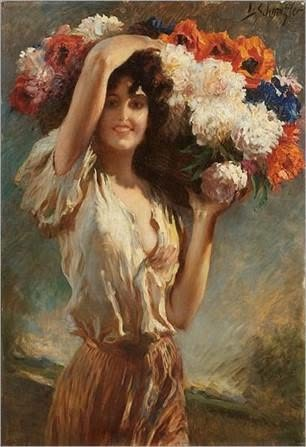
Stefka Sulakowa had an itch under her eye. She happened to be reaping barley, and as it was all tangled and lying flat, the women were reaping with sickles. When barley lies flat, a scythe is no good. Something itched under her eye, so she straightened up from her deep harvest stoop and wanted to scratch, but as she had a sickle in her hand, she didn’t think twice and scratched with the tip of the sickle, scratch, scratch. Her hands were tired, the sickle slipped a little and caught her eye. And the eye came out. Actually, it wasn’t so much that it came out, as that the tip of the sharp steel tore the eyeball and made a small bloody mark on her cheek. And then it really did come out. When asked how it happened, the women who had been reaping with her in the field answered:
— Well, she took her eye right out… There wasn’t even any blood. Not much of it.
Stefka pressed a handful of yarrow to her eye-that-wasn’t-an-eye and somehow reaped on till the end of the day.
Such were our women.
Nobody made a great fuss about it, because things like that happened all the time. Helka Worek chopped off the little finger of her left hand on a chopping block. She came to my mother with raspberries and bilberries. On a June morning, fresh as crystal, she would stand in our doorway laden with baskets of fresh fruit. Sometimes she also had a fine little pat of butter wrapped in a cabbage leaf. She was barefoot and smiling. My mother bought the berries, but the butter was another matter, because we usually made our own. And with these purchases came a lot of talk — what’s new, how are the children, how’s it in the fields… Ordinary women’s chatter.
— What is this, Helka, for God’s sake? — my mother asked — You haven’t got a finger?! You had one, you did!
— Oh, it’s nothing, ma’am — that was when I was topping the beetroot. I pricked myself on some bit of iron and it started festering, rotting, I kept changing the rag but it went blackish and started throbbing. At night I couldn’t sleep, it throbbed so — so I put it on the block and chopped it off clean with the little axe — what’s it to get in my way for?
My mother clutched her head.
— My dear Helka, Helka — have you gone mad — you should have come — my husband would have given you an ointment, a medicine — and now what — will you go without a finger? Most Holy Virgin — to cut off your own finger like that?
— Oh, ma’am — a finger’s nothing — it doesn’t get in my way at work at all. Not a bit. And I sleep well again now.
I remember them all so well! Good, brave and noble. First buxom, laughing and quick to work, then giggling by the fences while talking with the boys, and later still at the big village weddings, where huge plates of biscuits were served as starters. And then pregnancy, one, a second, a third, and on, and on. The farm, the husband, his drinking and his rows, then grandchildren… Until at last I would see them going to High Mass on Sundays, bent double, leaning on a wooden staff. Heavily gathered white aprons showed from beneath their festive woollen wraps, their shoes polished, church shoes, and a fine kerchief on their heads. But bent almost to the ground. To the ground! I looked on with horror and amazement.
— How can Dźwigajowa walk like that? — I asked my father — and my father said something about rheumatism, and I didn’t understand a thing. I was ten years old.
I roamed the countryside then, and I was everywhere. In the summer holidays I left the house before dawn and went off on a “little trip” — that’s what I called it. And on those rounds of the neighbouring villages I very soon found out why Dźwigajowa walked to church bent double. It was the never-ending, heavy, convict work on the farm that bent those fresh, once rosy and merry faces to the ground. For a whole lifetime of digging potatoes, binding sheaves with straw ropes, pouring swill to the pigs, milking, reaping with the sickle, weeding and countless household chores, they got this tear-jerking “reward” — they could look at the ground to their heart’s content! As if they hadn’t been doing that all their lives.
On those outings of mine it sometimes happened that I stayed somewhere for dinner, because nobody in our parts left a guest without a bite to eat. Not even a brat like I was then. So I ate potatoes from one bowl with the whole family. And they were good. Everyone held his own mug of sour milk and had a spoon in his hand. Whittled at home, wooden, the kind that scoops up potatoes or cabbage or pierogi neatly. Most often it was potatoes. I felt embarrassed and held back a little, because my mother used to say:
— Marcinku, don’t bother people — maybe they haven’t enough themselves — don’t eat at other people’s houses — you’ve got food at home!
But I loved “eating at other people’s houses”, though it was rare. What I liked best was eating from one bowl. I even brought the idea home and tried to talk my grandmother into eating like that too, but she only laughed merrily and said:
— Better not, for what would happen if I ate some of your share? You’d go hungry!
Women.
They came to work in my grandparents’ fields. For hire. It was at just such hired reaping that Stefka “took out” her eye.
My mother couldn’t stand the local way of speaking. Those “took out”, “took”, “why, of course” and many other turns of phrase. My mother said it wasn’t any dialect at all, just plain sloppy speech, but really the language was soft and pleasant to the ear, and my mother simply couldn’t find her place in our Little Poland conditions. Yes — she loved the countryside — but that other one, the wide Podolian one, left far beyond the border. She thought of it and compared everything with it. What vexed her was the crampedness of our parts, the small farms, the hillocks, the little scraps of fields, the plots, the balks and the grazing of cows along the ditches.
— Do you know, Marcinucha — that’s what she called me — what Podolia is? Do you know what measureless fields are, and how in the early morning you ride out on horseback into open country? You could ride like that till noon and not see a soul, the country wide, no end to be seen — and warm, gentle… And her eyes would fill with tears, and I could see her chin trembling, she missed it so. Oh, she missed it beyond measure, and she tried to pass on to us much of the charm of her childhood. But the times were no longer those times, and the country was a different one.
Women.
They came to work for my grandparents. Old ones, young ones… The young ones full of pranks and jokes — merry. I remember one midday, at dinner time — and the heat was almost unbearable — you could hear giggles and laughter and rolling about on the freshly carted haystack. Actually it was already after dinner, and people were trailing back to work.
Grandmother called out:
Marcin — go and see what those girls are doing on the straw! Let them stop fooling about! They’re only shaking out the grain. Call them to work — enough of this fooling about!
So I went to the stack and called out:
— Hey, what are you doing up there?
— We’re eating pears — laughing girls’ voices answered me.
— Don’t you know it’s Friday today? — I tried to joke.
— Pears aren’t meat!
— Not meat?! Maybe not meat, but get down to work, the carts are waiting and rain is coming — we’ve got to cart in what’s still left in the field…
— We’re coming, we’re coming! And Marcinko is chasing us, just chasing us…
What was I to “chase”? Grandmother said so, and there was no appeal against that.
Grandmother always said “girls”, and it had nothing to do with the meaning that word carries today. “Dziwka” was what people called a village girl. It was innocent and accepted. That’s how people spoke.
Women.
They also left their mark in the bloodied bundles of hay, or plantain leaves, or a rag dropped somewhere in a ditch, that you saw here and there. Those were their sanitary pads, which they worked into a neat little roll, tied, and put into the knickers they usually didn’t wear, only when their monthly time came upon them. Somehow that bundle had to stay put between their legs. And then — after marriage the problem faded, because, after all, pregnancy, pregnancy, one after another. Of course nobody talked specially about these women’s matters, because it was “shameful”, and then at last the time came when you could get cotton wool, so the yarrow and the hay went out.
And they were brave. With an ordinary, everyday, unnoticed courage that held families together, kept them afloat and let the children grow. But besides those grey ones, unnoticed in their quiet courage, there were others too, I would say exotic ones. They turn up everywhere, I suppose.
Such a one was Irka Tadla. Pretty — very pretty even, though prettiness wasn’t the point. That girl had in her some inborn wildness and a teasing eroticism. One memory of her has stayed in my mind to this day. It was in ’65. We were lighting a bonfire by the San. There were a few boys, two girls I think, and we were all after a hard day’s harvesting. It was the end of August, the smoke from the bonfires was already drifting across the fields, and you could feel autumn coming. We were lighting the bonfire and baking potatoes. At this spot the San wasn’t so much wide as very swift. Natural stone ledges ran across the river and churned the water. The place was called Bałwanki. In places it was deep. So we were lighting the bonfire and dusk was already coming on when suddenly we saw Irka riding bareback on a horse. She was riding home from the pasture. Her hair was loose and her light dress had ridden up to her hips, because she sat astride like a man. The boys began to call to her:
— Hey, Irka — come over for a bit — we’ve got potatoes — good ones…
And Irka didn’t need much telling. She rode straight over and jumped neatly to the ground. There was a bit of teasing, laughter, mouths burnt on hot potatoes, but Irka was known for her wildness, so one of the boys, half in jest and half on purpose, said:
— There are whirlpools here at Bałwanki. Nobody can swim the San here, it’ll pull him under. In Jaworówka they said two drowned here last year.
And Jaworówka was a village on the right bank of the river.
Irka was munching a potato and at once cried out with her mouth full:
— I’m not afraid, and I can swim across any time and nothing will happen to me. Why, the other day I even swam across with a horse to the other bank…
And that was all the boys wanted, and they went on laughing that Irka couldn’t do it, that she was only talking, and that maybe by day she might swim across, but not now, and she should stop talking.
And something seemed to get into Irka.
— I’ll fetch you that washing bat from the other side, the one the women left on the stones — can you see it?
And indeed — on the other side you could see the washing bat left behind. The women used them for washing. They beat the washing with them on the stones and rinsed it in the river. One of them had left her washing bat on the stones. It showed white from afar, but already barely visible, because, as I said, dusk was coming over the river.
And then Irka, in one movement, threw off her little dress, and underneath she was completely naked. Somehow she wasn’t ashamed at all. We stood dumbstruck, and she, without a thought, ran across the stones and into the water. She plunged in. We saw her swimming a man’s crawl. Girls didn’t swim like that in our parts. But after a moment a low cloud of splashed spray hid Irka’s little head, already small. We could barely see her. We felt both foolish and frightened. What if she drowns? God — what then?
But Irka didn’t drown. It went on and on, and Lutek was already about to run and call someone, to save her, because the river couldn’t be seen, and all you could hear was the roar of the water gurgling over the ledges.
And suddenly out of the dusk came Irka towards us, smiling, naked and wet. In her hand she held the washing bat in triumph. She seemed to be covering herself a little, but she bared her white teeth and shook her wet hair so it would spread over her back. She was shapely as a doe — and in the glow of the bonfire her skin shone like copper. That strangely natural, or rather animal, shamelessness of hers abashed us all. All you could hear was the crackling of branches on the bonfire. And she threw the washing bat to the ground and cried out laughing:
— Well, what about it? Got the washing bat?!? Got it! Well, never mind — I’ve got to run, my father will be shouting.
She got on the horse and rode off. Naked. One of the girls called after her:
— Irka, are you stupid? Get dressed at least — people will see you…
And Irka turned her horse back and calmly answered:
— What do I care about people — am I hunchbacked or something? But hand me my dress — I clean forgot it.
Such were our girls.
Irka — as I found out later — married some fool who beat her senseless, but she left him as she should have and went to the recovered territories. What happened next I don’t know, but I once heard that she lives in America and is doing well.
In 1959 two sapper companies came to us to build a bridge over the San. Until then there was a ferry, and people with carts and horses crossed on it from one bank to the other. Some two kilometres down the river there was another crossing, which the Marynowski family had run for years, but they used long flatboats which they pushed along with long poles.
Under some programme or other, an agreement was made between the town and the army that the sappers would build the bridge and the town the road. And so it was.
The soldiers were billeted in our little town and in Jaworówka for the duration of the building. How many children were born then is hard to count. Christenings followed christenings. But the time came, of course, when the work was done and the soldiers began to strike camp. Two hundred men. They brought up the lorries, and you could see they wouldn’t stay, that they’d go off somewhere into the world and be gone. And the word went round Jaworówka, Buków, Ruskie Pole, Dzieszyn and wherever else, that the soldiers were leaving!
The girls stood by the fences and in the doorways of barns and byres, torn away from their work, shielding their eyes with their hands to see whether it was true or only a bad rumour. And when they saw it was true, they ran on through the fields and potato patches, to be nearer to those who were leaving. And they stood along the road, unsmiling, with tears in their eyes. And the boys in uniform, already sitting on the lorries, began to sing soldiers’ songs — now “The weeping willows rustled”, now “Okę” — and more and more sniffling and unconcealed weeping could be seen on the girls’ faces.
And among those leaving there was a boy — maybe from Podhale — whose voice was high, strong and rising above the others. And he suddenly began to sing. His voice vibrated and carried over the San, the village, and further, further. The others stopped singing, and in that silence the well-known song sounded piercingly, like a real plea:
“The buds of white roses were blooming!”
Now they were all crying! And when he reached:
“come back, kiss me as in the old days” — and when that high singing echoed back from the surrounding hillocks, the day of judgment came!
A general sobbing rose like a sigh, like a great grief for happiness and joy being lost. The girls tore at the lorries like madwomen, clutching the sides, the drivers’ cabs and the bumpers with their hands! One even threw herself under the wheels!
But the soldiers left. They left behind them the newly built bridge, dozens of broken hearts and many tears on cheeks.
That’s how it was with our girls.
Scenes of a column of army lorries driving away, and women weeping as they said goodbye to their boys, happened in many places countless times, but they always carried an unimaginable charge of emotion.
But I remember an event which in this respect had no equal. And it was an event surpassing in its drama everything I have ever seen in my life.
As I mentioned, a few kilometres from the ferry, or later the newly built bridge, there was a crossing by flatboats. From Jaworówka to Buków it was the shorter way. Over the bridge it was a good deal further. Besides, people liked Marynowski, his flatboats and the grating of the poles pushing them off the riverbed. But the crossing didn’t last all year, because around December the San froze solid and stayed so until spring. Then a path was trodden out and people walked on the ice. That’s how you went to market, to church, to the pharmacy or the doctor. From the balcony of my house, which stood on a hill, you could see the flat ground before the San and, on a clear winter’s day, the distant crossing, or rather the path-track stretching across the frozen river. But the ice on the San wasn’t even, and the path had to be smoothed as best it could be. People walked in single file, and you could see a long row of figures wrapped in sheepskin coats. For some reason the San was never crossed alone. I went there once as a boy, because before Christmas Eve my grandmother sent me for fish to some fellow in Jaworówka. Something had happened, we had too few fish, someone said the pike that year were something, ho, ho, so grandmother told me to go and find out. It was a long way and it took me half the day. That’s when I saw that icy track, and that’s how I know what it looked like.
Well, on that terrible day a row of women was crossing the San. It was already March. It was cold, seemingly, and the ice held firm, but they said that somewhere at Myczkowce you could already hear the cracking and booming of waters tearing themselves back to life. But at the crossing to Jaworówka the ice path was still hard, and the women coming back from church stepped onto it without fear.
They walked in a long row, holding on to one another, because in a group, they say, it’s cheerier and safer. First went Hanka Kulikowa — a woman like a pine tree, strong as a man — mother of four. Right behind her “furious” Rebizaczka, a sharp-tongued housewife, who sat in the first pew in church. Then others, young, old, and even tiny little girls. Last went old Kokunicha, of whom they said she had burnt somebody, but that seemingly wasn’t true.
They walked slowly, saying aloud “Under Thy Protection”. It was cold, but suddenly, as if for a moment, a warm wind brushed the walking women. And then, when they were already in the middle of the river, the ice suddenly broke, and Luśka Kosta slipped into the water. A terrifying cry rose from behind. Luśka went in up to her breast. Maryśka, who was walking in front of her, fell backwards, because Luśka was holding her by her kerchief. Now with the strength of steel pincers. Oh no, she won’t let go of her now, because she herself will drown. And the water! Why, she can’t feel her legs any more… Maryśka fell and was already going under too, and behind her Zośka Tośkowa. The women threw themselves onto the ice and lay flattened like rolled-out dough. Kokunicha howled like a wounded she-wolf. She braced herself with her feet so that Zośka wouldn’t drag her down. The women’s dreadful screaming carried to the Jaworówka side, and everyone alive ran out in front of their cottages. Marynowski was first, because his house stood almost on the bluff — right by the landing. Horror paralysed people. You could see the women lying there, but to reach them was suicide, because you could already hear the cracking, and where the dark patch marked the group of women, the water was growing bolder and bolder.
As long as Buków has been Buków and Jaworówka Jaworówka, nobody had seen anything like it, because before the eyes of people running about aimlessly, women were going under the water. Our women!
The peasants began dragging ladders, poles and whatever anyone had, and tried to lay a makeshift bridge, but no sooner had Jasio Purcz crawled a few metres onto it than the ice gave way, and they barely pulled Jasio out by his hair.
And the women in the middle of the river held on. They no longer cried out, no longer screamed, only, clenched within themselves, they fought in silence for survival. And all the while a fervent, burning prayer went from their lips to the Most Holy Mother — the one from the Grotto of the Buków church, the one of Częstochowa, of Kodeń, or whichever one each of them worshipped and clung to and prayed to. And some force bound them together, so that, gathering themselves into a group, they began to save one another. And none of them looked to herself any more, but only watched that the other should survive, that the other should get out of that deep water and come back to her husband and her little children.
But maybe they wouldn’t have managed it if not for Hanka Kulikowa. Heedless of everything, she crawled to the very hole in the ice and, stretching out her arms, began to haul Luśka out. The others grabbed Hanka by the legs and pulled with all their might. Their slippers fell off their feet, and barefoot and torn they pulled. They had already torn Luśka from the water, already they were covering her on the ice with the woollen wraps and kerchiefs they’d taken off. She was saved now. Tough they were, oh, tough!
And the ice creaked and boomed, and you could see it wouldn’t last long. As far back as memory reached, nobody had ever seen anything like it.
And then, when they had all pulled themselves out of the seething water, they looked at one another, and Hanka called out:
Listen, women, listen! Either the Kingdom of God is written for us today, or we’ll break free. Run for the bank! As fast as each of you can! I’ll be right behind you! If we run, we’ll break free, because we’ll fly over this thin ice in a flash! And don’t stop, don’t stop! And together, together, one with another! Get up! Come on, come on, come on… LET’S GO!!!
And they flew!
Those standing on the bank froze, because it was a good way from the middle of the river. The women rushed together. They threw off their jackets, sheepskin coats and kerchiefs and tore towards the bank. And the ice was breaking, and now one or another of them would go in with a foot, the others would pull her out, and on, only onwards…
And they made it! They made it! They made it!
A few lay feverish in their featherbeds for a few days, but straight after that they were off to the milking, to the manure, and to tend the pigs a little. Because such were these women!
Nobody ever spoke of heroism, or of awarding medals. They lived. And that was the most important thing.
They lived, they worked, they brought up children. And as my grandmother used to say — they always made sure Poland survived — if not on the map, then at least in hearts. At once she would start singing in her trembling voice her “The Vistula flows, flows…” and then she would ask me:
Marcinku — listen now — tell me:
Who are you?
And I answered:
A little Pole!
Such were our Women!